Most ECG problems are not machine problems. They are electrode problems and skin preparation problems. Even so, the device you choose determines how easily staff can avoid those faults, how quickly a trace reaches the reporting clinician, and how much time is lost to repeats.
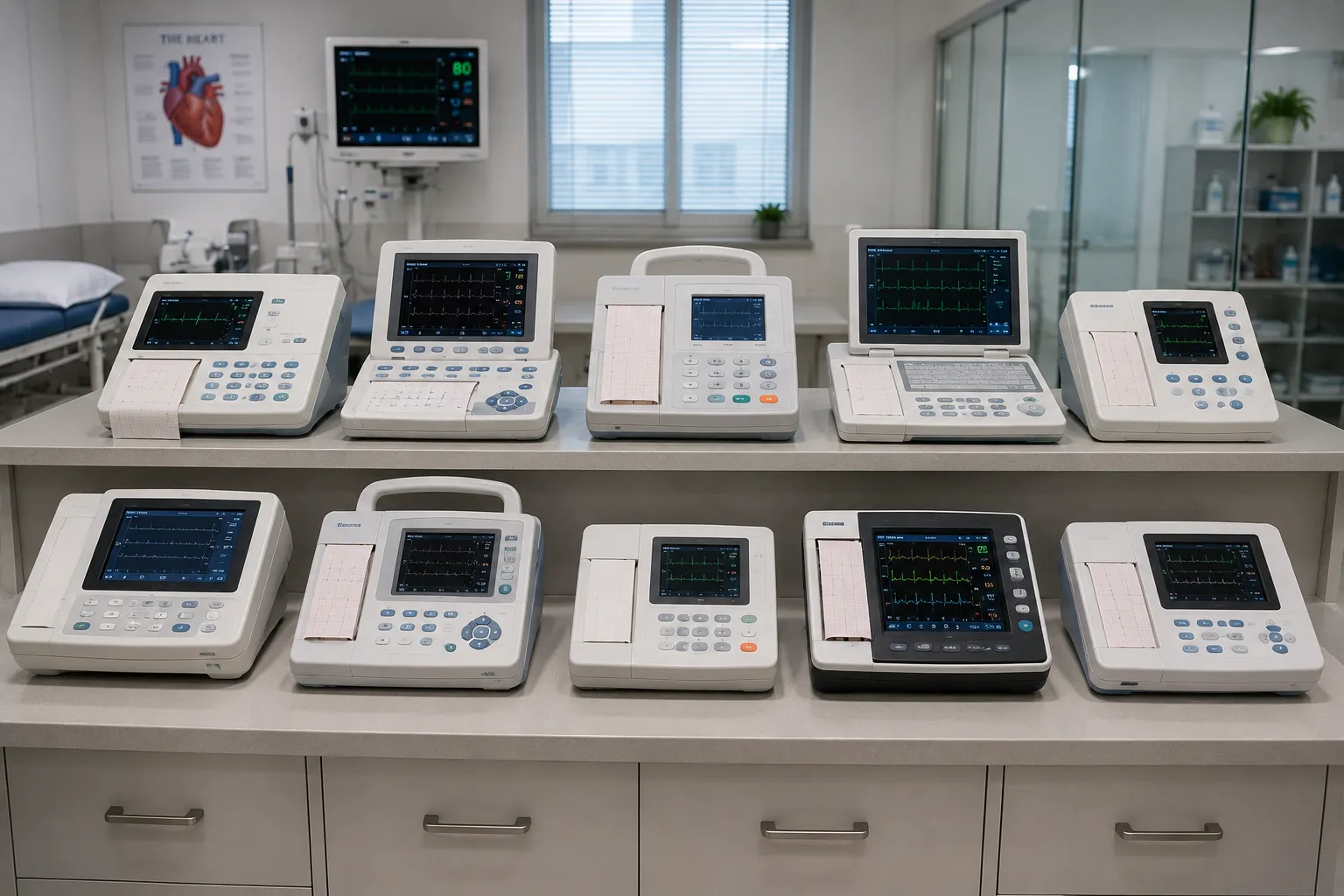
These ten machine types cover routine screening, ambulatory recording and exercise testing. Each entry explains the design and what to confirm before purchase.
Define the recording workload first.
A department that records routine twelve-lead traces at high volume needs speed, simple operation, nd a reliable path into the reporting system. A department also running ambruns and exercise studies needs the analysis software and the technical support that comes with it.
Ask: Hitraces are reviewed. If reporting happens remotely, connectivity and file format matter as much as the recording hardware, and they are the part most often left unresolved until after installation.
The ten ECG machine types
1. Three-channel recorders
Compact machines printing three leads at a time. Simple and portable, they suit small clinics and settings where a basic trace is sufficient.
2. Six-channel recorders
A middle option balancing print speed and footprint, common in general practice and outpatient clinics with moderate volumes.
3. Twelve-channel recorders
Print all twelve leads simultaneously, shortening recording time and reducing repeats. The standard choice for hospital screening departments.
4. Interpretive ECG machines
Provide an automated measurement and interpretation statement alongside the trace. The statement supports the reporting clinician rather than replacing review, and local policy should say so, making that clear when clearing ECG machines with touchscreen workflow
Guided entry of patient details, lead status display and on-screen preview before printing. These reduce mislabelled recordings, which is a common source of repeat work.
6. PC-based ECG systems
An acquisition module connected to a computer running the software. Flexible and space-efficient, though the department must plan for the computer's own lifecycle and security updates.
7. Exercise stress testing systems
Integrated with a treadmill or ergometer, with continuous recording, blood pressure measurement and reporting. Room layout, safety provision and staffing are part of this purchase.
8. Ambulatory Holter recorders
Worn for extended recording, with analysis software producing the report. Recorder count, turnaround and software licensing are the practical constraints.
9. Event and patch recorders
Longer-term or patient-activated recording using compact devices or adhesive patches. Confirm the consumable supply and the data retrieval route before adopting.
10. Vital signs monitors with ECG capability
Bedside devices offering rhythm display and sometimes diagnostic recording. Useful for continuous observation, but confirm whether the output is suitable for diagnostic reporting.
Electrodes, cables and connectivity
-
Electrode format. Confirm stud or clip fittings, adhesive type and supply, since electrode quality drives trace quality.
-
Cable durability. Patient cables are the most replaced part. Ask about reinforcement, replacement supply and lead times.
-
Paper or digital output. Establish whether printing continues, and confirm paper reliability
-
Conne of paper formatsctivity. Ask exactly how traces reach the reporting system, which format is used, and who configures the link.
-
Patient data. Confirm how records are stored on the device and how they are cleared or transferred.
Training, servicing and lifecycle
Training should focus on the things that ruin traces: skin preparation, electrode placement, cable management and artefact recognition. A short, practical session for everyone who records ECGs pays back quickly in fewer repeats.
For servicing, agreed maintenance intervals, electrical safety testing, calibration verification, and battery and battery cable replacement arrangements. Software support: PC-based Holter and PC-based stress systems often carry a licence and update path.
Confirm spare parts availability and expected support life in writing, and ensure the department receives published device safety alerts so that safety notices are acted on promptly.
Final thoughts
Buy for the workload and the reporting route. Most screening departments are best served by twelve-channel recorders with a working link to the reporting system, a healthy stock of electrodes and spare patient cables, and ambulatory or exercise capability only where the service genuinely requires it. Settle connectivity and software support before delivery.
This article provides general procurement guidance for healthcare organisations. It is not clinical or diagnostic advice, and it does not replace manufacturer instructions or professional judgement.