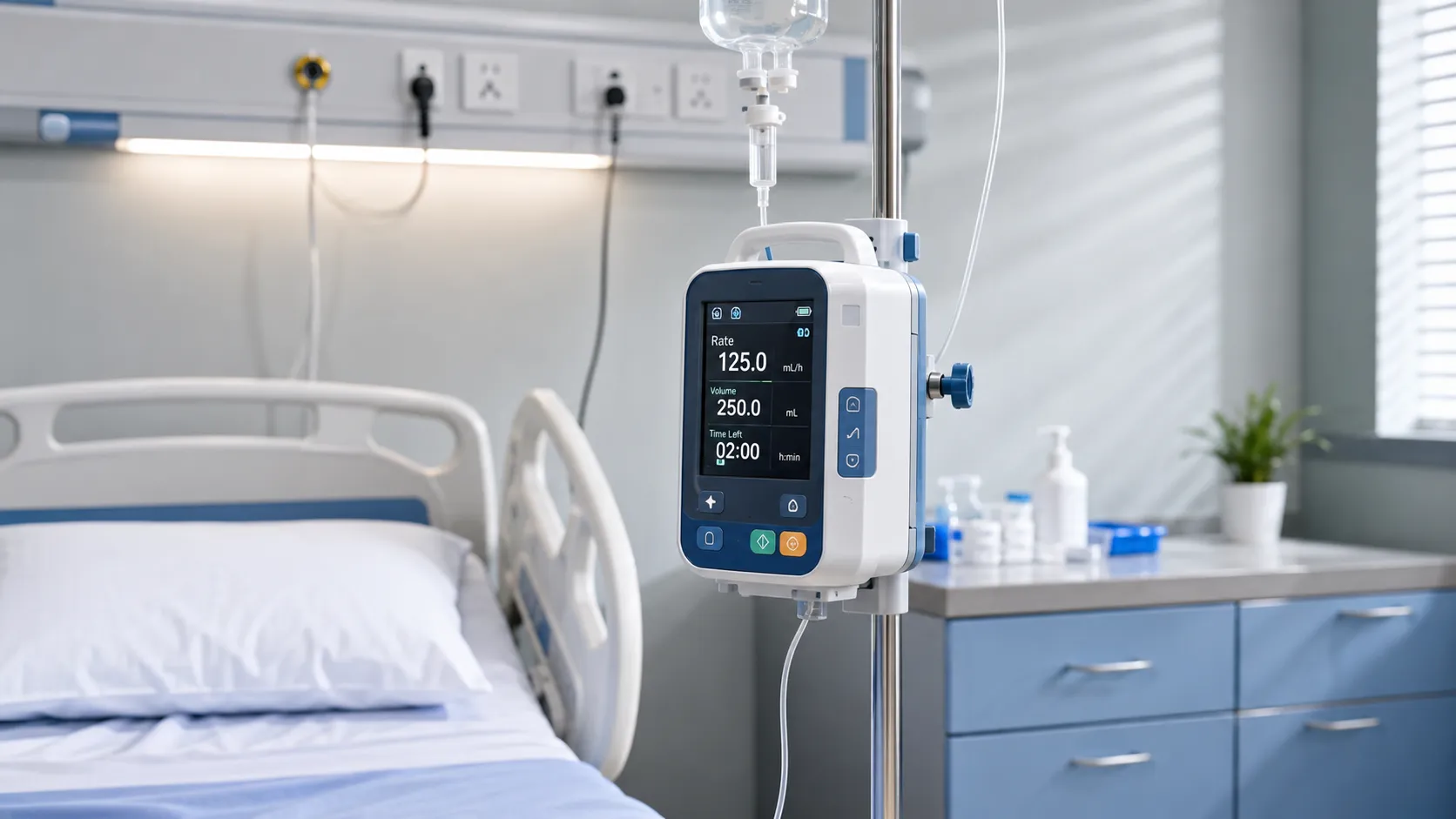
Infusion pumps are the most numerous powered devices in most hospitals, and the most exposed to human factors. A ward running four pump models with four different keypads, four alarm tones and four sets of giving sets is carrying avoidable risk. Standardisation is usually the strongest safety measure available to a procurement team.
The ten pump types below cover general ward, critical care, oncology and community use. Each entry sets out the purpose and what to confirm before purchase.
Standardisation, drug libraries and human factors
Two questions matter more than any specification. First, can the fleet be reduced to as few models as clinical need allows? Second, does the pump support a drug library with dose limits that your pharmacy team can maintain and update?
A drug library is only as good as the process behind it. Establish who builds it, who approves changes, how updates reach every pump, and whether updates require a device to be taken out of service. These answers shape the true workload of ownership.
The ten infusion pump types
1. Volumetric infusion pumps
The general-purpose ward pump, delivering fluids and medicines from a bag through a dedicated giving set. Flow accuracy, occlusion detection and free-flow protection are the core specifications.
2. Syringe pumps
Deliver small volumes precisely from a syringe, widely used for concentrated medicines and paediatric dosing. Syringe brand recognition and the range of accepted syringe sizes are practical points to confirm.
3. Multi-channel and stackable pumps
Several channels in one housing or a docking system that links pumps together. These reduce bedside clutter and cabling where patients receive multiple infusions.
4. Patient-controlled analgesia pumps
Allow a patient to request a dose within set limits, with lockout intervals and secured programming. Physical security of the reservoir and clear audit logging matter here.
5. Ambulatory infusion pumps
Compact, worn devices supporting mobile patients and home therapy. Battery endurance, alarm audibility and simplicity for patients and carers outweigh feature range.
6. Elastomeric infusion devices
Non-electronic devices where an elastomeric reservoir provides the driving pressure. They are simple and mobile, though flow depends on device design rather than programmed settings.
7. Enteral feeding pumps
Dedicated to feed delivery, with connectors designed to prevent misconnection with intravenous lines. These must be kept clearly distinct from intravenous devices in both stock and training.
8. Large-volume pumps for fluid management
Higher flow rate capability for resuscitation and theatre use, often paired with warming systems. Confirm the maximum sustained rate rather than the peak figure.
9. Pumps with target-controlled infusion capability
Used in anaesthesia to deliver agents against a modelled target. These are specialist devices requiring specific training and clear local governance.
10. Pumps with wireless connectivity
Support remote updates to the drug library and infusion data reporting. Confirm the network requirements, who maintains the connection and what happens when a pump is offline.
Consumables and compatibility
-
Giving sets. Sets are usually pump-specific. Confirm formats, supply arrangements and whether ward stock changes with the fleet.
-
Syringe compatibility. Check which syringe brands and sizes the pump recognises, as substitution can affect accuracy.
-
Battery performance. Ask for runtime at realistic rates and confirm battery replacement intervals across a large fleet.
-
Alarm behaviour. Compare occlusion sensitivity, alarm tones and escalation, particularly across mixed models on one ward.
-
Mounting. Confirm the compatibility of pole clamps, docking stations, and trolley with existing equipment.
Training, maintenance and fleet management
Training should cover programming, drug library use, alarm response, battery management and what staff do when a pump fails mid-infusion. Refresher sessions matter because pump errors cluster around unfamiliar models and rotating staff.
Technically, agree planned maintenance intervals, flow accuracy verification, electrical safety testing, battery replacement cycles and response times. For a large fleet, ask how loan devices are provided during servicing so wards are never short.
Confirm spare parts availability and expected support life in writing, and ensure the organisation receives published medical device safety alerts so that field safety notices reach clinical engineering promptly.
Final thoughts
Reduce the number of models before improving any single one. A workable fleet usually means one volumetric pump and one syringe pump across general areas, a maintained drug library, consistent giving sets and specialist devices only where the clinical case is clear. Settle consumables, library governance and service cover before delivery.
This article provides general procurement guidance for healthcare organisations. It is not clinical advice, does not cover dosing decisions, and does not replace manufacturer instructions or local medicines policy.