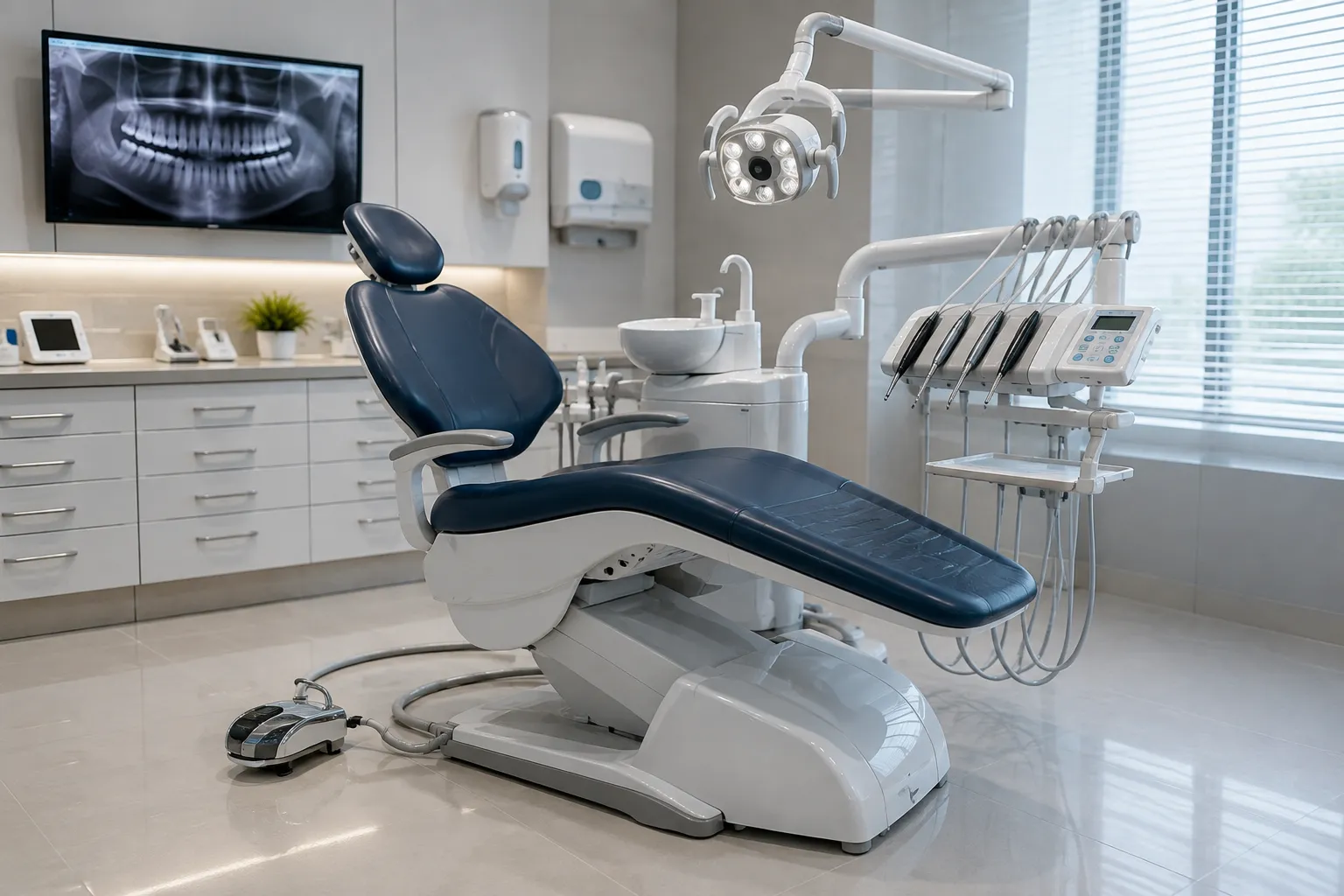
A dental chair is the anchor of the surgery. Everything else arranges itself around where the patient lies, where the delivery arm reaches and where the assistant sits. Choosing badly means years of small compromises in posture, reach and turnaround, so the decision deserves more attention than it usually gets.
These ten configurations cover general practice, hygiene, specialist and mobile work. Each entry explains the design and what to confirm before ordering.
Plan the surgery, not just the chair.
Before comparing chairs, map the room. Note the position of services, the door swing, the window, the assistant's working side and where the cabinetry will sit. Then decide handedness. An ambidextrous unit is worth considering wherever surgery is shared, or the practice rotates clinicians.
Utilities are the other early decision. Water supply, drainage, compressed air, suction and electrical provision all need routing before the chair arrives, and retrofitting is disruptive once the floor is finished.
The ten dental chair and unit types
1. Continental delivery units
Instruments are delivered from arms that swing over the patient. Handpiece tubing hangs in a balanced arm, which many clinicians find comfortable for reach and visibility.
2. Side delivery units
Instruments sit on a fixed arm beside the chair. This keeps the working area above the patient clear and can feel less imposing for anxious patients.
3. Cart delivery systems
A mobile cart carries the instruments, allowing the clinician to reposition it freely. Flexible, easy to clean around, and useful in rooms with variable layouts.
4. Ambidextrous chairs
Configured so the delivery system can be moved between sides, supporting both left- and right-handed clinicians. Sensible for shared surgeries and associate practices.
5. Knee-break chairs
The seat and leg sections articulate separately, which supports easier patient entry and exit and a more natural seated position between procedures.
6. Full flat-plane chairs
A continuous surface that lies flat for supine treatment. Preferred by many for four-handed dentistry and long restorative appointments.
7. Hygienist chairs
Simpler units with lighter delivery arrangements suited to scaling and preventive appointments, often with a smaller footprint for a compact room.
8. Orthodontic chairs
Slim backrests and open access designs that suit repeated short appointments and easier lateral access to the arches.
9. Implant and surgical chairs
Chairs with a wider positioning range, including Trendelenburg, and mounting provision for surgical motors and irrigation. Confirm the safe working load and the positioning limits.
10. Portable and mobile dental chairs
Folding chairs used for domiciliary visits, outreach and screening programmes. Weight, setup time and the compatibility of a portable suction and compressor unit matter most here.
What to confirm before ordering
-
Delivery configuration. Check the reach and balance of the arm with the operator seated in a real working position.
-
Suction system. Confirm whether wet or dry suction is required, and that the practice plant matches.
-
Waterline management. Ask how the unit's waterlines are treated and flushed, and what the daily routine involves.
-
Integrated devices. Establish whether scaler, curing light and intraoral camera integration is included or added later.
-
Upholstery. Check the material against the cleaning products the practice uses, and confirm the availability of replacement pads.
-
Chair light. Look at shadow control and adjustment reach, since the operating light is used continuously.
Installation, training and maintenance
Installation usually needs a plumber and an electrician alongside the equipment engineer, and it is worth agreeing a single point of coordination. Confirm the floor-fixing requirements, service loop positions, and whether the room requires any preparation before the delivery date.
Training should cover the whole team, including nurses who manage suction traps, waterline treatment and end-of-day routines. These tasks affect equipment life more than anything the clinician does.
For servicing, agree on planned maintenance intervals, electrical safety testing, compressor and suction plant servicing, upholstery replacement, supply, and response times. Confirm spare-parts availability and expected support life in writing. Keeping the practice registered for published device safety alerts helps ensure field safety notices reach the right person.
Final thoughts
Sit in the chair before buying it, ideally with your own working posture and your nurse in position. An ambidextrous unit serves most private practices well, with a delivery system chosen by the clinician who uses it daily, a matched suction plant, and a clear waterline routine. Settle utilities and servicing before installation, and the surgery works quietly for years.
This article offers general guidance for practices and equipment buyers. It is not clinical advice and does not replace manufacturer instructions or local infection prevention policy.