Sterilisation departments rarely fail because a chamber stops heating. They fail because water quality was never specified, because the cycle printer ran out of paper, or because nobody planned the service access behind a floor-loading unit. Choosing an autoclave is as much a facilities decision as a clinical one.
The ten steriliser types below cover benchtop, departmental and specialist needs. Each entry sets out where it fits and what to confirm before an order is placed.
Load type drives the choice.
Start by classifying what you sterilise. Solid unwrapped instruments, wrapped sets, hollow instruments with narrow lumens and porous items all behave differently under steam. A machine that handles solid loads perfectly may not reliably remove air from a lumened instrument, which is the single most common mismatch in smaller departments.
Then count the throughput. Cycle length, chamber volume, and the number of daily sessions determine whether one large machine or two smaller ones better serve the department. Two units also protect you when one is out for servicing.
The ten steriliser types
1. Benchtop sterilisers for solid unwrapped loads
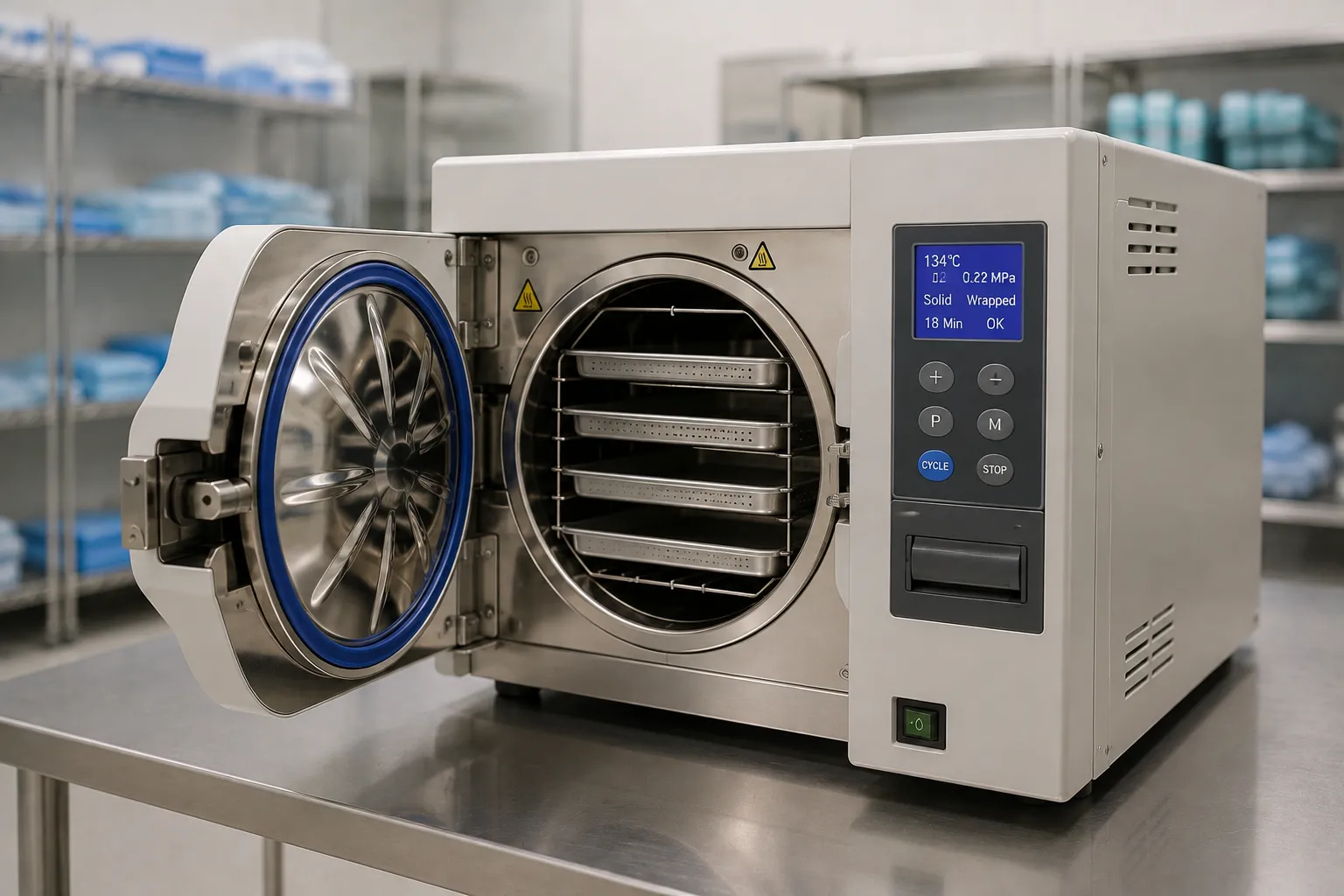
Compact units suited to simple, non-hollow, unwrapped instruments. Common in clinics and treatment rooms rather than central sterilisation, and unsuitable for wrapped or lumened items.
2. Benchtop sterilisers with defined cycle types
Machines validated for particular load types declared by the manufacturer. Useful where a clinic processes a known, limited range of instruments and the manufacturer states the cycle suits it.
3. Vacuum benchtop sterilisers
Active air removal through a vacuum phase, which supports wrapped, porous and hollow instruments. These are the practical choices for dental, podiatry, and minor-procedure settings that handle lumened items.
4. Gravity displacement sterilisers
Air is displaced downwards by incoming steam. Reliable for simple, non-porous loads and liquids in appropriate containers, but limited where trapped air is a risk.
5. Pre-vacuum porous load sterilisers
The mainstay of central sterilisation. Repeated vacuum pulses remove air before the sterilising phase, supporting wrapped sets, textiles and complex instruments.
6. Double-door pass-through sterilisers
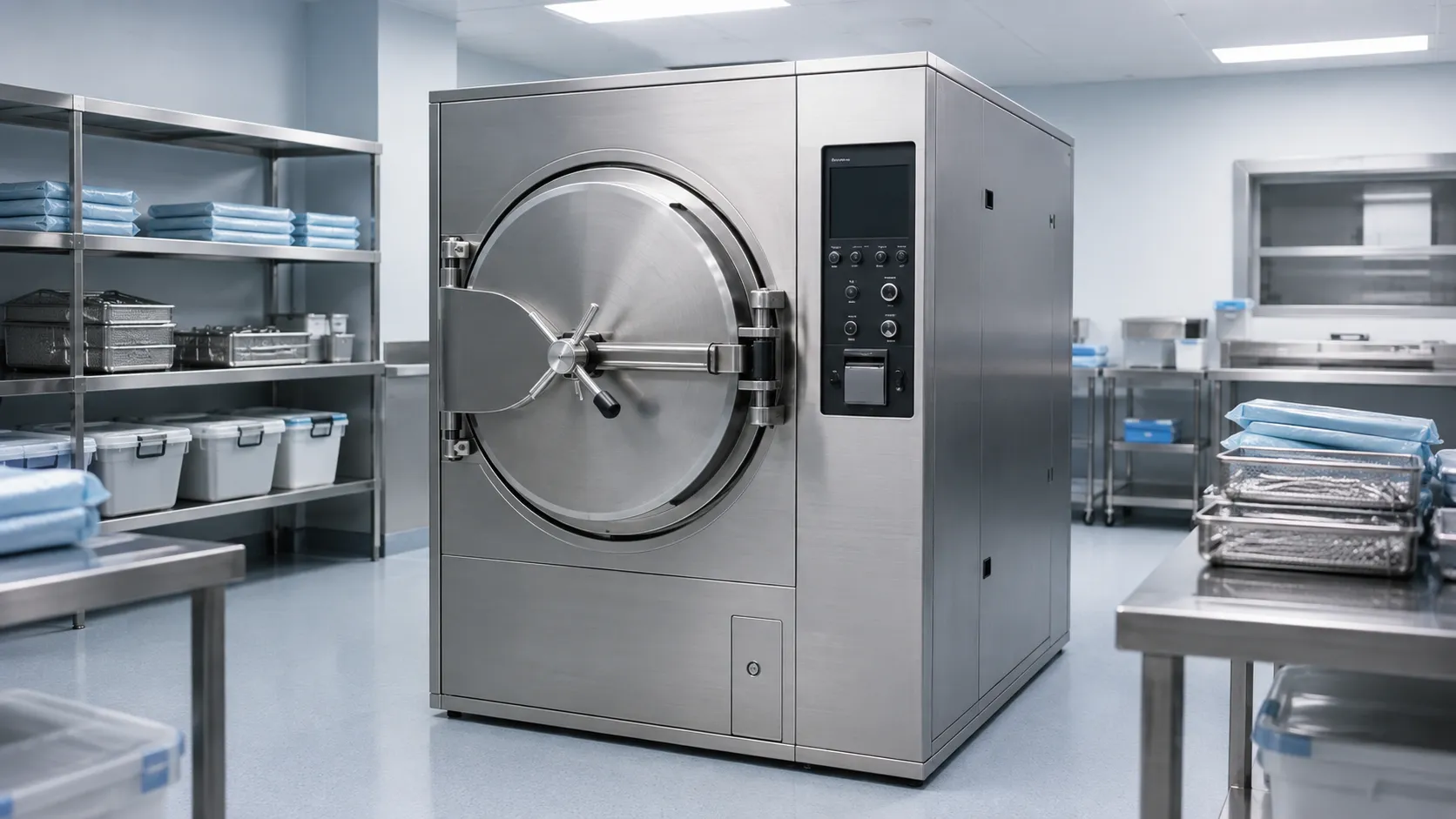
Loaded from the preparation side and unloaded into the sterile store, supporting a clean workflow separation. They need careful planning of the wall opening, service access and interlock arrangements.
7. Floor-loading large chamber sterilisers
High-capacity units taking loading trolleys directly. Suited to large departments and to facilities processing theatre sets in volume. Plant room requirements are significant.
8. Rapid cycle cassette sterilisers
Short cycles for a small number of instruments, useful where turnaround between procedures is tight. They complement rather than replace a departmental machine.
9. Laboratory autoclaves
Configured for media, waste and glassware rather than surgical instruments, often with specific cooling and containment features. They should not be treated as interchangeable with instrument sterilisers.
10. Low-temperature sterilisation systems
Non-steam processes for heat-sensitive devices such as certain endoscopic accessories. Confirm material compatibility and consumable supply, and treat these as an addition to steam capability rather than a replacement.
Facilities and utilities to confirm
-
Water quality. Feedwater requirements are strict, and poor water quality shortens the life of the chamber and generator. Establish whether the treatment plant is included.
-
Steam supply. Confirm whether the unit generates its own steam or relies on plant steam, and what quality is required.
-
Drainage and ventilation. Check drain temperature limits, condensate handling and room heat load.
-
Electrical supply. Larger chambers often need three-phase provision that the room may not have.
-
Service access. Confirm clearance around and behind the machine before installation, not after.
Validation, records and maintenance
Sterilisers are validated equipment. Expect installation, operational and performance qualification to be carried out and documented, with periodic testing thereafter. Agree in advance who performs these tests, how often, and what documentation your department receives.
Daily and weekly checks, cycle printouts or electronic records, and load traceability all need a practical home in the department's routine. Confirm how the machine records cycles, whether records export electronically, and how long they are retained.
For servicing, agree pon lanned maintenance intervals, door seal and gasket replacement, safety valve testing, calibration of the temperature and pressure sensors, response times ,and sspare partsavailability. Registering to receive published device safety alerts keeps the department informed of field safety notices affecting installed equipment.
Final thoughts
Match the machine to the load, then to the building. Most departments need vacuum capability for wrapped and hollow items, sufficient chamber volume for peak sessions, and a second unit or a clear contingency for downtime. Settle water treatment, drainage, electrical supply and validation responsibility before delivery, and the department runs predictably.
This article provides general procurement guidance for healthcare organisations. It is not clinical or regulatory advice, and it does not replace manufacturer instructions or local decontamination policy.