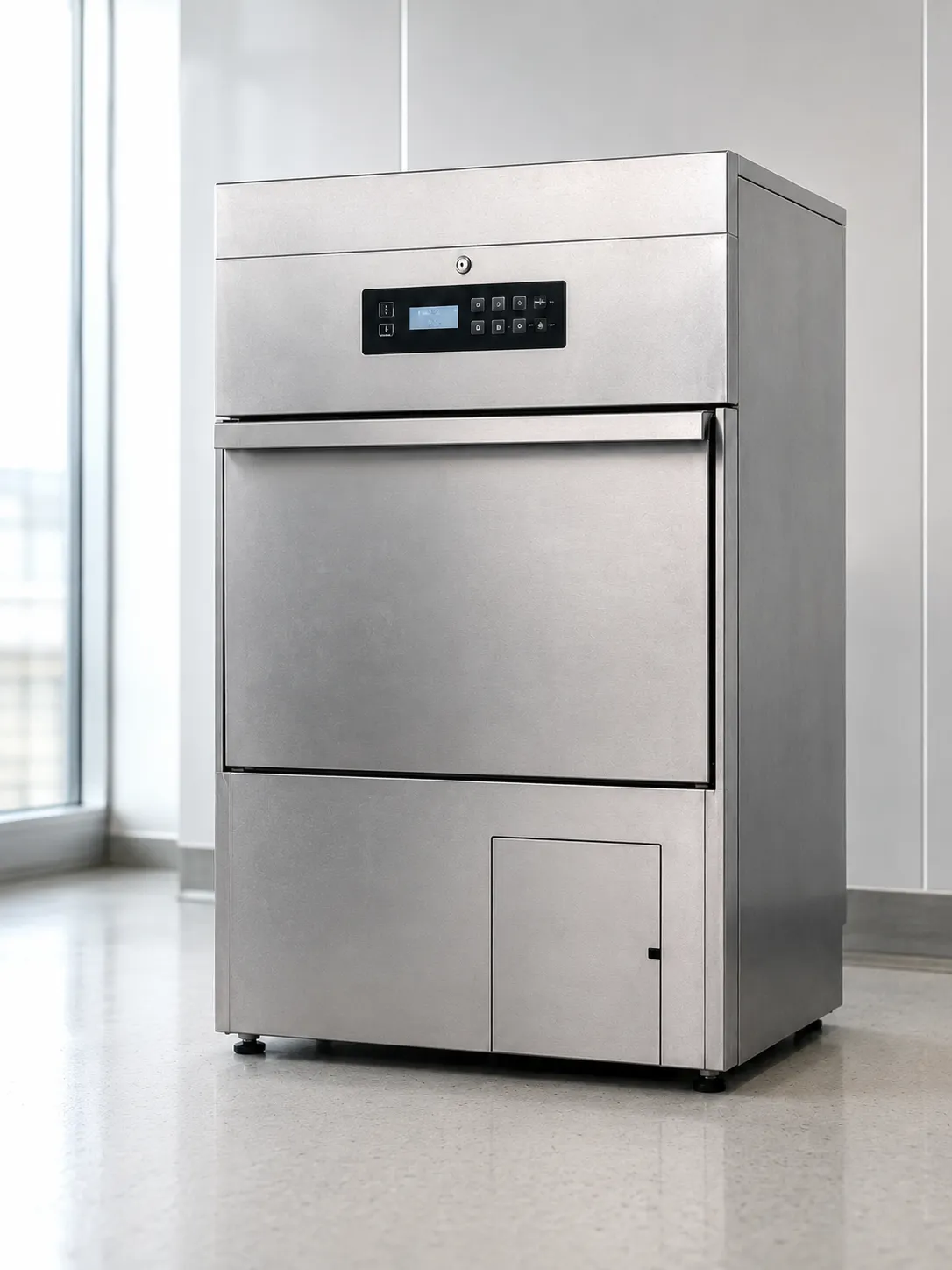
A washer disinfector performs the cleaning and thermal disinfection stages that make instruments safe to handle and ready for sterilisation. It sits at the heart of a decontamination workflow, and its throughput, load carriers and validation determine how smoothly the whole reprocessing cycle runs. Choosing one means considering the load it will carry and the water and chemistry it requires, not the chamber alone.
The ten types below cover central decontamination, departmental and specialist reprocessing. Each entry explains its role and what to confirm before purchase.
Load carriers, water and chemistry
The load carriers decide what a machine can actually process. Instrument trays, containers and specialist carriers for hollow or jointed items each affect cleaning, and a machine bought without the right carriers for its intended instruments cannot clean them effectively regardless of its chamber size.
Water quality and chemistry underpin the result. The final rinse water quality affects instrument condition and residue, and the detergents and process chemicals are matched to the machine and the instruments. Both belong in the specification alongside the machine itself.
The ten types
1. Single-chamber washer disinfectors
Load, process and unload through one door, the general configuration for many departments. Simple and flexible for a mixed workload.
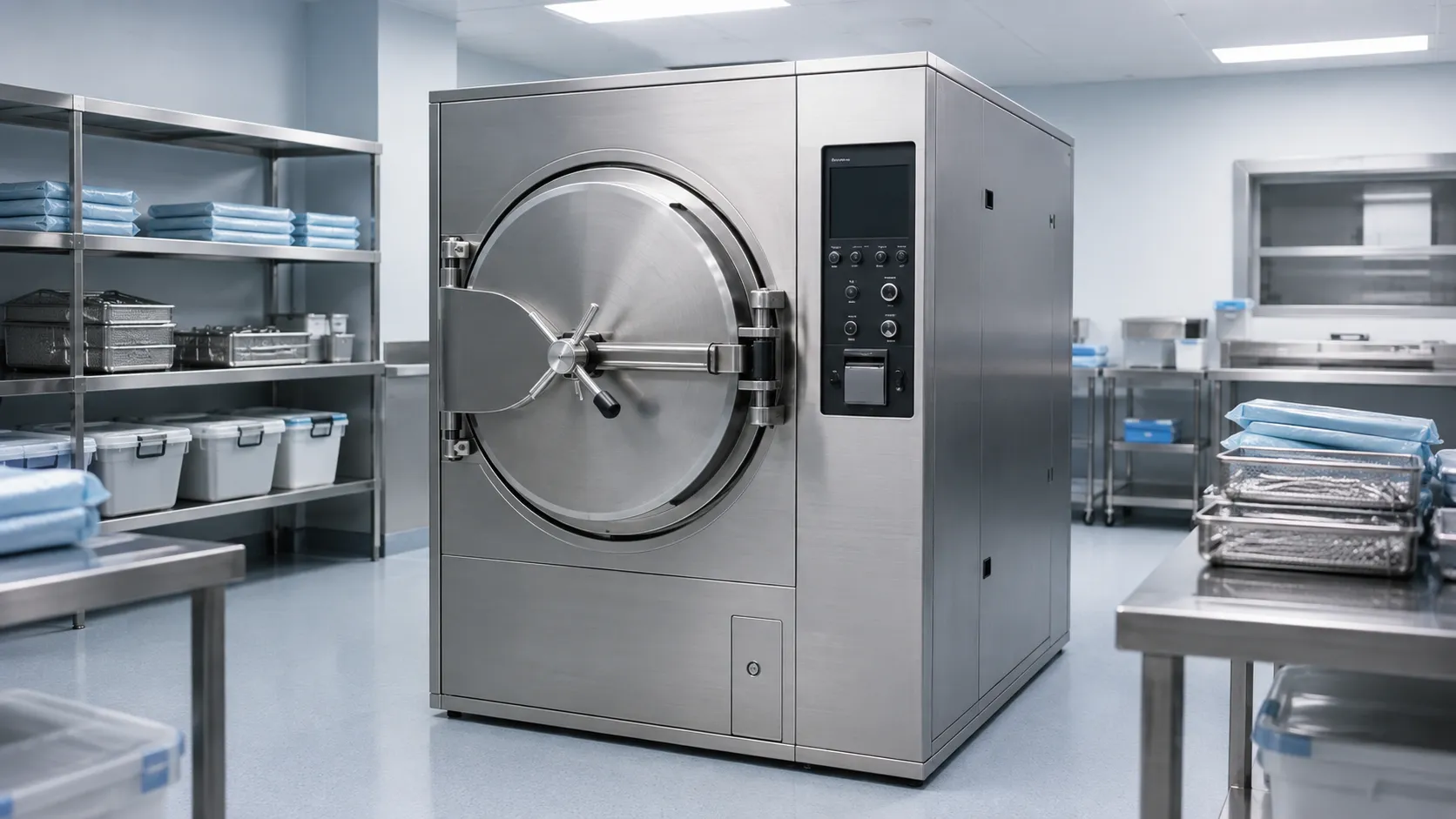
2. Double-door pass-through washer disinfectors
Load on the dirty side and unload on the clean side, supporting a one-way workflow through a barrier. Central to a well-separated decontamination layout.
3. High-capacity washer disinfectors
Larger chambers processing more instruments per cycle for busy central departments. Match capacity to peak workload rather than average.
4. Washer disinfectors for hollow instruments
Provide connections that flush water through lumened instruments, essential for items a spray alone cannot clean internally.
5. Washer disinfectors with process recording
Record cycle parameters for each load as part of the quality record. Confirm how records are retrieved and retained.
6. Compact washer disinfectors
Smaller machines for departments and clinics reprocessing lower volumes, where a central-scale machine is unnecessary.
7. Washer disinfectors for specialist instruments
Configured for particular instrument sets with dedicated carriers and cycles. Confirm the cycles suit your instruments.
8. Machines with automated load handling
Add automation for loading and transfer in high-throughput departments, reducing manual handling. Space and integration are the planning factors.
9. Washer disinfectors with independent water treatment
Pair with a water treatment arrangement delivering the required final rinse quality where the mains supply does not.
10. Machines with detailed cycle control
Offer configurable cycles for different instrument types, giving flexibility across a varied workload under validated parameters.
Siting, throughput and the decontamination flow
A washer disinfector is part of a flow that runs from dirty receipt through cleaning and disinfection to inspection and sterilisation, so its placement shapes the whole department. A pass-through machine set into a barrier supports one-way movement from dirty to clean, which is central to a well-designed decontamination layout. Throughput must match the department's workload at its busiest, since a machine that becomes a bottleneck at peak times holds up everything downstream. Utilities matter too: water supply and treatment, drainage, power, and the service access the machine needs should be confirmed with estates before installation, and the route to bring the machine into the room should be checked, since these units are substantial.
What to confirm before ordering
-
Load carriers. Confirm carriers suit your instruments, including hollow and jointed items.
-
Capacity. Match chamber capacity and cycle time to peak workload.
-
Water quality. Establish the final rinse water requirement and treatment needed.
-
Chemistry. Confirm compatibility of detergents and process chemicals, and their supply.
-
Records. Establish a cycle of recording, retrieval, and retention.
-
Utilities and access. Verify water, drainage, power, service access and the delivery route.
Validation, training and servicing
Validation demonstrates that the machine cleans and disinfects to the required standard, and it is a defined process performed at commissioning and repeated at intervals, with records kept. This is central to reprocessing, not an optional check, and it should be planned in collaboration with the relevant decontamination expertise.
Training should cover correct loading, carrier selection, chemistry handling, cycle selection and reading the process record. Correct loading is a frequent cause of cleaning failure, so it deserves emphasis.
For servicing, agree planned maintenance, cycle verification, water treatment maintenance, spray arm and connection checks and electrical and safety testing. Ensure the department receives device alert notifications so field safety notices reach the decontamination and estates teams.
Utilities, water treatment and the delivery route should be confirmed with estates before installation. Departments planning reprocessing can work through options via buyer support services.
Final thoughts
Specify the washer disinfector around its load carriers, water and chemistry, and place it within a decontamination flow that separates dirty from clean. Confirm capacity against peak workload, plan utilities and access with estates, and treat validation and correct loading as central to the result rather than afterthoughts.
This article provides general procurement guidance for healthcare organisations. It is not clinical or decontamination practice advice, and it does not replace manufacturer instructions, decontamination standards or expert advice.