Air handling in a healthcare building is usually the province of the ventilation system. Still, standalone and supplementary air purification has a role where fixed ventilation cannot easily be changed or needs support. The value of any unit depends on matching it honestly to the room and the purpose, since a device that looks impressive but moves too little air for the space achieves little.
The ten system types below cover portable, fixed and supplementary provision. Each entry explains its role and what to confirm before purchase, always alongside, not instead of, professional ventilation advice.
Filtration, air movement and the room
Two things determine whether a purifier helps: what it removes and how much air it moves. High-efficiency particulate filtration captures fine particles, and the effective clean air delivery for the room size determines how many times the air is treated in an hour. A unit rated for a small room does little in a large one, so the match to room volume is the honest measure rather than the headline filter grade.
The purpose shapes the specification. Supporting general air quality, providing supplementary treatment in a clinical area, or managing a specific situation each call for different capability, and the facilities and infection prevention teams should define the purpose before a unit is chosen.
The ten system types
1. Portable high-efficiency particulate air units
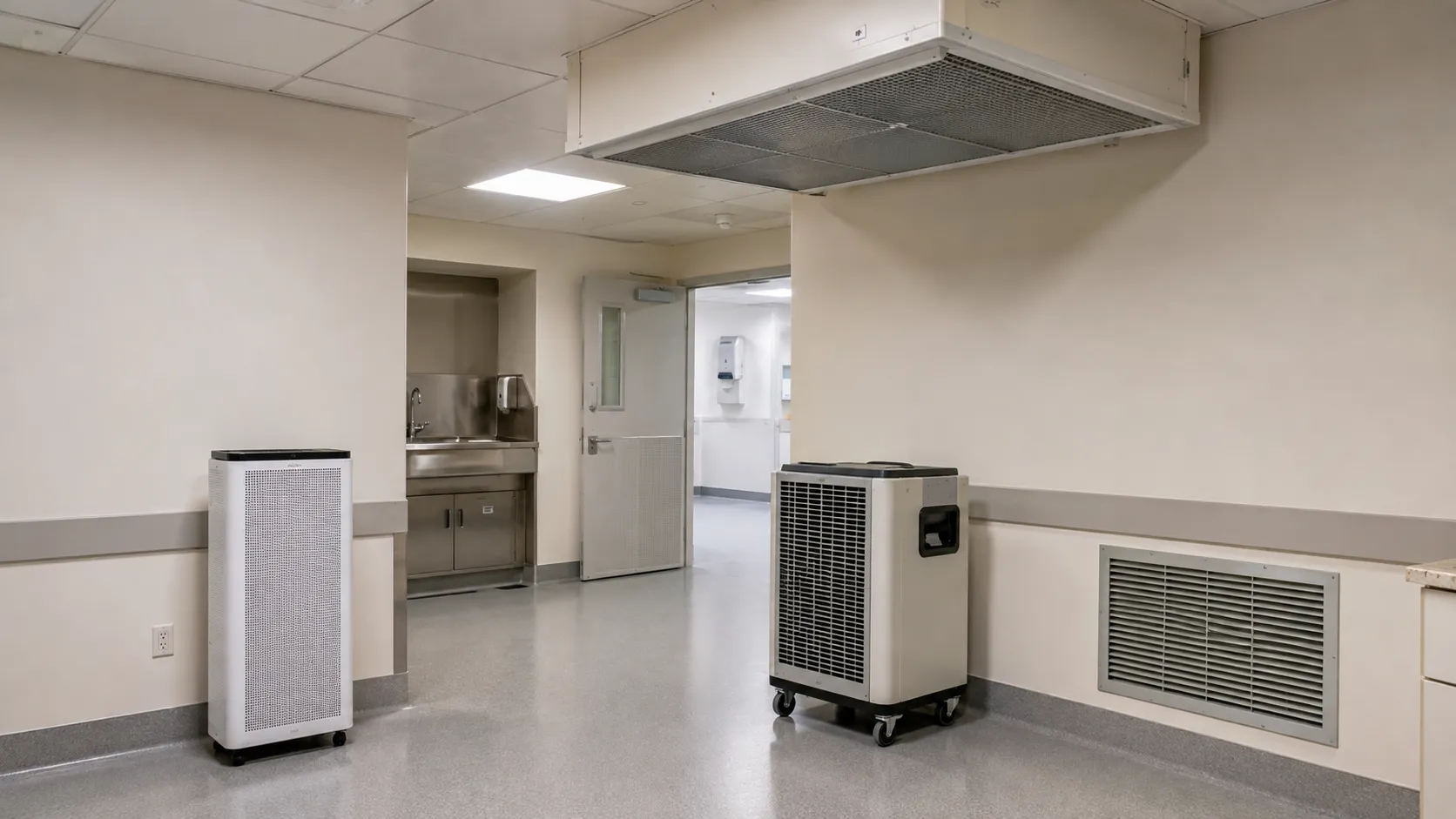
Freestanding units drawing air through a high-efficiency filter, movable between rooms. Effective clean air delivery to the room is the key measure.
2. Units with pre-filter and multi-stage filtration
Combine a pre-filter with the main filter to extend the main filter's working life and to handle larger particles first. Filter replacement is an ongoing requirement.
3. Units with activated carbon stages
Add a carbon stage to remove odours and certain gases, alongside particulate filtration. Confirm the intended purpose against the carbon capacity.
4. Units with ultraviolet stages
Include an internal ultraviolet stage in the treatment. Confirm how the stage is contained and maintained, and how its lamp is replaced.
5. Ceiling-mounted purification units
Fixed units that free floor space and treat air from height, suited to rooms where a portable unit is impractical.
6. In-duct supplementary units
Fit within existing ductwork to add treatment to the existing ventilation. Compatibility with the system is essential and needs specialist input.
7. Units with air quality monitoring
Include sensors that display air quality and adjust output accordingly. Confirm what is measured and how it is interpreted.
8. Quiet units for occupied clinical areas
Designed for lower noise so they can run in occupied rooms without disturbance. Ask for measured sound levels at working output.
9. High-capacity units for larger spaces
Move more air for waiting areas and larger rooms. Match the clean air delivery to the actual room volume rather than the label.
10. Units for specific clinical situations
Configured for particular supplementary needs under professional guidance, as part of a wider infection prevention approach rather than a standalone solution.
Siting, noise and honest expectations
A purifier only treats the air that passes through it, so siting affects how well it works. Position units where air can circulate to and from them, rather than tucking them into a corner behind furniture, and avoid placing them where the outlet blows directly at people for long periods. Noise is the factor that determines whether a unit stays switched on: a device too loud for an occupied room gets turned down or off, undermining its purpose, so measured sound at working output levels matters. Above all, expectations should be honest. Supplementary purification supports good ventilation and infection prevention; it does not replace them, and any purchase should be guided by advice from the facilities and infection prevention teams rather than treated as a complete answer.
What to confirm before ordering
-
Clean air delivery. Confirm the effective air treatment matches the room volume.
-
Filtration. Establish the filter grades, stages and replacement requirements.
-
Purpose. Confirm the intended purpose with facilities and infection prevention teams.
-
Noise. Ask for measured sound levels at working output.
-
Consumables. Confirm filter and lamp supply and replacement intervals.
-
Siting. Check placement allows air to circulate to and from the unit.
Maintenance, monitoring and servicing
Filters are the consumable that determines whether a purifier keeps working, and a clogged or overdue filter quietly reduces performance. Establish the replacement schedule and supply from the start, and record filter changes so they are not forgotten.
Where units include monitoring, confirm how readings are interpreted and who acts on them, so the display informs action rather than sitting ignored.
For servicing, agree filter and lamp replacement, electrical safety testing, fan and airflow checks and performance verification. Ensure the facility receives medical device safety alerts so any relevant field safety notices reach the facilities team.
Clean air delivery should be honestly matched to the room, with input from facilities and infection prevention. Facilities comparing units can check current options with verified suppliers.
Final thoughts
Choose air purification honestly, matching clean air delivery to the room, defining the purpose with facilities and infection prevention teams, and treating it as support for good ventilation rather than a replacement. Confirm filtration, noise, and consumable supply, and build filter replacement into a recorded schedule from the installation date.
This article provides general procurement guidance for healthcare organisations. It is not clinical or ventilation engineering advice, and it does not replace manufacturer instructions or expert advice on ventilation and infection prevention.