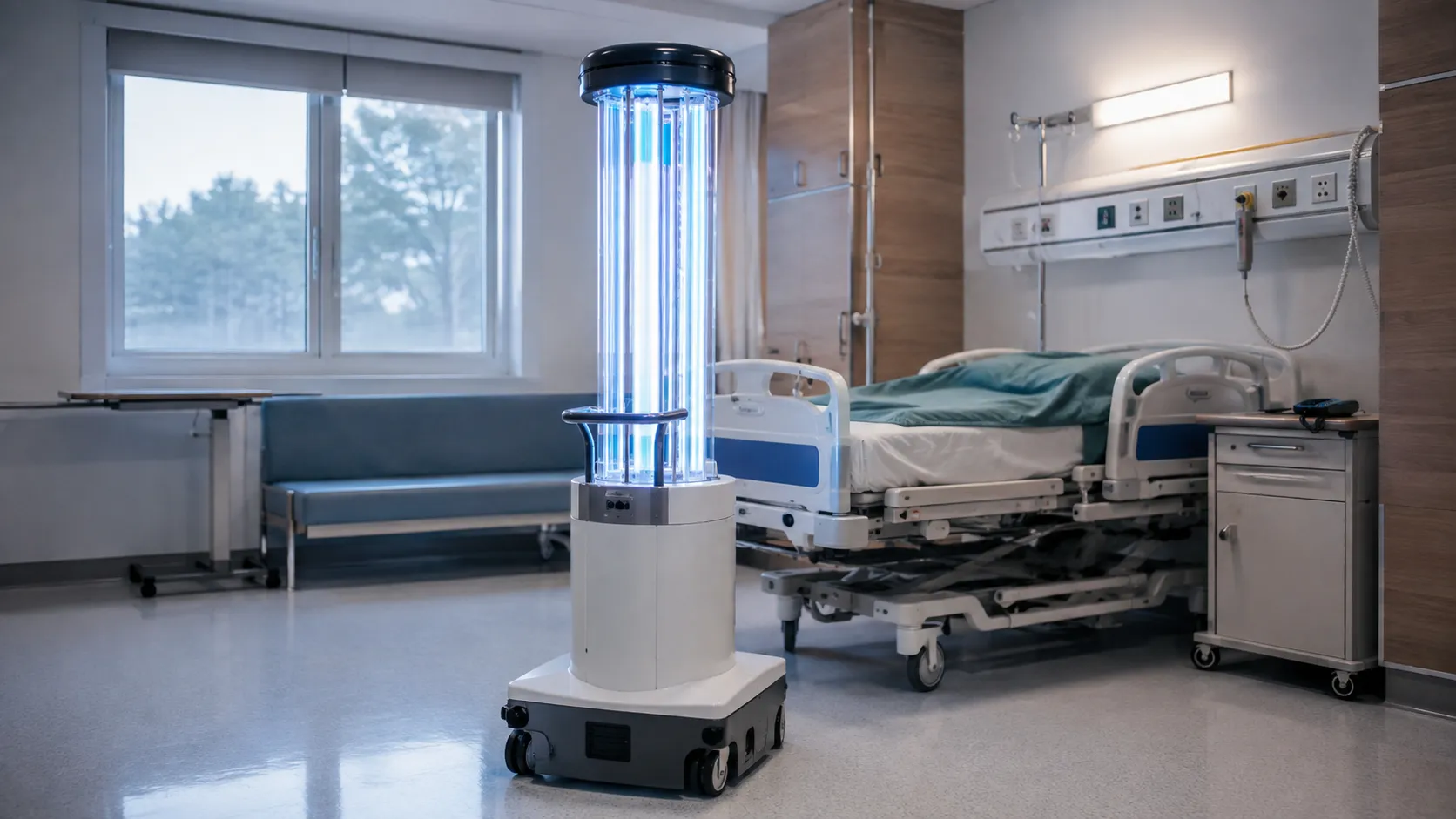
UV disinfection, sometimes called ultraviolet room decontamination, adds a terminal step after manual cleaning, using ultraviolet energy to treat surfaces a wipe may have missed. It supports, and never replaces, thorough manual cleaning, and its usefulness depends on line of sight, cycle placement and a disciplined workflow. A device that cannot reach shadowed surfaces, or is awkward to deploy between patients, delivers less than its specification suggests.
The ten device types below cover mobile, fixed and supplementary provision. Each entry explains its role and what to confirm before purchase.
Line of sight, coverage and manual cleaning first
Ultraviolet energy works where it reaches, so shadowed and hidden surfaces receive less treatment. This is why manual cleaning must come first and why device placement, sometimes with more than one position per room, matters. Coverage is a function of the room, the device output and the positions used, not the device alone.
The workflow around the cycle is as important as the technology. A room must be vacated, the cycle run safely, and the room returned to use, all within the turnaround the ward needs. A device that decontaminates well but takes too long or is hard to deploy will be used less than intended.
The ten UV disinfection device types
1. Mobile tower units
Wheeled ultraviolet towers positioned in a room to run a cycle, then moved on—the configuration is for flexible use across a site.
2. Units with multi-position guidance
Guide the operator to run the cycle from multiple positions to improve coverage in shadowed areas of a room.
3. Units with coverage measurement
Measure delivered energy at points in the room to confirm the cycle reached them, supporting confidence in the result.
4. Units with safety motion detection
Halt the cycle if movement is detected in the room, an important safety feature given the energy involved.
5. Compact and lightweight units
Easier to move and store, suited to sites needing to deploy a device quickly across many rooms.
6. High-output units for larger rooms
Provide the output needed to treat larger spaces within a workable cycle time. Match output to the rooms in use.
7. Units with cycle recording
Record each cycle, including the duration and any interruptions.
8recordedoom-installed systems
Installed within the room for repeated use, suited to areas that are decoratively. In decontaminated installations, planning factors are decontaminating and interlocks.
9. Units with remote start and monitoring
Allow the cycle to be started and monitored from outside the room, keeping the operator safely clear of the energy.
10. Elementary units within a cleaning programme
Used as one part of a wider cleaning and infection prevention programme rather than a standalone measure, under the infection prevention team's direction.
Safety, workflow and turnaround
Safety governs how these devices are used, because the energy involved requires people to be out of the room during a cycle. Motion detection, clear signage, controlled access and a defined operator procedure all protect staff and patients, and the arrangements should be agreed with the infection prevention team before deployment. Workflow then decides whether the device earns its place. The cycle sits within room turnaround, so the time to prepare the room, run the cycle and return it to use must fit the ward's needs. A realistic view of turnaround, and of how many rooms one device can serve in a session, prevents the disappointment of a capable device that cannot keep pace with demand.
What to confirm before ordering
-
Coverage. Confirm how coverage is achieved, including multi-position use for shadowed areas.
-
Cycle time. Establish the cycle duration against room turnaround needs.
-
Safety features. Confirm motion detection, access control and operator procedure.
-
Recording. Establish cycle recording and how records are retrieved.
-
Deployment and check ease and how devices are handled. Confirm how many devices are serviceable. Confirm lamp life and replacement arrangements.
Training, validation and servicing
Training should cover manual cleaning first, safe deployment, running the cycle, the safety procedure and recording. The point that ultraviolet treatment supplements rather than replaces cleaning needs to be understood by every operator.
Validation and monitoring, where the device measures delivered energy, support confidence that a cycle achieved its intent. Agree with the infection prevention team how results are used and recorded.
For servicing, agree lamp replacement, output verification, motion detection testing and electrical safety testing, since lamp output declines over time. Ensure the organisation receives the MHRA device alerts service so any field safety notices reach the infection prevention and estates teams.
Cycle time and safety arrangements should be agreed with the infection prevention team before deployment. Services comparing devices can discuss requirements with the team at Medigear.uk.
Final thoughts
Treat ultraviolet decontamination as a terminal step after manual cleaning, chosen around covebascyclend a safe, workable turnaround. Confirm the safety features and lamp maintenance, agree the workflow with the infection prevention team, and set realistic expectations of how many rooms a device can serve.
This article provides general procurement guidance for healthcare organisations. It is not clinical or infection prevention advice, and it does not replace manufacturer instructions or the direction of the infection prevention team.