A tracheostomy is a surgically created opening in the front of the neck, through the trachea, into which a tube is placed so a patient can breathe with the upper airway bypassed. It is used when the natural airway is blocked, unsafe or needs long-term mechanical support, and it can be temporary or permanent. The opening itself, the stoma, is only the starting point: safe care depends on a chain of supporting equipment for suction, humidification, securing and monitoring the tube.
For a procurement lead or biomedical engineer, the buying question is rarely a single tube. It is the whole bedside ecosystem: the stock, the supply, and the servicing behind it. This guide explains what a tracheostomy is, the two main ways it is formed, and the equipment categories a facility needs to stock to look after tracheostomised patients well.
Why a tracheostomy is performed
Tracheostomies are formed for a handful of broad reasons: to bypass an obstruction above the level of the trachea, to allow prolonged mechanical ventilation without an oral tube, to protect the lower airway where swallowing is unsafe, and to make long-term secretion clearance manageable. Critically ill patients on extended ventilation are a large group, as are people with certain head and neck conditions and some neurological disorders. Whether the tracheostomy is a short-term measure during recovery or a lifelong arrangement shapes the tube type chosen and the consumables the ward will get through.
How a tracheostomy is formed: the two main approaches
Percutaneous dilational tracheostomy
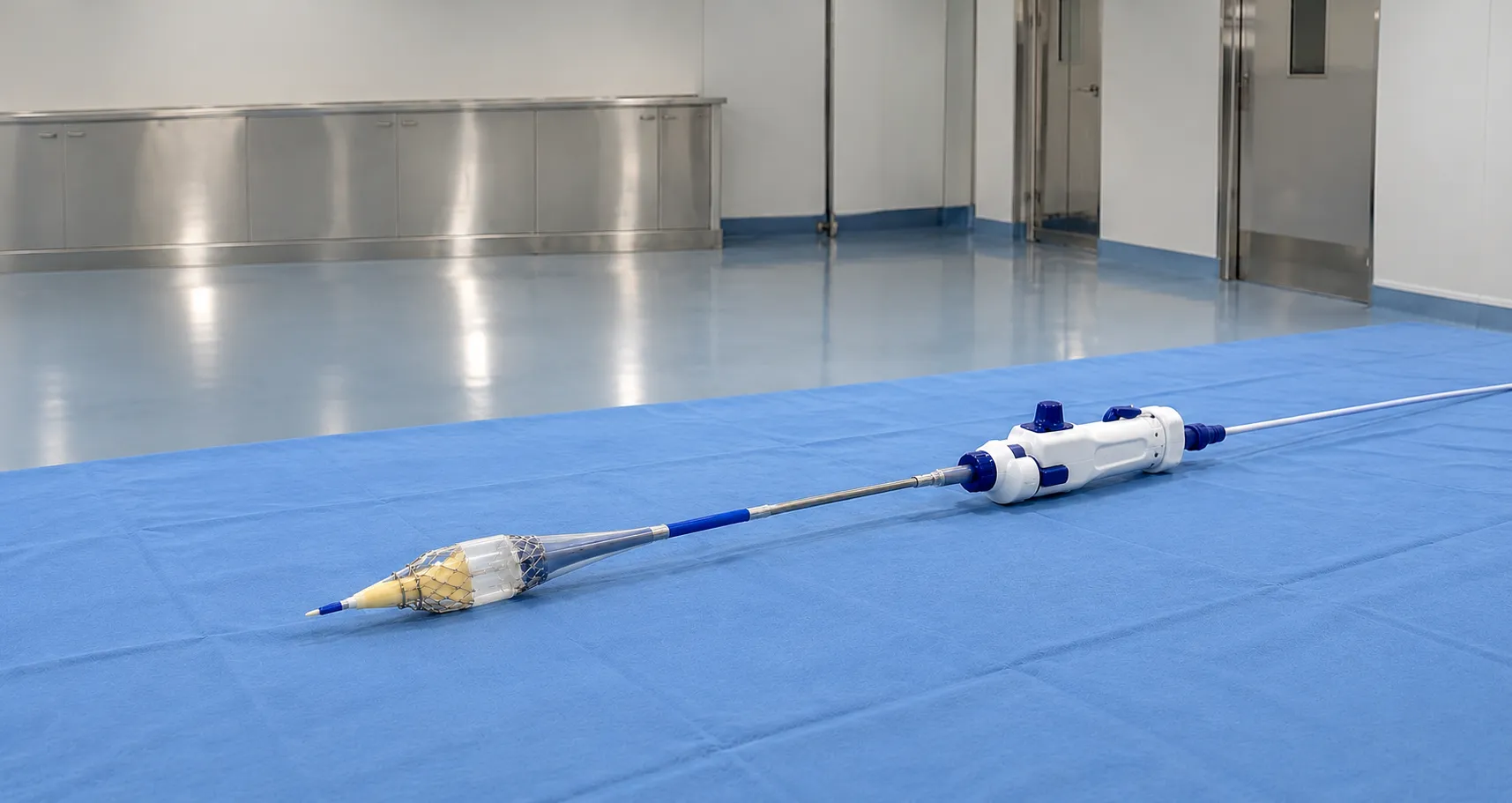
Percutaneous tracheostomy is usually carried out at the bedside in critical care. A needle is passed between the tracheal rings, a guidewire is fed through, and the tract is progressively widened with dilators until the tube can be introduced, often under bronchoscopic view to confirm placement. It avoids a trip to theatre, is quick in experienced hands, and is the common route for ventilated intensive-care patients. The kit is typically a single-use procedure pack containing the introducer needle, guidewire, dilator and loaded tube.
Surgical (open) tracheostomy
A surgical tracheostomy is performed in an operating theatre through a small incision, with the tissue layers dissected and an opening made in the tracheal wall under direct vision. It is preferred where the anatomy is difficult, in some paediatric cases, and where a controlled, formally sutured stoma is wanted. It draws on standard theatre instrument sets, tracheal dilators and retractors rather than a pre-packed percutaneous kit. The distinction matters to a buyer because the two routes stock quite differently: one leans on procedure packs, the other on reusable instrument trays and theatre consumables.
The supporting equipment ecosystem
Once a tube is in, safe care rests on several equipment groups working together.
Suction and secretion clearance
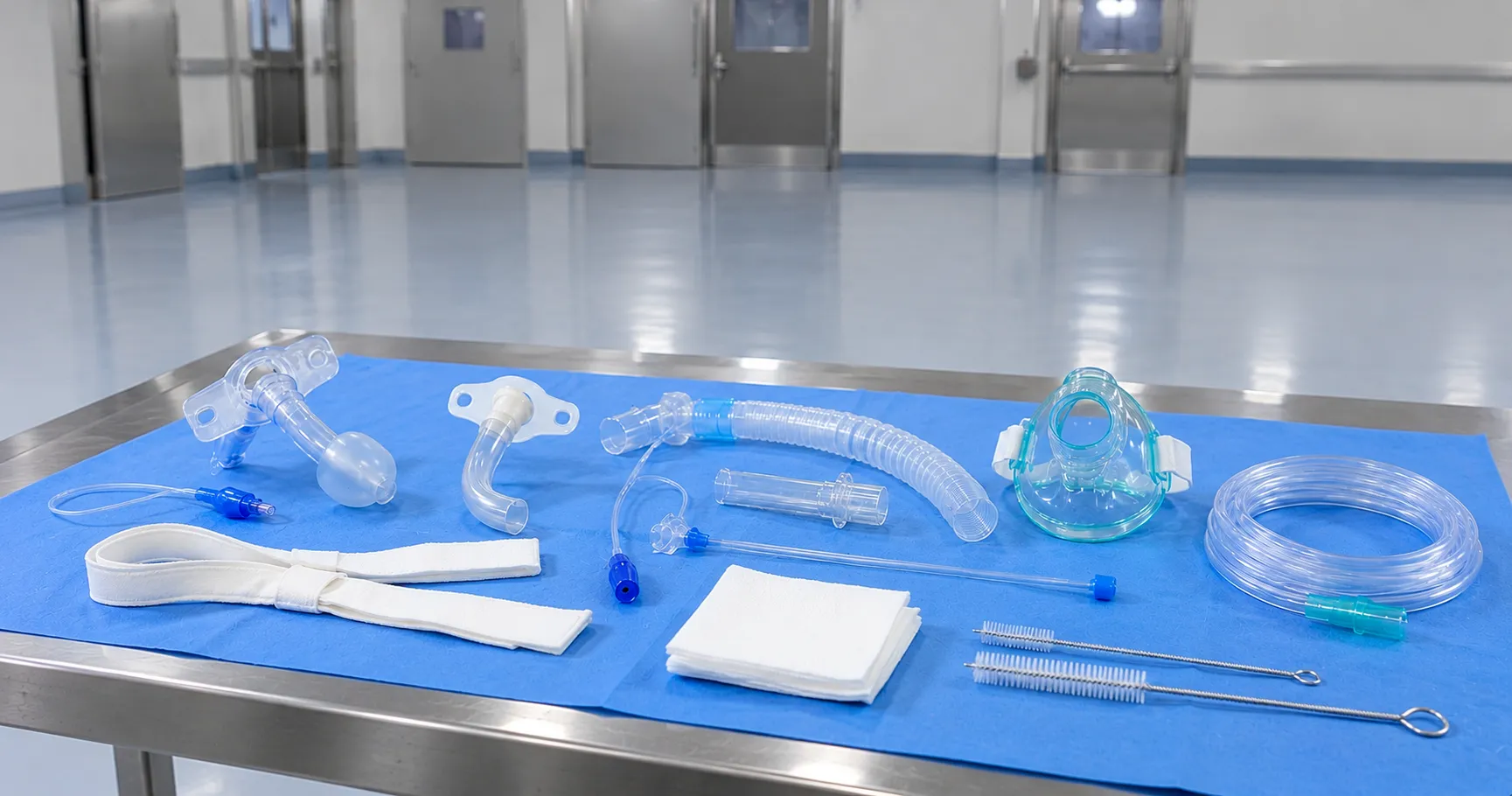
Because the tube bypasses the nose and mouth, the patient cannot clear secretions normally, so suction is fundamental. Wards need a reliable suction source, a properly sized catheter, and often a closed in-line suction system for ventilated patients to keep the circuit sealed. Yankauer suckers handle oral secretions above the cuff.
Humidification and oxygen delivery
The upper airway normally warms and moistens inspired air; a tracheostomy removes that function, so gas must be humidified to stop secretions drying and blocking the tube. Options range from heat and moisture exchangers to heated humidifiers, along with tracheostomy masks and connectors for supplemental oxygen.
Securing, dressings and skin care
Tubes are held with adjustable ties or a holder, and the stoma is protected with a keyhole dressing that manages moisture and guards the skin. Barrier products and correctly sized dressings reduce the risk of pressure damage and stoma breakdown.
Emergency and bedside provision
Every tracheostomy patient should have equipment immediately available for the two feared events: a blocked or a dislodged tube. National safety guidance is built around a bedside emergency box holding spare tubes of the same size and one smaller, a tracheal dilator or equivalent, suction and a means of re-establishing the airway. Clear bedhead signage stating the tube type and whether the upper airway is patent, plus a documented emergency algorithm, are part of the standard. When specifying ward stock, buyers should build these emergency items into the picture rather than treating them as an afterthought, because availability is what makes the difference in a crisis.
Care settings and how needs change
Requirements shift across settings. In critical care, tubes are usually cuffed and often connected to ventilators, with closed suction and heated humidification. On general wards and in step-down, patients may move to uncuffed or fenestrated tubes as they progress toward decannulation. In the community and at home, carers and patients manage routine suction, cleaning and tube changes with simpler humidification and a domiciliary supply of consumables. Paediatric care uses smaller tube sizes and places greater emphasis on humidification and vigilance. Each setting has a different consumable profile, which is central to forecasting stock and total cost of ownership.
Monitoring, cuff care and decannulation
Care does not stop once the tube is secured. Patients are monitored with oxygen saturation and, where ventilated, capnography, and cuffed tubes need cuff pressure checked with a manometer to keep the seal within a safe range that holds without overpressurising the tracheal wall. As a patient improves, a structured weaning and decannulation pathway may use cuff deflation, downsizing to a smaller tube, capping trials and speaking valves, each needing its own accessories. The consumable load shifts across this journey, heavy early suction and humidification giving way to lighter later use, so forecasting stock along the pathway helps a service budget realistically and avoid both shortages and overstock.
Standards, regulation and decontamination
Tracheostomy tubes and airway accessories are medical devices that must carry valid UKCA or CE marking with a declaration of conformity and clear instructions for use; the MHRA oversees them. UK dimensions follow the ISO 5366 series, with airway connectors using the standard 15 mm and 22 mm fittings, which underpins compatibility with ventilators, catheter mounts, and humidification. Much of the associated equipment, including many procedure-pack components and suction catheters, is single-use and must not be reprocessed; reusable theatre instruments used for open tracheostomy are decontaminated to national standards. Broader safety and service guidance is published on GO: UKK and in NICE clinical guidance; clinicians should confirm certification and single-use status before committing to a line.
Procurement checklist
-
Decide whether you are stocking for percutaneous, surgical or both routes.
-
Confirm UKCA or CE marking and instructions for use on every device line.
-
Check tube sizing conforms to ISO 5366 and connectors are standard 15 mm.
-
Specify suction, humidification and securing consumables as a matched set.
-
Build bedside emergency provision, spare tubes and a dilator, into ward stock.
-
Clarify single-use status and never plan to reprocess single-use items.
-
Match consumable profiles to your settings: critical care, ward, community.
-
Agree on supply reliability and lead times so bedside stock never runs short.
Conclusion
A tracheostomy is far more than an opening and a tube; it is a system of care that works only when suction, humidification, securing, monitoring, and emergency provision are all in place. Understanding whether the stoma was formed percutaneously or surgically, and how needs differ across critical care, the ward and the community, lets a buyer stock sensibly and forecast consumables honestly. Getting certification, sizing compatibility and single-use status right protects patients and controls cost. To scope a tracheostomy stock list for your service, contact our team or register as a buyer with MediGear.
Disclaimer
This article is for informational purposes only. It is published by MediGear (medigear.uk) for general information and procurement guidance. It is not clinical, diagnostic, treatment, technical, engineering, legal or regulatory advice, nor a product endorsement, guarantee or substitute for professional assessment. MediGear does not provide medical consultations. Buyers should consult their clinical, biomedical, estates and regulatory contacts, and he manufacturer's documentation, and independently verify all specifications, certifications, compatibility and suitability before purchase. Specifications, certifications and availability are correct at the time of publication and may change without notice. MediGear is a medical-equipment distributor and does not sell medicines or pharmaceutical products.