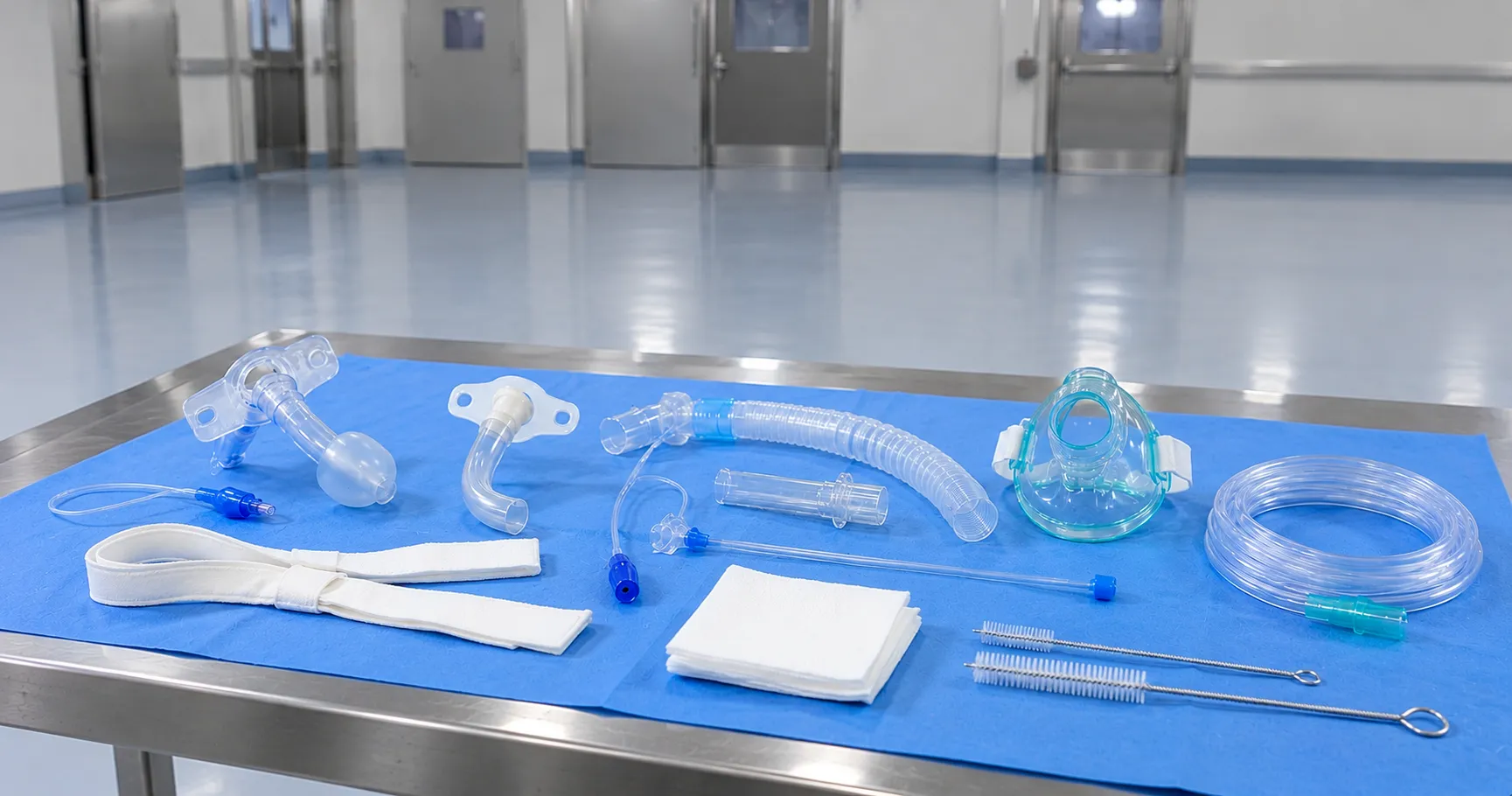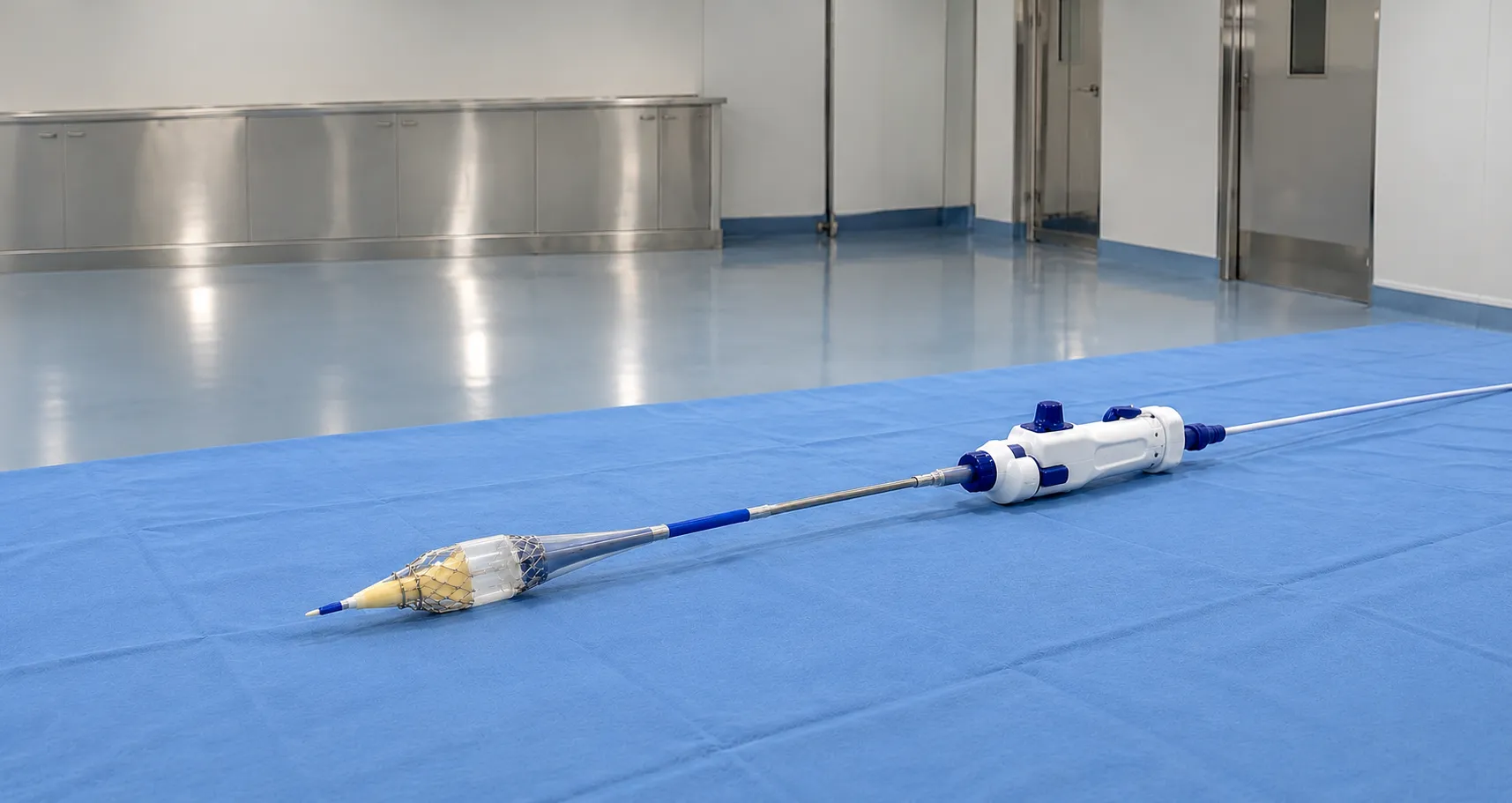

A chest tube insertion kit is a sterile, pre-packed tray that holds everything a clinician needs to place an intercostal drain at the bedside or in theatre, minus the drainage bottle and suction it will later connect to. The point of the kit is readiness: in a tension pneumothorax, a large haemothorax or an empyema, the team should be able to open one package and have the tube, the introducer, the local anaesthetic set, the blade, the fixation suture and the dressing all to hand, in date and sterile. This guide is about the kit itself — what goes in it, how sizes are chosen and how Seldinger and open surgical kits differ — rather than the drainage circuit it feeds.
For a procurement lead, the kit is a consumable decision with real clinical weight. Getting the contents, sizes and sterility right means a critical-care team never has to scavenge components across a resus room while a patient decompensates.
What a chest tube insertion kit contains
Contents vary by manufacturer and by whether the kit is a Seldinger or an open surgical type, but a typical bedside kit brings together a predictable list. Expect the drain itself, an introducer appropriate to the technique, a scalpel with a fixed or detachable blade, a syringe and needles for local anaesthetic infiltration, artery forceps or a blunt dissector for the open method, a connector to the drainage tubing, a heavy fixation suture with needle, a scalpel-safe blade holder or sharps guard, gauze, drapes and a dressing. Many kits also include a three-way tap or a one-way flutter valve, a specimen pot, and an instruction card. The value isn't a single item; it's that they arrive matched, sterile, and complete.
Seldinger kits versus open surgical kits
Two techniques drive two kit designs, and the difference matters when you specify stock. A Seldinger kit supports a guidewire method: a needle enters the pleural space, a soft J-tipped guidewire passes through it, the track is dilated over the wire, and a small-bore drain is railroaded into place. Its kit therefore includes the introducer needle, guidewire, one or more dilators, and a small-bore catheter, usually with a locking pigtail. An open surgical kit supports blunt dissection: an incision is made, forceps spread a track through the muscle and pleura, and a larger-bore straight tube is guided in by finger and clamp. Its kit carries a scalpel, curved forceps and a large-bore drain, but no wire or dilators. Seldinger kits suit small and moderate collections and are gentler; open kits suit large haemothoraces, thick empyema and trauma where a wide-bore tube is needed.
Small-bore versus large-bore
Bore is the headline specification. Small-bore drains, broadly in the 8–14 French range, are typical of Seldinger kits and drain air and thin fluid well with less patient discomfort. Large-bore drains, often 20–32 French, are the province of open kits and are chosen where blood or thick pus would block a narrow lumen. Because the two are not interchangeable, most units stock both kit families rather than trying to make one cover every case.
Sizing and how tube gauge is chosen
French gauge measures the outer tube's circumference; a higher number means a wider drain. The clinical logic is straightforward: air and serous fluid pass a fine catheter, while clotting blood and viscous empyema demand a wide lumen that resists blockage. Paediatric practice runs to smaller gauges again, so a service treating children needs kits scaled accordingly rather than adult tubes used off-label. When you compare kits, check the exact French sizes offered, the tube length and marking, the presence of radiopaque lines and a sentinel eye, and whether the drain is straight or a locking pigtail. These details decide whether one product range can cover your case mix.
Sterility, packaging and shelf life
Every insertion kit is a sterile single-use device, and the packaging is part of the safety case. Look for an intact, clearly dated sterile barrier, an easy aseptic-presentation peel or wrap, and a layout that lets the operator work without contaminating the field. Because these kits are opened under time pressure, a logical tray sequence and a printed contents list reduce fumbling. Confirm the sterilisation method stated by the manufacturer, the expiry dating and the batch traceability, and never reprocess a single-use kit. Storage matters too: kits held in resus rooms, wards and theatres must be rotated so nothing expires.
Standards, regulation and traceability
Chest tube kits are sterile single-use medical devices and must carry valid UKCA or CE marking, with the manufacturer’s use supplied. In the UK, the MHRA is the regulator, and its field-safety notices are worth monitoring for any recall affecting a kit you stock. Because insertion involves sharps and body fluids, safe handling and sharps disposal fall under the HSE framework, so a good kit includes a sharps-safe blade solution. Keep batch numbers against the patient record for traceability, and retain the instructions for use with your procurement documentation.
Care settings and how demand differs
Where a kit you use is a kit you buy, emergency departments and major trauma centres need both Seldinger and large-bore open kits immediately available, because the presenting problem — a tension pneumothorax versus a massive haemothorax — dictates the technique on the spot. Res: respiratory and day units handling recurrent effusions tend to favour large-bore Seldinger kits. Intensive care sits between the two. A district general hospital stocks a broad range in modest depth, while a specialist thoracic centre holds more of the larger sizes. Mapping stock to your actual case mix, rather than a generic list, keeps critical kits available without over-holding lines that rarely turn over.
Total cost, consumables and supply security
The unit price of a kit is only part of the picture. A complete kit that saves a team from opening three separate packs can be better value than a cheaper stripped-down tray. Weigh the cost against completeness, the reliability of the sterile barrier and the certainty of supply, because a stock-out in a critical case is the expensive failure. Standardising on one or two kit families across a site also simplifies training, since staff open a familiar tray every time. Think about the whole pathway too: the kit feeds a drainage bottle and, sometimes, suction, so confirm the connector fits the circuits you already run.
-
Confirm whether you need Seldinger, open surgical or both kit types for your case mix.
-
Check the exact French sizes, tube length, radiopacity,pigtail-versus-straight options.
-
Verify a sharps-safe blade or guard is included to meet safe-handling duties.
-
On delivery, check each insertion kit's sterile barrier kit expiry date and batch identifier before it enters stock.
-
Match the kit connector to your drainage bottles and suction circuits.
-
Stock paediatric-appropriate gauges separately if you treat children.
-
Rotate resus, ward and theatre stock so nothing expires unnoticed.
-
Confirm valid UKCA or CE marking and retain the instructions for use.
Conclusion
A chest tube insertion kit earns its keep in the moments a critical case allows no delay: one sterile package, complete and in date, that lets a team place a drain without hunting for parts. Choosing well means matching kit type and tube gauge to your case mix, insisting on a sharps-safe design and a sound sterile barrier, and securing dependable supply across every area that might need one. To build a chest-drain consumable pathway that suits your service, register as a buyer or contact the MediGear team.
Disclaimer
This article is for informational purposes only. It is published by MediGear (medigear.uk) for general information and procurement guidance. It is not clinical, diagnostic, treatment, technical, engineering, legal or regulatory advice, nor a product endorsement, guarantee or substitute for professional assessment. MediGear does not provide medical consultations. Buyers should consult their clinical, biomedical, estate, and regulatory contacts, and the manufacturer's domain, and independently verify all specifications, certifications, compatibility, and availability before purchase. Specifications, certifications and availability are correct at the time of publication and may change without notice. MediGear is a medical-equipment distributor and does not sell medicines or pharmaceutical products.