Acute care moves fast, and the emergency medicine devices behind it have to be ready the moment a patient arrives. From the defibrillator on the resuscitation trolley to the splint in the trauma bay, these are the devices an emergency team reaches for when time matters most.
What sets this equipment apart is not just what it does but that it must be immediately available, checked and working, because there is no time to source a missing device in an emergency. Thinking of it as a state of readiness, rather than a list, is the right frame for acute care.
The fifty emergency medicine devices below are grouped into five areas of ten by the job they do in an emergency, from resuscitation to diagnostics and support. Grouping them this way follows the priorities of acute care: airway and circulation first, then assessment and support. Grouping them this way follows the priorities of acute care, from airway and circulation to assessment and support.
How the fifty devices group
The devices fall into five areas: resuscitation and airway, monitoring and assessment, circulation and access, trauma and immobilisation, and diagnostics and support. Each area maps onto a priority in managing an acutely unwell patient.
Resuscitation and airway
Restoring breathing and circulation comes first in an emergency. This area supports resuscitation. Restoring breathing and circulation comes first, so this area is the heart of any resuscitation.
-
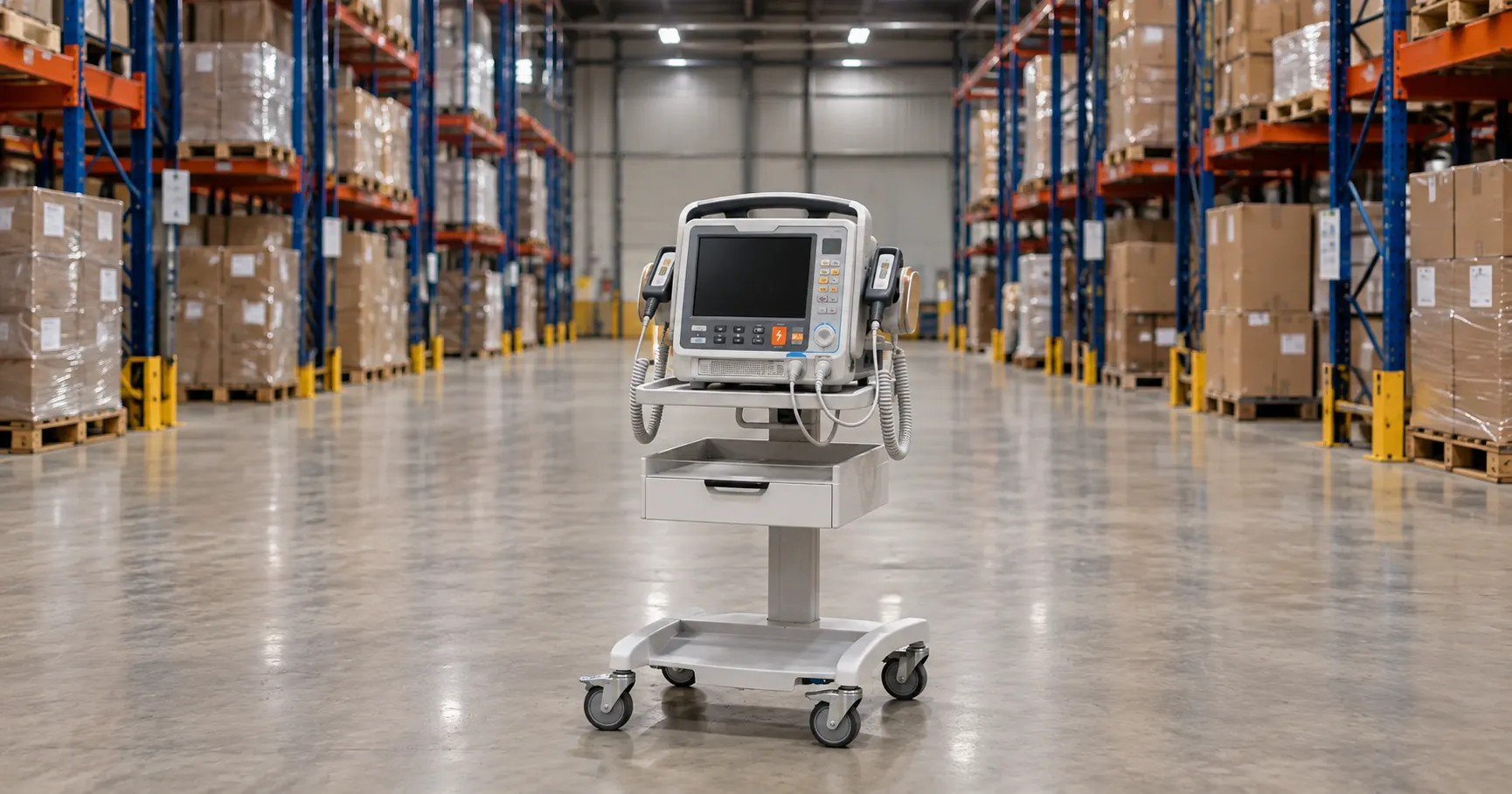
Defibrillators — restoring a normal heart rhythm.
-
Bag-valve masks — delivering rescue breaths.
-
Laryngoscopes — viewing the airway for intubation.
-
Endotracheal tubes — securing the airway.
-
Supraglottic airways — a rapid airway alternative.
-
Suction units — clearing the airway of fluids.
-
Oxygen delivery systems — supplying oxygen quickly.
-
Manual resuscitators — ventilating by hand.
-
Airway adjuncts — holding the airway open.
-
Capnography — confirming ventilation.
Monitoring and assessment
Fast, accurate assessment guides every decision. This area keeps the patient under close watch. Fast, accurate assessment guides every decision, so these devices are always to hand.
-
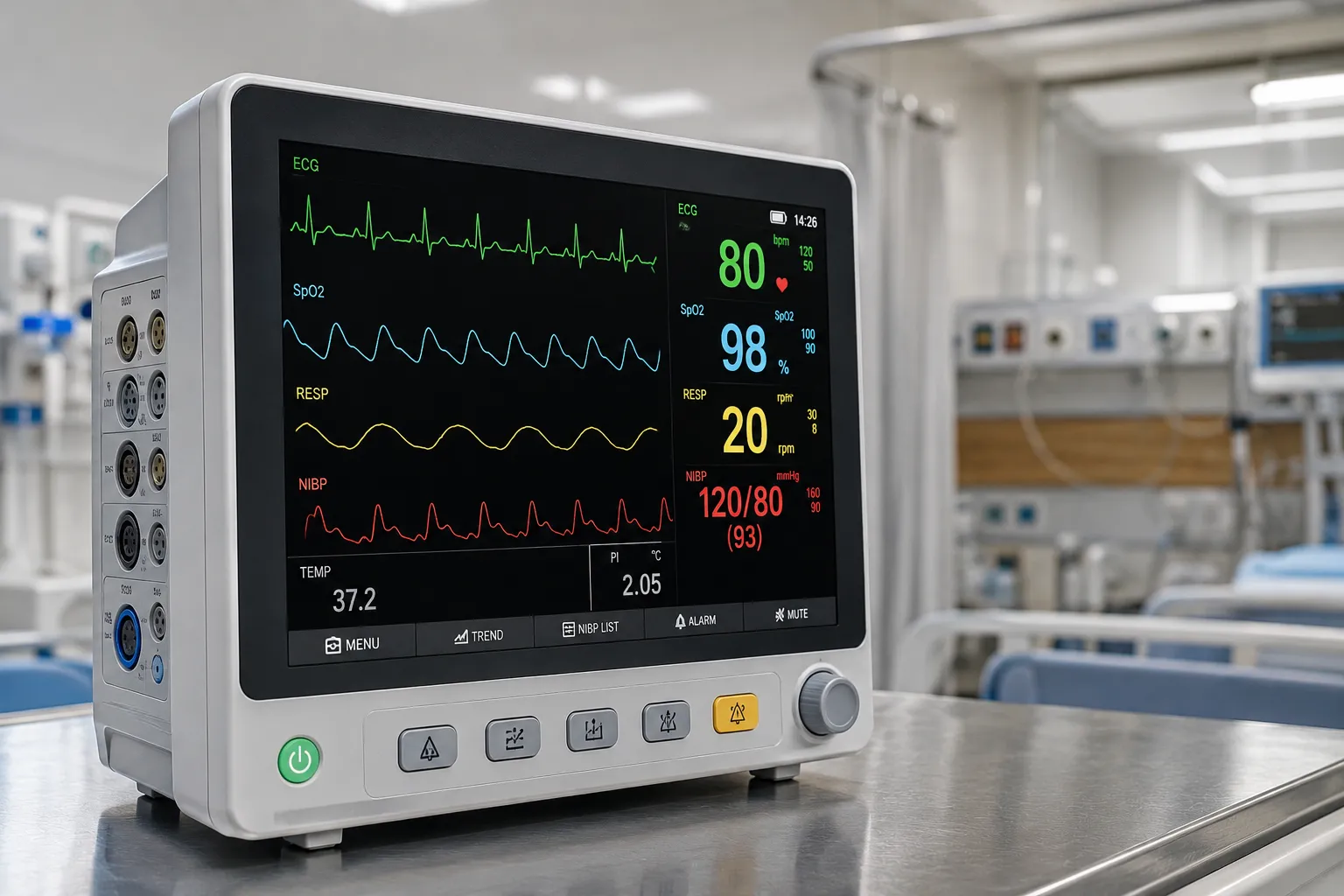
Multiparameter monitors — tracking vital signs at once.
-
Pulse oximeters — reading oxygen levels.
-
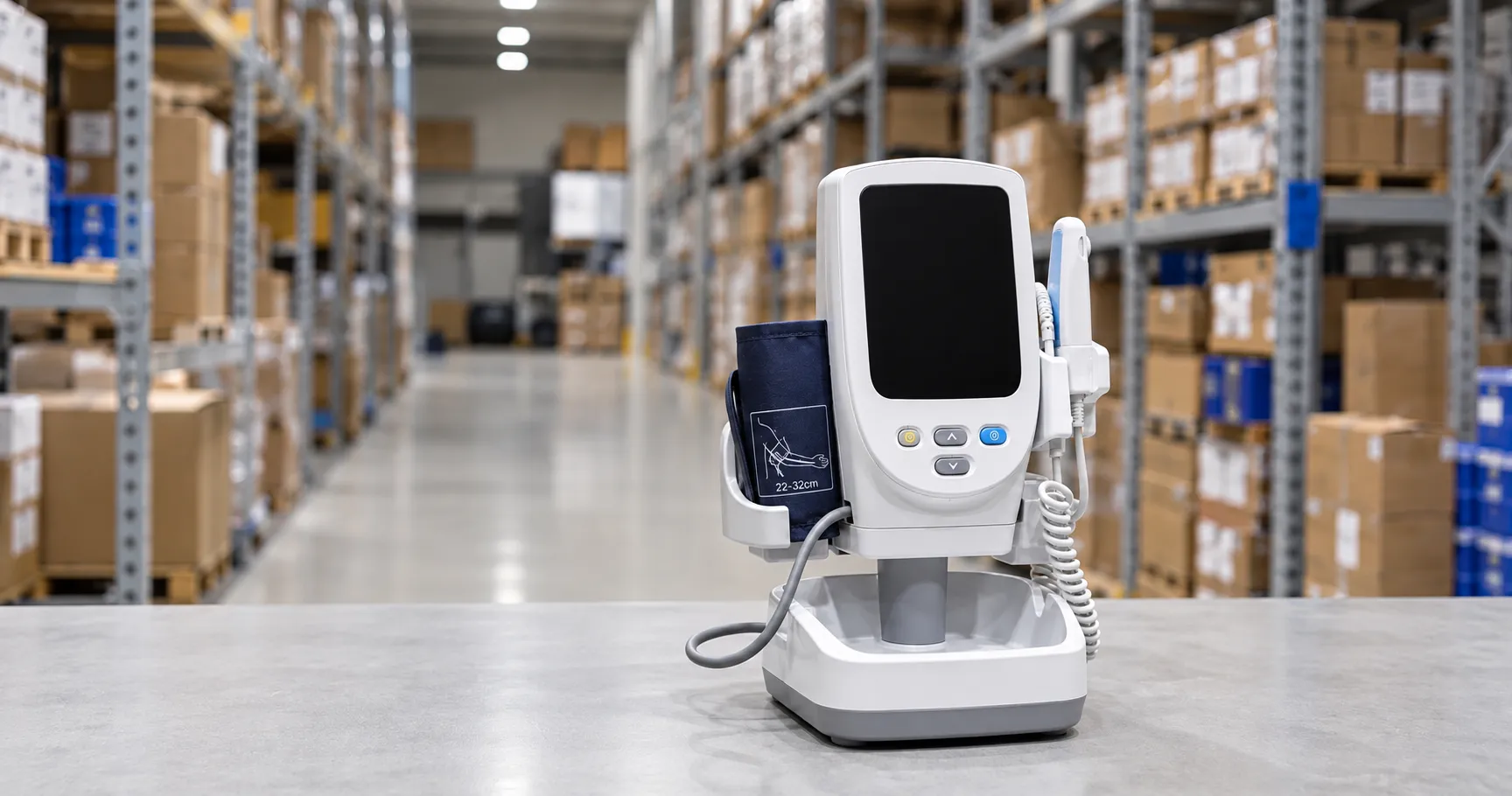
Blood pressure monitors — following blood pressure.
-
ECG machines — recording heart activity.
-
Temperature probes — measuring core temperature.
-
Blood glucose meters — checking glucose rapidly.
-
Blood gas analysers — reporting gases and pH fast.
-
Portable ultrasound — imaging at the bedside.
-
Cardiac monitors — watching rhythm continuously.
-
Vital signs monitors — quick rounds of observations.
Circulation and access
Getting fluids and drugs in quickly can be life-saving. This area supports access. Getting fluids and drugs in quickly can be life-saving, so access equipment is kept ready.
-
IV cannulae — gaining a vein for fluids and drugs.
-
Intraosseous devices — access when veins fail.
-
Infusion pumps — delivering fluids precisely.
-
Pressure infusers — giving fluids rapidly.
-
Fluid warmers — warming fluids before delivery.
-
Rapid infusion systems — high-volume resuscitation.
-
Central line kits — secure central access.
-
Tourniquets — controlling bleeding.
-
Blood administration sets — transfusing safely.
-
Syringe drivers — precise drug infusion.
Trauma and immobilisation
Injured patients need stabilising and protecting. This area supports trauma care. Injured patients need stabilising and protecting, so this area supports trauma from the first minutes.
-
Spinal boards — immobilising the spine.
-
Cervical collars — protecting the neck.
-
Vacuum splints — stabilising limbs.
-
Traction splints — managing femoral fractures.
-
Pelvic binders — stabilising the pelvis.
-
Scoop stretchers — lifting patients safely.
-
Head immobilisers — holding the head still.
-
Haemostatic dressings — controlling severe bleeding.
-
Chest drainage kits — treating chest injuries.
-
Wound closure supplies — closing wounds.
Diagnostics and support
Emergency care needs quick answers and steady support. This area rounds out acute care. Emergency care needs quick answers and steady support, so this area rounds out acute readiness.
-
Portable X-ray — imaging without moving the patient.
-
Point-of-care analysers — rapid bedside results.
-
Warming blankets — treating and preventing cold.
-
Patient trolleys — moving patients quickly.
-
Procedure lights — lighting emergency procedures.
-
Nebulisers — delivering inhaled treatment.
-
Examination lamps — supporting close assessment.
-
Diagnostic sets — examining ears and eyes.
-
Bladder scanners — checking retention quickly.
-
Crash carts — carrying emergency kit together.
Ready before the patient arrives.
The defining feature of emergency equipment is readiness, so daily checks, restocking, and clear location matter as much as the devices themselves. A defibrillator that is charged and to hand, a crash cart that is complete,e and a trolley that is stocked are what let a team act the moment a patient arrives rather than searching when seconds count. Building those checks into the daily routine is what keeps readiness real rather than assumed.
Planning acute care equipment
Acute care equipment is best planned around the emergencies a service actually sees, so its devices match its case mix and are duplicated where a single failure would be dangerous. Because readiness is everything, checking routines, restocking,g and clear storage are built into the plan alongside the devices. Services often find suppliers of emergency medical devices on Medigear.UK, chosen around the emergencies they see.
Reliability and familiarity are vital here, since staff must use this equipment under pressure without hesitation. Standardising devices and training the whole team means everyone reaches for the same equipment and uses it confidently when it matters. Reviewing the set against the emergencies actually seen keeps it matched to real demand.
Points to confirm before buying
-
Case mix. Match devices to the emergencies seen.
-
Redundancy. Duplicate critical devices.
-
Readiness. Build in checks and restocking.
-
Familiarity. Standardise and train the team.
-
Location. Store devices where they are needed fast.
When seconds count
In acute care, the difference between a good and a poor outcome is often measured in seconds, and equipment plays its part by being ready and familiar. A team that never has to think about where a device is, or how it works, can put all its attention on the patient, which is exactly why readiness and standardisation are treated as clinical priorities, not administrative ones.
Checking, not assuming
The quiet routine that keeps emergency equipment safe is the daily check: confirming the defibrillator is charged, the crash cart is complete, and the airway trolley is stocked. It is unglamorous work, but it is what stands between a team and an unpleasant surprise at the worst possible moment, which is why it is never left to chance.
The team behind the devices
Even the best emergency equipment only helps if the team can use it instinctively, so regular training and drills matter as much as the devices on the trolley. A team that has rehearsed together reaches for the right device without a word, and that shared fluency is itself part of the acute-care set-up.
Spares close at hand
Where space allows, keeping spares of the most critical devices near where they are used removes a dangerous single point of failure. A second laryngoscope, a backup monitor or a spare suction unit close by means a fault never becomes an emergency in itself, which is exactly the kind of resilience acute care is built on.
Servicing and safety
Emergency devices are used in the highest-stakes moments, so maintenance, daily checks and staff training are essential to keep them dependable, with resuscitation equipment checked to a strict routine. Staff should also know how to report a problem with a medical device to the MHRA if one is ever found faulty.
Acute readiness in short
Acute care depends on the right emergency devices being ready, checked and familiar the moment they are needed. Grouping the fifty devices by their job, planning for readiness and redundancy, a nd training the whole team turns a list into genuine preparedness. Ready this way, emergency medicine devices help a team give patients the best chance when it matters most. Ready,c checked, and familiar, they let a team act without hesitation. To plan acute-care readiness, it is simple to speak to Medigear.uk about equipping for acute care.
This article provides general procurement guidance for healthcare organisations and is not clinical advice; resuscitation and emergency practice always follow current guidelines and local policy.