A multidisciplinary rehabilitation centre brings physiotherapists, occupational therapists and other professionals together around one goal, and the rehabilitation devices they share are what turn that teamwork into progress for each person. From a walking frame to a hand dynamometer, this equipment supports recovery across the whole journey.
Because so many professionals draw on the same equipment, a centre benefits from thinking about its rehabilitation devices as a shared toolkit rather than one therapist's kit. The right spread lets every discipline work well, and lets a person move smoothly from assessment to exercise to independent living.
The fifty rehabilitation devices below are grouped into five areas of ten by their role in recovery, from mobility aids to therapy modalities. Grouping them this way follows how a multidisciplinary team actually works with a person. Grouping them this way follows how a multidisciplinary team actually works with a person, stage by stage.
How the fifty devices group
The devices fall into five areas: mobility and walking aids, physiotherapy and exercise, occupational therapy and daily living, assessment and measurement, and support, positioning and modalities.
Mobility and walking aids
Getting a person moving safely is often the first goal. This area supports mobility. Getting a person moving safely is often the very first goal, so this area is used from day one.
-
Walking frames — stable support for early walking.
-
Rollators — wheeled frames for longer distances.
-
Walking sticks — light support and balance.
-
Crutches — offloading a limb while walking.
-
Wheelchairs — mobility when walking is limited.
-
Transfer boards — safe moves between surfaces.
-
Standing frames — supported standing practice.
-
Gait trainers — guided walking rehabilitation.
-
Parallel bars — supported gait practice.
-
Mobility scooters — independence over distance.
Physiotherapy and exercise
Rebuilding strength and movement is daily work. This area equips active therapy. Rebuilding strength and movement is daily work, so this area is the busiest in most centres.
-
Exercise bikes — building lower-limb strength.
-
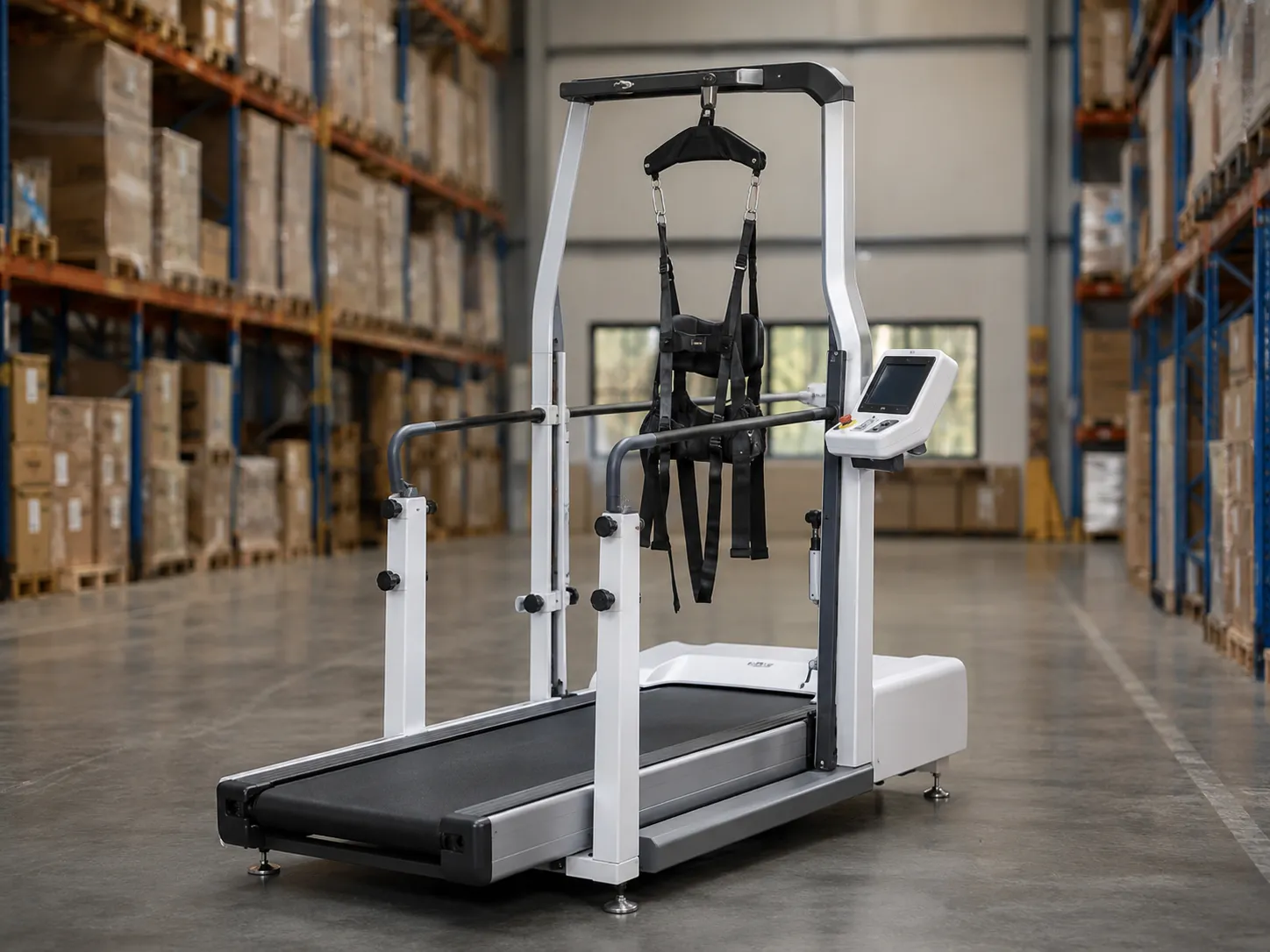
Treadmills — practising walking safely.
-
Resistance bands — graded strengthening.
-
Exercise balls — core and balance work.
-
Hand weights — building upper-body strength.
-
Pulley systems — assisted range-of-movement.
-
Balance boards — retraining balance.
-
Wobble cushions — challenging stability.
-
Steps and platforms — practising stairs.
-
Motion units — gentle continuous movement.
Occupational therapy and daily living
Returning to everyday tasks is the wider goal. This area supports daily living. Returning to everyday tasks is the wider goal, so this area reaches beyond the therapy room.
-
Dressing aids — managing clothing independently.
-
Reaching aids — picking up without bending.
-
Adapted cutlery — easier eating.
-
Grab rails — safe support at home.
-
Raised toilet seats — safer transfers.
-
Perching stools — supported sitting for tasks.
-
Bath boards — safer bathing.
-
Kitchen aids — cooking with one hand.
-
Writing aids — regaining fine control.
-
Button hooks — fastening clothing.
Assessment and measurement
Measuring progress keeps therapy on track. This area supports assessment. Measuring progress keeps therapy honest, so this area is used at every review.
-
Goniometers — measuring joint range.
-
Dynamometers — measuring grip strength.
-
Pinch gauges — measuring finger strength.
-
Balance platforms — assessing stability.
-
Gait analysis systems — studying walking patterns.
-
Posture grids — assessing posture.
-
Tape measures — tracking limb changes.
-
Stopwatches — timing functional tests.
-
Peak flow meters — checking breathing.
-
Assessment kits — structured functional testing.
Support, positioning and modalities
Protecting and easing the body supports recovery. This area covers modalities. Protecting and easing the body supports the active work, so these modalities sit alongside exercise.
-
Orthoses — supporting weak joints.
-
Splints — resting or positioning limbs.
-
Positioning cushions — comfortable, safe posture.
-
Pressure-relief supports — protecting skin.
-
Nerve stimulation units — easing pain.
-
Ultrasound therapy units — treating soft tissue.
-
Heat packs — relaxing tissue before exercise.
-
Cold therapy packs — settling swelling.
-
Wax baths — easing stiff hands.
-
Mirror therapy boxes — retraining movement.
A shared toolkit
The strength of a multidisciplinary centre is that one set of equipment serves many professionals and many goals, so rehabilitation devices are chosen for the whole team rather than any single therapist. Planning the toolkit around the disciplines under one roof means everyone has what they need and equipment does not sit idle in one room while another goes without.
Planning rehabilitation equipment
Rehabilitation equipment is best planned around the disciplines a centre brings together and the conditions it most often treats, so mobility, exercise, daily living, assessment and support are all covered. Because a person moves through several stages of recovery, the devices are chosen to carry them smoothly from one stage to the next, and choosing equipment that suits the centre's most common conditions keeps the range practical. Many centres source rehabilitation devices from suppliers on Medigear.uk when building that toolkit.
Durability and adjustability matter here, since this equipment is used many times a day by people of different sizes and abilities. Choosing sturdy, adjustable devices that suit a real range of people keeps a centre versatile and welcoming. Matching the equipment to the conditions a centre most often treats keeps the toolkit focused as well as broad.
Points to confirm before ordering
-
Disciplines. Cover every profession under the roof.
-
Stages. Support the whole recovery journey.
-
Adjustability. Suit different sizes and abilities.
-
Durability. Choose equipment for heavy daily use.
-
Safety. Confirm stable, well-maintained devices.
Built around the person
Good rehabilitation is built around the individual, so the best-equipped centre is one that can adapt its devices to each person rather than fitting people to fixed equipment. Adjustable, varied and well-chosen rehabilitation devices let a team meet people where they are, which is exactly what a multidisciplinary approach is for.
From ward to home
A good rehabilitation centre thinks beyond its own walls, because recovery continues at home long after a session ends. Stocking daily-living aids and home-safety equipment, and setting people up to use them confidently, is part of what turns progress in the gym into independence in the kitchen and the bathroom.
Room to work together
Because several professionals share the same space and equipment, a little coordination goes a long way. Planning who needs what, and when, keeps busy equipment moving between disciplines smoothly rather than sitting locked in one therapist's room while another waits for it. Some teams see how rehab centres equip their teams through Medigear.uk to plan a shared set well.
Confidence, not just capability
Rehabilitation is as much about a person's confidence as their physical capability, so equipment that feels safe and supportive does psychological work as well as clinical work. A stable frame or a well-set treadmill lets someone push a little further because they trust it will hold them, and that trust is itself part of recovery. Small touches like this often shape how quickly a person regains their independence.
A place for everything
A busy centre works best when its equipment is findable and ready, so clear storage and a sensible layout matter more than they first appear. When frames, bands and assessment kit each have a home, sessions start on time and nothing is hunted for while a patient waits on the plinth. A tidy centre simply runs more calmly than a cluttered one.
Servicing and safety
Rehabilitation devices carry people who may be unsteady, so stability, maintenance and safety checks matter a great deal, and staff training keeps equipment used correctly. It also helps the team to watch the MHRA's Yellow Card guidance on reporting device problems, so any concern with a device can be raised properly.
Rehabilitation in short
A multidisciplinary centre helps people recover because its whole team shares the right equipment. Grouping the fifty rehabilitation devices by their role, planning a shared toolkit, and choosing adjustable, durable devices turns a broad list into real support for recovery. Chosen this way, rehabilitation devices help a team meet each person exactly where they are. Equipped this way, a centre turns shared teamwork into steady, visible recovery. A centre planning its equipment can also ask the Medigear.uk team about rehabilitation equipment.
This overview is general procurement guidance for rehabilitation and multidisciplinary services, not clinical advice; professional assessment and manufacturer instructions always come first.