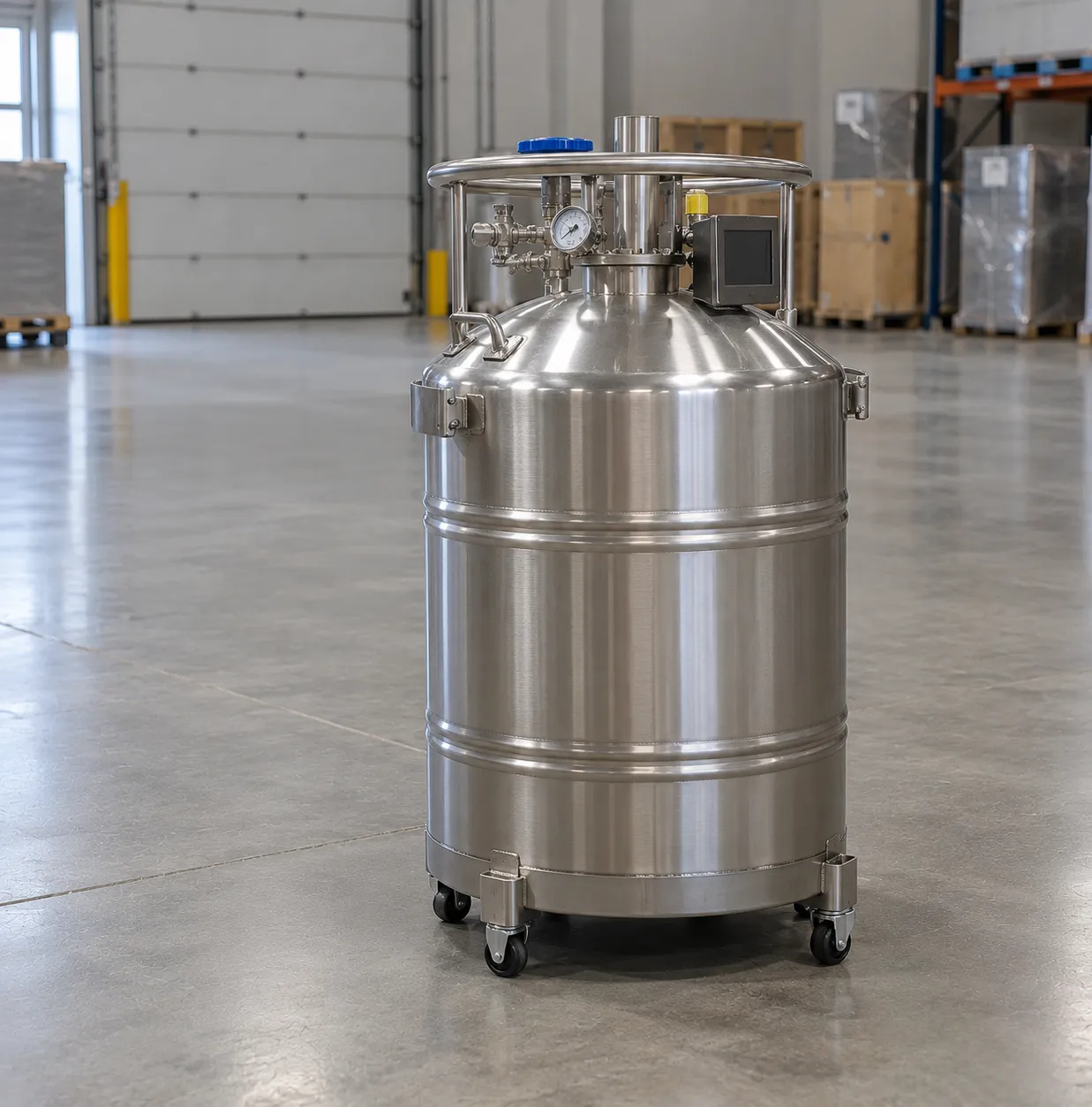
A cryogenic storage tank is a large, heavily insulated vessel that holds biological samples in liquid nitrogen (LN2) at cryogenic temperatures — below roughly −150°C in the vapour phase, down to −196°C when immersed in the liquid. These tanks are the backbone of long-term biobanking, where cells, tissue, embryos, stem cells and reference material must survive for years or decades without meaningful change. Below about −130°C, all biological activity effectively stops, which is why cryogenic storage is the standard for archives that must outlast any mechanical freezer.
This article covers the large biobank tank and its inventory, monitoring and safety systems. The specific portable LN2 vessel — the dewar, with its neck tube and holding time — is covered in a sibling article, so here the focus is bulk long-term storage.
Vapour Phase Versus Liquid Phase
Cryogenic tanks store samples in one of two ways. In liquid-phase storage, samples sit immersed in liquid nitrogen at −196°C, giving the coldest and most uniform temperature but carrying a cross-contamination risk, because pathogens can survive in the liquid and transfer between vials, and a risk of vials exploding on warming if LN2 leaks into them. In vapour-phase storage, samples sit in the cold nitrogen gas above a shallow LN2 reservoir, typically held below −150°C. Vapour phase avoids liquid contact and is now preferred for most biobanking, though it demands good tank design to keep the temperature uniform from top to bottom of the rack. Many modern tanks are engineered specifically for vapour-phase storage with a small liquid reservoir in the base.
Inventory: Racks, Boxes, Canisters and Canes
Capacity is enormous. A large biobank tank can hold tens of thousands to hundreds of thousands of vials, organised in a hierarchy of racks holding stacked boxes of cryovials, or in canisters holding canes of straws and vials. Every sample needs a defined address — tank, rack, level, box, position — recorded in an inventory or laboratory-information system, so it can be retrieved quickly. Slow, disorganised retrieval means the lid is open longer, which warms the whole store and wastes nitrogen. Two-dimensional barcoded cryovials and automated storage systems are increasingly used for large collections to make retrieval fast and auditable. Agree a naon ming convention with the sample owners before the tanks arrive and reconcile the physical stock against the database periodically, so the record stays trustworthy over decades of deposits and withdrawals.
Automatic Filling and Nitrogen Supply
Biobank tanks are usually connected by a vacuum-jacketed line to a bulk LN2 supply and fitted with an automatic fill controller that tops up the reservoir when the liquid level falls, holding it between set high and low points. This keeps the temperature steady and removes the risk of a manual fill being missed. The supply may be a bulk external tank or a bank of pressurised LN2 cylinders. Buyers must plan the nitrogen logistics — delivery, storage, changeover and redundancy — as carefully as the tanks themselves, because the store is only as reliable as its LN2 supply.
Monitoring and Alarms
A biobank tank continuously monitors both liquid level and temperature at the sample zone, with high and low alarms and remote alerting to duty staff. Because the risk is gradual loss of nitrogen rather than a sudden compressor failure, trending the level and consumption rate is valuable: a rising fill frequency signals failing vacuum insulation before the tank warms. Records must be auditable for accredited biobanks. Independent temperature logging near the top of the sample space, the warmest point in a vapour-phase tank, confirms every sample stays below its limit.
Oxygen-Depletion Safety
Liquid nitrogen expands roughly 700-fold as it boils to gas, so a leak or spill can displace oxygen and cause asphyxiation without warning. Cryogenic stores must have oxygen-depletion monitors at low and breathing height, forced ventilation, and safe-working procedures, in line with HSE guidance on confined spaces and cryogenic liquids. Staff need cryogenic gloves, face protection and training in handling LN2 and in cold-burn first aid. Room design — ventilation, gas detection, access control and clearance for deliveries — is as much a part of the procurement as the tanks.
Insulation, Static Loss and Redundancy
Cryogenic tanks use a high-vacuum, multi-layer insulated wall to minimise heat ingress, quoted as a static evaporation or hold-time figure. Over years, the vacuum can slowly degrade, raising nitrogen consumption and, eventually, threatening temperature, which is why consumption trending matters. Serious biobanks build in redundancy: spare tank capacity, backup LN2 supply, and a documented contingency plan to move samples if a tank fails. Because collections are irreplaceable, resilience is designed in from the start rather than added later.
Manual and Automated Retrieval Systems
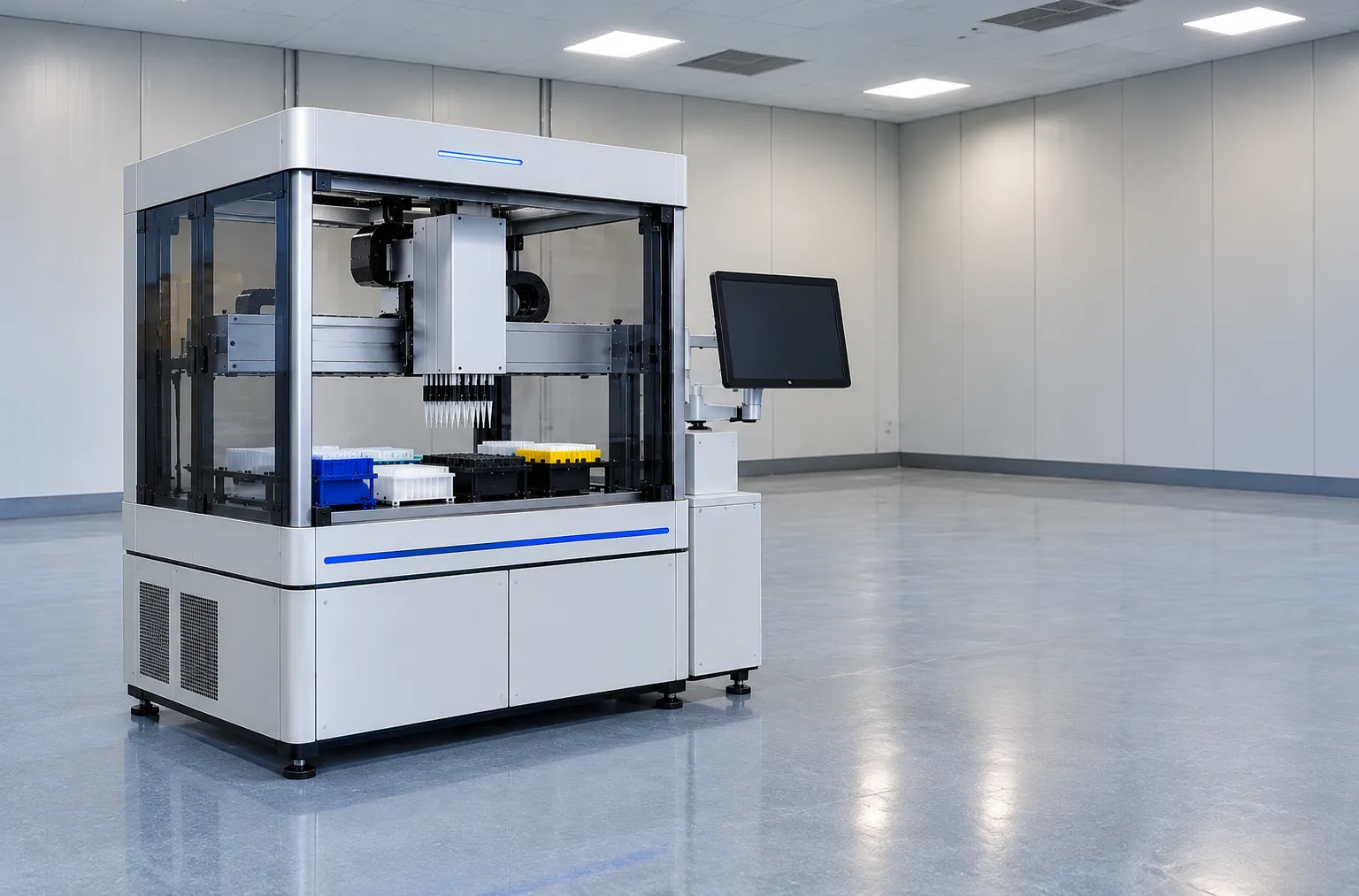
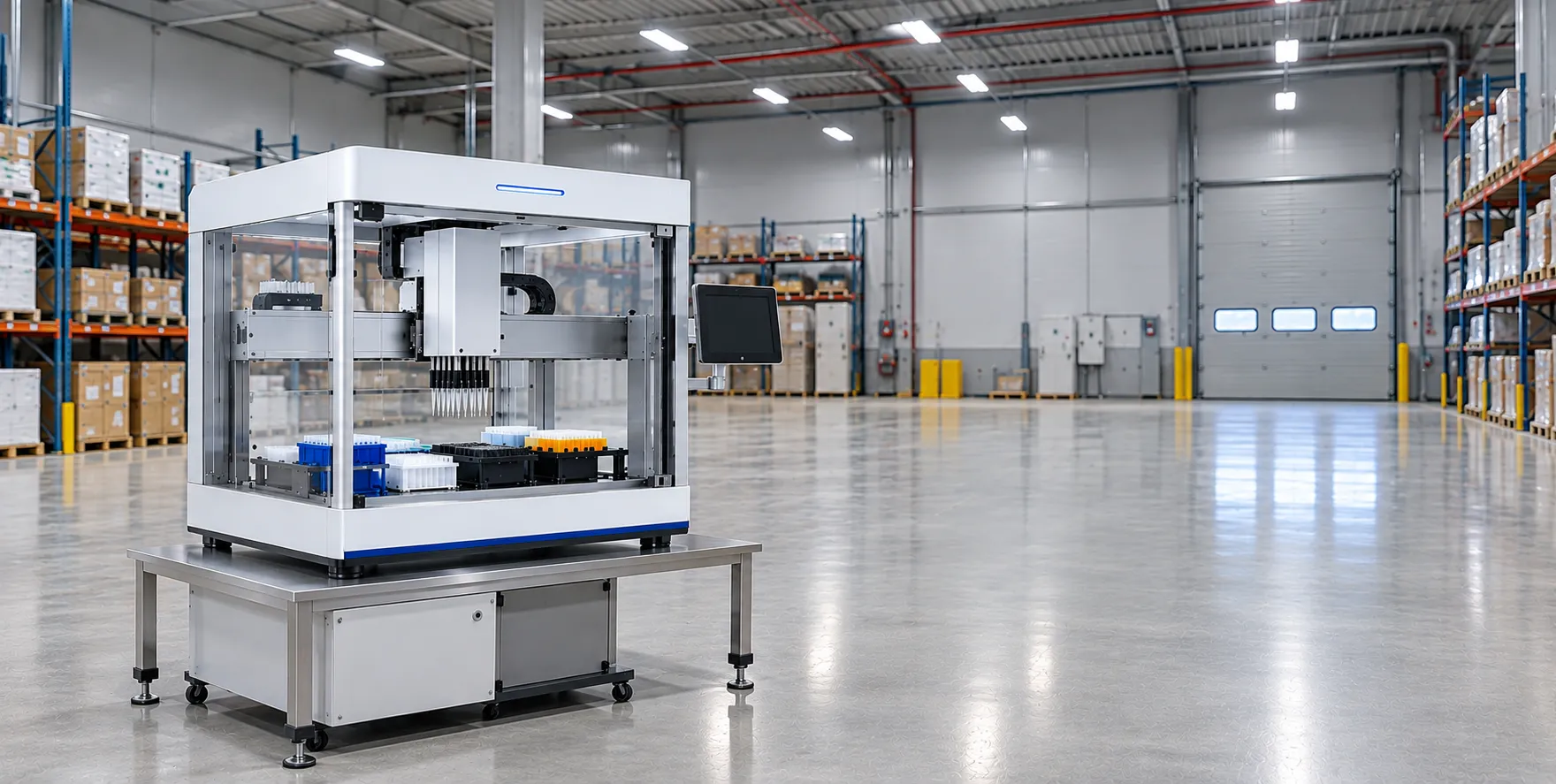
The way samples come out of a tank shapes how well the store performs. In a conventional manual tank, staff lift a rack or canister out through the lid, find the box or cane, and return it quickly, working to a strict inventory to keep the open time short. For very large or high-throughput collections, automated cryogenic stores retrieve individual barcoded vials robotically without warming the rest of the archive, and log every access. Automation raises capital cost but improves sample integrity, traceability and audit readiness, and removes much of the manual handling risk. Match the level of automation to collection size, access frequency, and how tightly warming events must be controlled.
Sizing and Future-Proofing
Cryogenic tanks are long-lived assets and collections tend to grow, so size on projected volume, not just today's. Consider the vial format now and later, whether racks and canisters from different tanks are interchangeable, floor loading, ceiling height for lifting racks, and access routes for deliveries. Leaving headroom in capacity and in the LN2 supply avoids a disruptive expansion later. It is far cheaper to plan spare capacity into the room and supply from the outset than to retrofit a crowded store.
Regulation and Accreditation
Biobanks holding human tissue in the UK operate under the Human Tissue Authority framework, and clinical laboratories work to ISO 15189, while research biobanks often follow ISO 20387. Storing reproductive material carries additional regulatory duties. These frameworks shape the traceability, monitoring records, validation, and contingency planning a store must demonstrate, so confirm the compliance requirements for your material before specifying tanks and inventory systems. General UK guidance is available via gov.uk. Building this compliance picture early, before hardware is chosen, avoids costly rework, because the traceability and validation the regulator expects influence which inventory system and monitoring you specify.
Procurement Checklist
Before specifying cryogenic storage tanks, confirm the following:
-
Vapour-phase or liquid-phase storage matched to your samples' contamination risk and temperature-uniformity needs.
-
Usable vial capacity and inventory format (rack/box or canister/cane), sized for current and future collections.
-
Automatic fill and LN2 supply logistics, including bulk supply, changeover, and delivery access.
-
Level and temperature monitoring with high/low alarms, remote alerting and auditable records.
-
Oxygen-depletion monitoring, ventilation and PPE designed to HSE guidance for the room.
-
Static hold time and vacuum integrity, with consumption trending to catch insulation failure early.
-
Redundancy and contingency: spare capacity, backup supply and a sample-transfer plan, plus the applicable HTA/ISO compliance.
Conclusion
Cryogenic storage tanks preserve biobank collections for decades by holding samples below −150°C over liquid nitrogen, in vapour or liquid phase, with automatic filling, level and temperature alarms and strict oxygen-depletion safety. Specify on capacity, phase, monitoring, nitrogen logistics and redundancy, because the material is irreplaceable. To plan a biobank, compare cryogenic tanks and monitoring, or arrange LN2 supply, speak to MediGear or register your project through our buyer services.
Disclaimer
This article is for informational purposes only. It is published by MediGear (medigear.uk) for general information and procurement guidance, and is not clinical, diagnostic, treatment, technical, engineering, legal or regulatory advice, nor a product endorsement, guarantee or substitute for professional assessment. MediGear does not provide medical consultations. Buyers should consult their clinical, biomedical, estates and regulatory contacts, and the manufacturer's documentation, and independently verify all specifications, certifications, compatibility and suitability before purchase. Specifications, certifications and availability are correct at the time of publication and may change without notice. MediGear is a medical-equipment distributor and does not sell medicines or pharmaceutical products.