Keeping inpatients safe depends on knowing how they are, moment to moment, and that is the job of medical monitoring devices. From the pulse oximeter clipped to a finger to the central station watching a whole ward, these devices turn a patient's changing condition into information a team can act on.
Inpatient safety improves when the right thing is monitored, in the right place, with alarms that draw attention when they should. Thinking about monitoring by what is being watched, rather than by ward, helps a hospital make sure nothing important goes unseen.
The fifty medical monitoring devices below are grouped into ten areas of five by what they monitor, from the heart to the developing baby. Grouping them this way follows how a hospital actually keeps watch over its patients. Grouping them this way follows how a hospital actually keeps watch over its patients, area by area.
Why monitoring underpins inpatient safety
Most serious deterioration gives warning signs before it becomes a crisis, and monitoring is how a team catches those signs in time. Reliable devices, sensible alarm settings and staff who trust the readings together turn continuous watching into earlier, safer intervention, which is why monitoring sits at the heart of inpatient safety.
The ten monitoring areas
The devices fall into ten areas: cardiac, respiratory, vital signs, haemodynamic, neurological, glucose and metabolic, fetal and maternal, fluid and output, alarm and central systems, and wearable and mobile monitoring.
Cardiac monitoring
The heart is watched closely in many patients. This area follows cardiac activity. The heart is watched closely in many patients, so this area is central to acute care.
-
ECG monitors — tracking heart rhythm.
-
Cardiac telemetry — wireless rhythm monitoring.
-
Holter monitors — recording rhythm over time.
-
Central station monitors — watching many hearts at once.
-
Event recorders — capturing intermittent events.
Respiratory monitoring
Breathing is a key early warning sign. This area watches respiration. Breathing is a key early warning sign, so this area often catches deterioration first.
-
Pulse oximeters — reading blood oxygen.
-
Capnographs — tracking exhaled carbon dioxide levels.
-
Respiratory rate monitors — counting breaths.
-
Apnoea monitors — detecting pauses in breathing.
-
End-tidal monitors — tracking ventilation.
Vital signs
The core observations frame every assessment. This area covers vital signs. The core observations frame every assessment, so this area is used on every ward.
-
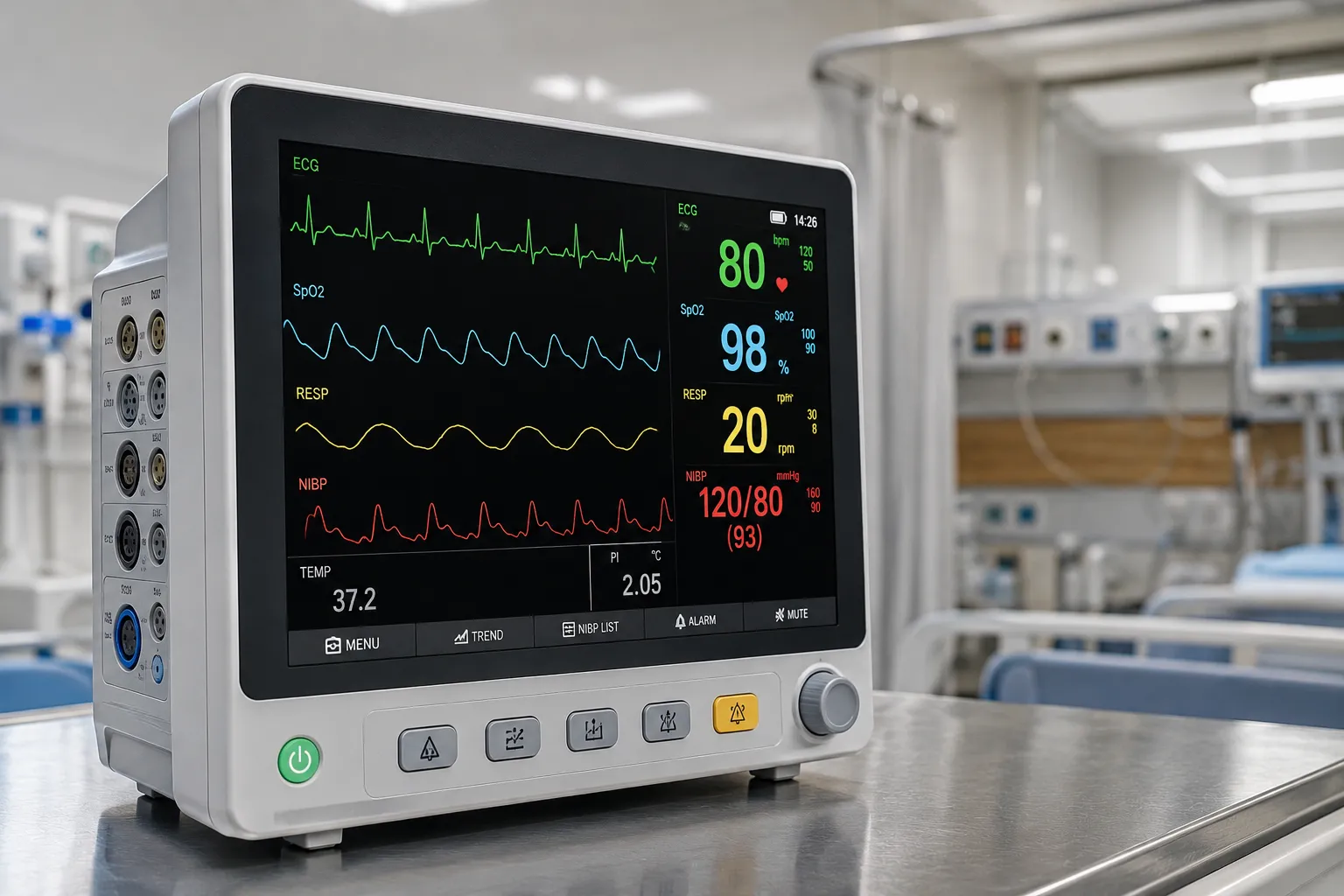
Multiparameter monitors — several signs at once.
-
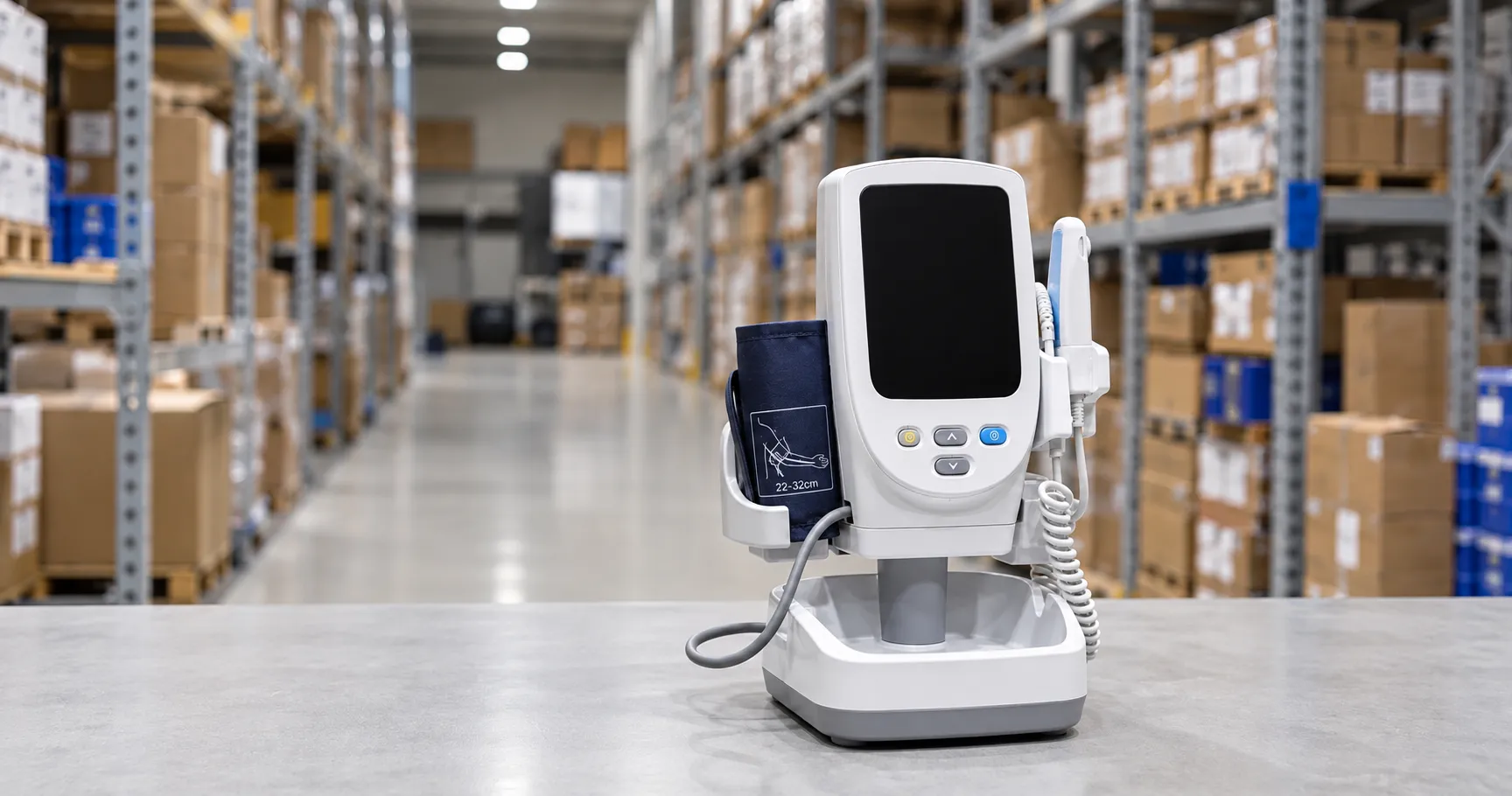
Blood pressure monitors — tracking pressure.
-
Spot-check monitors — quick routine rounds.
-
Vital signs stations — bedside observation hubs.
-
Temperature monitors — following temperature.
Haemodynamic monitoring
The sickest patients need deeper measures. This area watches circulation. The sickest patients need deeper measures, so this area belongs to critical care.
-
Invasive pressure monitors — direct pressure readings.
-
Cardiac output monitors — measuring blood flow.
-
Arterial line monitors — continuous pressure.
-
Venous pressure monitors — central filling pressure.
-
Non-invasive cardiac monitors — flow without lines.
Neurological monitoring
The brain needs watching in critical care. This area follows neurology. The brain needs watching in critical care, so this area guides sedation and protection.
-
EEG monitors — recording brain activity.
-
Intracranial pressure monitors — watching pressure.
-
Anaesthesia depth monitors — gauging sedation.
-
Cerebral oximeters — measuring brain oxygen.
-
Sedation monitors — guiding sedation levels.
Glucose and metabolic
Metabolic balance affects many patients. This area tracks metabolism. Metabolic balance affects many patients, so this area is checked routinely.
-
Blood glucose monitors — checking blood sugar.
-
Continuous glucose monitors — trends over time.
-
Blood gas analysers — gases and pH.
-
Lactate monitors — a marker of stress.
-
Ketone monitors — checking for ketones.
Fetal and maternal
Maternity units watch two patients at once. This area covers fetal and maternal care. Maternity units watch two patients at once, so this area is specialised and vital.
-
Cardiotocography monitors — fetal heart and contractions.
-
Fetal dopplers — listening to the fetal heart.
-
Maternal monitors — watching the mother.
-
Uterine activity monitors — tracking contractions.
-
Fetal scalp monitors — closer fetal monitoring.
Fluid and output
Balancing fluids protects many patients. This area watches fluid status. Balancing fluids protects many patients, so this area is followed carefully.
-
Infusion monitoring systems — tracking what goes in.
-
Urine output monitors — measuring output.
-
Drainage monitors — following drains.
-
Fluid balance monitors — weighing intake and loss.
-
Bladder scanners — checking bladder volume.
Alarm and central systems
Monitoring only helps if alarms are heard. This area ties monitoring together. Monitoring only helps if alarms are heard, so this area ties everything together.
-
Central monitoring stations — one view of a ward.
-
Alarm management systems — prioritising alerts.
-
Nurse call integration — routing alarms to staff.
-
Remote monitoring systems — watching from afar.
-
Bedside alarms — alerting at the bedside.
Wearable and mobile
Patients who move still need watching. This area supports mobile monitoring. Patients who move still need watching, so this area keeps monitoring going anywhere.
-
Wearable sensors — continuous mobile readings.
-
Ambulatory monitors — watching moving patients.
-
Wireless patch monitors — discreet monitoring.
-
Portable spot monitors — checks on the move.
-
Telemetry transmitters — sending readings wirelessly.
Alarms that mean something
The quiet enemy of good monitoring is alarm fatigue, where so many alerts sound that staff stops noticing them. Choosing devices with sensible, adjustable alarms and setting them thoughtfully is as important as the monitoring itself, because an alarm only protects a patient if it is heard and believed when it matters.
Points to confirm before ordering
-
What to monitor. Match devices to each ward's needs.
-
Alarms. Choose sensible, adjustable alerts.
-
Integration. Connect to central and nurse-call systems.
-
Reliability. Trust the readings under pressure.
-
Familiarity. Standardise devices across wards.
Planning monitoring for a ward
Monitoring is best planned around the level of care a ward provides, so a general ward, a high-dependency unit and intensive care each get the depth of monitoring they need. Because alarms and readings flow to central and nurse-call systems, monitoring is planned as a connected system rather than a set of separate devices.
Standardisation helps a great deal, since staff move between wards and need to read a monitor without hesitation. Choosing familiar, consistent devices means a reading is understood the same way everywhere, which is itself a safety measure. Hospitals often source patient monitoring devices from suppliers on Medigear.uk when standardising a ward.
One language across the hospital
When the same monitors appear on every ward, a reading means the same thing wherever a nurse or doctor sees it, and that shared understanding is quietly powerful. Staff who move between areas can read any monitor at a glance, which removes a real source of error at exactly the moments when clarity matters most. Manufacturers can also list your monitoring devices for hospital buyers on Medigear.uk.
Reliable when it matters
A monitor is only useful if its readings can be trusted, so reliability and regular calibration are as important as the range of things a device can measure. Staff need to believe a number when it appears, because hesitation over whether a reading is real wastes exactly the time that monitoring is meant to save.
Servicing and safety
Monitoring devices guide urgent decisions, so calibration, maintenance and staff training are essential to keep readings trustworthy, and alarms are checked as carefully as the devices. Staff should also know how to report a problem with a medical device to the MHRA if a monitor is ever found faulty.
Monitoring in short
Inpatients are kept safe by watching the right things reliably and acting on what the readings show. Grouping the fifty medical monitoring devices by what they watch, planning monitoring as a connected system,m and taming alarms turn continuous watching into earlier, safer care. Used this way, medical monitoring devices help a team catch trouble before it becomes a crisis. Watched and maintained well, monitoring quietly makes a whole hospital safer.
The notes here offer general procurement guidance for healthcare organisations rather than clinical advice, and never replace local policy or manufacturer instructions.