Sturdy orthopaedic instruments are built for the real demands of working on bone. Orthopaedic surgery works on bone, which requires instruments built to cut, shape, and fix hard, structural tissue. A bone surgery theatre is stocked differently from a general theatre because the work involves powered tools, fixation hardware, and instruments strong enough for the task.
The twenty-five instruments below are grouped by their role in an orthopaedic procedure. They form a familiar backbone across bone surgery, which each speciality and surgeon adapts to their work.
How the list is grouped
The instruments fall into five groups: cutting and shaping, fixation, powered tools, retraction and exposure, and theatre support. Together they follow an orthopaedic procedure from preparing bone through to fixing and closing, and reading them in that order follows the shape of a typical orthopaedic operation.
Cutting and shaping bone
These instruments prepare and shape bone, and an orthopaedic surgeon relies on them throughout a procedure.
-
Osteotomes — cutting and dividing bone.
-
Bone chisels — shaping and removing bone.
-
Bone rongeurs — biting away bone.
-
Bone files and rasps — smoothing prepared surfaces.
-
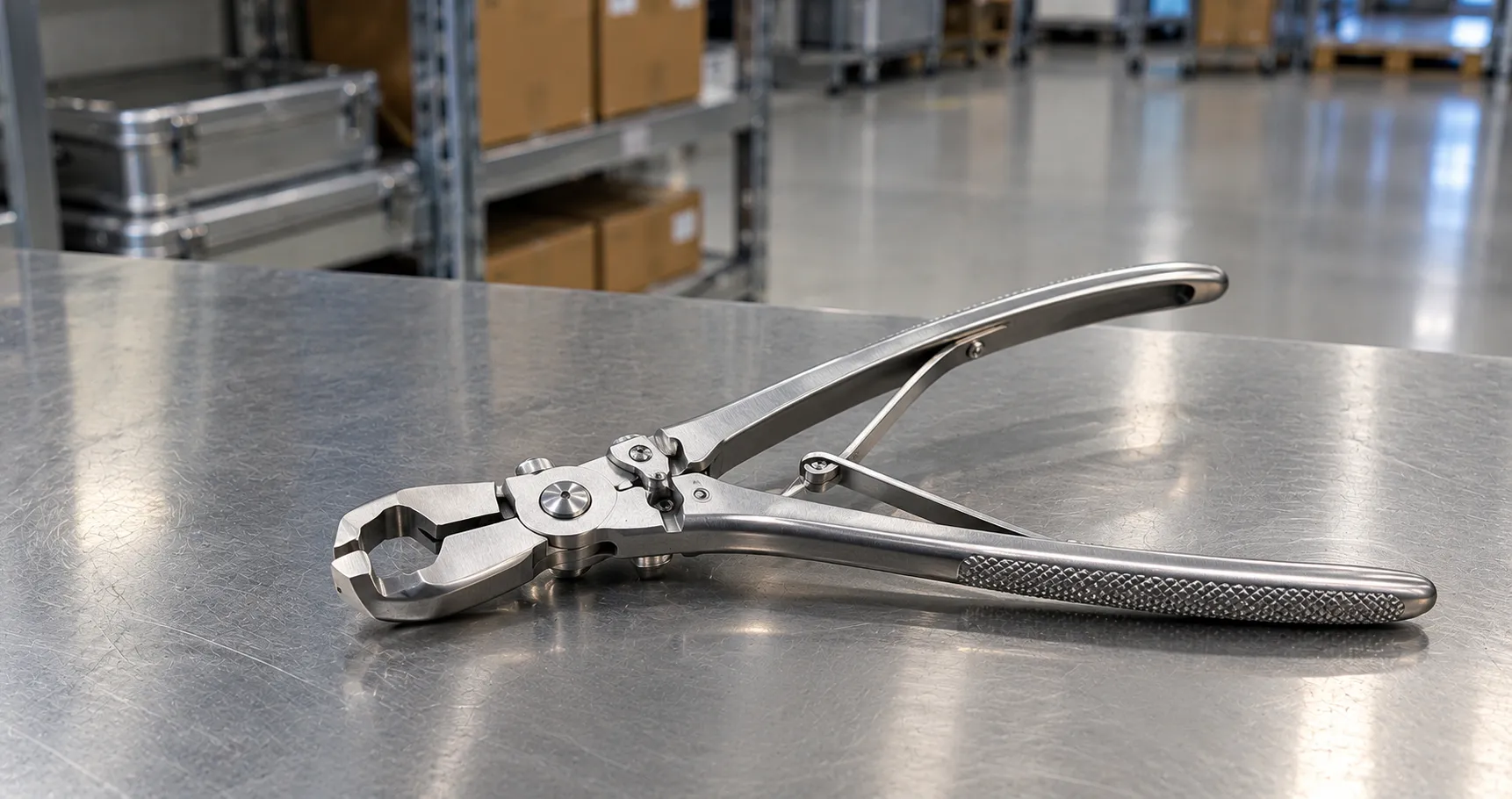
Bone-cutting forceps — cutting through bone.
Fixation
Holding and fixing bone is central to orthopaedics, and this group manages hardware and repair.
-
Bone-holding forceps — holding bone during fixation.
-
Screwdrivers — driving fixation screws.
-
Plate benders — shaping plates to the bone.
-
Wire and pin instruments — placing wires and pins.
-
Depth gauges and measuring — sizing screws and fixation.
Powered tools
Powered instruments do much of the heavy work in bone surgery, and surgeons use them constantly.
-
Surgical drills — drilling bone for fixation.
-
Surgical saws — cutting bone accurately.
-
Reamers — preparing bone for implants.
-
Power tool attachments — matched to the task.
-
Battery or air power sources — driving the tools.
Retraction and exposure
Reaching and holding open a surgical site in orthopaedics requires sturdy retraction, as shown here.
-
Bone levers — retracting and levering bone.
-
Self-retaining retractors — holding the wound open.
-
Hohmann retractors — retracting around bone.
-
Deep retractors — exposing deeper structures.
-
Soft tissue retractors — protecting surrounding tissue.
Theatre support
This group supports the wider orthopaedic procedure and the reprocessing behind it.
-
Instrument trays and cases — organising large orthopaedic sets.
-
Implant handling instruments — placing implants safely.
-
Irrigation equipment — cooling and clearing during power use.
-
Positioning aids — supporting the limb during surgery.
-
Suction — clearing the operative field.
Planning the purchase
Orthopaedic sets are large and often tied to specific implant systems, so teams plan instruments, trays, and the implants they serve together rather than separately. Powered tools, their attachments, batteries, and reprocessing need particular attention, since they are central to the work and require careful maintenance. Instrument strength matters given the forces involved in bone surgery, and instruments that stay sound through heavy use serve a theatre well. Working with sterile services on these substantial sets keeps enough trays in circulation for the operating list. Because the sets are heavy and detailed, clear tray lists also make counting and restocking far more reliable.
Points to confirm before ordering
-
Implant systems. Plan instruments and trays alongside the implant systems used.
-
Powered tools. Confirm attachments, power sources and reprocessing.
-
Strength. Establish instruments are sound under the forces of bone surgery.
-
Set management. Match large trays to the operating list with sterile services.
-
Irrigation. Confirm cooling and clearing during power tool use.
Servicing and safety
Orthopaedic instruments and powered tools are used under load and reprocessed constantly, so inspection, powered-tool maintenance, and battery care matter, since a failing tool or worn instrument affects a procedure. Agreed servicing and repair keeps large sets in order. Ensure the theatre receives published device safety alerts so field safety notices reach the orthopaedic and sterile services teams.
For more on sourcing, you can ask the Medigear.uk team about equipping a new service.
Bringing the list together
A bone surgery theatre is stocked around cutting, fixing and the powered tools that do the heavy work. Grouping the twenty-five instruments this way, planning sets with the implant systems, and caring for powered tools turn the list into a working orthopaedic service; getting the sets, the tools, and their care right keeps bone surgery running safely. When chosen and maintained this way, orthopaedic instruments stand up to bone surgery.
This article provides general procurement guidance for healthcare organisations. It is not clinical or surgical advice, and it does not replace manufacturer instructions or professional judgement.