
An emergency room has to be ready for anything, so its equipment is chosen with real care. An emergency department must be ready for anything at any moment, so its equipment prioritises availability and rapid use. Setting one up means making sure the resuscitation kit, monitor, procedure equipment, and diagnostics are all where they need to be the instant a patient arrives.
The twenty-five essentials below are grouped by the role they play in acute care. They describe the backbone of an emergency department, which each site scales to its size and case mix.
How the list is grouped
The essentials fall into five groups: resuscitation and airway, monitoring, trauma and procedures, diagnostics, and department flow and safety. Each group supports a stage of caring for an acutely unwell or injured patient.
Resuscitation and airway
When a patient arrives critically unwell, this group is reached first; it is kept ready across the department.
-
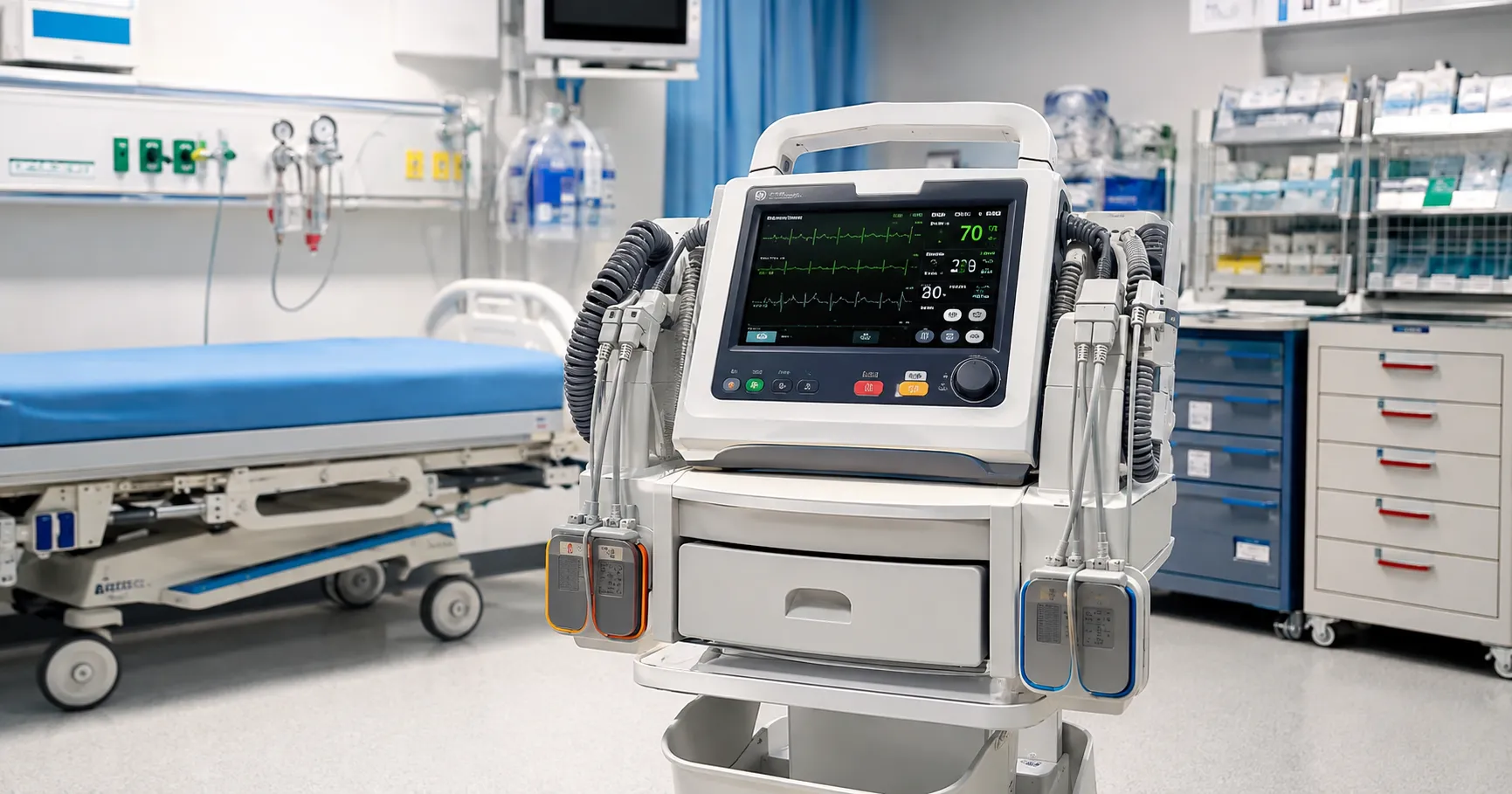
Defibrillators — resuscitation devices ready across the department.
-
Airway management equipment — for securing and supporting the airway.
-
Bag-valve-mask devices — manual ventilation.
-
Suction units — clearing the airway quickly.
-
Resuscitation trolleys — organised emergency drugs and equipment.
Monitoring
This group keeps acutely unwell patients safe and monitored during transfers through the hospital.
-
Patient monitors — multiparameter monitoring in each bay.
-
ECG machines — recording cardiac traces rapidly.
-
Pulse oximeters — oxygen saturation at triage and bedside.
-
Capnography — monitoring exhaled carbon dioxide during resuscitation.
-
Transport monitors — monitoring patients as they move through the hospital.
Trauma and procedures
Managing injuries and carrying out bedside procedures draws on this group repeatedly throughout a busy emergency shift.
-
Procedure trolleys — organised equipment ready for interventions.
-
Wound care and suturing sets — managing injuries.
-
Splinting and immobilisation — supporting injured limbs.
-
Warming devices — warming patients and fluids.
-
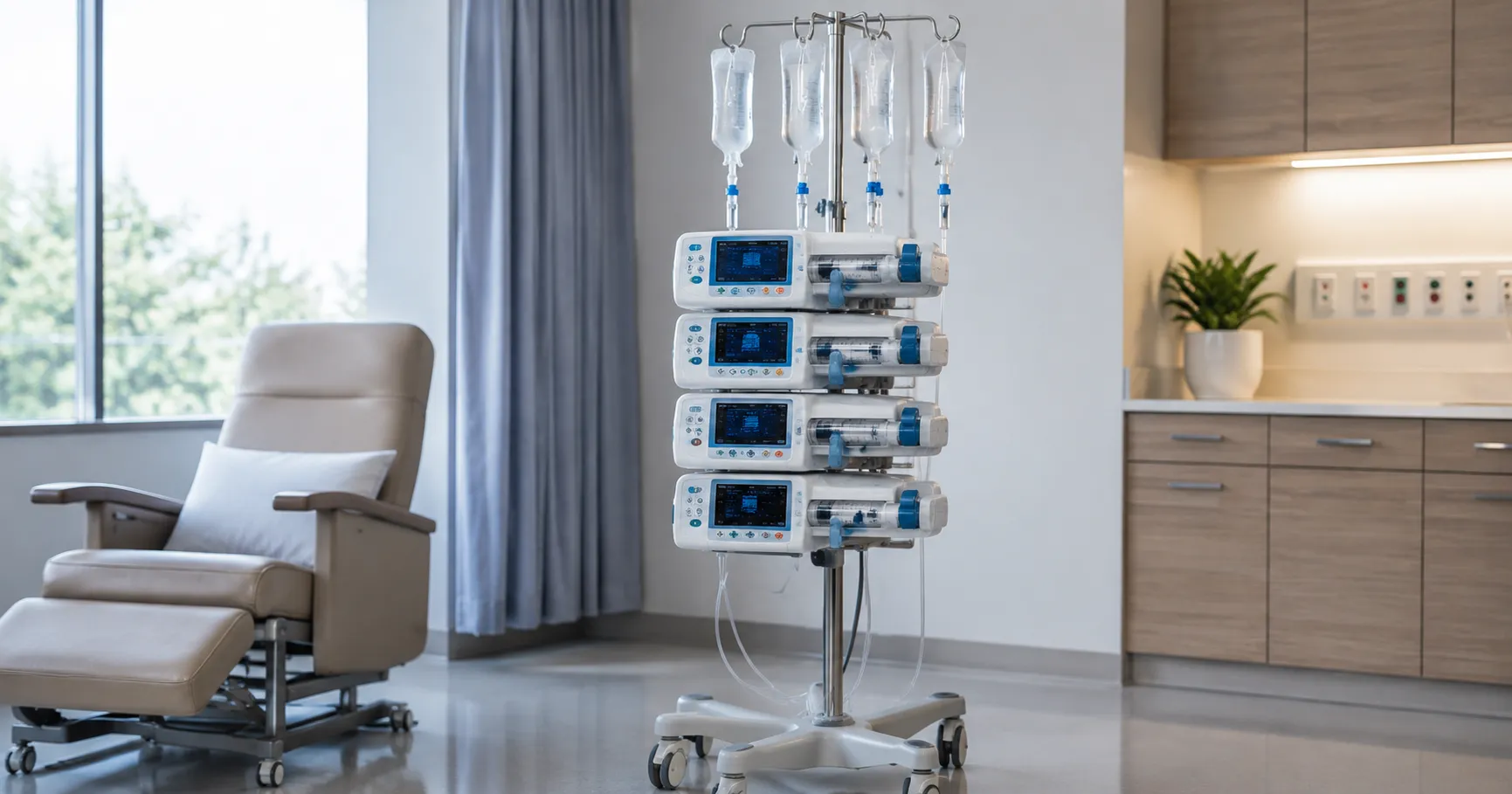
Infusion and syringe pumps — controlled delivery of fluids and drugs.
Diagnostics
Working out what is wrong quickly relies on this group, from bedside imaging to point-of-care tests — rapid imaging of the acutely unwell.
-
Point-of-care analysers — blood gas and rapid results.
-
Ultrasound — bedside assessment in the department.
-
Blood glucose meters — quick capillary testing.
-
Diagnostic examination sets — otoscopes and ophthalmoscopes.
Department flow and safety
Moving patients safely and keeping the department flowing underpins everything else that the other groups make possible.
-
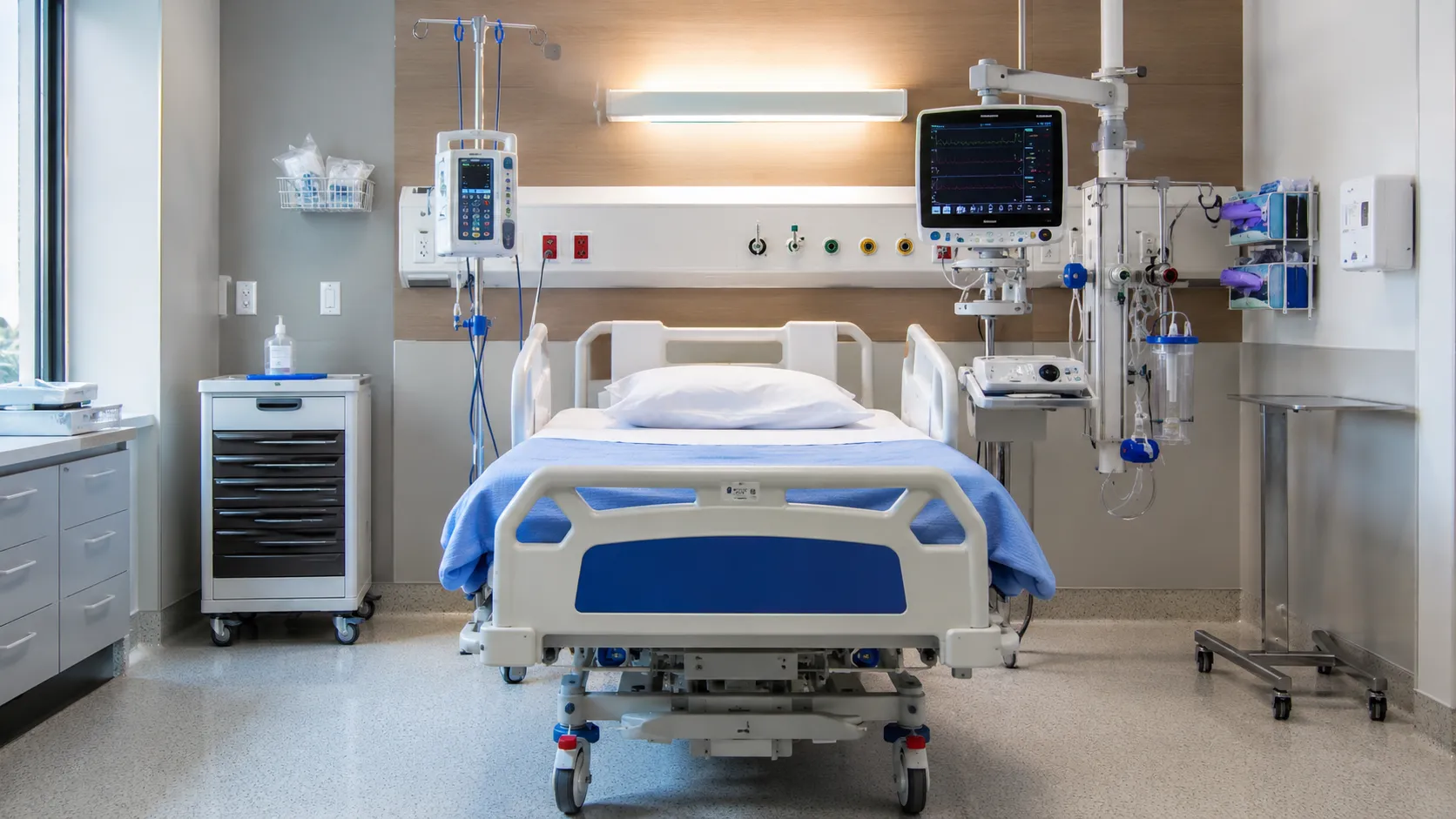
Emergency trolleys and beds — patient handling through the department.
-
Patient hoists and transfer aids — safe patient movement
-
Oxygen delivery equipment — regulators and delivery at each bay.
-
Infection control equipment — supporting a clean, safe environment.
-
Communication and alerting equipment — coordinating the team.
Planning the purchase
An emergency department's defining requirement is availability, so equipment must be ready and easy to grab under pressure. Consistent resuscitation trolleys and defibrillators across the department, laid out the same way everywhere, help a team work quickly wherever they are. Standardising monitors and pumps with the rest of the hospital eases the movement of patients and equipment between the department, imaging and critical care. Provision Plan: Provisioning, including oxygen, suction, and power, should be a weak link when it is suddenly needed.
Points to confirm before ordering
-
Availability. Establish equipment ready and easy to reach under pressure.
-
Consistency. Confirm resuscitation trolleys and defibrillators laid out the same way.
-
Standardisation. Align monitors and pumps with the wider hospital.
-
Bay provision. Confirm oxygen, suction and power at each bay.
-
Servicing. Agree maintenance keeping emergency equipment ready.
Servicing and safety
Emergency equipment must work the moment it is neededis needed; maintenance and rapid fault resolution are essential, and resuscitation equipment in particular is checked to schedule. Regular servicing and support keep the department ready around the clock. Ensure the department receives published device safety alerts so field safety notices reach the emergency and clinical engineering teams.
For more on sourcing, you can compare medical equipment suppliers listed on Medigear.uk.
Bringing the list together
An emergency department succeeds on readiness. Grouping the twenty-five essentials by their role, keeping resuscitation and monitoring consistent, and planning provision at every bay turn the list into a department ready for whatever arrives. Ready this way, the emergency room equipment supports care at any moment.
This article provides general procurement guidance for healthcare organisations. It is not clinical advice, and it does not replace manufacturer instructions or professional judgement.