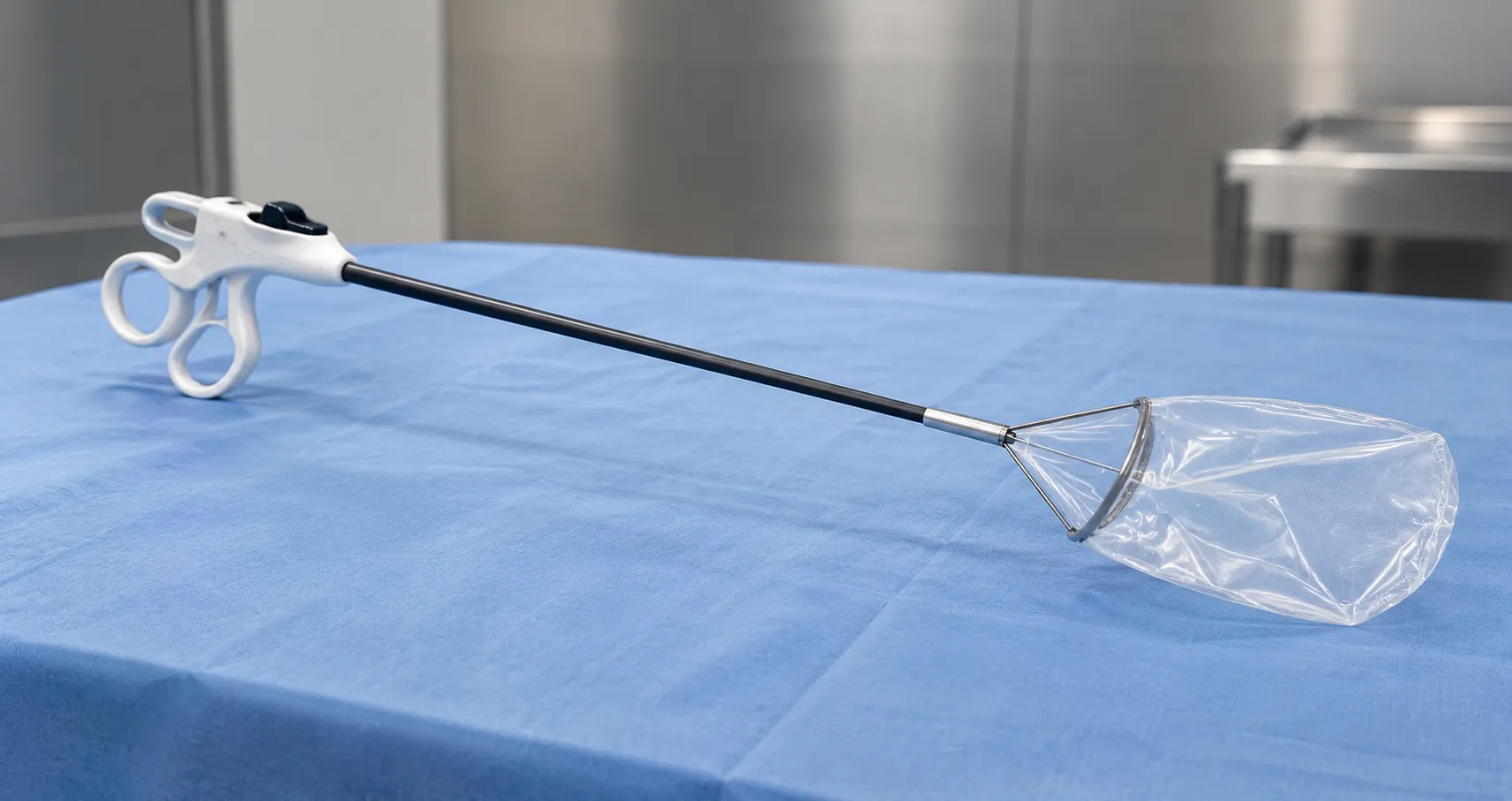
A specimen retrieval bag is a sterile pouch used in keyhole surgery to capture a removed organ, tumour, or tissue sample inside the abdomen and bring it out through a small port or incision without spilling its contents. The surgeon opens the bag inside the cavity, places the specimen in it, closes the mouth with a drawstring, and extracts the whole enclosed package. It protects against contamination of the wound and cavity, prevents seeding of tumour or infected material, and keeps a fragile or fragmenting specimen intact.
For a theatre buyer, retrieval bags are a small but critical consumable. Choosing the right volume, deployment mechanism and material affects specimen integrity, extraction time and the safety of removing malignant or infected tissue. This guide explains their role and what to compare.
Why containment matters in keyhole surgery
Minimally invasive surgery removes tissue through openings far smaller than the specimen itself. Dragging an unprotected gallbladder, appendix, spleen fragment, ovarian cyst or bowel segment through a port risks tearing it, spilling bile, pus, stones or cyst fluid, and, in cancer surgery, seeding tumour cells along the port track. A retrieval bag isolates the specimen so it can be manipulated, and sometimes morcellated or decompressed, within a sealed space and drawn out cleanly. Containment is not a convenience; for infected and malignant specimens it is central to a safe operation and to protecting the wound and the peritoneal cavity.
How a retrieval bag is deployed and used
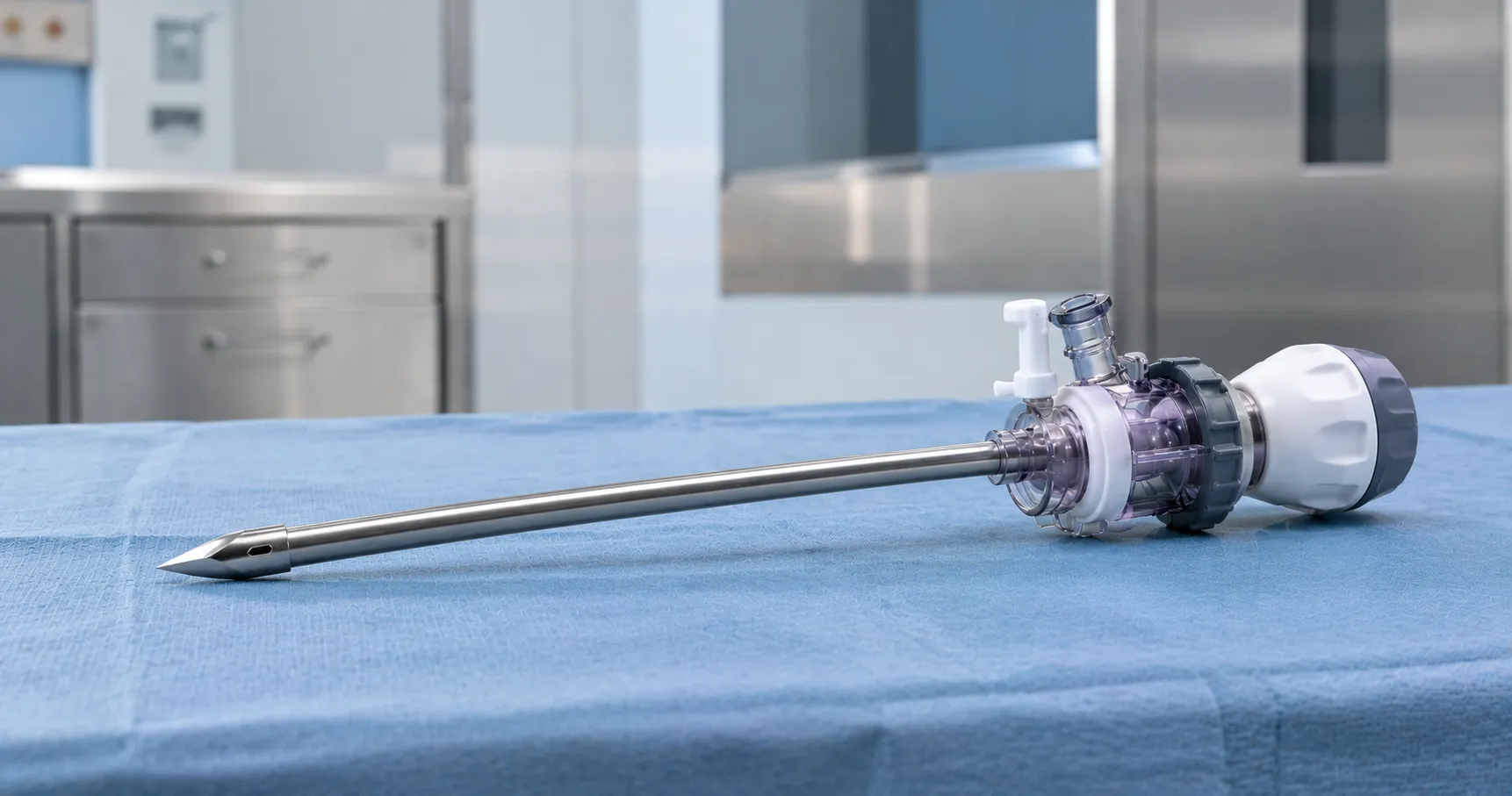
Most bags are supplied rolled or folded inside a slim introducer that passes down a trocar of matching diameter. Inside the abdomen, the bag is pushed out and springs open or is opened, often held by a self-expanding ring or a wire loop at the mouth so the surgeon can guide the specimen in with graspers. Once the specimen is inside, a drawstring or the introducer closes the mouth, capturing the contents. The closed bag is then drawn up to the port; a small specimen comes out through the port itself, while a larger one is brought to a slightly enlarged incision, where it can be reduced within the bag before removal. Throughout, the bag must resist puncture from bone fragments, gallstones o, or instruments so nothing escapes.
Types and how they compare
Ring-opening (self-expanding) bags
These have a sprung ring or nitinol loop at the mouth that opens the bag automatically once deployed, giving a wide, held-open opening that makes loading a bulky specimen straightforward. They are quick to use but occupy the port during deployment.
Drawstring pouches
Simpler drawstring bags rely on the surgeon opening the mouth with graspers and then pulling the string to close. They are economical and low-profile, suiting smaller specimens where a self-opening ring is not needed.
Manual and improvised alternatives
Purpose-made bags are strongly preferred over improvised containers because they are validated for strength, are sterile, and have controlled deployment; only a validated device gives reliable puncture resistance and a secure closure.
Detachable-mouth and specialist designs
Some bags allow the introducer to detach from the mouth ring so instruments have more room, and specialist designs support contained morcellation, where tissue is reduced inside a sealed bag under controlled conditions.
Key specifications a buyer must check
Match the bag volume to your specimens, from small appendix or gallbladder pouches to large bags for a spleen, kidney or bowel segment, and stock a range. Check the introducer diameter against your trocars, commonly 10 to 15 mm, and whether a version deploys through a 5 mm port. Look at the deployment mechanism, self-opening ring versus manual, and how easily the mouth stays open for loading. Puncture and tear resistance is essential where stones, bone o, or sharp tissue are involved, so review the material and any stated strength. Confirm the closure is secure and the bag comes out cleanly, and whether the design supports contained morcellation if your service needs it. As with all sterile single-use devices, check the packaging shows batch and expiry, and verify trocar compatibility before standardising.
Standards, regulation and safe use
Retrieval bags are sterile single-use medical devices and must carry valid UKCA or CE marking with a declaration of conformity and instructions for use stating single-use status. They must never be reprocessed. Sterile packaging should show the sterilisation method, batch number and expiry, all of which support traceability if a specimen bag is implicated in an incident. Where a bag is used for contained morcellation of potentially malignant tissue, follow current regulatory and clinical guidance closely: the MHRA, the UK medical-device regulator, has issued guidance in this area, and clinical bodies such as NICE publish relevant procedural guidance, with wider material on GOV.UK. Because specimens may be infected or malignant, safe handling and disposal duties under the HSE framework also apply. Keep the instructions for use and record the device details for any oncological specimen.
Consumables, stock control and total cost of ownership
Retrieval bags are single-use, so the recurring cost is the device itself, and the practical task is stocking the right sizes in the right numbers. Model annual usage by procedure: cholecystectomy, appendicectomy, nephrectomy, splenectomy, colorectal resection and gynaecological cases each favour particular volumes. Holding a small range of sizes prevents the twin problems of forcing a large specimen into a small bag, risking rupture, and wasting a large, costlier bag on a tiny sample. Standardising on introducer diameters that match your trocar set simplifies theatre stock and training. Because these are low-cost, high-frequency items, reliable supply and short lead times matter as much as unit price. We can help you set par levels across your theatres — register as a buyer or contact our team to review retrieval-bag options.
Use across surgical settings.
Specimen retrieval bags are used across laparoscopic general surgery, urology, gynaecology and colorectal work, and in robotic surgery. A district general hospital stocks a spread of sizes to cover routine gallbladder and appendix removal through to nephrectomy and bowel resection, while a specialist cancer or gynaecology unit pays particular attention to strong, secure bags and, where relevant, contained-morcellation-capable designs. Day-surgery units doing high volumes of cholecystectomy value quick-deploying, reliable pouches. Paediatric theatres need smaller bags matched to small ports, and veterinary laparoscopy uses the same devices scaled to the animal. Matching bag size and deployment to the setting keeps specimen removal clean and quick without over-spending on capacity a routine list never uses.
Procurement checklist
-
Stock a range of volumes from small gallbladder pouches to large organ bags.
-
Match introducer diameter to your trocars, and confirm 5 mm options where needed.
-
Choose self-opening ring or drawstring designs to suit specimen size and speed.
-
Confirm puncture and tear resistance where stones, bone,e or sharp tissue feature.
-
Check the closure is secure and the bag extracts cleanly through the port.
-
Verify contained-morcellation capability if your service requires it.
-
Confirm UKCA or CE marking, sterile packaging, batch and expiry, single-use status.
-
Set par levels and reliable supply for these high-frequency consumables.
Conclusion
Specimen retrieval bags do a simple job that matters enormously: they bring a removed organ or tissue sample out of the abdomen cleanly, protecting the wound and cavity and, in cancer surgery, guarding against tumour seeding. The buying decision turns on volume range, introducer diameter, deployment mechanism and puncture resistance, matched to your procedures and, where relevant, to contained-morcellation guidance. Confirm the sizes, the trocar fit and the sterile documentation, then set sensible stock levels for reliable supply. MediGear can supply specimen retrieval bags in the sizes your theatres need so minimally invasive cases finish safely and cost-effectively.
Disclaimer
This article is for informational purposes only. It is published by MediGear (medigear.uk) for general information and procurement guidance, and is not clinical, diagnostic, treatment, technical, engineering, legal or regulatory advice, nor a product endorsement, guarantee or substitute for professional assessment. MediGear does not provide medical consultations. Buyers should consult their clinical, biomedical, estates and regulatory contacts, and the manufacturer's documentation, and independently verify all specifications, certifications, compatibility and suitability before purchase. Specifications, certifications and availability are correct at the time of publication and may change without notice. MediGear is a medical-equipment distributor and does not sell medicines or pharmaceutical products.