Ultrasonic dissection cuts and seals tissue using high-frequency mechanical vibration rather than electric current or a steel edge. A generator drives a blade to oscillate tens of thousands of times a second, and that rapid movement cuts tissue while the friction it produces denatures protein and coagulates small vessels at the same time. The result is a device that divides and seals in one action, with less heat spread to nearby structures than electrosurgery.
For a theatre buyer, ultrasonic systems are a significant capital and consumable commitment, so the case for them rests on understanding how they differ from monopolar, bipolar and advanced bipolar energy, what the generator and handpieces cost over time, and which settings genuinely benefit. This guide explains the mechanism and the buying considerations.
How ultrasonic cutting works
At the heart of the system is a piezoelectric transducer in the handpiece. Driven by the generator, it converts electrical energy into mechanical motion, vibrating the active blade longitudinally at a fixed ultrasonic frequency, commonly around 55.5 kHz, over a very small excursion. When the vibrating blade is pressed against tissue held between it and a passive pad, three effects combine. The rapid movement breaks hydrogen bonds and generates heat through friction, coagulating protein and sealing vessels; cavitation, the formation and collapse of tiny vapour pockets in the tissue water, helps separate tissue planes; and the mechanical action itself divides the tissue. Crucially, the working temperature is lower than electrosurgical arcing, and there is no electrical current passing through the patient, so lateral thermal spread and the risk of remote burns are reduced.
How it differs from electrosurgery
Monopolar and bipolar electrosurgery pass electrical current through tissue to heat it. Ultrasonic devices do not; they use mechanical vibration, so no current flows through the patient,t and there is no return-electrode requirement as with monopolar diathermy. Compared with electrosurgery, ultrasonic dissection generally produces less smoke, less charring and a narrower zone of collateral thermal damage, which is valued when working close to nerves, bowel or major vessels. The trade-off is that vessel-sealing capacity is bounded by blade design, so very large vessels may still need an advanced bipolar sealer, a clip or a suture. Many theatres therefore run ultrasonic and advanced bipolar platforms alongside each other and choose per task.
The parts of an ultrasonic system
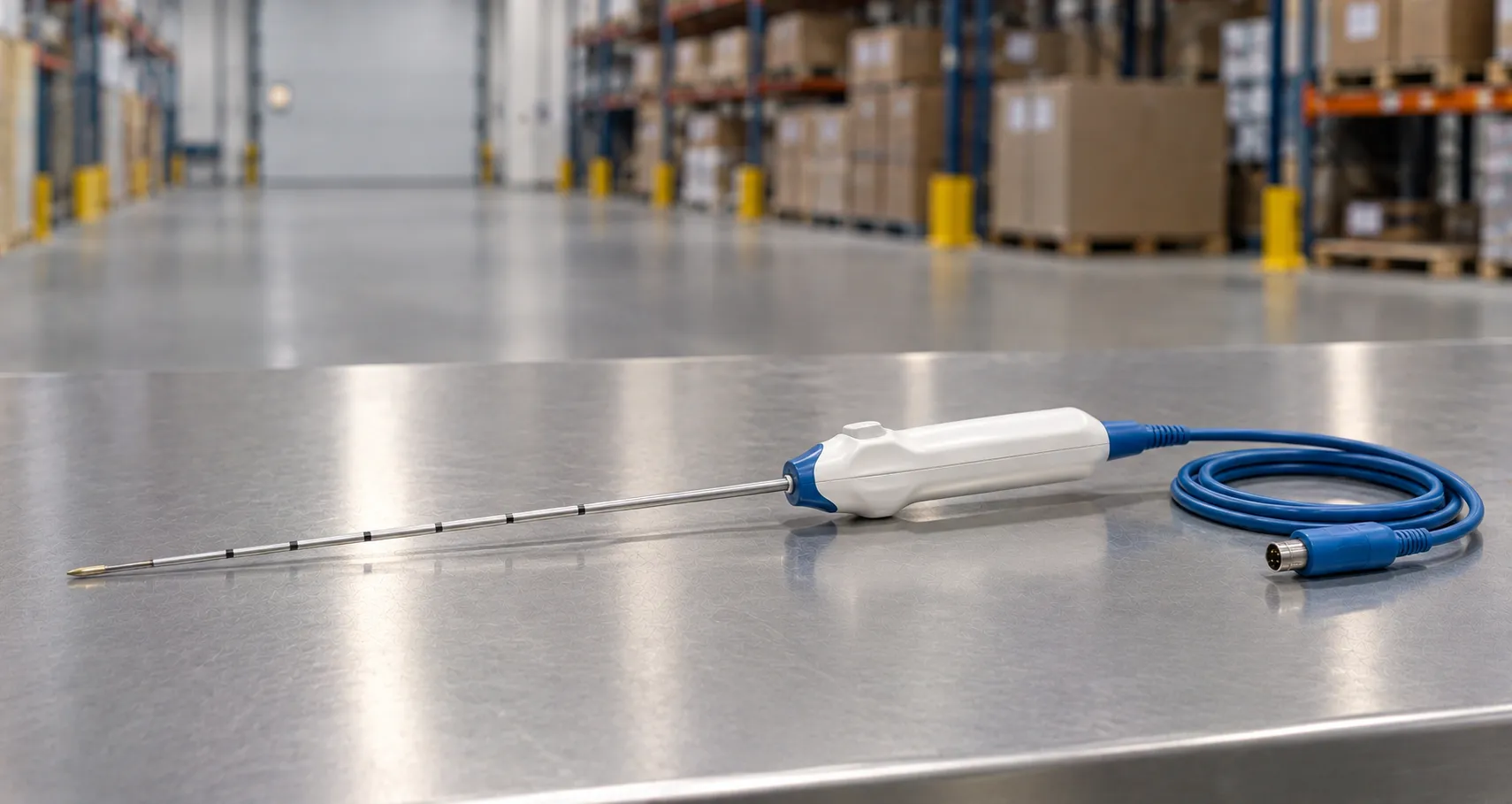
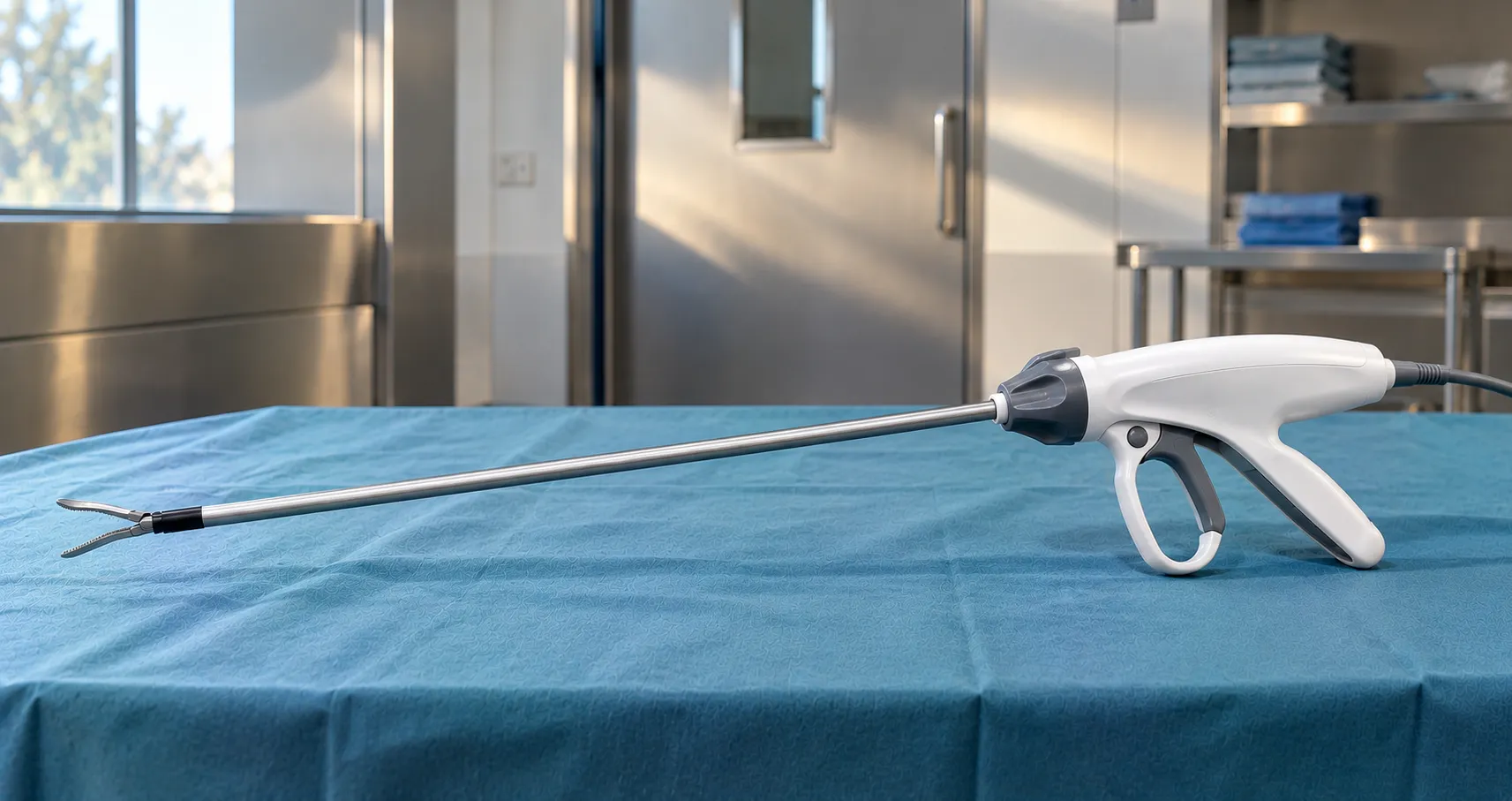
Three elements make up a working system. The generator supplies and controls the ultrasonic drive and sets power levels. The handpiece or transducer houses the piezoelectric element and connects to the generator, and may be reusable across many cases or built into a single-use instrument. The blade and shaft, the part that reaches the tissue, come as open shears for open surgery or long laparoscopic shafts with rotating shafts and curved active blades. Some platforms are combined, integrating ultrasonic and advanced bipolar energy in one instrument and generator so a surgeon can seal larger vessels and dissect finely without swapping devices.
Variants and how they compare
Open shears versus laparoscopic shafts
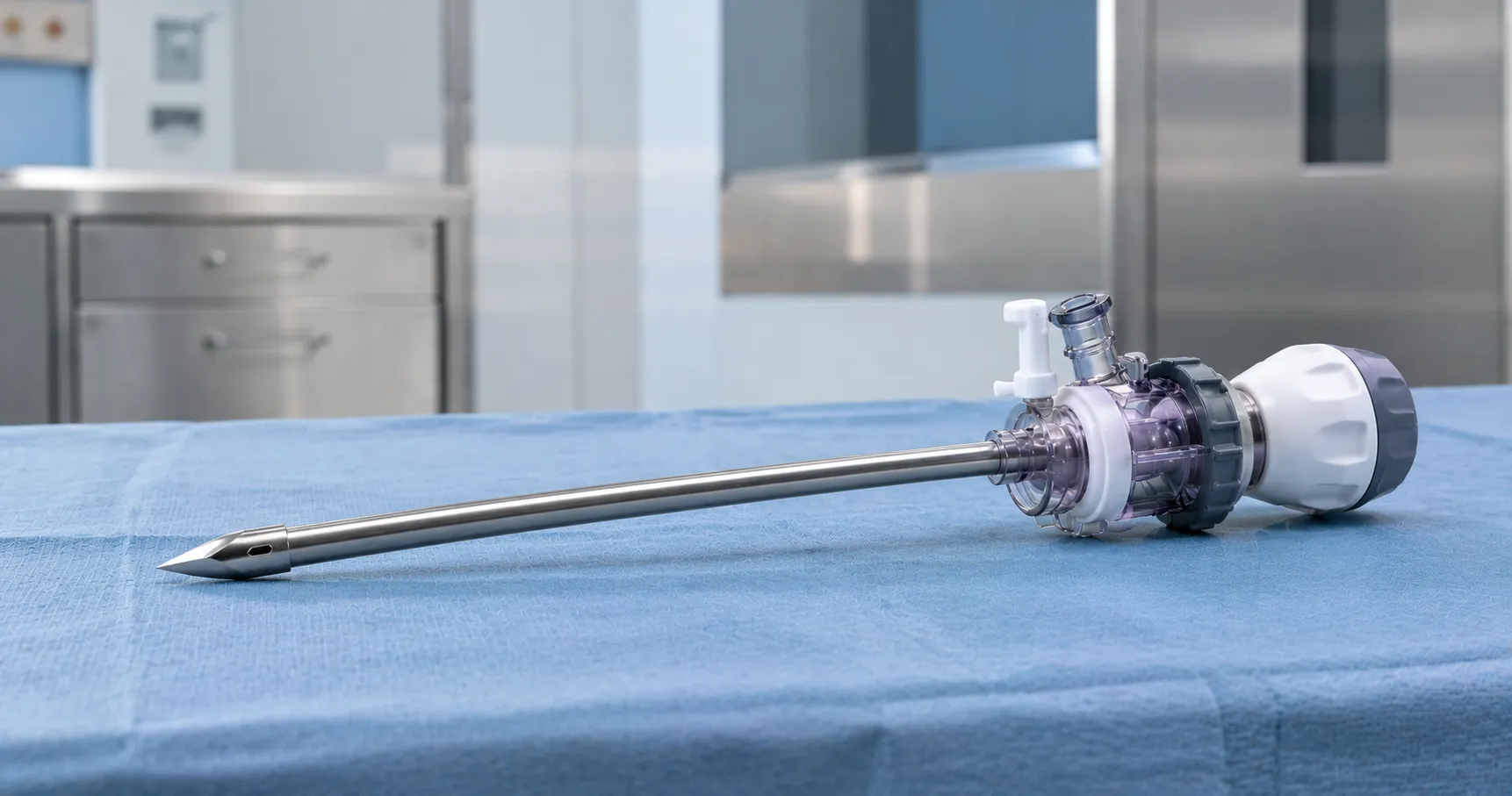
Open ultrasonic shears are short and used directly in an open field, while laparoscopic instruments have long shafts sized to pass through a 5 mm or larger trocar, with rotation and a curved tip for access inside the abdomen. The energy mechanism is the same; the reach and ergonomics differ.
Reusable handpiece with single-use blade
A common model pairs a durable, reusable transducer with a single-use blade or shaft, balancing consistent cutting performance against per-case cost. Fully single-use instruments remove reprocessing but cost more per procedure.
Combined ultrasonic and advanced bipolar
Hybrid platforms let the surgeon apply ultrasonic dissection for fine work and advanced bipolar sealing for larger vessels through one instrument, reducing instrument exchanges at a higher capital and consumable outlay.
Key specifications a buyer must check
Start with the generator: its footprint, the platforms and handpieces it drives, its user interface and whether it can be upgraded as your instrument range grows. For handpieces, confirm whether the transducer is reusable and how many uses it is rated for, and how blades attach. For laparoscopic shears,s check shaft diameter against your trocars, shaft length, rotation, and the vessel-sealing size the blade is validated for. Consider whether an integrated smoke-reduction benefit and quieter operation suit your theatre. Confirm the power settings and any tissue-feedback features, and how intuitive they are for surgeons switching from electrosurgery. Check footswitch and hand-control options, cable management on your tower, and that consumables are readily available. As always, verify compatibility with your existing stack and any planned robotic integration before committing.
Standards, regulation and safety
An ultrasonic generator is active electromedical equipment and, with its handpieces, must carry valid UKCA or CE marking, a declaration of conformity and instructions for use. As mains-powered equipment, the generator sits within the IEC 60601-1 safety family, with high-frequency surgical equipment addressed in the related particular standards. Even though no current passes through the patient, the active blade becomes hot and can cause thermal injury if it touches tissue after use, so safe-handling training and adherence to the instructions for use are essential; workplace safety duties under the HSE framework apply to energy devices and surgical smoke. Single-use blades must not be reprocessed unless validated, and reusable transducers should follow the ISO 17664 reprocessing information. Report device faults to the MHRA, the UK medical-device regulator, and check procurement and safety guidance on GOV.UK. Keep servicing and electrical-safety test records for the generator.
Consumables, servicing and total cost of ownership
The generator is a capital purchase, but the recurring cost lies in the dies, pieces, and blades. Model the per-case consumable spend carefully: a reusable transducer amortised over its rated uses plus a single-use blade behaves very differently in the budget from a fully disposable instrument. Add generator servicing, electrical-safety testing and any software support, and confirm the availability of loan generators so a fault does not cancel a list. Because these platforms are often proprietary, the consumable pricing is effectively locked to the generator you choose, so weigh the whole five-year picture, not just the capital line, and negotiate consumable pricing as part of the deal. Our team can model generator and consumable options against your theatre schedule — register as a buyer or contact us to compare energy platforms.
Use across surgical settings.
Ultrasonic dissection is used widely in laparoscopic and open general surgery, colorectal, upper-GI and bariatric work, gynaecology, urology, thyroid and head-and-neck surgery, where low thermal spread near nerves is prized. A major centre may standardise on a combined ultrasonic and advanced bipolar platform for flexibility across services, while a smaller unit might choose an ultrasonic system for its dissection quality and keep it alongside existing electrosurgery. Thyroid and paediatric surgeons value the precise, low-spread cutting; veterinary referral practice uses the same technology. Matching the platform and consumable model to the caseload avoids buying combined-energy capacity a service rarely needs, or under-specifying where a busy resection list would benefit from integrated sealing.
Procurement checklist
-
Confirm which handpieces and future platforms the generator can drive and upgrade to.
-
Check whether the transducer is reusable, its rated uses, and how blades attach.
-
Match laparoscopic shaft diameter to trocars, plus length, rotation, and validated seal size.
-
Decide whether combined ultrasonic and advanced bipolar energy suits your case mix.
-
Verify UKCA or CE marking and IEC 60601-1 compliance for the generator.
-
Plan safe handling for the hot active blade and surgical-smoke management.
-
Model per-case consumables: reusable transducer plus blade versus fully disposable.
-
Confirm generator servicing, electrical-safety testing, and loan-unit cover.
Conclusion
Ultrasonic dissection cuts and seals tissue with high-frequency vibration instead of electric current, giving precise division and low thermal spread that surgeons value near delicate structures. The buying case rests on how it complements your electrosurgery, whether combined-energy platforms earn their keep, and, above all, the true cost of proprietary handpieces and blades over five years. Confirm generator compatibility, the consumable model, and the safety documentation, then judge the whole-life cost rather than the capital price alone. MediGear can help you compare ultrasonic and advanced bipolar platforms so your theatres cut cleanly and buy wisely.
Disclaimer
This article is for informational purposes only. It is published by MediGear (medigear.uk) for general information and procurement guidance, and is not clinical, diagnostic, treatment, technical, engineering, legal or regulatory advice, nor a product endorsement, guarantee or substitute for professional assessment. MediGear does not provide medical consultations. Buyers should consult their clinical, biomedical, estates and regulatory contacts, and the manufacturer's documentation, and independently verify all specifications, certifications, compatibility and suitability before purchase. Specifications, certifications and availability are correct at the time of publication and may change without notice. MediGear is a medical-equipment distributor and does not sell medicines or pharmaceutical products.