A thoracic drainage unit is the collection system that a chest drain empties into, doing three jobs at once: gathering the drained fluid, acting as a one-way seal so air cannot travel back up the tube into the chest, and, where needed, applying controlled suction to help the lung re-expand. In managing a pleural effusion, the unit both collects the fluid. It shows the team how drainage is progressing, making it a genuine clinical and procurement decision rather than an afterthought to the drain itself.
This guide looks at the units and their consumables, from the classic underwater seal to modern single-piece and digital systems, and sets out what a buyer should weigh when equipping wards and theatres.
The underwater seal principle
Every design rests on the same idea: the drain tube ends underwater, and air can bubble out, but nothing can be sucked back in. The traditional arrangement used separate glass bottles, a collection bottle, a water-seal bottle and a suction-control bottle, plumbed in series. That three-bottle system works and is still taught, but it is bulky, easy to assemble wrongly and awkward to move with a patient. Understanding it, though, explains exactly how modern single-unit systems handle the compartments.
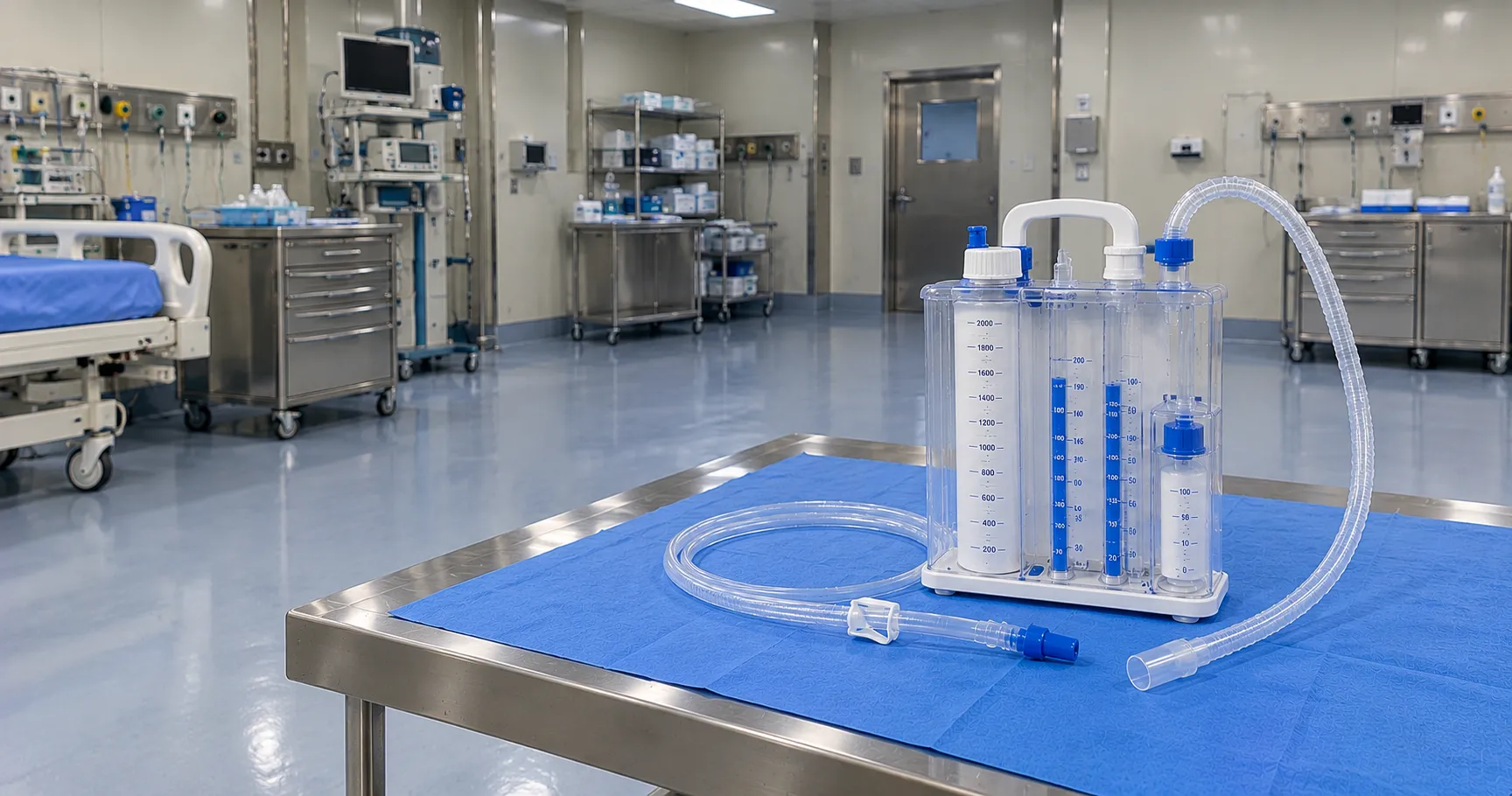
Contemporary units combine those functions into one moulded, disposable housing with distinct chambers for collection, water seal and suction control. A single sealed unit is quicker to set up, harder to misconnect, and safer to transport because it will not spill if tipped. The collection chamber is graduated, the water seal chamber shows swinging and any air leak, and the suction-control chamber sets the level of vacuum. For most level wards, this integrated design is now the default.
Wet versus dry suction control
Suction can be regulated in two ways. A wet suction-control chamber uses a column of water whose height sets the maximum negative pressure, and gentle bubbling confirms suction is active. A dry suction system uses a mechanical regulator dial instead, providing pressure without a noisy water column; it's easier to set up and adjust, and it doesn't evaporate. Many buyers now favour dry suction for convenience, while wet systems remain valued for their simple visual confirmation.
Air-leak monitoring
A key feature is how clearly the unit shows an air leak. Most units include a graduated air-leak indicator, a series of numbered columns, so staff can grade a leak and track whether it is settling, which matters after surgery or with a persistent pneumothorax. A clear, well-marked air-leak window is worth specifying because it turns a vague observation into a chartable number, and it lets a nurse distinguish one without guesswork.
Digital drainage systems
Electronic drainage units add a small pump and sensors that maintain a set pressure precisely and measure both fluid output and air leak as continuous digital readings. Because the numbers are objective rather than eyeballed, teams can make consistent, data-driven decisions about when a leak has resolved and the drain. Studies in thoracic surgery link this to more consistent care. These units are portable and battery-powered, letting patients mobilise sooner. They cost more and need charging and servicing, so they suit thoracic and high-dependency areas more than every general ward.
Capacity, mobility and consumables
Match collection capacity to expected output: a large haemothorax or a big effusion needs a high-capacity chamber, while a small pneumothorax needs very little. For patients who are mobilising, look for compact units with a carry handle, a hanger, and a stable base; for pneumothorax cases, single-use flutter-valve devices dispense water altogether. Remember that the units are consumables, so ongoing supply of the disposable EMS, connecting tubing, and any digital cartridges is part of the real cost, not just the first purchase.
Standards, safety and single use
Thoracic drainage units are medical devices and must carry valid UKCA or CE marking with instructions for use; the disposable collection systems are single-use and not reprocessed. Digital units are medical electrical equipment and fall under the general safety standard IEC 60601-1, needing planned maintenance, battery care and calibration checks like any powered device. Connectors between drain, tubing and unit must be compatible and secure, since a disconnection breaks the seal. The MHRA regulates these devices and is the route for reporting faults such as a failed seal or a suction-control error.
Setup, clamping and transport
A drainage unit is only as safe as the wahow itndlehandled;of that is desidedesignedit: water-the seal chamber is primed to the marked level (in wet systems) and t,he unit is kept upright and below the patient's chest so drainage flows and fluid cannot siphon back. A poorly designed unit that tips easily, or whose priming level is hard to read, invites error, so a stable base and clear fill marks are worth specifying. Dry-seal units that need no water priming remove one setup step and one thing to get wrong.
Clamping and moving patients are where problems arise. A chest drain with an ongoing air leak should generally not be clamped, because trapped air can build up dangerously, so units that make the air-leak status obvious help staff make the right call. For transport, a compact unit with a secure hanger, a carry handle and a tip-resistant design lets a patient move to imaging or a ward without breaking the seal. Digital units, being self-contained and battery-powered, are particularly suited to mobilising patients. Still, any chosen for a busy service should be judged partly on how forgiving it is to handle.
Total cost of ownership
For disposable wet or dry units, the spend is driven by throughput and by rationalising to one or two dependable systems with interchangeable tubing. Digital units invert this: a higher capital outlay, then costs for cartridges, batteries and biomedical support, offset by potential savings from shorter drain dwell and earlier discharge. A sensible estate often mixes both, digital units where objective air-leak data changes decisions, and simple disposable seals elsewhere. Standardising connectors across the estate avoids the classic problem of a drain that will not mate with the unit to hand, which wastes time and stock at the bedside.
Procurement checklist
-
Decide between disposable single-unit seals and digital drainage for each clinical area.
-
Choose wet or dry suction control to suit staff preference and noise tolerance.
-
Insist on a clear, graduated air-leak indicator and easy-to-read collection graduations.
-
Match collection capacity to expected output across pneumothorax, effusion and haemothorax.
-
For mobility, check compact size, carry handle, hanger and spill-resistant, tip-proof design.
-
Confirm connector compatibility with your chest drains and any wall suction.
-
For digital units, verify IEC 60601-1 compliance, battery life, calibration and biomedical support.
-
Request UKCA or CE documentation and confirm consumable and tubing supply.
Conclusion
A thoracic drainage unit is more than a container: it seals the chest, meters the output and, in its digital form, turns air-leak monitoring into hard numbers that guide when a drain comes out. Buying well means matching disposable and digital units to each clinical area, specifying clear air-leak and suction control, and standardising connectors and consumable supply across the estate. MediGear can help hospitals compare underwater-seal and digital drainage systems and keep the consumables flowing; register as a buyer or use the contact page.
Disclaimer
This article is for informational purposes only. It is published by MediGear (medigear.uk) for general information and procurement guidance. It is not clinical, diagnostic, treatment, technical, engineering, legal or regulatory advice, nor a product endorsement, guarantee or substitute for professional assessment. MediGear does not provide medical consultations. Buyers should consult their clinical and regulatory contacts and the manufacturer's documentation, and independently verify all specifications, certifications, compatibility, and suitability before purchase. Specifications, certifications and availability are correct at the time of publication and may change without notice. MediGear is a medical-equipment distributor and does not sell medicines or pharmaceutical products.