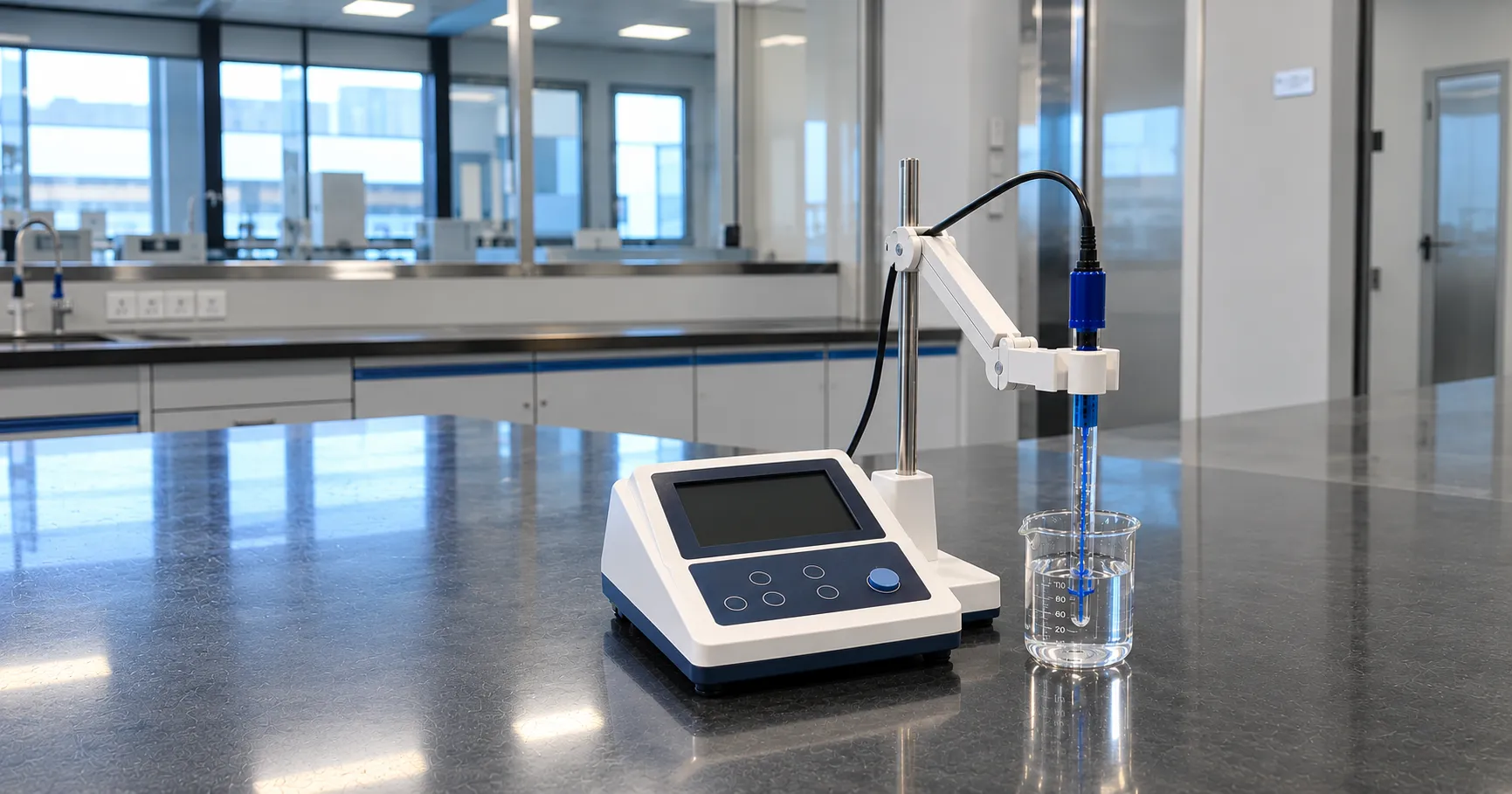
A pH meter measures how acidic or alkaline a solution is by reading the tiny voltage generated across a glass electrode, then converting that millivolt signal into a pH value on a scale from 0 to 14. Accurate readings depend on calibrating the meter against known buffer solutions before use and compensating for the sample's temperature. It is a core instrument for preparing and checking buffers, media, reagents and process solutions across pathology, microbiology, water and pharmaceutical laboratories.
This article covers pH measurement specifically. Conductivity, which tells you about total dissolved ions rather than hydrogen-ion activity, is a different measurement made with a different probe and is covered separately, so the two are not confused.
How a pH Meter Works
The heart of the instrument is a glass electrode whose thin, ion-selective glass membrane develops an electrical potential proportional to the hydrogen-ion activity of the solution. That potential is measured against a stable reference electrode; most laboratory probes combine both into a single combination electrode. The meter reads the millivolt difference, which changes by about 59 mV per pH unit at 25°C (the Nernstian slope), and displays it as pH. Because the signal is temperature-dependent, the meter must know the sample temperature to report a correct value.
Calibration Against Buffers
A pH meter is meaningless until calibrated. Calibration uses standard buffer solutions of certified pH, commonly pH 4.01, 7.00 and 10.01, which bracket the range you will measure. A two-point calibration using pH 7 and either pH 4 or pH 10 is the routine minimum; a three-point calibration improves accuracy across a wide range. The meter uses the buffers to set the electrode's zero point (offset) and its slope. A healthy electrode shows a slope of roughly 95 to 105 per cent of the ideal; a falling slope signals an ageing or fouled electrode that needs cleaning or replacement. Calibrate at the start of each session, and more often for critical or drifting work. Use fresh buffers that bracket your expected pH, and stir gently and consistently, because a still sample and a stirred one can read slightly differently. Meters that recognise standard buffer sets automatically and store the calibration history make it far easier to spot a drifting electrode over time.
Temperature Compensation
Temperature affects pH readings in two ways, and buyers should understand the difference. Automatic temperature compensation (ATC), usually via a temperature sensor built into or beside the electrode, corrects the electrode's millivolt-to-pH conversion for the sample temperature. It does not correct for the fact that the true pH of many solutions genuinely changes with temperature; that is a property of the solution itself. For consistent results, measure and calibrate at similar temperatures, and always use a probe with ATC rather than assuming 25°C.
Types of pH Meter
Portable and pocket meters
Handheld and pen-type meters suit spot checks, field water testing and moving between benches. They trade some resolution and features for portability.
Benchtop meters
Benchtop instruments offer higher resolution (often 0.01 or 0.001 pH), multi-point calibration, data logging, GLP records and connections for automatic titration. They are the choice for buffer and media preparation and for regulated QC.
Process and inline meters
Fixed sensors monitor pH continuously in tanks and lines, a different specification from bench laboratory work.
Choosing the Electrode
The electrode matters more than the meter. Match it to the sample: a general-purpose glass bulb for aqueous buffers; a low-resistance or gel-filled electrode for field use; a probe with a sleeve or open junction for viscous, dirty or protein-rich samples that clog a ceramic junction; a spear tip for semi-solids; and a flat surface electrode for small volumes. Check whether the reference is refillable (better performance, needs topping up with the correct electrolyte) or gel-filled (low maintenance). Electrodes are consumables with a typical working life of one to two years, so their cost and availability matter as much as the meter's.
Key Specifications a Buyer Must Check
Compare meters on measuring range and resolution (0.1, 0.01 or 0.001 pH), accuracy, number of calibration points and recognised buffer sets, ATC range, and whether they also read millivolts and ORP. For regulated environments, look for GLP-compliant records, electrode-condition and calibration-history logging, data output and audit trails. Confirm the electrode connector type (BNC is common) so probes are interchangeable, and check ingress protection if the meter will be used near water.
Standards, Care and Maintenance
The instrument should meet IEC 61010-1 for electrical safety and carry UKCA or CE marking, and buffers and any certified reference materials should be traceable. Where a pH meter forms part of a regulated diagnostic or manufacturing process, the wider device and quality expectations overseen by the MHRA may also apply. Electrode care drives accuracy: keep the glass bulb hydrated in the manufacturer's storage solution (never deionised water, which leaches the reference), rinse but do not wipe the bulb between samples, clean protein or grease with the recommended solution, and top up the reference electrolyte on refillable probes. Replace buffer sachets by their expiry and never pour used buffer back into the bottle. Log calibration slope and offset so a failing electrode is caught before it spoils results.
Where pH Meters Are Used
Solution-preparation and media rooms rely on them to set buffers and culture media precisely; water and environmental labs check samples and process water; pharmaceutical and cosmetic QC verify formulations; food and brewing labs monitor product; and education and veterinary labs use portable units. Matching meter and electrode to the setting, a rugged portable for field water work or a GLP benchtop for regulated media preparation, ensures the readings are both accurate and defensible.
Procurement Checklist
Before ordering a pH meter, confirm the following:
-
Resolution and accuracy (0.1, 0.01 or 0.001 pH) matched to how critical your work is.
-
Automatic temperature compensation with a suitable probe, not an assumed 25°C.
-
Calibration points and buffer recognition, at least two-point, three-point for wide ranges.
-
The right electrode for your samples (viscous, protein-rich, semi-solid or general aqueous) and a standard connector.
-
Refillable versus gel electrode, weighing performance against maintenance.
-
GLP records and data output if you work in a regulated or audited environment.
-
Buffer and electrode supply, ongoing availability and cost of consumables.
Consumables and Total Cost of Ownership
The meter is a one-off cost; the electrodes and buffers are the recurring ones. Electrodes wear out and are the item that limits accuracy, so factor in replacing them every year or two and keeping a spare on the shelf. Certified buffer solutions, storage solution and reference electrolyte are modest but continuous costs. Buying a mid-range meter with cheap or hard-to-source electrodes is a false economy; match the meter to a family of electrodes you can readily obtain. A second consideration is that electrode life depends heavily on how the probe is treated, so investing in a proper storage solution and unhurried cleaning routines protects the most expensive consumable. Standardising the meter, electrodes and buffers across benches keeps calibration practice and spares consistent, and makes results directly comparable between operators and instruments.
Conclusion
A pH meter turns the voltage across a glass electrode into a calibrated pH value, and its accuracy rests on regular buffer calibration, temperature compensation and a well-maintained electrode. Choose resolution, calibration and electrode type to match your samples, insist on IEC 61010 conformity and GLP records where needed, and budget for electrodes and buffers as consumables. To compare benchtop and portable pH meters, electrodes and buffers or arrange servicing, contact the MediGear team or register your requirements through our buyer services.
Disclaimer
This article is for informational purposes only. It is published by MediGear (medigear.uk) for general information and procurement guidance, and is not clinical, diagnostic, treatment, technical, engineering, legal or regulatory advice, nor a product endorsement, guarantee or substitute for professional assessment. MediGear does not provide medical consultations. Buyers should consult their clinical, biomedical, estates and regulatory contacts, and the manufacturer's documentation, and independently verify all specifications, certifications, compatibility and suitability before purchase. Specifications, certifications and availability are correct at the time of publication and may change without notice. MediGear is a medical-equipment distributor and does not sell medicines or pharmaceutical products.