Efficient patient transport is essential to delivering timely, safe, and coordinated healthcare. Hospital stretchers play a crucial role in moving patients between emergency departments, operating theatres, intensive care units, diagnostic imaging suites, and inpatient wards. Selecting the right stretcher is no longer simply a purchasing decision—it directly affects patient safety, caregiver ergonomics, workflow efficiency, and long-term operational costs.
For hospital and clinic buyers' services teams sourcing medical equipment globally, choosing a stretcher requires balancing durability, functionality, regulatory compliance, and lifecycle value rather than focusing solely on purchase price. Healthcare facilities operating in different regions also need equipment that meets applicable local standards while supporting diverse clinical workflows.
This guide explains the different types of hospital stretchers, their core features, technical considerations, and procurement factors to help healthcare organisations make informed purchasing decisions.
Understanding How Hospital Stretchers Support Clinical Workflows
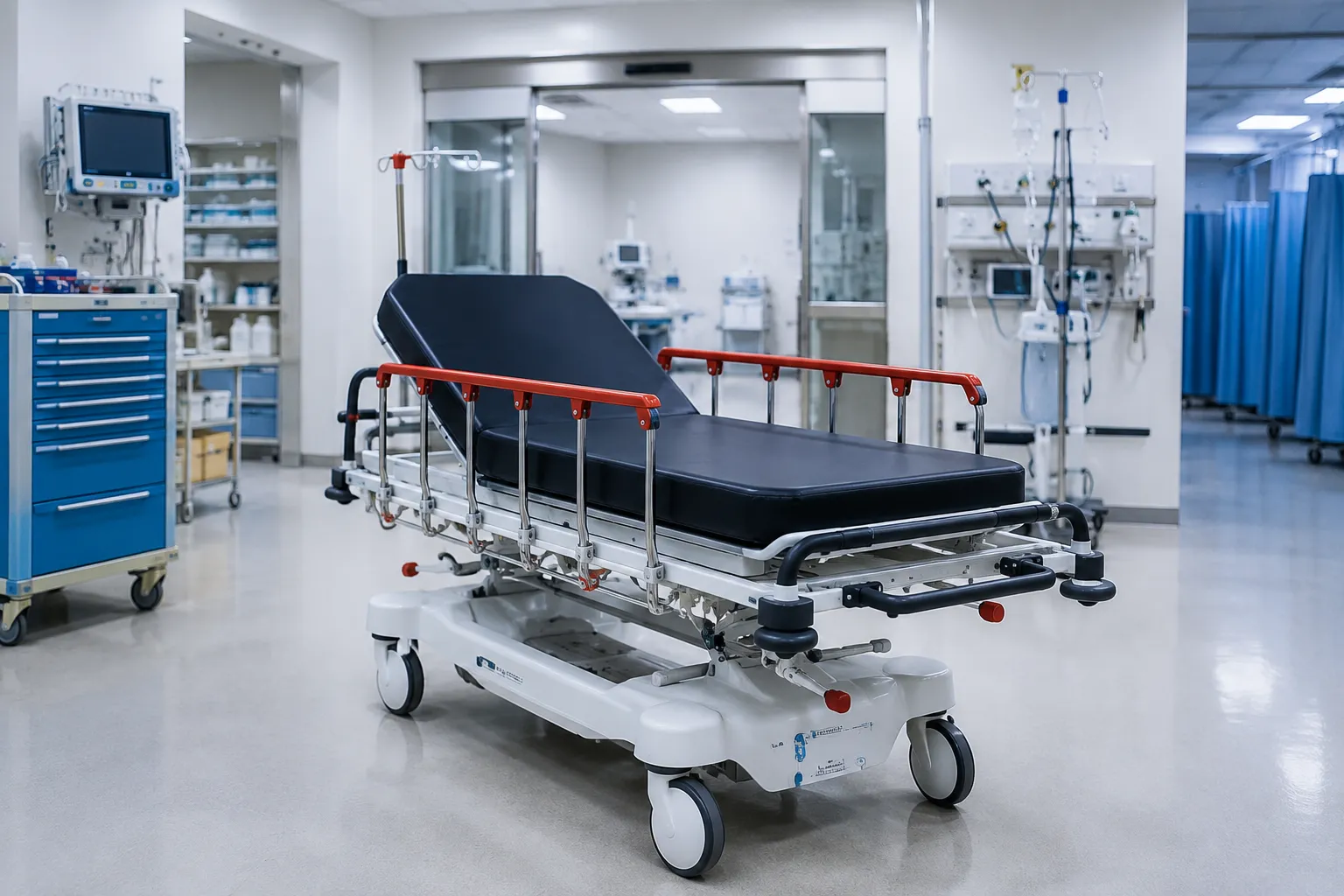
Hospital stretchers are designed to transport patients safely while ensuring comfort, stability, and accessibility during clinical care. Their design varies depending on the intended healthcare environment, patient condition, and operational requirements.
Emergency Patient Transport — Emergency departments depend on stretchers that can move patients rapidly from ambulances to treatment areas. Reliable braking systems, smooth manoeuvrability, and secure side rails help reduce delays during critical situations. In practice, emergency departments often prioritise durability because stretchers operate continuously throughout the day.
Operating Theatre Transfers — Surgical teams require stretchers with adjustable height mechanisms that align precisely with operating tables. This minimises manual lifting and reduces the risk of caregiver injuries during patient transfers. Experienced clinical staff often evaluate the stability of hydraulic lifting systems before approving new equipment.
Diagnostic Imaging Support — Many hospitals use specialised stretchers compatible with imaging procedures such as X-ray and CT examinations. Radiolucent surfaces enable imaging without repeated patient repositioning, improving both efficiency and patient comfort.
Critical Care Mobility — Intensive care units require stretchers that can accommodate ventilators, IV poles, monitoring devices, and other life-support equipment. Facilities managing critically ill patients typically choose models with superior stability and multiple accessory mounting options.
Where Different Hospital Stretcher Types Are Used Worldwide
Hospital stretchers are deployed across diverse healthcare settings, with each environment requiring specific features and performance characteristics.
Emergency Departments — Emergency rooms require highly manoeuvrable stretchers that withstand continuous use and enable rapid patient movement between triage, examination, and treatment areas.
Ambulance Services — Ambulance stretchers emphasise lightweight construction, secure locking mechanisms, and compatibility with vehicle loading systems. These designs prioritise safe transportation under challenging road conditions.
Healthcare organisations that source from verified global medical equipment business suppliers frequently receive products accompanied by compliance documentation, technical manuals, and after-sales support, thereby simplifying international procurement.
Operating Rooms and Recovery Areas — Surgical departments require stretchers that offer precise height adjustment, easy cleaning, and compatibility with infection-prevention protocols. Smooth transfers reduce patient discomfort and improve workflow efficiency.
Community Healthcare Facilities — Smaller hospitals, clinics, and healthcare centres often prioritise cost-effective manual or hydraulic stretchers that combine reliability with straightforward maintenance. In regions with limited technical support, simpler mechanical systems can offer lower long-term operating costs.
Technical Characteristics That Influence Purchasing Decisions
Selecting a hospital stretcher requires evaluating specifications based on operational performance rather than product brochures alone.
Frame Construction — Aluminium frames reduce overall weight while maintaining structural strength. Stainless steel frames offer exceptional durability and corrosion resistance, making them suitable for high-volume healthcare environments.
Load Capacity — Standard hospital stretchers typically support a wide range of patient weights, while bariatric models accommodate heavier patients safely. Procurement teams should consider future patient demographics rather than focusing solely on current requirements.
Mobility System — High-quality caster wheels with central locking improve steering precision and reduce caregiver fatigue during long-distance patient transfers. Wheel quality significantly influences operational efficiency across busy hospital corridors.
Height Adjustment Mechanism — Manual, hydraulic, and powered adjustment systems each offer distinct operational advantages. Hydraulic stretchers improve caregiver ergonomics by reducing physical lifting, whereas powered models provide enhanced convenience for high-volume healthcare facilities.
Choosing the Right Hospital Stretcher for Long-Term Healthcare Value
Selecting a hospital stretcher involves much more than comparing prices or basic specifications. Procurement professionals should evaluate how the equipment performs throughout its entire lifecycle, from installation and daily use to maintenance and eventual replacement. A well-planned purchasing decision improves patient safety, enhances staff efficiency, and minimises unexpected operational costs.
Total Cost of Ownership — The purchase price represents only one part of the overall investment. Maintenance requirements, spare part availability, staff training, and service contracts contribute significantly to long-term ownership costs. Experienced procurement managers typically compare lifecycle expenses rather than selecting the lowest initial quotation.
Supplier Reliability and Technical Support — Choosing a supplier with established after-sales service and technical expertise reduces downtime. Healthcare facilities that purchase through medical equipment businesses advertise and reach international procurement teams often benefit from installation guidance, operator training, warranty support, and faster access to replacement components.
Compliance and Certification — Hospital stretchers should comply with applicable local regulatory standards and internationally recognised certifications such as CE, FDA, or regional equivalents. Procurement teams should verify product documentation, quality certifications, and manufacturer testing before approving purchases.
Equipment Compatibility — Stretchers should integrate smoothly with hospital beds, imaging systems, operating tables, elevators, and ambulance loading systems. Compatibility improves workflow efficiency while reducing unnecessary patient transfers between devices.
Healthcare organisations operating across multiple facilities frequently achieve greater purchasing consistency by establishing long-term medical equipment supply business partners with trusted suppliers that provide standardised products, centralised service support, and predictable maintenance schedules.
Maximising Equipment Lifespan Through Preventive Maintenance
Routine maintenance plays a major role in ensuring hospital stretchers remain safe, reliable, and operational throughout their service life. Preventive servicing also helps healthcare organisations reduce repair costs and avoid unexpected equipment failures.
Routine Safety Inspections — Regular inspections should include wheel alignment, brake performance, side rail integrity, hydraulic mechanisms, and frame stability. Early identification of wear prevents costly repairs and improves patient safety.
Cleaning and Infection Control — Stretchers are exposed to continuous patient contact, making proper cleaning essential. Healthcare facilities should use manufacturer-approved disinfectants and follow established infection prevention protocols to protect both patients and caregivers.
Replacement of Wear Components — Wheels, locking mechanisms, mattresses, hydraulic seals, and handles experience natural wear over time. Replacing these components before failure helps extend equipment lifespan while maintaining operational reliability.
Facilities located in regions with limited access to technical service providers often find that maintenance planning significantly affects total ownership costs. Procuring equipment with readily available spare parts can reduce downtime and improve long-term value.
Global Demand and International Procurement Trends
Growing healthcare investments worldwide continue to increase demand for high-quality patient transport equipment. Hospitals, emergency medical services, outpatient facilities, and specialised healthcare centres are modernising patient handling systems to improve operational efficiency.
Growing Emergency Care Infrastructure — The expansion of emergency departments and trauma centres has increased demand for durable stretchers capable of supporting continuous patient movement under demanding conditions.
Preference for Advanced Mobility Solutions — Many healthcare organisations now prefer hydraulic and powered stretchers because they reduce caregiver fatigue and improve patient comfort. However, manual stretchers remain a practical choice for facilities prioritising affordability and simplified maintenance.
International Sourcing Considerations — Global buyers should evaluate manufacturer reputation, regulatory compliance, export documentation, warranty coverage, spare parts availability, shipping timelines, and local technical support before placing orders. One aspect that surprises first-time buyers is that dependable after-sales support often proves more valuable than small differences in purchase price.
Final Thoughts
Choosing the right hospital stretcher is an important investment for any healthcare facility. The best stretcher should provide safe patient transport, improve staff efficiency, and withstand daily clinical use. Before purchasing, compare the stretcher type, weight capacity, mobility, safety features, maintenance requirements, and supplier support. A well-selected stretcher can improve patient care, reduce workplace injuries, and provide long-term value for hospitals, clinics, ambulance services, and emergency care providers.
Disclaimer
Medigear.uk is a global medical equipment supplier, exporter, and distributor. The content published on this site is intended for educational and product awareness purposes only. Nothing on this page constitutes medical advice, clinical guidance, or treatment recommendations. All healthcare procurement and clinical decisions should be made by qualified medical professionals and compliant procurement teams operating within the regulatory frameworks of their respective countries.