Critical care units demand organised, efficient, and flexible workspaces where healthcare professionals can access life-support equipment without delay. As hospitals continue expanding intensive care services and modern operating theatres, ceiling-mounted medical pendant systems have become an essential part of healthcare infrastructure. Rather than occupying valuable floor space, these systems keep medical gases, electrical outlets, monitoring devices, infusion pumps, and other critical equipment safely positioned above the patient, improving workflow and reducing clutter.
For medical equipment buyers services professionals worldwide, selecting the right medical pendant system involves evaluating clinical requirements, ceiling load capacity, equipment compatibility, safety standards, and long-term serviceability. The right solution not only enhances caregiver efficiency but also contributes to better infection control and improved patient safety throughout the healthcare facility.
This guide explains how medical pendant systems function, where they are used, the different types available, and the technical factors healthcare organisations should consider before investing in modern critical care infrastructure.
Supporting Clinical Care Through Intelligent Equipment Management
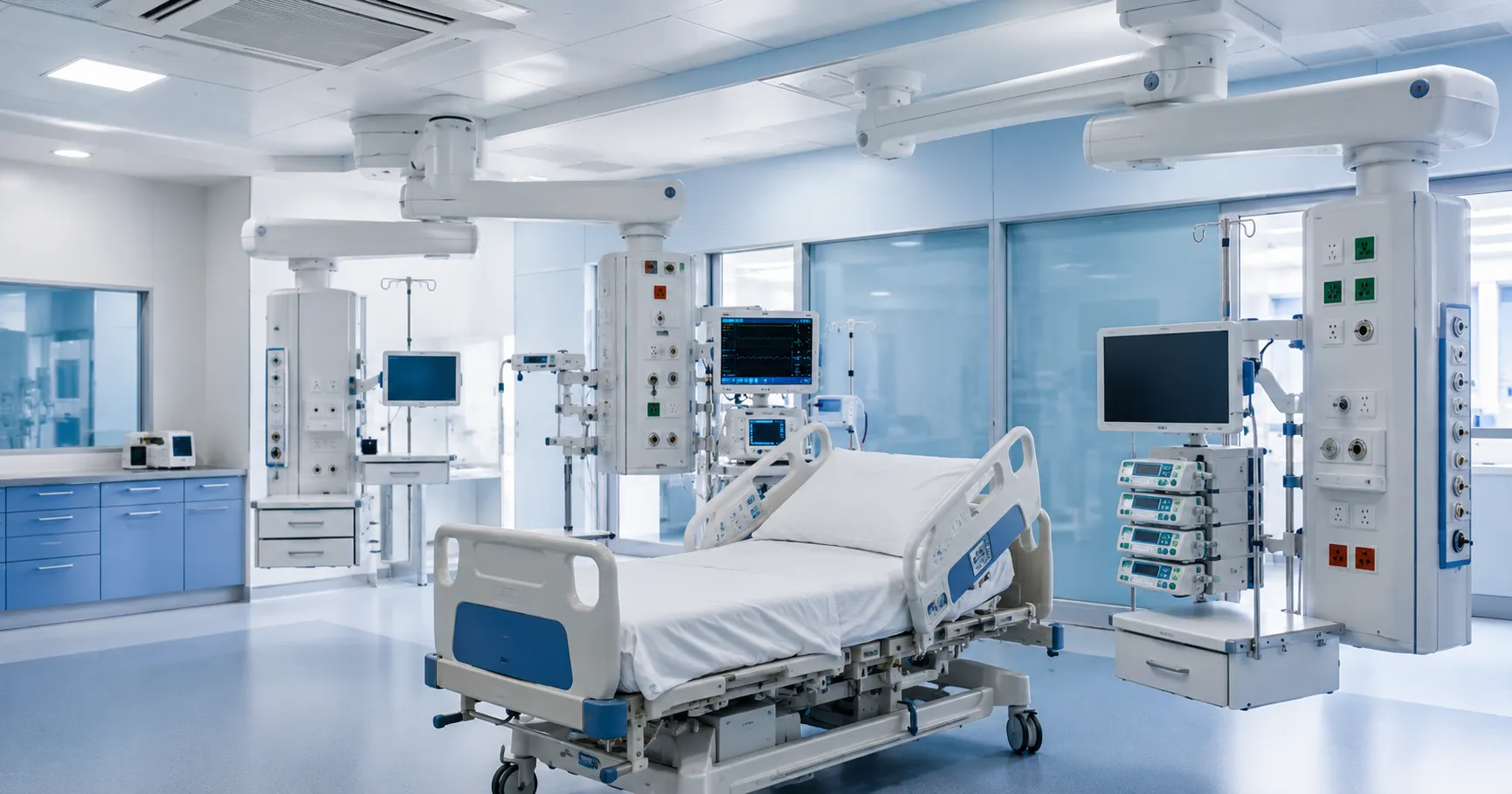
Medical pendant systems are ceiling-mounted support units designed to organise medical equipment, utilities, and life-support connections around the patient's bedside or operating area. They provide centralised access to essential services while creating a safer and more efficient working environment.
Centralised Medical Gas Distribution — Medical pendants integrate oxygen, vacuum, compressed air, and other medical gas outlets into a single overhead system. This eliminates long hose runs across the floor, reducing trip hazards and improving emergency accessibility. In practice, hospitals often report faster response times when critical equipment is positioned within easy reach.
Electrical Power Integration — Modern pendant systems include multiple electrical sockets, network ports, and communication interfaces for ventilators, monitors, infusion pumps, and imaging devices. Reliable power distribution helps support uninterrupted patient care in high-dependency environments.
Improved Clinical Workflow — Ceiling-mounted systems free valuable floor space by supporting heavy equipment overhead. Experienced ICU managers typically find that organised workstations improve staff movement and simplify emergency interventions around critically ill patients.
Enhanced Infection Prevention — By minimising floor-mounted cables and equipment stands, medical pendants facilitate easier cleaning and better infection control. Smooth surfaces and modular designs also simplify routine maintenance procedures.
Healthcare Environments That Depend on Medical Pendant Systems
Medical pendant systems are installed in various healthcare departments where efficient organisation of equipment and immediate access to life-support equipment are essential.
Intensive Care Units (ICUs) — Critical care units rely heavily on medical pendants to support ventilators, patient monitors, infusion pumps, suction units, and oxygen delivery systems. The flexible positioning of equipment improves patient management while allowing caregivers to work safely around the bedside.
Operating Rooms — Surgical pendant systems provide surgeons and operating staff with convenient access to electrical power, medical gases, monitors, and surgical instruments. Their ergonomic design helps maintain sterile environments by reducing floor congestion.
Facilities sourcing through verified global medical equipment business suppliers generally receive systems that comply with international quality standards and that offer installation support, technical documentation, and after-sales service.
Emergency Departments — Trauma bays and emergency resuscitation rooms benefit from ceiling-mounted pendants, which allow rapid access to critical equipment without restricting staff movement during emergency procedures.
Specialised Procedure Rooms — Cardiac catheterisation laboratories, hybrid operating rooms, neonatal intensive care units, and recovery suites frequently use customised pendant configurations tailored to specific clinical workflows.
Technical Characteristics That Influence Medical Pendant Selection
Healthcare organisations should evaluate medical pendant systems based on technical performance, safety, flexibility, and long-term operational value.
Load-Bearing Capacity — Pendant arms must safely support medical devices, shelves, monitors, and accessories without compromising stability. Understanding equipment weight requirements helps prevent future capacity limitations.
Rotation and Positioning Range — Multi-axis rotation enables caregivers to position equipment exactly where needed while maintaining patient accessibility. Greater movement flexibility improves workflow efficiency in busy critical care settings.
Modular Configuration — Modern pendant systems allow hospitals to customise shelves, drawers, monitor mounts, infusion pump racks, and accessory rails according to departmental requirements. Modular designs also simplify future upgrades as clinical needs evolve.
Cable and Gas Management — Internal routing of electrical cables and medical gas pipelines protects critical connections while improving safety and aesthetics. Well-designed cable management reduces maintenance requirements and minimises accidental disconnections.
Selecting the Right Medical Pendant System for Long-Term Clinical Performance
Choosing a medical pendant system requires more than comparing product specifications. Hospitals should evaluate how the system will perform throughout its operational life, considering installation, maintenance, future expansion, and compatibility with existing medical infrastructure. A carefully selected pendant system improves caregiver efficiency, enhances patient safety, and reduces equipment management challenges.
Total Cost of Ownership — The initial purchase cost is only one part of the investment. Installation, preventive maintenance, spare parts, staff training, and future upgrades contribute significantly to long-term ownership costs. Experienced procurement teams often compare lifecycle value rather than focusing only on the purchase price.
Supplier Experience and Technical Support — Reliable suppliers provide installation planning, commissioning, user training, warranty coverage, and technical support. Healthcare facilities that work with medical equipment, business advertising, and national procurement teams often benefit from faster service response times, genuine spare parts, and comprehensive documentation throughout the equipment lifecycle.
Compliance and Safety Standards — Medical pendant systems should comply with applicable local regulatory requirements and internationally recognised standards such as CE, FDA, or regional equivalents. Procurement professionals should verify structural testing, medical gas certifications, electrical safety, and installation documentation before purchase.
Future Expansion Capability — Modern hospitals frequently upgrade monitoring systems, ventilators, and patient care technology. Selecting modular pendant systems allows additional shelves, monitor arms, electrical outlets, and medical gas connections to be added as clinical requirements evolve.
Healthcare organisations managing multiple hospitals often improve procurement consistency and maintenance efficiency by establishing long-term medical equipment supply business partners with trusted suppliers that can support future expansion projects.
Maintaining Medical Pendant Systems for Reliable Clinical Operations
Routine maintenance ensures medical pendant systems remain safe, reliable, and compliant throughout their service life. Preventive inspections also reduce unexpected equipment downtime and extend system longevity.
Routine Mechanical Inspection — Scheduled inspections should include rotating arms, locking mechanisms, load-bearing joints, shelves, and mounting structures. Early detection of wear helps prevent operational interruptions and improve patient safety.
Medical Gas and Electrical Testing — Medical gas outlets, electrical sockets, communication ports, and grounding systems should be inspected regularly in accordance with manufacturer recommendations and applicable healthcare regulations. Proper testing ensures uninterrupted delivery of essential clinical services.
Cleaning and Preventive Maintenance — Pendant systems should be cleaned with approved hospital disinfectants, avoiding damage to electrical and gas outlet components. Facilities operating in high-acuity environments often include pendant maintenance within their biomedical preventive maintenance schedules.
Hospitals located in regions with limited local technical support frequently reduce lifecycle costs by selecting manufacturers with globally available spare parts and comprehensive service networks.
Global Demand and International Procurement Trends
Medical pendant systems have become standard infrastructure in newly constructed hospitals, intensive care units, hybrid operating rooms, and specialised treatment centres worldwide. Increasing demand for efficient patient care environments continues to drive investment in ceiling-mounted equipment management systems.
Growth of Critical Care Facilities — The expansion of ICUs, emergency departments, and advanced surgical centres has significantly increased demand for flexible medical pendant systems that support complex patient-care equipment.
Preference for Modular Designs — Many healthcare providers now prefer modular pendant systems because they allow departments to reconfigure equipment layouts without replacing the entire installation. This flexibility supports changing clinical requirements while protecting long-term investments.
International Procurement Considerations — Global buyers should evaluate supplier reputation, engineering expertise, regulatory compliance, installation support, export documentation, warranty terms, and spare parts availability before placing orders. One aspect that surprises first-time buyers is that professional installation planning often has a greater impact on long-term performance than selecting the highest-priced system.
Final Thoughts
Medical pendant systems have become an essential component of modern intensive care units, operating theatres, emergency departments, and specialised treatment areas. By organising medical gases, electrical services, patient monitoring equipment, and clinical accessories overhead, these systems improve workflow efficiency, enhance patient safety, and create cleaner healthcare environments. Healthcare organisations should carefully evaluate system configuration, load capacity, flexibility, regulatory compliance, and after-sales support before investing. Selecting the right medical pendant system helps hospitals improve clinical operations while supporting future expansion and evolving patient care needs.
Disclaimer
Medigear.uk is a global medical equipment supplier, exporter, and distributor. The content published on this site is intended for educational and product awareness purposes only. Nothing on this page constitutes medical advice, clinical guidance, or treatment recommendations. All healthcare procurement and clinical decisions should be made by qualified medical professionals and compliant procurement teams operating within the regulatory frameworks of their respective countries.