Hospitals depend on fast, reliable communication between patients and caregivers, especially in high-pressure environments such as emergency departments, ICUs, and recovery wards. Nurse call systems form the backbone of this communication network, ensuring patients can request assistance instantly while allowing clinical staff to prioritise care efficiently.
For medical equipment buyers services and service professionals worldwide, selecting the right nurse call system involves evaluating system architecture, integration capabilities, scalability, reliability, and compliance with healthcare communication standards. Poor system selection can delay response times and impact patient safety outcomes across entire hospital units.
Modern healthcare facilities are increasingly adopting digital and wireless nurse call systems that integrate with hospital information systems, mobile devices, and centralised monitoring platforms. This guide explains how nurse call systems work, where they are used, and what hospitals should consider before investing in them.
How Nurse Call Systems Support Clinical Response Workflow
Nurse call systems are designed to ensure that patients can immediately alert healthcare staff when assistance is required. These systems are structured to reduce response delays and improve coordination between nursing teams.
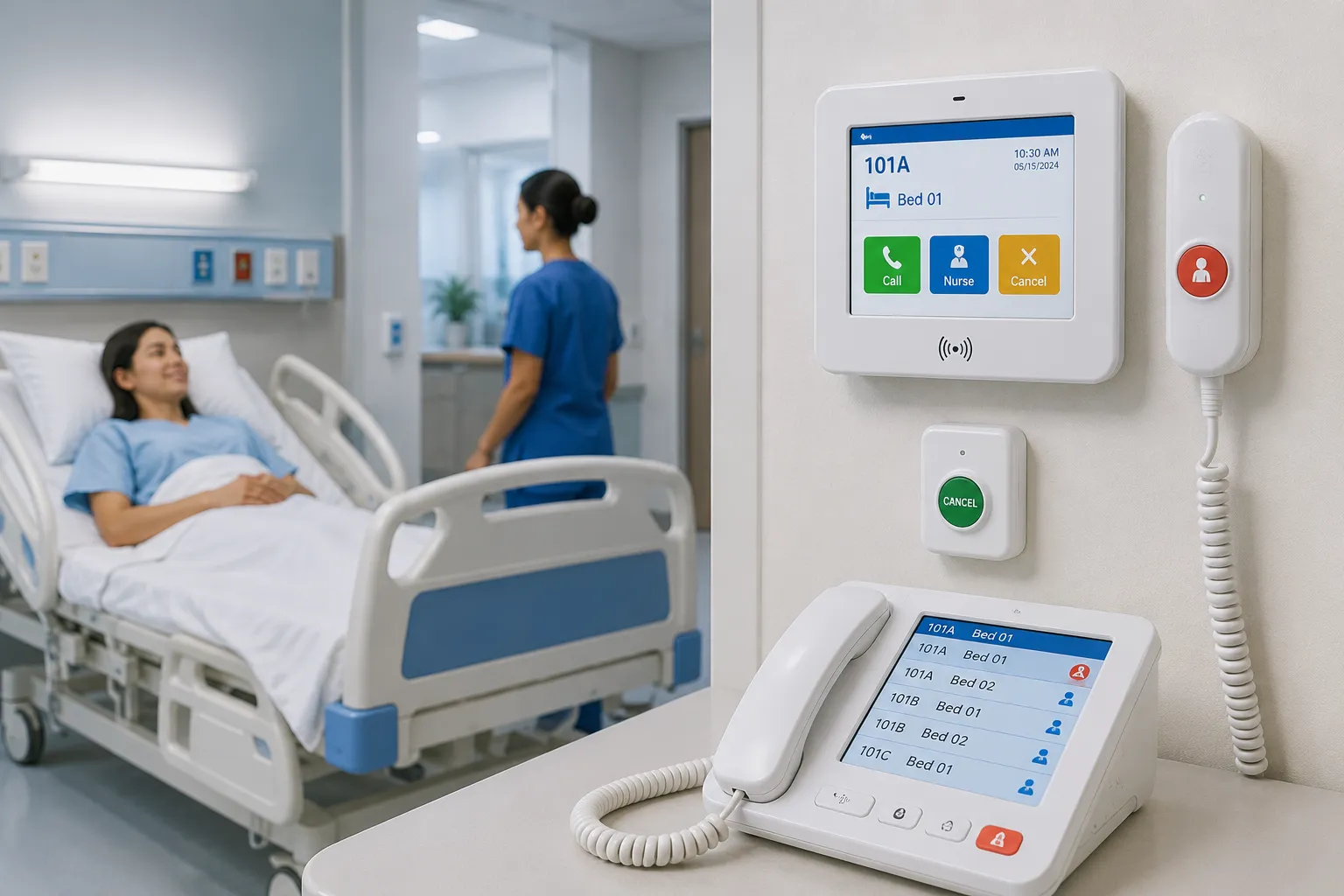
Patient-to-Nurse Communication Trigger — At the core of every nurse call system is a bedside call button or handheld device that allows patients to send alerts instantly. These signals are transmitted to nurse stations or mobile devices, ensuring rapid awareness of patient needs. In practice, hospitals find that faster alert transmission significantly reduces response delays in critical care areas.
Centralised Alert Management — Modern systems route incoming alerts to centralised nursing dashboards, enabling staff to prioritise cases by urgency. This reduces confusion during peak workload periods and improves patient safety outcomes.
Integration with Hospital Systems — Advanced nurse call systems integrate with electronic medical records, paging systems, and mobile applications. Experienced clinical engineers typically evaluate integration capability to ensure seamless workflow coordination.
Escalation and Backup Alerts — If a nurse does not respond within the defined time frame, alerts automatically escalate to senior staff or backup teams. This ensures continuous patient coverage even during high workload situations.
How Nurse Call Systems Support Clinical Response Workflow
Nurse call systems are designed to ensure that patients can immediately alert healthcare staff when assistance is required. These systems are structured to reduce response delays and improve coordination between nursing teams.
Patient-to-Nurse Communication Trigger — At the core of every nurse call system is a bedside call button or handheld device that allows patients to send alerts instantly. These signals are transmitted to nurse stations or mobile devices, ensuring rapid awareness of patient needs. In practice, hospitals find that faster alert transmission significantly reduces response delays in critical care areas.
Centralised Alert Management — Modern systems route incoming alerts to centralised nursing dashboards, enabling staff to prioritise cases by urgency. This reduces confusion during peak workload periods and improves patient safety outcomes.
Integration with Hospital Systems — Advanced nurse call systems integrate with electronic medical records, paging systems, and mobile applications. Experienced clinical engineers typically evaluate integration capability to ensure seamless workflow coordination.
Escalation and Backup Alerts — If a nurse does not respond within the defined time frame, alerts automatically escalate to senior staff or backup teams. This ensures continuous patient coverage even during high workload situations.
Deployment of Nurse Call Systems Across Healthcare Environments
Nurse call systems are implemented across multiple hospital environments, each requiring different levels of responsiveness, integration, and reliability depending on patient condition and care intensity.
Intensive Care Units (ICU Integration) — In ICUs, nurse call systems are integrated with monitoring equipment and bedside devices to ensure immediate response to critical alerts. These systems often prioritise alarm escalation and continuous connectivity. Facilities operating high-acuity units often report improved coordination of patient monitoring when integrated systems are used.
General Inpatient Wards — In standard wards, nurse call systems support routine patient requests such as mobility assistance, medication needs, and hygiene support. Simpler wired or hybrid systems are commonly used here due to cost efficiency and ease of maintenance.
Hospitals sourcing from verified global business suppliers of medical equipment benefit from certified systems that comply with international safety and healthcare communication standards while offering scalable installation across departments.
Emergency Departments — Emergency care environments require high-speed alert processing and multi-channel communication. Wireless nurse call systems are often preferred for their flexibility and rapid deployment during patient surges.
Long-Term Care Facilities — Nursing homes and rehabilitation centres rely heavily on nurse call systems to ensure continuous patient monitoring and rapid caregiver response, especially for elderly or mobility-limited patients.
Technical Design and System Architecture Considerations
The performance of a nurse call system depends on its underlying architecture, communication technology, and integration capabilities within the hospital environment.
Wired vs Wireless Infrastructure — Wired systems provide stable, interference-free communication, making them well-suited for permanent hospital installations. Wireless systems provide flexibility and easier expansion but require careful network management to avoid signal disruption. Procurement teams often evaluate infrastructure readiness before selection.
System Integration Capability — Modern nurse call systems integrate with hospital management software, mobile applications, and alert dashboards. This ensures real-time communication between patients, nurses, and administrative teams, improving workflow coordination.
Alert Customisation and Priority Levels — Advanced systems allow hospitals to configure alert categories such as emergency, routine, or assistance requests. This helps clinical teams prioritise critical situations effectively during periods of high workload.
Durability and Infection Control Design — Equipment used in clinical environments must withstand repeated cleaning and exposure to disinfectants. One aspect that surprises first-time buyers is how material quality directly impacts long-term system reliability in high-use wards.
Procurement Evaluation and Decision-Making Strategy
Selecting a nurse call system requires careful evaluation of performance reliability, system scalability, and long-term operational costs.
Total Cost of Ownership Evaluation — Procurement teams must consider installation cost, maintenance requirements, software updates, and hardware replacement cycles. Low-cost systems may lead to higher long-term operational expenses if reliability is poor.
Vendor Reliability and System Support — Choosing experienced vendors ensures proper installation, training, and ongoing technical support. Healthcare organisations that use medical equipment business suppliers to reach international procurement teams benefit from structured deployment and faster issue resolution.
Compliance and Safety Standards — Systems must comply with applicable healthcare communication regulations and hospital safety requirements. Certification ensures safe operation across different clinical environments and reduces regulatory risks.
Scalability for Future Expansion — Hospitals often expand capacity over time. Systems should support additional beds, wards, and departments without requiring complete replacement.
Healthcare facilities managing multi-site operations often achieve greater efficiency by establishing long-term medical equipment supply business partners to ensure consistent system deployment and maintenance.
Maintenance and System Lifecycle Performance
Regular maintenance ensures nurse call systems continue to function reliably in high-demand healthcare environments.
Routine System Testing — Hospitals should conduct periodic testing of call buttons, alert routing, and communication panels. This ensures all system components function correctly and reduces the risk of failure during emergencies.
Software Updates and Monitoring — Digital nurse call systems require regular software updates to improve performance, security, and integration with hospital networks. Biomedical IT teams typically manage these updates.
Hardware Inspection and Replacement — Physical components such as buttons, bedside units, and control panels experience wear over time. Regular inspection ensures continued reliability and patient safety.
In hospitals with high patient turnover, maintenance planning directly affects system uptime and response efficiency.
Global Demand and Procurement Trends
Nurse call systems are experiencing increased global demand due to rising healthcare standards, hospital modernisation programs, and digital transformation initiatives.
Shift Toward Smart Healthcare Systems — Hospitals are adopting integrated communication platforms that connect nurse call systems with mobile apps, monitoring systems, and electronic health records.
Increased Demand in Aged Care Facilities — Long-term care centres and rehabilitation hospitals are expanding their nurse call infrastructure to enhance patient safety and meet ongoing monitoring needs.
International Procurement Considerations — Buyers must evaluate system compatibility, regulatory compliance, installation support, and after-sales service. One common challenge is ensuring seamless integration with existing hospital infrastructure across different regions.
Final Thoughts
Nurse call systems are essential for ensuring fast, reliable communication between patients and healthcare staff. They improve response times, reduce workload pressure on nurses, and enhance overall patient safety. Modern systems go beyond simple call buttons and now include digital dashboards, wireless communication, and hospital-wide integration capabilities.
When selecting a system, hospitals should focus on reliability, scalability, integration, and long-term service support rather than just initial cost. A well-planned nurse call system significantly improves operational efficiency across all healthcare environments.
Disclaimer
Medigear.uk is a global medical equipment supplier, exporter, and distributor. The content published on this site is intended for educational and product awareness purposes only. Nothing on this page constitutes medical advice, clinical guidance, or treatment recommendations. All healthcare procurement and clinical decisions should be made by qualified medical professionals and compliant procurement teams operating within the regulatory frameworks of their respective countries.