Modern operating rooms are designed to minimise every possible source of contamination during surgical procedures. While sterile instruments, protective clothing, and strict infection control protocols are essential, the quality of air inside the operating theatre is equally important. Airborne particles carrying bacteria or microorganisms can increase the risk of surgical site infections, making controlled ventilation systems a critical part of hospital infrastructure.
For medical equipment buyers services professionals worldwide, selecting an appropriate laminar airflow system involves evaluating airflow performance, filtration efficiency, operating room size, energy consumption, maintenance requirements, and compliance with applicable healthcare regulations. Hospitals investing in advanced ventilation technology often improve environmental control while supporting safer surgical outcomes and greater operational efficiency.
This guide explains how laminar airflow systems function, where they are used, their technical characteristics, and the key factors that healthcare organisations should consider before investing in modern operating theatre ventilation.
Understanding the Clinical Role of Laminar Air Flow Systems
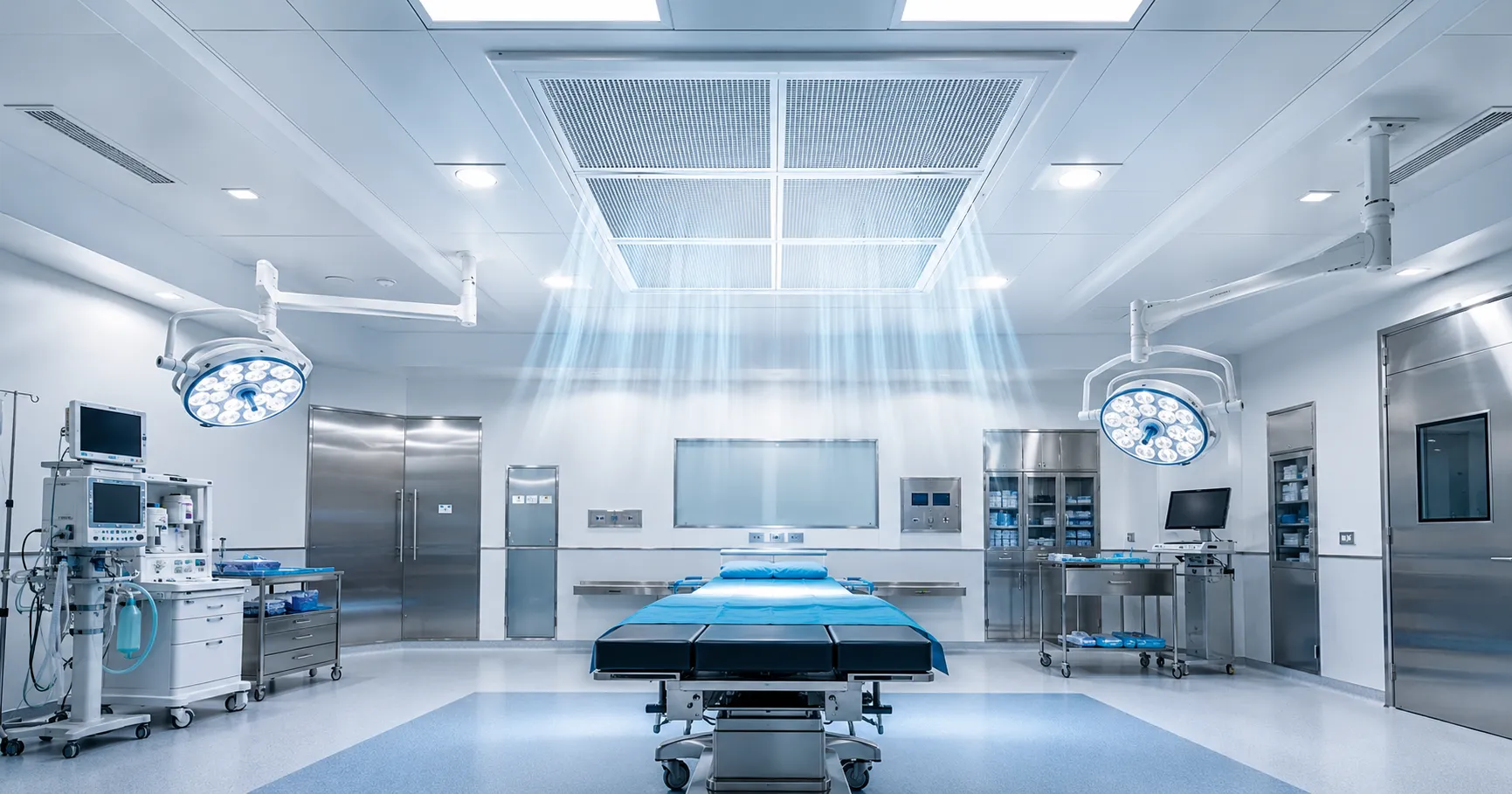
Laminar airflow systems are specialised ventilation solutions that continuously deliver highly filtered air over the operating area via a controlled, unidirectional airflow pattern. Their primary purpose is to reduce airborne contamination and maintain a cleaner surgical environment throughout medical procedures.
HEPA Filtration Performance — Most laminar air flow systems use High-Efficiency Particulate Air (HEPA) filters capable of removing at least 99.97% of airborne particles measuring 0.3 microns. Clean air passes through these filters before entering the operating room, helping reduce bacteria, dust, and other contaminants. In practice, hospitals performing orthopaedic, cardiac, transplant, and neurosurgical procedures often prioritise high-efficiency filtration because infection prevention is especially critical.
Controlled Unidirectional Airflow — Unlike conventional ventilation systems that circulate air in multiple directions, laminar airflow moves uniformly downward from the ceiling toward the floor. This continuous airflow carries airborne particles away from the surgical site before they can settle on sterile instruments or open wounds, supporting a consistently cleaner operating environment.
Positive Pressure Protection — Operating rooms equipped with laminar airflow systems generally maintain positive air pressure relative to adjacent corridors. This pressure difference prevents contaminated air from entering the surgical suite whenever doors are opened, helping preserve sterile conditions throughout the procedure.
Supporting Infection Prevention — Laminar airflow systems complement established infection control practices rather than replace them. Experienced biomedical engineers and infection prevention teams typically evaluate airflow performance alongside sterilisation protocols, staff movement patterns, operating room traffic, and environmental monitoring to maximise overall surgical safety.
Where Laminar Air Flow Systems Are Used in Healthcare Facilities
Laminar air flow systems are installed in healthcare environments where maintaining exceptional air quality is essential for patient safety and clinical performance.
Operating Theatres — General surgery, orthopaedic surgery, cardiovascular procedures, neurosurgery, and organ transplantation frequently rely on laminar airflow systems to create a highly controlled surgical environment. Clean, filtered air continuously protects the operating field while reducing airborne contamination.
Hybrid Operating Rooms — Hybrid theatres combine surgical procedures with advanced imaging equipment. These rooms require sophisticated ventilation systems that maintain sterile conditions while supporting complex clinical workflows and large medical devices.
Healthcare facilities that source from verified global medical equipment business suppliers often receive professionally designed laminar airflow systems accompanied by engineering documentation, installation guidance, commissioning assistance, and regulatory compliance certification.
Specialised Procedure Rooms — Laminar airflow is also used in burn treatment units, ophthalmic surgery suites, fertility laboratories, tissue handling areas, and selected pharmaceutical cleanrooms where strict environmental control is essential.
Selecting the Right Laminar Air Flow System for Long-Term Performance
Choosing a laminar airflow system requires more than comparing airflow capacity or equipment costs. Hospitals should evaluate how the system will perform over its operational life, considering installation requirements, maintenance needs, regulatory compliance, and future expansion. A properly selected system improves infection prevention, enhances surgical efficiency, and delivers long-term value.
Total Cost of Ownership — The purchase price represents only part of the investment. Installation, HEPA filter replacement, energy consumption, preventive maintenance, validation testing, and service support all contribute to lifecycle costs. Experienced procurement teams usually compare overall ownership costs rather than focusing solely on the initial quotation.
Supplier Expertise and Technical Support — Reliable manufacturers provide engineering consultation, installation supervision, commissioning, staff training, and after-sales service. Healthcare organisations that work with medical equipment business Advertise to international procurement teams often benefit from faster technical assistance, genuine replacement filters, and long-term maintenance support.
Compliance with Healthcare Standards — Laminar airflow systems should comply with applicable local healthcare regulations and internationally recognised standards, such as ISO cleanroom guidelines, CE requirements, FDA regulations, or regional equivalents. Procurement teams should verify airflow validation reports, HEPA filter certifications, and commissioning documentation before accepting installation.
Future Expansion and System Integration — Modern operating rooms frequently undergo equipment upgrades. Selecting ventilation systems that integrate with hospital building management systems (BMS), environmental monitoring, and HVAC controls improves operational flexibility. Hospitals managing multiple surgical suites often benefit from establishing long-term medical equipment supply business partners to maintain consistent performance across facilities.
Maintaining Laminar Air Flow Systems for Safe Surgical Environments
Regular maintenance is essential to ensure a laminar airflow system continues to deliver clean, filtered air throughout its service life. Preventive maintenance also helps maintain regulatory compliance and reduces the risk of unexpected system failures.
HEPA Filter Inspection and Replacement — HEPA filters gradually become less effective as they capture airborne particles. Hospitals should inspect filters according to manufacturer recommendations and replace them when airflow or filtration efficiency declines. Timely replacement maintains consistent air quality and infection prevention.
Airflow Performance Testing — Routine airflow validation confirms that the system continues to deliver uniform, unidirectional airflow over the operating table. Biomedical engineers typically perform airflow velocity measurements, smoke visualisation tests, and particle count assessments during scheduled inspections.
Cleaning and Preventive Servicing — Ceiling diffusers, air ducts, control panels, and ventilation components should be cleaned regularly in accordance with approved maintenance procedures. Facilities with multiple operating rooms often include laminar airflow systems in their preventive maintenance programs to maximise reliability.
Healthcare facilities in regions with limited technical support frequently reduce maintenance costs by selecting systems backed by global service networks and readily available replacement components.
Global Demand and International Procurement Trends
Growing investments in healthcare infrastructure and infection prevention continue to increase demand for laminar air flow systems worldwide. Hospitals are modernising operating theatres to improve patient safety, meet evolving regulatory requirements, and support increasingly complex surgical procedures.
Expansion of Advanced Surgical Facilities — Newly constructed hospitals, speciality surgical centres, and hybrid operating rooms increasingly incorporate laminar airflow technology as a standard component of operating theatre design. This trend is particularly evident in facilities performing orthopaedic, cardiovascular, neurosurgical, and transplant procedures.
Increasing Focus on Infection Prevention — Healthcare providers continue investing in advanced air filtration systems to reduce airborne contamination and improve surgical outcomes. Modern laminar airflow systems also support environmental monitoring and energy-efficient ventilation strategies.
International Procurement Considerations — Global buyers should evaluate engineering support, installation expertise, warranty coverage, spare parts availability, regulatory compliance, and export documentation before making a purchase. One aspect that surprises first-time buyers is that professional installation and commissioning often influence long-term system performance more than equipment specifications alone.
Final Thoughts
Laminar air flow systems play a vital role in maintaining clean, controlled operating room environments that support infection prevention and patient safety. By delivering HEPA-filtered air in a uniform, unidirectional pattern, these systems help reduce airborne contamination and improve surgical conditions. When selecting a laminar airflow system, healthcare facilities should consider airflow performance, filtration efficiency, compliance with standards, maintenance requirements, and long-term service support. Investing in the right ventilation solution contributes to safer surgical procedures, greater operational efficiency, and reliable clinical performance for years to come.
Disclaimer
Medigear.uk is a global medical equipment supplier, exporter, and distributor. The content published on this site is intended for educational and product awareness purposes only. Nothing on this page constitutes medical advice, clinical guidance, or treatment recommendations. All healthcare procurement and clinical decisions should be made by qualified medical professionals and compliant procurement teams operating within the regulatory frameworks of their respective countries.