Haematology Analysers Explained for Complete Blood Counts
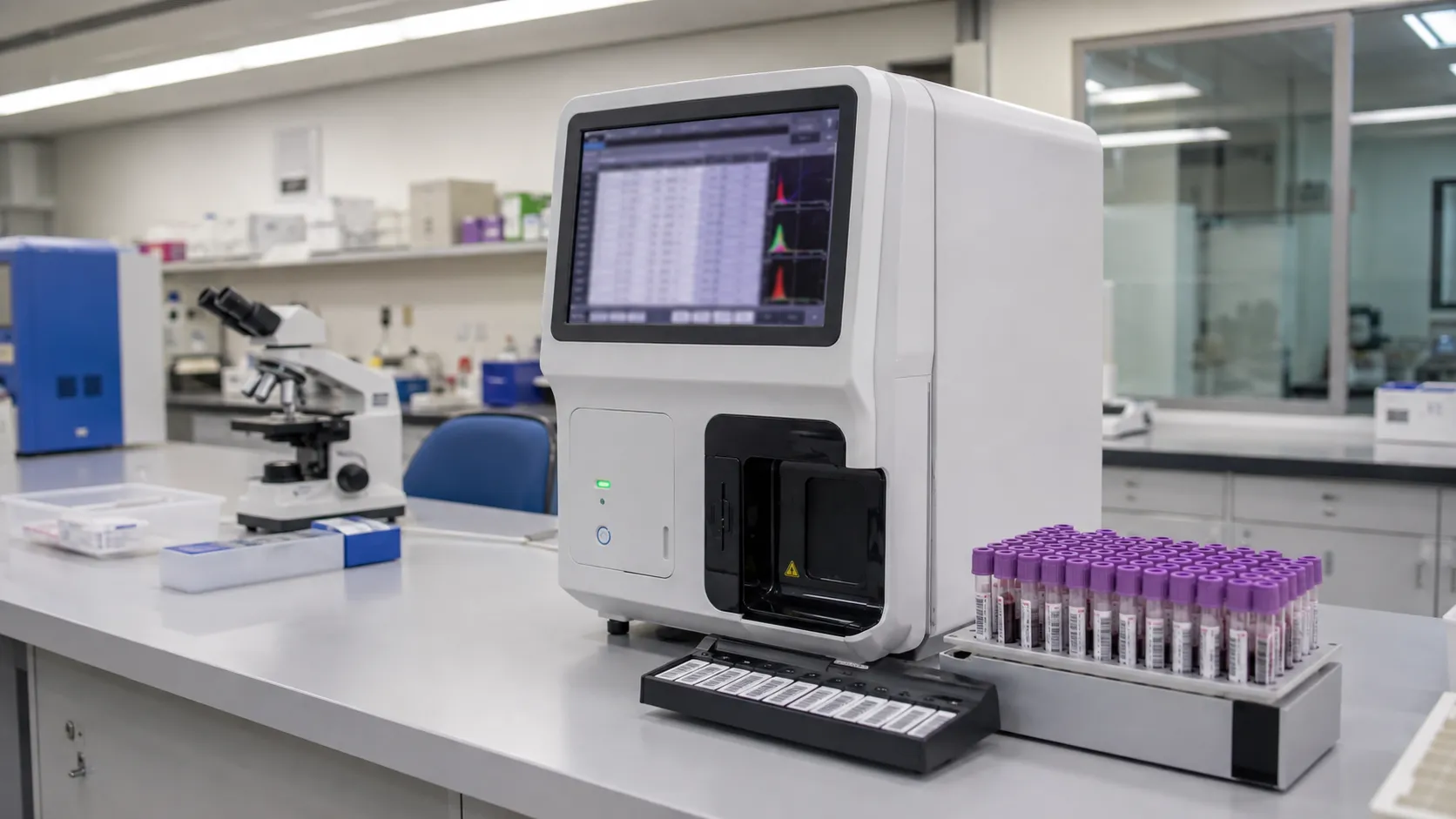
A haematology analyser is an automated laboratory instrument that counts and characterises the cells in a blood sample to produce a full blood count, reporting red cells, white cells, platelets, haemoglobin and a differential white-cell breakdown in under a minute per sample. It draws a measured aliquot of whole blood, dilutes and processes it through detection chambers, and prints numeric results with flags where a value falls outside expected limits.
This guide is written for pathology procurement leads and biomedical scientists specifying analysers for haematology benches. It explains the two core counting principles, what a five-part differential adds over a three-part count, how throughput and walk-away capacity are quoted, and the standards, connectivity and running costs a buyer should confirm before signing.
How a Haematology Analyser Counts Cells
Two measurement principles do most of the work, and modern analysers combine them. Electrical impedance, the Coulter principle, draws cells one at a time through a narrow aperture across which a current flows; each cell displaces conductive fluid and produces a voltage pulse whose height is proportional to cell volume. Counting the pulses gives concentration, and sizing them gives the volume distribution used to derive red-cell indices and platelet counts.
Optical detection adds discrimination that impedance alone cannot. A focused laser illuminates each cell in a flow cell, and forward scatter, side scatter and, on higher-end platforms, fluorescence are measured together. Forward scatter tracks size, side scatter reflects internal complexity and granularity, and fluorescent staining of nucleic acids helps separate reticulocytes, nucleated red cells and immature granulocytes. Combining impedance, conductivity, and light scatter enables an instrument to resolve overlapping populations reliably.
Three-Part Versus Five-Part Differential
The differential splits the total white cells into subtypes. A three-part differential separates lymphocytes, a mixed middle fraction, and granulocytes, and is well-suited to low-volume or point-of-care settings. A five-part differential resolves neutrophils, lymphocytes, monocytes, eosinophils and basophils individually, which is the clinical expectation for hospital and reference laboratories. Five-part instruments also raise morphological flags, prompting a blood film review or reflex testing when abnormal cells are suspected. For most acute-trust benches, a five-part analyser is the baseline requirement, with three-part units reserved for satellite or veterinary use.
Throughput and Walk-Away Capacity
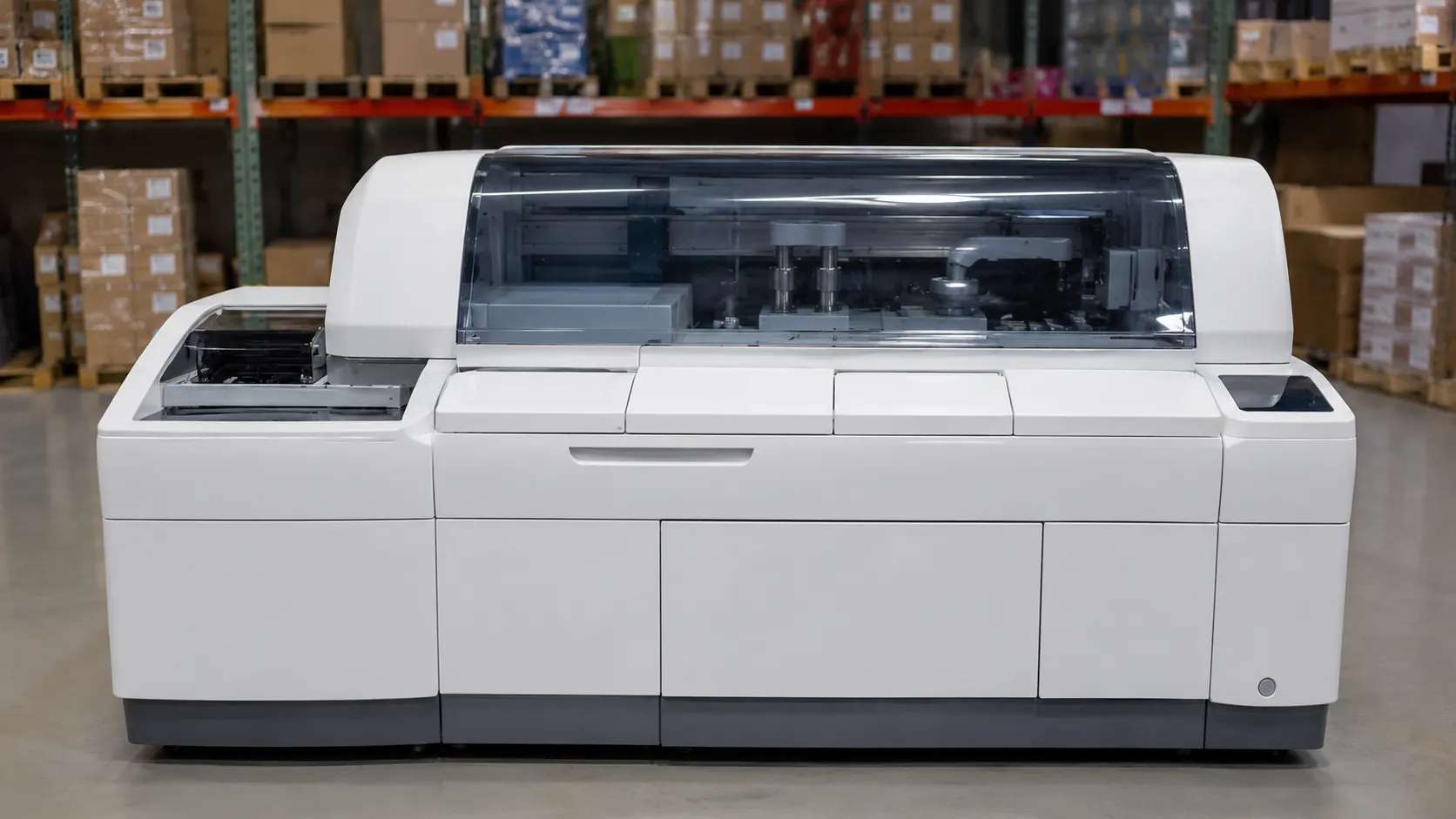
Throughput is quoted in samples per hour, and mid- to high-volume analysers typically run in the low hundreds per hour, with the highest-tier tracked systems going considerably faster. Numbers on a datasheet describe an ideal run, so weigh two figures that matter more in practice: the onboard tube capacity for continuous autoloading, and how the analyser handles reruns and reflex actions without a scientist reloading. For a busy laboratory, autoloader size, closed-tube sampling from capped tubes, and the option to link analysers into a track with an automatic slide-maker often decide productivity more than the headline rate.
Reagents, Consumables and Total Cost of Ownership
Reagents dominate the running cost. A haematology analyser requires diluents, lysing reagents, cleaning and sheath fluids, and fluorescent dyes for optical platforms; these are usually proprietary to the instrument. When comparing systems, cost the full reagent menu per reportable result, not the instrument price alone, and factor daily quality-control material, calibrators and the routine start-up and shutdown cycles that consume reagent before a single patient sample is run. Ask whether reagents are closed-system only, what the onboard stability and shelf life are, and how waste is handled, because a lower capital price can hide a higher cost per test across a five-to-seven-year life.
Calibration, Quality Control and Standards
Accredited haematology laboratories in the UK work to ISO 15189, the standard for medical laboratory quality and competence, and analysers must fit that framework. Expect daily internal quality control at multiple levels, regular calibration against the manufacturer's calibrators, and enrolment in an external quality assessment scheme so results are traceable and comparable. As in-vitro diagnostic medical devices, analysers and their reagents carry UKCA or CE marking and are regulated for the UK market by the MHRA; buyers moving between suppliers should also confirm how the newer in-vitro diagnostic regulation (IVDR) affects the reagents and assays they depend on. Keep the instructions for use, QC records and calibration logs audit-ready.
LIS Connectivity and Middleware
An analyser earns its place only when results flow cleanly into the laboratory information system. Confirm the instrument supports your LIS interface, ordinarily bidirectional so it can query the host for the test request and return results automatically, and check whether it needs vendor middleware to manage rules, auto-validation, reflex testing and delta checks. Middleware that automatically verifies normal results and holds only flagged samples for review is often where a high-throughput bench recovers scientists' time. Establish licensing, validation support, and ownership of the interface build before purchase, in line with UK information governance expectations for patient data.
Use Across Different Laboratory Settings
Requirements scale with the setting. A district general hospital typically wants one or two five-part analysers with autoloaders and an integrated slide-maker; a reference or tertiary centre may run a linked track with body-fluid modes and reticulocyte and immature-cell parameters. Smaller GP hubs, clinics, and veterinary practices are better served by compact benchtop three-part or entry-level five-part units with lower reagent draw volumes. Match the analyser to genuine daily and peak workload, and to the space, power and drainage the bench can provide, rather than to a headline specification you will never use.
Procurement Checklist
- Confirm UKCA or CE marking, MHRA registration and IVDR status of reagents and assays.
- Verify five-part differential and the morphology and immature-cell flags you require.
- Check counting technology combines impedance with optical or fluorescence detection.
- Compare true throughput, autoloader capacity and closed-tube sampling, not headline rate.
- Cost reagents, controls, calibrators and waste per reportable result across the contract life.
- Confirm bidirectional LIS connectivity and any middleware licensing for auto-validation.
- Agree service-contract cover, response times, spares and application-support availability.
- Ensure the platform supports ISO 15189 quality control and external quality assessment.
Service Contracts, Warranty and Uptime
A haematology bench is a critical service, so the support agreement matters as much as the hardware. Compare response and fix times, whether preventive maintenance visits are included, the cost of field-replaceable parts such as apertures and pumps, and whether a backup or loan instrument is available during a major fault. Remote diagnostics that let the vendor pre-empt failures, and clear escalation to application scientists for flagging or interference queries, protect turnaround. Weigh warranty length and what it excludes against the realistic downtime cost of a laboratory that cannot report full blood counts.
Sample Requirements and Interferences
Full blood counts run on whole blood anticoagulated with EDTA, and the sample matters as much as the instrument. Underfilled or overfilled tubes shift the anticoagulant ratio and distort results; clotted samples are unreportable, and ageing samples show swelling that alters cell indices, so laboratories set acceptance limits on tube fill and sample age. Certain samples interfere with automated counting: lipaemia and high bilirubin can affect optical haemoglobin measurement; cold agglutinins can clump red cells and falsely lower the count; and platelet clumping or giant platelets can be miscounted. A capable analyser flags these conditions so a scientist can act, for example warming a cold-agglutinin sample or reviewing a film, and buyers should check the range and clarity of the interference and abnormal-population flags a platform raises, since undetected interference is a genuine reporting risk.
Conclusion
A haematology analyser is judged on the reliability of its cell counting and differential, its true sustained throughput, and the total cost of the reagents and service that keep it reporting. Specify a five-part platform that combines impedance and optical detection, meets ISO 15189 quality control requirements, and interfaces cleanly with your LIS, then compare lifetime cost rather than sticker price. To compare compliant analysers and arrange a laboratory quote, contact MediGear or open a buyer account.
Disclaimer
This article is for informational purposes only. It is published by MediGear (medigear.uk) for general information and procurement guidance. It is not clinical, diagnostic, treatment, technical, engineering, legal,l or regulatory advice, nor a product endorsement, guarantee,e or substitute for professional assessment. MediGear does not provide medical consultations. Buyers should consult their clinical, biomedical, estates and regulatory contacts, and the manufacturer's documentation, and independently verify all specifications, certifications, compatibility and suitability before purchase. Specifications, certifications and availability are correct at the time of publication and may change without notice. MediGear is a medical-equipment distributor and does not sell medicines or pharmaceutical products.