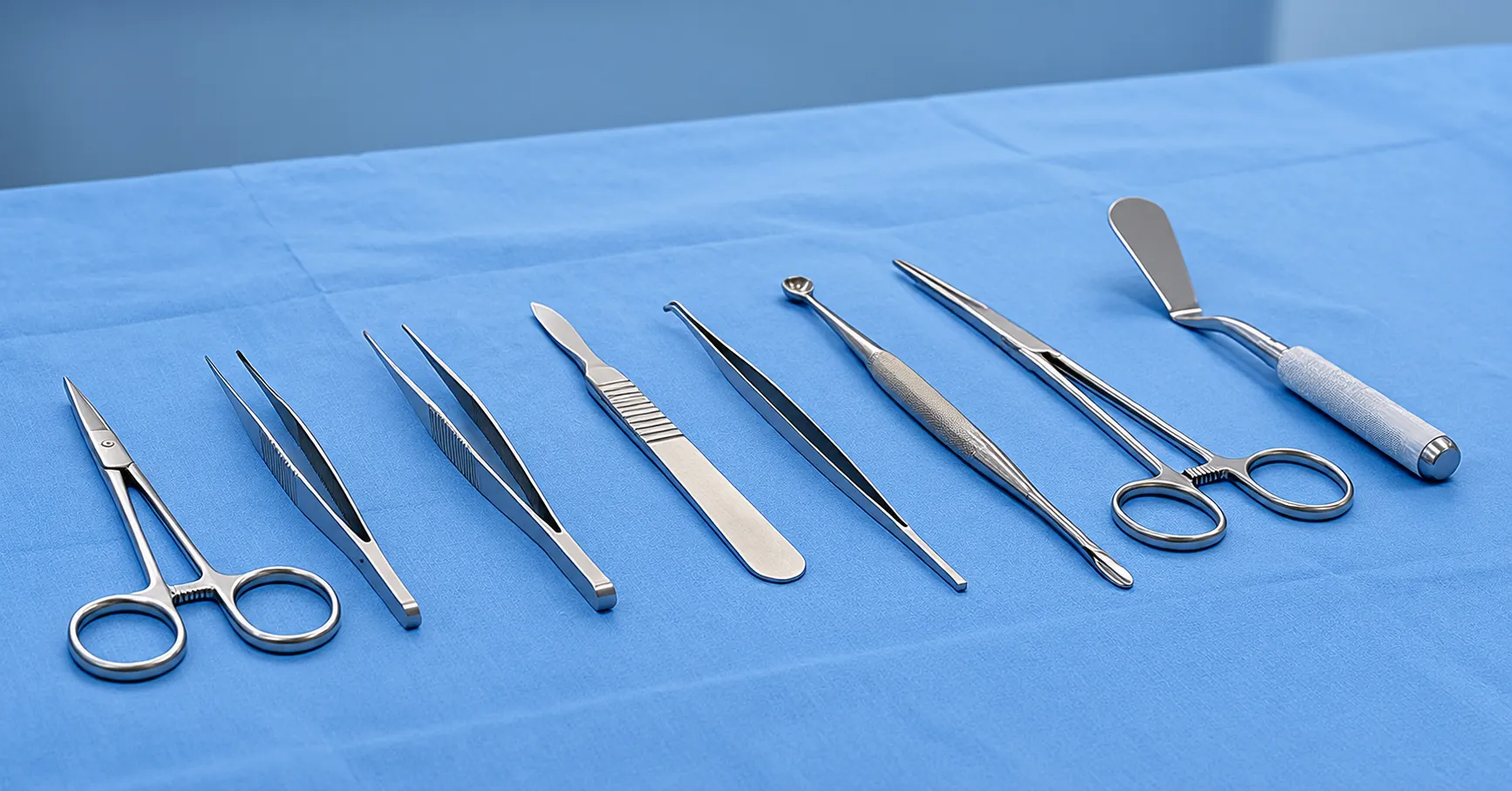
Tendon repair is the surgical reconnection of a torn or severed tendon so muscle force can be transmitted to bone again. The instrument tray is compact but specialised: fine needle holders, tenotomy scissors, atraumatic tendon-grasping forceps, tendon retrievers or passers, small self-retaining retractors, and a suture set suited to the tendon size. Get those elements right, and the repair holds; get them wrong, and the load fails at the knot.
For a procurement lead assembling or replenishing a hand and orthopaedic set, the value lies in matching instrument calibre, suture range and sterilisation pathway to the caseload. This guide walks through the core instruments, the specifications that matter, and the buying checks that keep a tray reliable.
What the procedure involves
Tendons are dense collagen cords with poor blood supply, so handling must be gentle and precise. A repair typically exposes the two tendon ends, debrides frayed tissue, retrieves the retracted proximal end, then approximates the ends with a core suture and a running epitendinous stitch. Flexor tendon injuries in the hand are the classic example, but the same principles apply to the Achilles, quadriceps, patellar and rotator-cuff tendons. The instruments differ mainly in scale, not concept.
The core instrument groups
Needle holders and scissors
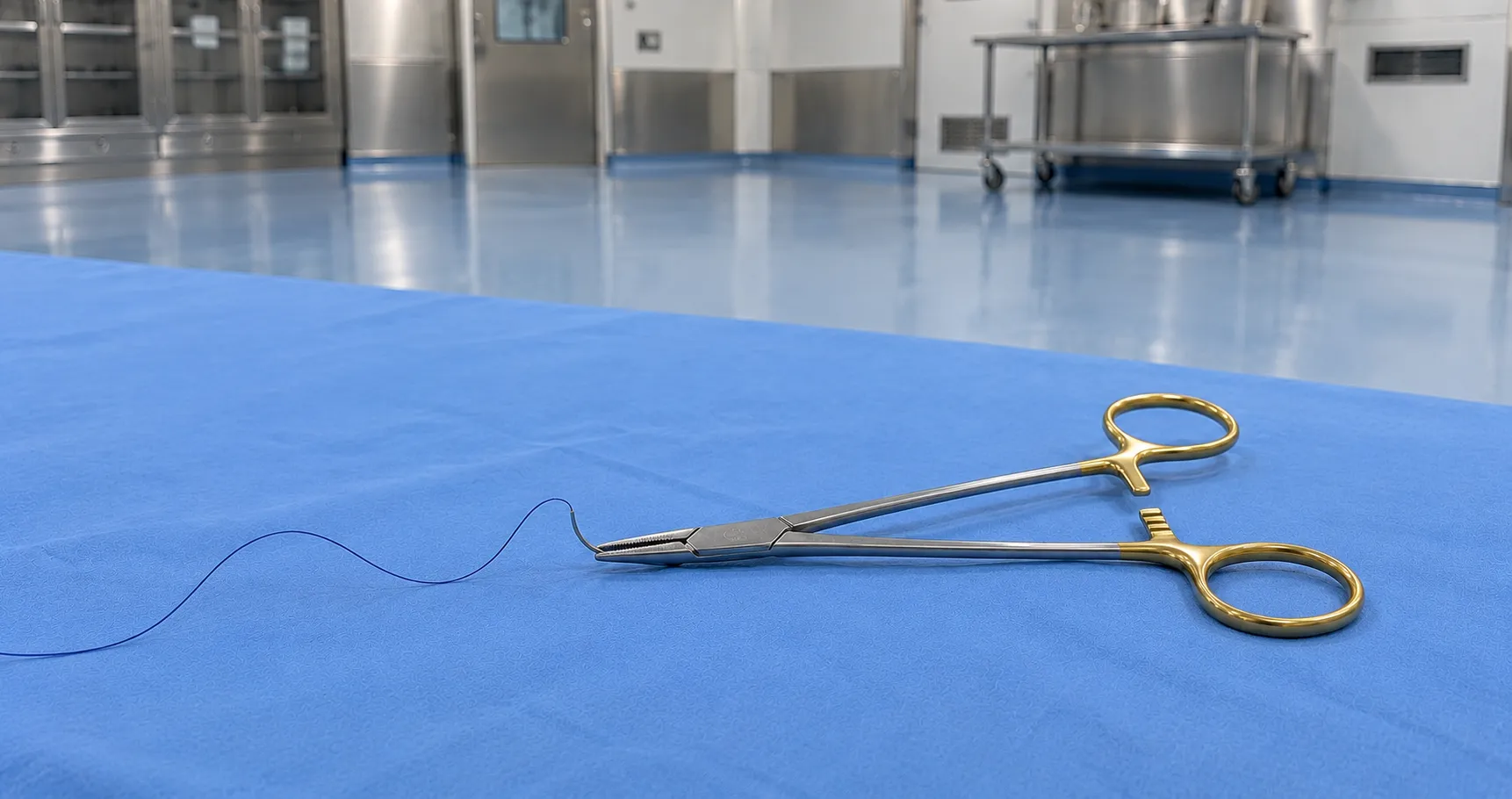
Fine, non-locking or delicately ratcheted needle holders let the surgeon place small curved needles accurately without crushing the tendon. For flexor work, a jaw around 13–15 cm with a smooth or lightly serrated tip is common. Tenotomy scissors—short, sharp and often curved—trim frayed collagen and open the tendon sheath cleanly. A set usually pairs these with fine dissecting scissors for the surrounding soft tissue.
Atraumatic grasping forceps
Because crushed collagen weakens the repair, tendon-holding forceps use broad, finely ridged or fenestrated jaws that spread grip pressure rather than pinch. Many trays include Adson and DeBakey patterns, alongside dedicated tendon-holding clamps that stabilise an end while the core suture is thrown.
Tendon retrievers and passers
A retracted proximal end can spring several centimetres up the sheath. Tendon retrievers, small pituitary-style graspers and flexible tendon passers recover and route it back through the pulley system without repeated blind grabs that shred the surface. In reconstruction or grafting, a tendon stripper harvests a donor tendon such as palmaris longus through a small incision.
Retractors and skin hooks
Exposure is delivered by fine self-retaining retractors—mini Weitlaner or Alm patterns—plus double skin hooks that hold wound edges without bruising them. Good static exposure frees the surgeon's hands for the repair itself.
Microsurgical instruments for small tendons
The smallest tendon repairs, and any that involve vessels or nerves alongside the tendon, cross into microsurgery. Here the tray adds jeweller's forceps, spring-handled micro needle holders and micro scissors, often used under loupes or a microscope. The instruments are counterbalanced and round-handled so they can be rolled between the fingertips for precise needle placement, and their tips are measured in fractions of a millimetre. A service that undertakes replantation or digital nerve work needs this micro range in addition to the standard set, and buyers should treat it as a separate, carefully protected inventory because the fine tips bend or splay if mishandled during cleaning or storage.
Suture materials and anchors
The suture is as much a part of the repair as the steel. Core sutures are usually a non-absorbable braided polyester or a coated multifilament in 3-0 or 4-0 for hand tendons, stepping up to heavier gauges for the Achilles. The epitendinous stitch is finer, often 5-0 or 6-0, and tidies the repair surface to reduce gliding resistance. When a tendon is avulsed from bone, suture anchors or transosseous techniques come into play, so a set for serving cuff or distal biceps work should include matching drivers. Buyers should confirm suture availability and cost as a recurring consumable, not a one-off.
Materials, standards and sterilisation
Reusable instruments are made from surgical stainless steel to ISO 7153-1, and any device placed on the UK market must carry UKCA or CE marking with a declaration of conformity, overseen by the MHRA. Check that instruments are validated for your sterilisation cycle—typically steam autoclaving to the relevant standard—and that fine tips tolerate repeated reprocessing without springing out of alignment. Single-use suture passers and disposable sets are an option where reprocessing capacity is tight,o r cross-contamination risk must be minimised.
Where tendon repair happens
The setting shapes the tray. A hand-surgery unit needs the finest calibre and a full micro range; a general orthopaedic theatre repairing an Achilles wants heavier holders and larger retractors. Emergency departments may hold a basic tendon set for early exploration, while veterinary practices need scaled instruments for animal tendon injuries. Defining the caseload first stops a facility from over-buying micro sets it rarely opens.
Why repair zone changes the instrument choice
Hand surgeons describe flexor injuries by zone, and the zone shapes the kit. Repairs within the fibro-osseous sheath (the historically difficult zone II) demand the finest atraumatic technique, delicate sheath retractors and careful pulley management to preserve smooth tendon gliding, so a set for this work leans toward micro-calibre instruments. Repairs outside the sheath tolerate slightly heavier instruments. Extensor tendon repairs on the back of the hand are more accessible but still need fine holders and sutures. Understanding the mix of zones a service treats tells a buyer whether to invest in a full micro range or a more general set, and prevents both under- and over-specification.
Consumables and total cost of ownership
The reusable steel is bought once, but a tendon service consumes sutures, needles, suture anchors and blades on every case, and those recurring costs often outweigh the instrument outlay over a year. When comparing suppliers, model the whole picture: instrument purchase, expected reprocessing life, sharpening and repair, and the per-case consumable bill. A slightly dearer instrument that holds its edge and alignment through more cycles can be cheaper over its life than a bargain that needs early replacement. Warranty length, repair turnaround and the availability of individual replacement instruments—so a single damaged holder does not sideline a whole tray—are practical differentiators worth pinning down in writing.
Decontamination, maintenance and lifecycle
Fine tendon instruments are delicate. Box joints and serrated jaws trap tissue, so ultrasonic cleaning and careful inspection under magnification protect both function and the patient. Track each tray's reprocessing count, watch for misaligned tips and blunt scissors, and budget for sharpening or replacement. A structured comparison across suppliers on this total cost—instruments, sutures and servicing—beats buying on headline price. Talking to an equipment buyer service holds every quote to the same specification. Manufacturers and distributors looking to reach UK theatres can also list through MediGear's supplier network.
Tendon repair procurement checklist
-
Match instrument calibre to the caseload—fine hand set versus heavier Achilles work.
-
Confirm atraumatic, non-crushing jaws on all tendon-holding forceps and clamps.
-
Include retrievers, passers and, for grafting, a tendon stripper.
-
Check UKCA or CE marking, ISO 7153-1 material and a declaration of conformity.
-
Verify instruments are validated for your autoclave cycle and reprocessing count.
-
Cost the suture range and anchors as recurring consumables.
-
Confirm spares, sharpening support and warranty with the supplier.
Conclusion
A tendon repair set is small but unforgiving: every instrument either protects the collagen or damages it. Buying well means matching calibre and suture range to the actual caseload, confirming atraumatic handling, checking UKCA or CE conformity and autoclave validation, then weighing sutures and servicing into the lifetime cost. Facilities that assess suppliers on documentation, spares and support—not just unit price—end up with trays that stay reliable through hundreds of reprocessing cycles. You can compare instrument specifications and source complete tendon sets through MediGear to build a tray that fits your service.
Disclaimer
This article is for informational purposes only. It is published by MediGear (medigear.uk) for general information and procurement guidance. It is not clinical, diagnostic, treatment, technical, engineering, legal or regulatory advice, nor a product endorsement, guarantee or substitute for professional assessment. MediGear does not provide medical consultations. Buyers should consult their clinical, biomedical, estates and regulatory contacts, and the manufacturer's documentation, and independently verify all specifications, certifications, compatibility and suitability before purchase. Specifications, certifications and availability are correct at the time of publication and may change without notice. MediGear is a medical-equipment distributor and does not sell medicines or pharmaceutical products.