Mobile cardiac telemetry is an ambulatory heart monitor that transmits ECG data in near real time to a staffed monitoring centre, which reviews the trace and raises an alert when a significant arrhythmia is detected. The defining feature is the live data flow: rather than storing days of ECG for later analysis, mobile cardiac telemetry sends the recording onward while the patient goes about normal life, so a clinically important rhythm can be acted on within hours rather than after the device is returned. That real-time, monitored connection is what separates it from a Holter recorder or a store-and-analyse patch.
For a procurement or clinical-engineering lead, mobile cardiac telemetry is as much a service and a data pathway as a device. The questions are about connectivity, the monitoring centre, alerting and, critically, how patient data is protected as it travels across networks you may not fully control.
How the data flows: sensor to monitoring centre
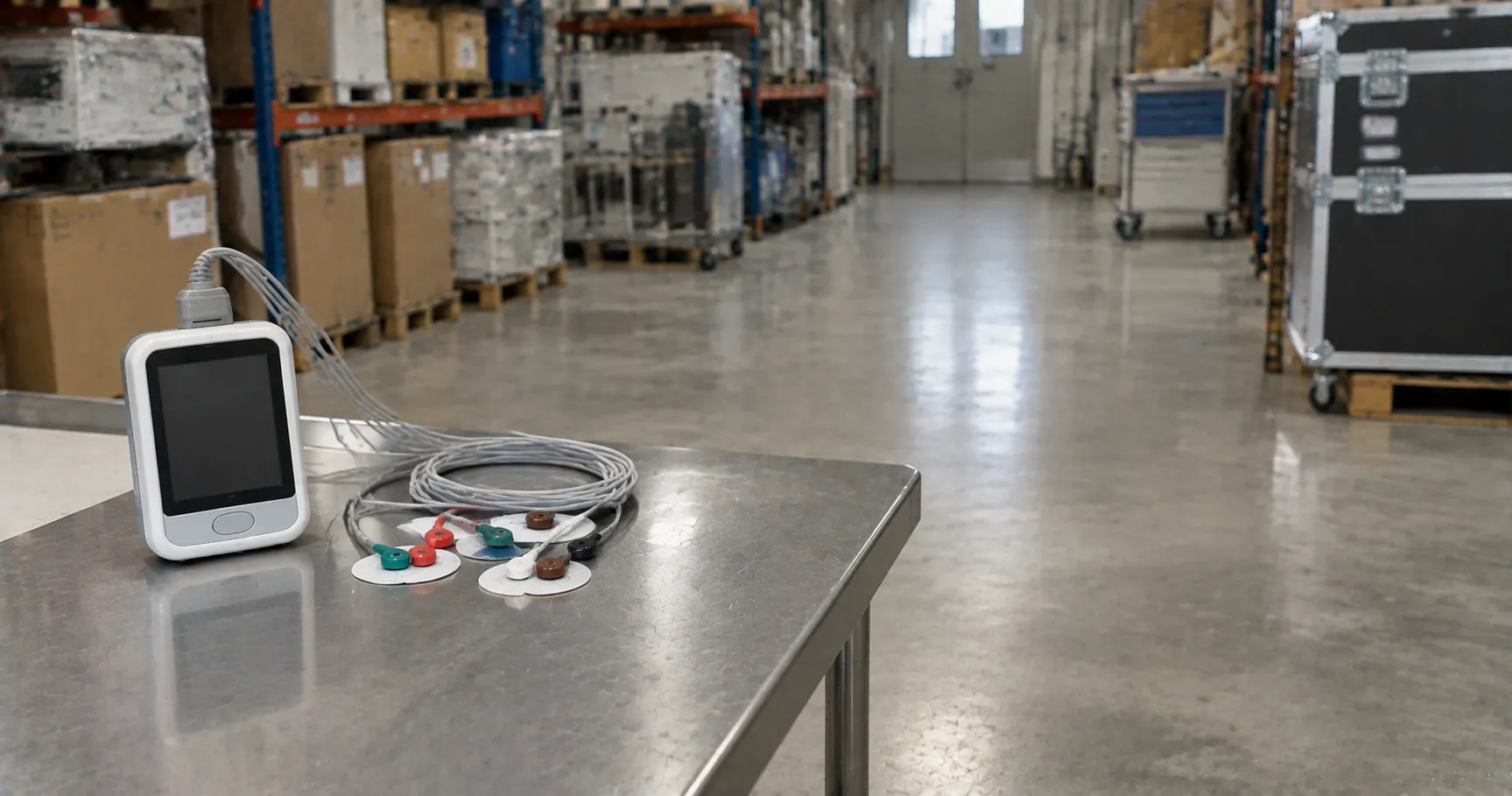
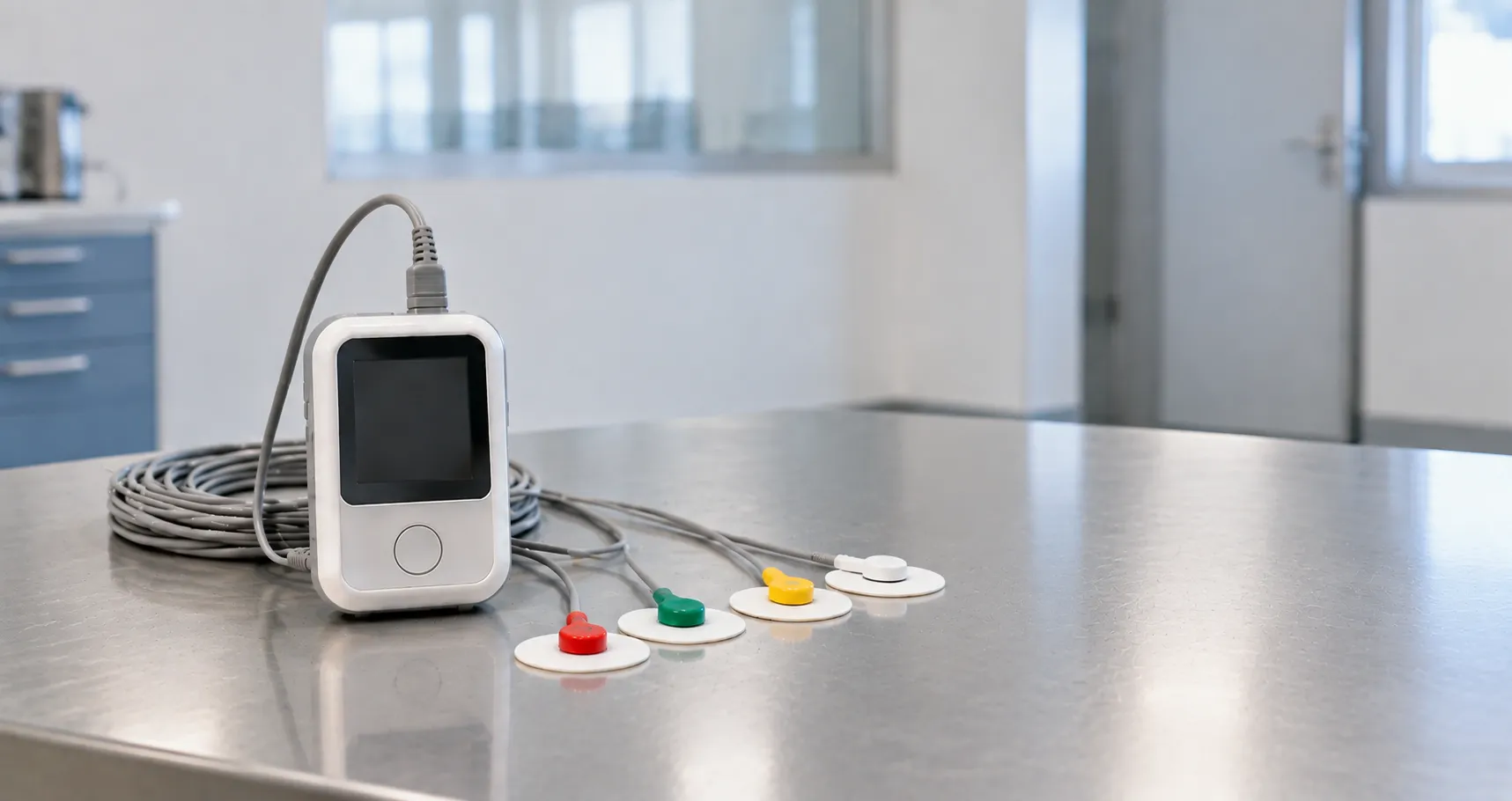
A mobile cardiac telemetry system has three parts: a body-worn sensor recording the ECG, a portable gateway or paired smartphone that receives the signal, and a remote monitoring centre. The sensor sends its data to the gateway over a short-range link, and the gateway forwards it over a mobile network to the monitoring centre's servers. There, detection software screens the incoming ECG continuously and surfaces anything abnormal for a technician to review. Understanding this chain matters for buyers, because every link- the sensor, the wireless hop, the cellular connection, and the centre-, has to be reliable for the real-time promise to hold.
Automatic arrhythmia detection and alerting
The engine of mobile cardiac telemetry is automatic detection with human review. Algorithms scan the transmitted ECG for atrial fibrillation, pauses, bradycardia, fast ventricular rhythms and other defined events, then flag them by priority. A trained technician at the monitoring centre confirms the finding and, for urgent events, notifies the responsible clinician according to an agreed protocol. This is the practical difference from a Holter: instead of a symptom being discovered days later on download, a serious rhythm can prompt a same-day response. When comparing systems, examine the detection accuracy, how false alerts are handled, and the escalation pathway for urgent findings.
The monitoring centre and response protocols
Because a monitoring centre sits at the heart of the service, its arrangements are part of what you are buying. Look at hours of cover, whether review is genuinely continuous or periodic, the qualifications of the reviewing staff, and the defined response times for different alert levels. A clear protocol should set out who is contacted, how quickly, and for which events. For UK services, this also raises the question of where the centre is based and how it fits NHS pathways; NHS service context is available from the NHS, and clinical guidance on arrhythmia investigation from NICE. The centre's reliability is inseparable from the device's clinical value.
Connectivity: cellular, Bluetooth and the gateway
Real-time telemetry depends on a working connection, so connectivity is a core specification, not a footnote. Most systems pair the sensor to the gateway by Bluetooth and rely on a cellular data link to reach the monitoring centre. Coverage gaps, a flat gateway battery, or a patient who leaves the device behind all interrupt the flow, so good systems buffer data locally and resend once the connection returns, which prevents true data loss during a dropout. When evaluating mobile cardiac telemetry, ask how the system behaves offline, how it recovers, and how battery life on both the sensor and the gateway matches the intended wear period.
Data protection and information governance
Live-transmitted ECG is identifiable patient data, so information governance is central to any mobile cardiac telemetry procurement. Data in transit and at rest should be encrypted, access controlled and handled in line with UK GDPR, and any supplier or monitoring centre acting on your behalf needs the appropriate data-processing arrangements. NHS-facing services will also expect completion of the Data Security and Protection Toolkit. UK guidance on data protection obligations is published on GOV.UK. Confirm where data is stored, who can access it and how a networked device is managed on your IT infrastructure before signing anything.
Integration with cardiology and IT systems
A telemetry service only helps if its output lands where clinicians work. Ask how alerts and end-of-study reports reach your team: by secure portal, direct message to a named clinician, or a feed into the cardiology information system. Because the sensor, gateway and monitoring centre form a networked medical system, your IT and information-governance teams should be involved early to confirm how the devices connect, how updates are managed and how the service fits existing security policy. Smooth integration reduces the manual chasing of results that otherwise erodes the time advantage telemetry is bought to provide.
Standards for a mobile cardiac telemetry system
The recording hardware in a mobile cardiac telemetry system is medical electrical equipment built to IEC 60601-1, with the particular requirements for ambulatory electrocardiographic systems in IEC 60601-2-47. Because it is a networked device handling data across IT infrastructure, information security and network risk management also apply alongside UK GDPR. For sale in Great Britain, the system comes under the UK Medical Devices Regulations 2002 and requires valid UKCA or recognised CE marking, regulated by the Medicines and Healthcare products Regulatory Agency. This guide is compiled from manufacturer and UK regulatory guidance for procurement teams.
Specifying a mobile cardiac telemetry service
Before contracting a mobile cardiac telemetry service, test the device, the data pathway and the monitoring together:
-
Monitoring-centre cover, reviewer qualifications and defined response times for each alert level.
-
Automatic detection accuracy, false-alert handling and the urgent-event escalation protocol.
-
Connectivity design: Bluetooth and cellular links, offline buffering and automatic resend after dropouts.
-
Sensor and gateway battery life against the intended monitoring period.
-
UK GDPR compliance, encryption, data-processing agreements and Data Security and Protection Toolkit status.
-
Recorder built to IEC 60601-1 and IEC 60601-2-47, UKCA or CE marked, with documented network security.
-
How reports and alerts integrate with your cardiology and IT systems.
Sensor wear, battery, and the patient experience
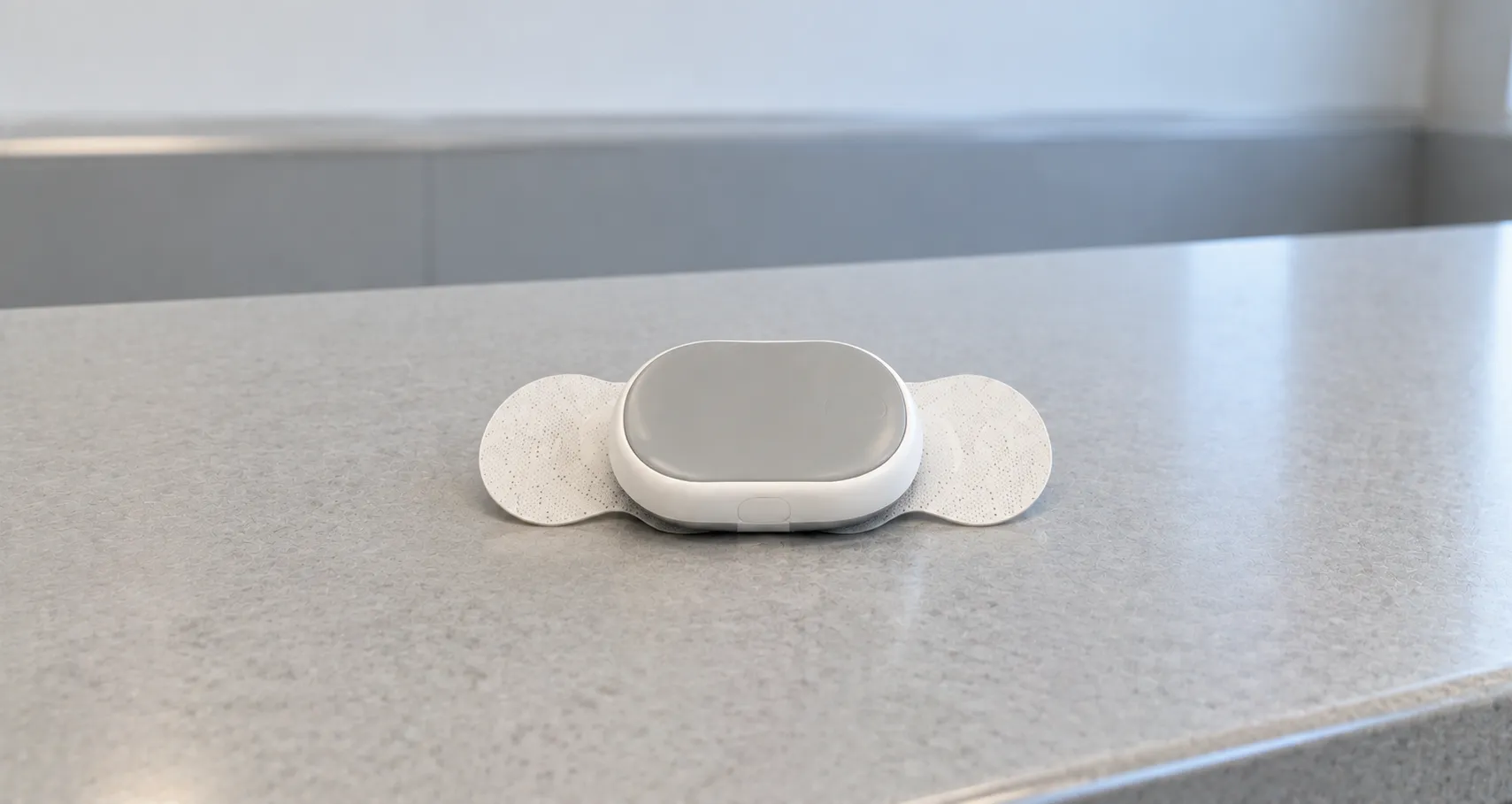
The patient side of mobile cardiac telemetry shapes how much usable data you get. The body-worn sensor is typically a small adhesive or clip-on unit that has to stay attached and powered for the whole prescribed period, which may run to several weeks, so battery life, recharging arrangements,s and skin comfort all affect adherence. The gateway adds a second device the patient must keep charged and nearby, which is a real-world failure point some systems avoid by transmitting through a paired smartphone. When you compare services, think about how much the patient has to do, because a monitor that is fiddly to keep running loses exactly the continuous coverage it was chosen to provide.
Service model and running costs
Mobile cardiac telemetry is usually bought as a managed service rather than a boxed device, so the cost reflects the monitoring centre, connectivity and analysis as well as the hardware. That can be efficient, because you are not staffing a review desk yourself, but it makes the contract terms, per-patient pricing and data arrangements the things to scrutinise. Compare the total per-study cost and the service-level commitments against the alternatives of a reusable Holter or a single-use patch. MediGear helps UK facilities compare verified cardiac monitoring suppliers and service models through the buyers page or current suppliers.
Judging a telemetry service, not just a sensor
Mobile cardiac telemetry is defined by its live data flow and staffed monitoring, which is what lets a serious arrhythmia be acted on the same day rather than discovered on download. Judge it as a system: the sensor, the connectivity, the monitoring centre, the alerting, ng and the data governance all have to be sound, because a weak link anywhere breaks the real-time value. Get the whole pathway right, and telemetry delivers something the store-and-analyse tests cannot: a monitored rhythm with a response attached.
Disclaimer
This article is for informational purposes only. It is published by MediGear (medigear.uk) for general information and procurement guidance, and is not clinical, diagnostic, treatment, technical, engineering, legal or regulatory advice, nor a product endorsement, guarantee or substitute for professional assessment. MediGear does not provide medical consultations. Buyers should consult their clinical, biomedical, estates and regulatory contacts, and the manufacturer's documentation, and independently verify all specifications, certifications, compatibility and suitability before purchase. Specifications, certifications and availability are correct at the time of publication and may change without notice. MediGear is a medical-equipment distributor and does not sell medicines or pharmaceutical products.