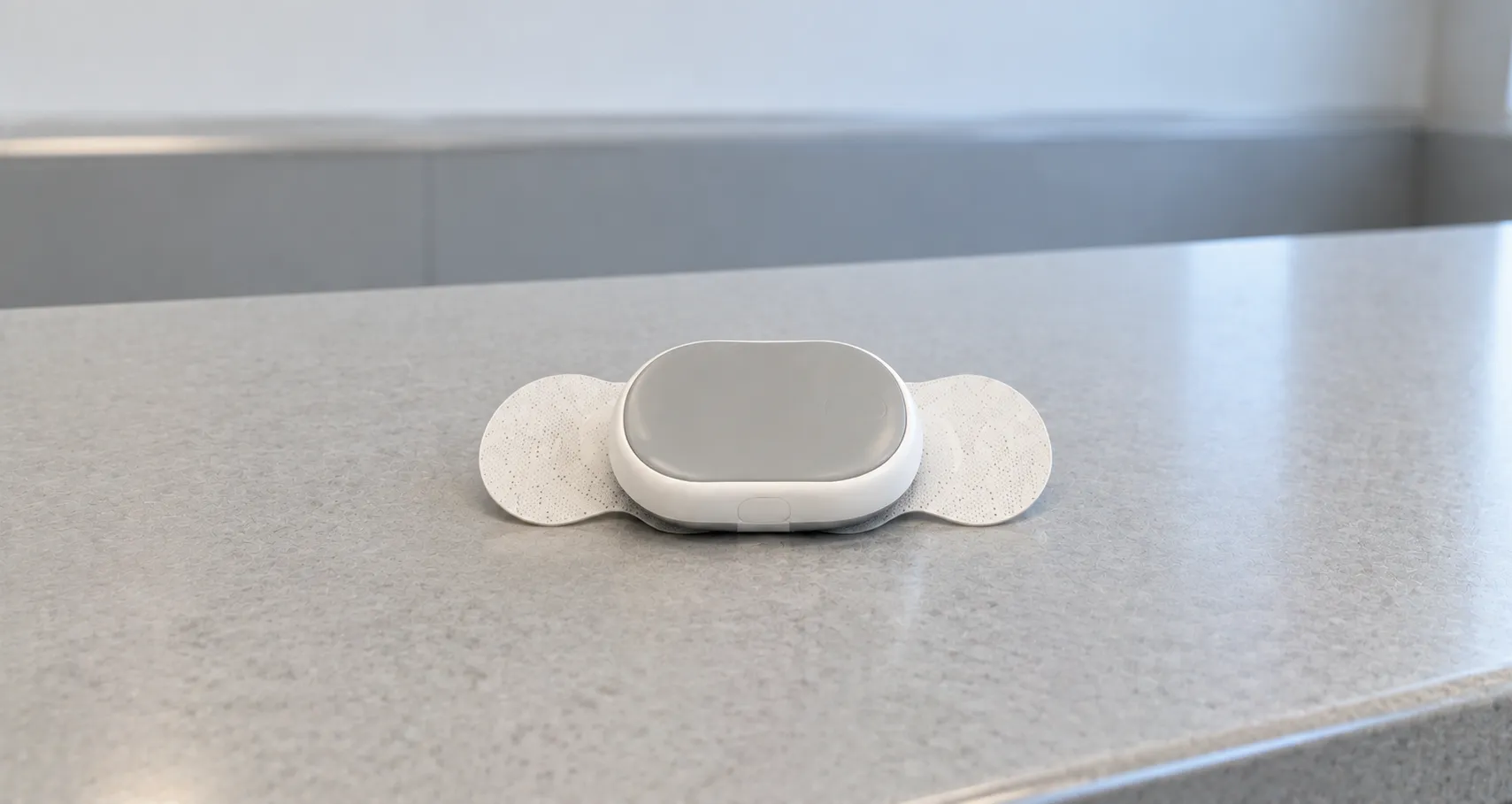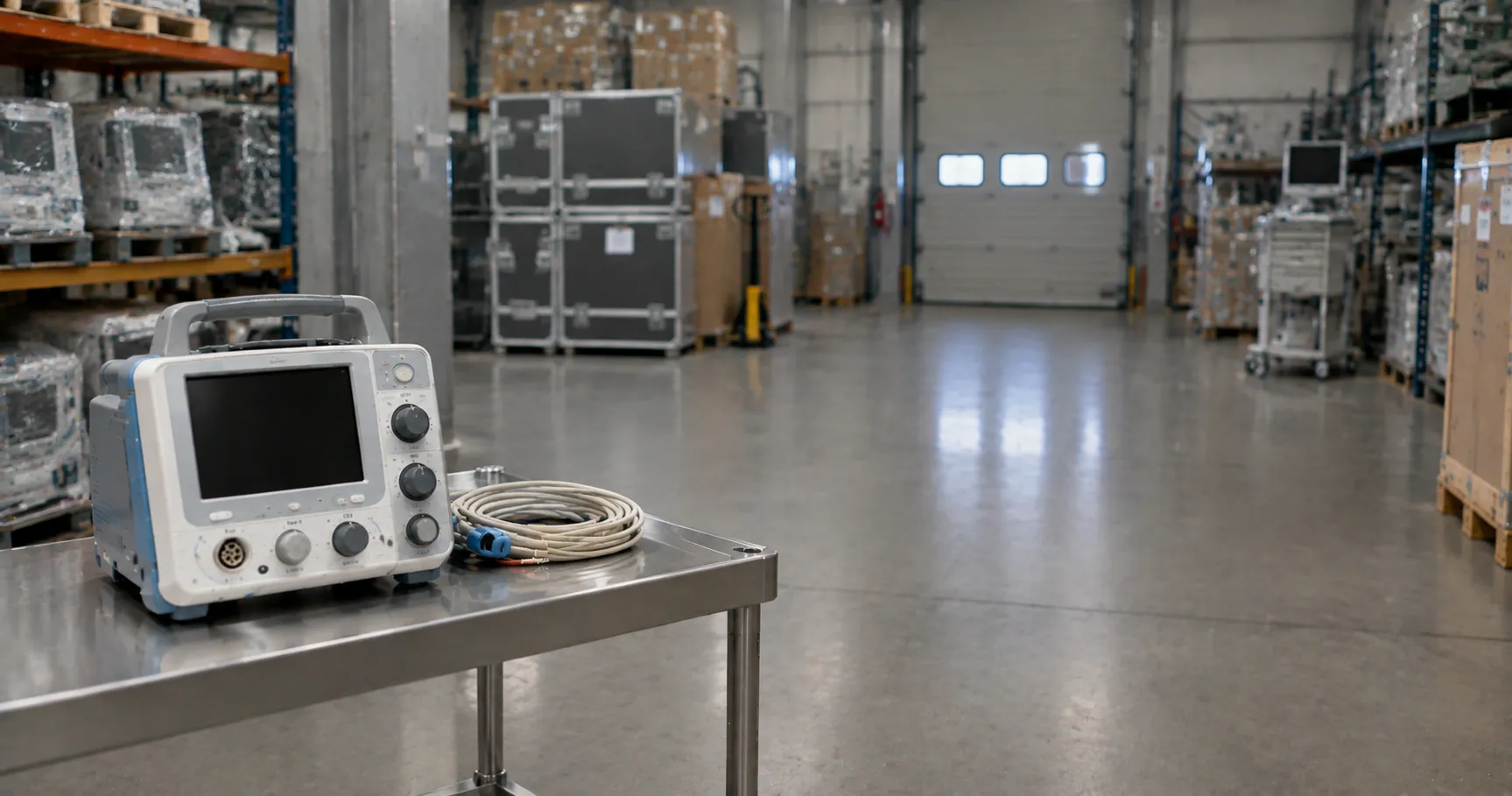
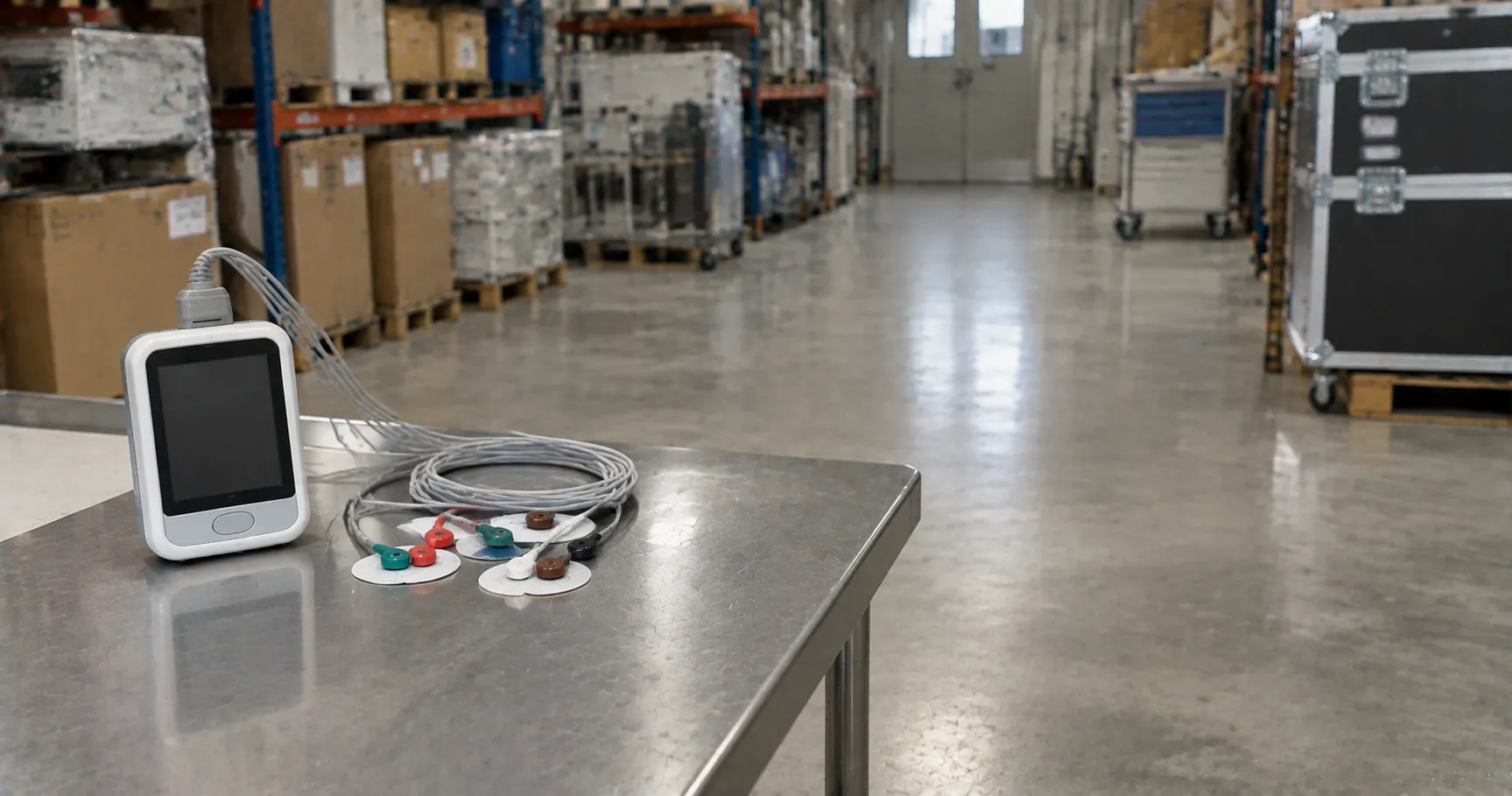
A Holter monitor recorder is a small, body-worn device that continuously captures every heartbeat for 24 to 48 hours, and in extended versions, up to seven days, using adhesive skin electrodes and wired leads. It records the full ECG without gaps, so the review afterwards is retrospective: nothing is discarded, and the whole trace is analysed to find rhythm disturbances a short resting ECG in clinic would never catch. That continuous, full-disclosure recording is what defines the Holter monitor and sets it apart from a patient-triggered event recorder.
For a cardiology service or clinical-engineering team, the purchasing decision is less about the recorder box and more about the leads, electrode count, recording window, and, above all, the analysis software that turns days of raw beats into a report a cardiologist can sign. Get those four things right and the Holter service runs; get them wrong and you buy a drawer of recorders and a growing backlog.
Full-disclosure recording, not a clinic snapshot
A resting 12-lead ECG lasts a few seconds and only shows the rhythm present at that moment. Intermittent arrhythmias hide between appointments. The Holter monitor closes that gap by recording continuously. Hence, an ectopic run, a pause, or a burst of atrial fibrillation that appears once overnight still shows up on the trace the next morning. Because it stores everything, the device supports beat-by-beat counting, ST-segment trends and heart-rate variability across the whole wear period. This is the strength of continuous acquisition, and it is why a Holter monitor remains the first-line ambulatory test for patients whose symptoms occur most days rather than once a fortnight.
Leads, channels and electrode count
Most Holter monitors record two or three ECG channels from five to seven adhesive electrodes, which is enough to reliably characterise rhythm and ectopy. Twelve-lead Holter recorders exist for cases where morphology and ST analysis matter, using ten electrodes and giving a fuller diagnostic picture at the cost of more leads to place. When comparing recorders, look at channel count, sampling rate and how the device handles lead-off detection, because a lead that lifts mid-recording leaves a gap in an otherwise continuous trace. Good electrode adhesion and proper skin preparation do more for data quality than any single datasheet specification, so consumable choice and staff technique are part of the buying decision, not an afterthought.
Choosing the recording window: 24 hours to seven days
The classic Holter records for 24 or 48 hours. Extended recorders now stretch the window to five or seven days on a single set of electrodes and a larger battery, improving diagnostic yield for less frequent symptoms without moving to a different device class. Longer windows mean more data to analyse and more demand on adhesive and battery life, so the choice is a trade-off between yield and workload. A service that sees a mix of daily and every-few-days symptoms often standardises on a recorder that can do both a 24-hour and a seven-day protocol, rather than buying and maintaining two separate hardware fleets.
How the Holter analysis software builds a report
The recorder is only half the system. Once returned, the device is downloaded into analysis software that detects beats, classifies them, flags pauses, tachycardias and atrial fibrillation, and produces summary tables and representative strips. The software does the heavy counting, but a trained physiologist still over-reads the automated results, corrects misclassified beats and confirms the events that matter. When you evaluate a Holter monitor, evaluate its software just as hard: editing speed, false-positive rate on ectopics, report templates and how cleanly it exports into the cardiology record all shape how long each study takes to sign off. NICE provides clinical guidance on investigating arrhythmias, and NHS diagnostic pathway context sits with the NHS.
Standards and marking for a Holter monitor recorder
A Holter monitor is medical electrical equipment built to the general safety standard IEC 60601-1, with the particular requirements for ambulatory electrocardiographic systems set out in IEC 60601-2-47. That standard covers the recorder, the electrodes and the analysis system as a whole, including accuracy of the stored ECG. In Great Britain, the recorder is regulated under the UK Medical Devices Regulations 2002. It needs valid UKCA or recognised CE marking, with the Medicines and Healthcare products Regulatory Agency as the responsible authority. This guide is drawn from manufacturer documentation and UK regulatory and clinical guidance, and written for procurement and clinical-engineering teams rather than patients.
Batteries, storage and the patient diary
Practical details decide whether a Holter service runs smoothly. Some recorders use a rechargeable internal cell; others take standard AA or AAA batteries a patient could replace mid-study, which matters for seven-day wear. Onboard storage must comfortably hold the full recording at the chosen sampling rate. Most systems still ask the patient to keep a symptom diary, on paper or in an app,s o that the physiologist can line up a reported palpitation with the trace at that timestamp. Confirm how the recorder timestamps events and whether it offers an event button for the patient to mark symptoms, because that correlation is often what makes the report clinically useful.
Cleaning, reuse and electrical safety
A Holter monitor is a reusable recorder that is returned, cleaned and reissued many times, so decontamination and safety testing are part of running the fleet. Confirm that the manufacturer supports wipe-down disinfection of the recorder body and lead sets between patients, and that the materials tolerate your chosen cleaning agents. As mains-chargeable or battery equipment held close to the patient, each recorder needs periodic electrical-safety testing and a record of its service history. Building this into the workflow keeps the fleet compliant and traceable, which matters when a device is passed between dozens of patients over its working life.
Where Holter monitoring fits across settings
Holter recorders are used well beyond the hospital cardiology department. GP practices refer patients into ambulatory monitoring, community diagnostic centres run high-volume Holter lists, and some services fit and remove devices in the patient's own home. Each setting shapes the specification: a community service valuing throughput may prioritise fast fitting and self-service downloads, while a tertiary cardiology unit may want 12-lead capability and detailed ST analysis. Mapping where your recorders will actually be fitted, worn and analysed helps size the fleet and choose between a simple three-channel workhorse and a fuller-featured recorder.
Specifying a Holter monitor recorder
Before you commit to a Holter fleet, check the whole system rather than the recorder alone:
-
Recording windows supported: 24 and 48 hours, and whether the same unit does five to seven days.
-
Channel and electrode count, sampling rate and reliable lead-off detection.
-
Analysis software quality: editing speed, arrhythmia detection accuracy, report templates and export to your cardiology system.
-
Battery type and life against your longest protocol, plus onboard storage capacity.
-
Compliance with IEC 60601-1 and the ambulatory ECG standard IEC 60601-2-47, plus valid UKCA or CE marking.
-
Electrode and consumable compatibility, cleaning method and per-study consumable cost.
-
Warranty, software licensing model and a maintenance and electrical-safety testing plan.
Consumables and the real running cost
The recorder is a one-off purchase; running costs come from electrodes, lead sets, a nd batteries used on every study, plus the analysis software licence. Reusable recorders come back, are cleaned and redeployed, so throughput depends on how many units you own against your weekly demand and how long each study takes to analyse. Software licensing varies from a one-time purchase to an annual subscription, and that choice can outweigh the hardware price over a fleet's life. MediGear is a UK distributor that lets facilities compare verified Holter monitor suppliers and their consumables; start on the buyers page or browse current suppliers.
Getting the Holter specification right
A Holter monitor earns its place through continuous, full-disclosure recording: it captures everything for a day, two days or a week, and lets the analysis find what a clinic ECG cannot. Specify the recorder, the electrodes and the software as one system, match the recording window to the symptom pattern you actually see, and budget for the consumables and licences that follow. Doth a, and the Holter service delivers reliable, signable studies rather than a backlog of unread data.
Disclaimer
This article is for informational purposes only. It is published by MediGear (medigear.uk) for general information and procurement guidance. It is not clinical, diagnostic, treatment, technical, engineering, legal or regulatory advice, nor a product endorsement, guarantee or substitute for professional assessment. MediGear does not provide medical consultations. Buyers should consult their clinical, biomedical, estates and regulatory contacts, and the manufacturer's documentation, and independently verify all specifications, certifications, compatibility and suitability before purchase. Specifications, certifications and availability are correct at the time of publication and may change without notice. MediGear is a medical-equipment distributor and does not sell medicines or pharmaceutical products.