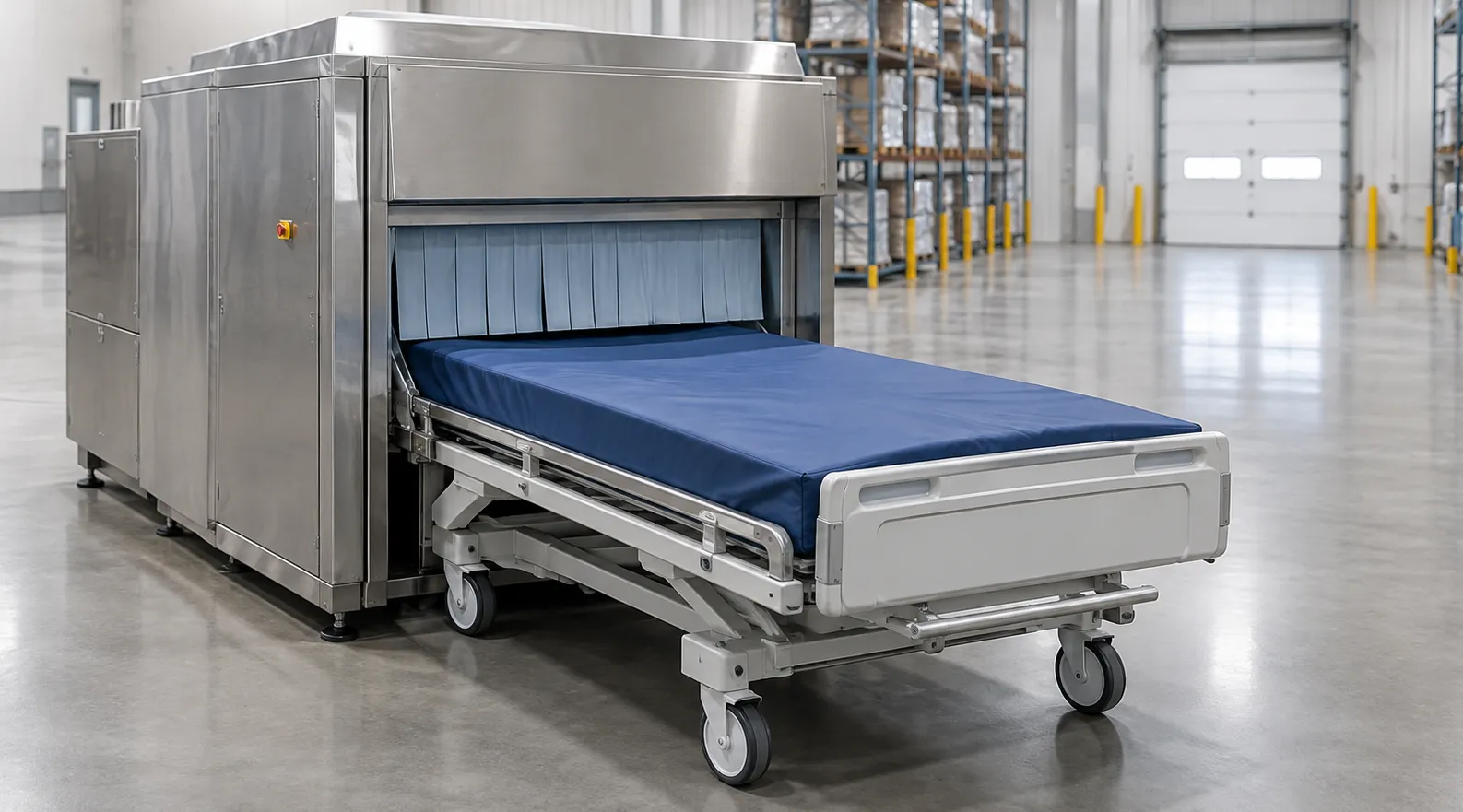
Mattress decontamination is the process of cleaning and disinfecting a hospital mattress between patients so it is safe for the next occupant, and of checking that the waterproof cover has not been breached. A ward mattress is a fluid-exposed, high-turnover surface, so decontamination is a two-part discipline: cleaning the cover to a known standard, and auditing the cover and foam beneath it for hidden contamination. Both matter, because a spotless-looking cover can hide a soaked, condemned core.
For procurement, this shapes what you buy — mattresses and covers designed to be decontaminated reliably, and the audit tools to prove they still can be. This guide covers how the cover works, the cleaning method, why covers fail, and what to specify.
The cover does the work: waterproof, vapour-permeable barriers.
Almost all of a mattress's infection-control performance lives in its cover. A healthcare cover is a polyurethane- or PVC-coated fabric that is fully waterproof yet vapour-permeable, letting moisture vapour escape to manage the skin microclimate while blocking liquid ingress. Seams are high-frequency welded rather than stitched, because needle holes are a direct fluid path into the foam, and a covered baffle or flap protects the zipper. A low-friction, two-way-stretch top reduces shear on the skin. You decontaminate the cover; the foam should never be exposed.
Two-stage cleaning between patients
Routine decontamination is a two-stage wipe. First, clean with a general-purpose neutral detergent and water to remove visible soil and organic matter, because disinfectants are inactivated by soil. Then apply disinfection with a chlorine-releasing agent at 1,000 ppm available chlorine for routine use, rising to 10,000 ppm for blood and body-fluid spillages, and allow the correct contact time before drying. The same chlorine chemistry is applied to the surrounding bed frame and surfaces with surface disinfectant sprayers during a ward deep clean. Manufacturers' instructions govern which agents are compatible — many PU covers degrade with alcohol or high-concentration chlorine used too often — so the disinfectant must match the cover. The chemicals themselves sit within a COSHH assessment, and the Health and Safety Executive sets the workplace framework for handling them.
Strike-through and why covers fail
The failure mode that decontamination alone cannot fix is strike-through: fluid breaching the cover and reaching the foam. It happens where a welded seam splits, a zip fails, the coating cracks with age or a puncture goes unnoticed. Once fluid is in the foam, the mattress cannot be decontaminated by wiping the outside — the core is contaminated, and staining, dampness or odour on the inner cover surface is the tell. This is why a clean exterior is never sufficient assurance on its own.
Auditing the fleet: cover integrity checks
A mattress audit programme helps a hospital catch strike-through before a patient lies on a contaminated core. At set intervals, and always on discharge cleaning, staff unzip the cover and inspect the inner surface and foam for staining, moisture, or discolouration; they also check the outer cover for cracks, tears, worn areas, and zip integrity. Many trusts use a traffic-light condition score to decide whether to pass, re-cover, or condemn. Documented auditing turns mattress hygiene from an assumption into evidence. Where extra confirmation is needed, surface sampling swabs can test the cleaned cover for residual contamination.
Foam, filling and when a mattress is condemned.
When an audit finds fluid ingress, staining or persistent odour in the foam, the mattress is condemned — the core cannot be reliably decontaminated. It must be replaced, not just re-covered, unless the cover alone failed and the foam is proven clean. Foam also fatigues over time, losing the pressure-redistribution properties a support surface is bought for, so end-of-life is driven by both hygiene and performance. Replacing a cover is cheap; replacing a whole mattress is not, which is why early detection of cover damage protects the core.
Dynamic and static mattresses: different decontamination
Static foam mattresses have a single decontaminable cover and a simple audit. Specialist surfaces, such as conductive warming mattress systems, add heating elements and a controller, each of which needs its own decontamination step. Dynamic (alternating-pressure) mattresses add air cells, a pump and connecting hoses, each of which needs its own cleaning protocol — the cells and hose connectors are additional surfaces, and the pump housing must be wiped and its filter maintained. Specifying a dynamic system means specifying how every component is decontaminated between patients, not just the top cover. Air cells that cannot be wiped down easily, or hoses with awkward connectors, quietly become the weak point in an otherwise sound cleaning routine, so ease of decontamination is a genuine selection criterion for dynamic surfaces, not an afterthought. Both static and dynamic types must meet the healthcare fire-retardancy expectations of BS 7177 for the relevant hazard category.
Traceability and the audit schedule
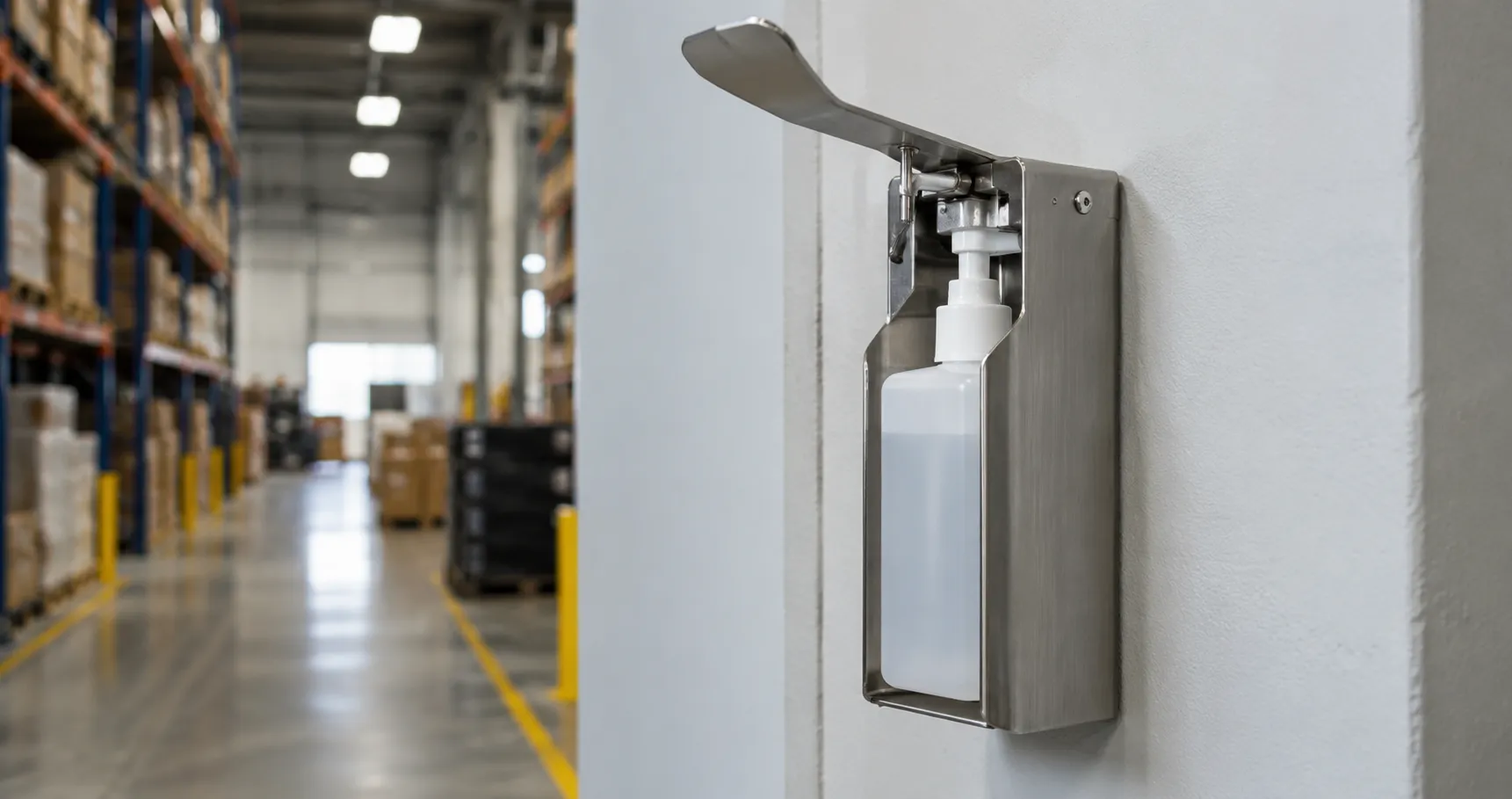
Decontamination becomes reliable when it is scheduled and recorded rather than left to memory. A managed programme assigns each mattress an identifier, logs its cleaning and audit history, and sets fixed points for inspection — most importantly on every patient discharge, when the cover should be checked as part of terminal cleaning. The mattress is one part of bed-space hygiene that also spans surface cleaning and the hand-sanitiser points logged by automated dispensing. Recording which mattresses passed, were re-covered or were condemned gives infection-prevention teams a fleet-level picture and flags covers that fail early, which may point to a chemical incompatibility or a rough handling route worth investigating. Without that record, a hospital cannot show which surfaces its patients are actually lying on.
Cleaning products and cover compatibility
The disinfectant that keeps a cover clean can also destroy it. Repeated use of alcohol-based wipes or chlorine at concentrations above what the cover is rated for can craze the polyurethane coating, opening the microscopic cracks that later become strike-through paths. That is why the infection-control team's chosen products and the mattress manufacturer's compatibility list must be reconciled before purchase, not after covers start failing. Where a single wipe product is used site-wide, specifying covers rated for that exact chemistry protects the fleet and keeps the two decisions from working against each other.
Specifying decontaminable mattresses and covers
-
Confirm a waterproof, vapour-permeable cover with high-frequency welded (not stitched) seams and a baffled zip.
-
Check the manufacturer states compatible cleaning and disinfectant agents, including chlorine tolerance.
-
Verify the cover is fully removable, and the design allows inner-surface and foam inspection.
-
Ask for a cover replacement option so a failed cover need not mean a scrapped mattress.
-
Confirm fire retardancy to BS 7177 for the intended hazard setting.
-
For dynamic systems, obtain decontamination protocols for cells, hoses, pump and filter.
-
Set up an audit and condition-scoring regime with traffic-light replacement criteria.
The lifetime cost of a mattress fleet
A mattress's true cost is spread across its service life, not its purchase price. Covers that resist cracking and welded seams that do not split extend that life and cut replacement rates, while a removable-cover design lets you replace a damaged cover for a fraction of a new mattress. Audit labour is a real cost, but cheaper than the infection risk and premature scrapping that undetected strike-through causes. Buying covers matched to the disinfectants your infection-control team actually uses avoids the chemical damage that quietly shortens fleet life and drives premature replacement. Standardising covers across the fleet also simplifies stock-holding and training, so staff decontaminate every surface the same way.
The verdict on mattress decontamination
Mattress decontamination is only complete when the cover has been cleaned to a validated method and audited to prove no fluid has reached the foam. Specify waterproof, welded, disinfectant-compatible covers, insist on a removable design and inspection access, and run a documented audit programme so strike-through is caught early. To source decontaminable mattresses, replacement covers and the systems around them, talk to the MediGear buyers' team or get in touch.
Disclaimer
This article is for informational purposes only. MediGear (medigear.uk) publishes it for general information and procurement guidance; it is not clinical, diagnostic, treatment, technical, engineering, legal, or regulatory advice, nor a product endorsement, guarantee, or substitute for professional assessment. MediGear does not provide medical consultations. Buyers should consult their clinical, biomedical, estates, and regulatory contacts and the manufacturer's documentation, and independently verify all specifications, certifications, compatibility, and suitability before purchase. Specifications, certifications and availability are correct at the time of publication and may change without notice. MediGear is a medical-equipment distributor and does not sell medicines or pharmaceutical products.