A laminectomy is a decompression procedure that removes part or all of the lamina—the bony arch at the back of a vertebra—to relieve pressure on the spinal cord or nerve roots. The defining tools are bone-removing instruments: Kerrison punches, rongeurs, high-speed burrs and curettes, supported by nerve hooks, dural elevators and self-retaining or tubular retractors. The goal is to take bone away safely, not to fuse or implant anything.
For a procurement team, a laminectomy set is distinct from a fusion tray. It focuses on controlled bone resection and neural protection rather than screws and cages. This guide covers the instruments, their specifications and the buying checks that matter.
Why decompression is done
Spinal stenosis, thickened ligamentum flavum, a herniated disc, or bony overgrowth can crowd the neural elements and cause pain, weakness, or numbness. Laminectomy opens that space by removing the lamina and any offending bone or ligament. It can be a standalone decompression or the first stage before a separate fusion, but t. Still, the resection instruments are the same either way—which is why this set stands apart from implant-driven fusion trays.
Kerrison punches
The Kerrison rongeur, or punch, is the signature laminectomy instrument. A thin footplate slides under the bone and a sliding upper blade bites off a controlled fragment with each squeeze. They come in a range of bite sizes—commonly 1 mm to 5 mm—and in up-cutting, and sometimes down- or forward-angled patterns. Buyers should note that thin-footplate designs pass under bone with less neural disturbance, and that detachable or ejector versions clean far more reliably than fixed ones.
Rongeurs
Rongeurs are heavier gouging forceps that remove larger volumes of bone. Leksell and double-action rongeurs take the bulk of the lamina, while fine pituitary rongeurs retrieve disc fragments and soft tissue from the canal through a narrow corridor. Double-action jaws multiply cutting force with less hand effort, which reduces surgeon fatigue on long lists.
High-speed burrs
Powered high-speed burrs thin the lamina before punches complete removal and cut through dense bone precisely. Matched to a pneumatic or electric surgical drill, they come as cutting or diamond heads in various diameters, with diamond burrs favoured near the dura because they abrade rather than grab. Key buying points are burr compatibility with the theatre's existing drill system, the range of straight and angled attachments, continuous irrigation to control heat and protect the bone, and a reliable single-use or reprocessed burr supply as a recurring consumable that must be budgeted per case.
Curettes, nerve hooks and dural elevators
Angled and straight curettes scrape residual bone and ligament from the canal margins and undercut the lamina. Blunt nerve hooks and ball-ended probes palpate the canal, sweep the nerve root free and check for residual compression before closure. Dural or Penfield elevators lift and protect the dura and ligamentum flavum during bone removal. These fine instruments are the neural-protection half of the tray, and their tips must stay smooth and true after reprocessing, since a burred or bent edge working against the dura is a direct patient-safety risk.
Patient positioning and access
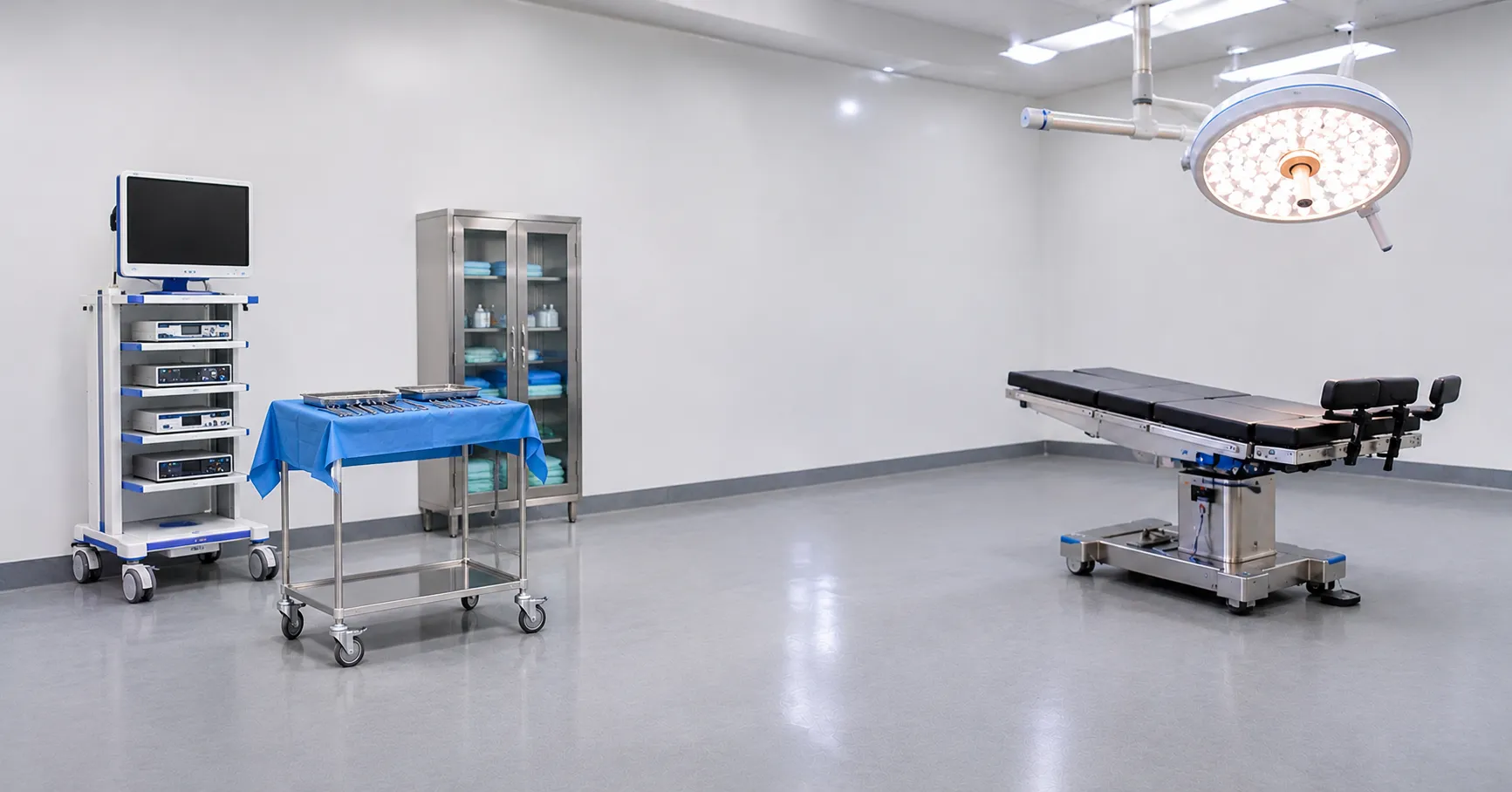
Bone instruments only work if the surgeon can reach the lamina cleanly, so positioning aids fit into the overall recompression picture. Spinal frames and bolsters place the patient prone with the abdomen free, which reduces epidural venous pressure and bleeding and opens the interlaminar space for access. A buyer equipping a spinal theatre should confirm that the operating table, prone supports and any radiolucent sections suit the intended approaches and imaging, because poor positioning undermines even the best instrument set. These items sit outside the instrument tray itself and are part of provision; properly ensuring compatibility with existing theatre furniture is worth checking early.
Retractors and exposure
Open laminectomy uses self-retaining retractors—Taylor, McCulloch or Adson–Beckman patterns—to hold the paraspinal muscles apart and keep the field open. Minimally invasive decompression instead uses a tubular retractor system, a series of dilators and a fixed tube that create a working channel through a small incision. If a facility is moving toward minimally invasive spine work, tubular retractor compatibility with its existing burrs, Kerrisons and visualisation becomes a central procurement question.
Visualisation and haemostasis adjuncts
Decompression is unforgiving of poor visibility. Open cases rely on loupes or an operating microscope and a headlight to see into a deep, narrow field. At the same time, tubular approaches depend on the light and camera built into the retractor system or an endoscope. Meticulous haemostasis keeps that field clear, so bipolar diathermy forceps, bone wax and haemostatic agents sit alongside the bone instruments. A buyer specifying a decompression set should therefore think beyond the punches and rongeurs to the visualisation and bleeding-control items that make them usable, and confirm those adjuncts are compatible with the theatre's existing energy platforms.
Instrument sets versus individual pieces
Spinal decompression instruments can be bought as a curated tray or built up piece by piece. A pre-configured set simplifies ordering and sterile-services logistics. However, many with an established technique still prefer to specify individual Kerrison sizes, rongeur patterns, and curette angles to match how their surgeons work. Either way, standardising on a limited, well-chosen range across theatres makes spare-parts holding, instrument tracking and staff familiarity far easier than a patchwork of one-off purchases. Agreeing the tray content with the clinical team before ordering avoids duplicated or unused instruments.
Materials, standards and reprocessing
Reusable spinal instruments are surgical stainless steel to ISO 7153-1, and every device must carry UKCA or CE marking with a declaration of conformity under MHRA oversight. Kerrison punches and box-jointed rongeurs are notorious for trapping bone debris, so specify take-apart designs and confirm each instrument is validated for your ultrasonic and autoclave cycles. Given decompression's proximity to neural tissue, decontamination standards and instrument condition are safety-critical, not just housekeeping.
Servicing, spares and total cost
Decompression instruments take heavy mechanical loads, so wear is inevitable: Kerrison blades dull, footplates chip and rongeur joints loosen. Budget for sharpening, footplate replacement and joint servicing, and confirm the supplier can repair or replace individual instruments rather than only whole sets, so a single worn punch does not retire a tray. Burrs and single-use adjuncts are continuous consumables; ring suppliers on repair turnaround, spare availability, and lifetime cost—not just the initial quote—to keep a busy spinal service running without instrument-driven cancellations.
Laminectomy set procurement checklist.
-
Stock a graduated range of Kerrison punch sizes with thin footplates.
-
Prefer detachable or ejector Kerrisons and take-apart rongeurs for cleaning.
-
Include Leksell, double-action and pituitary rongeurs for bulk and fine removal.
-
Confirm high-speed burr compatibility with the existing drill and irrigation.
-
Include curettes, blunt nerve hooks and dural elevators for neural protection.
-
Match retractors to open or minimally invasive tubular technique.
-
Verify UKCA or CE marking, ISO 7153-1 steel and reprocessing validation.
Conclusion
A laminectomy tray is defined by safe bone removal and nerve protection, which is what sets it apart from an implant-led fusion set. Buying well means stocking a graduated Kerrison range with clean take-apart designs, matching rongeurs and burrs to the workload, protecting the dura with quality curettes and hooks, and choosing retractors that fit the surgical approach. Because these instruments work millimetres from the spinal cord, reprocessing quality and UKCA or CE conformity are central, not incidental. You can compare decompression instrument specifications and assemble a complete laminectomy set through MediGear's buyer service.
Disclaimer
This article is for informational purposes only. It is published by MediGear (medigear.uk) for general information and procurement guidance. It is not clinical, diagnostic, treatment, technical, engineering, legal or regulatory advice, nor a product endorsement, guarantee or substitute for professional assessment. MediGear does not provide medical consultations. Buyers should consult their clinical, biomedical, estate, and regulatory contacts, and the manufacturer's documentation, and independently verify all specifications, certifications, compatibility, and suitability before purchase. Specifications, certifications and availability are correct at the time of publication and may change without notice. MediGear is a medical-equipment distributor and does not sell medicines or pharmaceutical products.