What is a cylinder manifold system, and howdoes backup gas flow
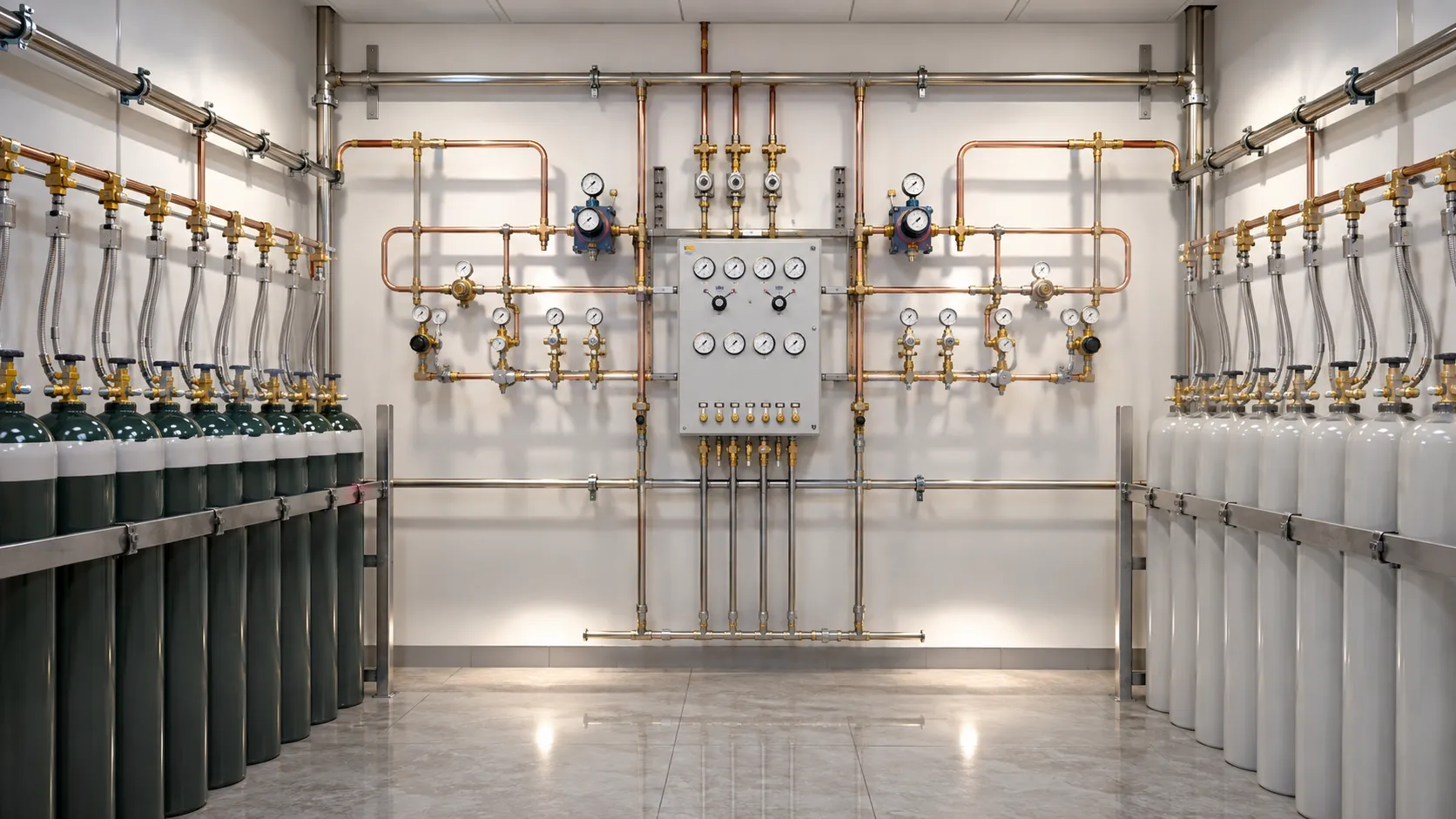
A cylinder manifold system is a bank of high-pressure medical gas cylinders connected to feed a piped pipeline through automatic pressure regulation and changeover. It supplies gas either as the primary source at a smaller site or as the reserve that takes over when a main supply falls. Cylinders are grouped into duty and standby banks; when the running bank empties, the manifold automatically switches to the full bank without interrupting flow and signals the change to the medical gas alarm so an empty bank can be replaced.
For estates and procurement teams, the manifold is where cylinder handling, pressure control and supply continuity meet. This guide explains how backup gas flows, what the system is made of, and what to consider before you specify one.
Duty, standby and reserve: how changeover works
A manifold arranges cylinders into two banks, usually described as duty and standby. The duty bank feeds the pipeline through a regulator; the standby bank sits full and ready. A control panel monitors duty-bank pressure. When it falls to a set point, the panel automatically switches to the standby bank, so supply continues without a manual switch. The now-empty bank is flagged for replacement, and once restocked, it becomes the standby side for the next cycle. This automatic, alternating duty lets a manifold run continuously, with cylinders replaced during normal working hours.
Where cylinder manifolds are used
A manifold fills two roles. At smaller sites — community units, clinics, dental and veterinary practices, and any gas drawn in modest volume — it is the practical primary source for oxygen, nitrous oxide or medical air, giving a controlled, alarmed piped supply without the scale of a bulk installation. In larger hospitals, it works the other way round: liquid oxygen from a vacuum-insulated evaporator is the primary source, manifolds provide the secondary and reserve supply, and gases such as nitrous oxide and carbon dioxide that are not stored in bulk are fed from manifolds, whatever the hospital's size.
HTM 02-01 frames supply as an architecture rather than a single feed. A continuously used gas is expected to have a primary source, a secondary source that takes over automatically when the primary is exhausted, and a separate reserve held back for emergencies. A cylinder manifold commonly serves as that secondary or reserve source. When it does, the reserve is sized to hold the pipeline for a defined period long enough to correct the primary fault or take a delivery, and it feeds through its own regulation so it can cut in without a pressure dip. Placing the manifold correctly within that primary, secondary and reserve structure is as important as the hardware on the wall.
What the system is built from
The core components are consistent across manifolds. Cylinders connect via high-pressure tailpipes — flexible or rigid pigtails — to a header bar on each bank, with non-return valves so a cylinder can be changed without depressurising the header. The two headers feed a control panel carrying the pressure regulators that drop cylinder pressure to the pipeline distribution pressure, plus the automatic changeover mechanism. Downstream, the regulated gas enters the pipeline. Connections use gas-specific fittings so the correct cylinders go to the correct manifold. Tailpipes and headers are the parts handled most and are a key wear-and-safety item.
How the manifold protects supply continuity
Continuity is the whole point of the duty/standby design. Because the standby bank is always full and changeover is automatic, an empty bank does not interrupt the pipeline. Signalling ties this together: the manifold sends status to the medical gas alarm system — bank changed, bank low, reserve in use — so staff know a cylinder change is due before the system is compromised. A reserve arrangement adds a further layer, holding emergency capacity that maintains supply while the fault is dealt with. Designing the signalling and the reserve together is what makes the backup genuinely dependable.
Sizing a manifold to demand
Flow determines the number and size of cylinders on each bank the service draws from, and how long a bank should last between changes. A busy oxygen service needs enough cylinders per bank for changeovers to be manageable within working hours, while a low-volume gas may need only a small bank. Buyers should estimate peak and average demand, the acceptable frequency of cylinder changes, and the reserve duration required if the primary source fails. Undersizing forces constant cylinder handling; oversizing ties up cylinder stock and space. A structured comparison through a buyer's route keeps competing designs to the same demand figures.
Safety, ventilation and pressure duty
A manifold room stores high-pressure cylinders, so safety is central. Cylinders are secured against falling, the room is ventilated and kept clear of ignition sources and incompatible materials, and oxygen and nitrous oxide storage follows the required separation and signage. As pressure equipment, the system falls within the scope of pressure safety duties, and the associated workplace risks are managed under HSE guidance. Safe cylinder handling — correct manual handling, trained staff and controlled stock rotation — is part of running a manifold, not an afterthought.
Standards and regulatory context
A medical gas manifold is part of a pipeline system. It is designed, installed and operated to Health Technical Memorandum HTM 02-01 and BS EN ISO 7396-1, which cover source equipment, changeover, signalling and reserve provision. As a medical device system, it carries UKCA or CE marking under the UK Medical Devices Regulations. This guide covers the manifold-specific parts of those standards, including automatic changeover, status signalling, and reserve provision, along with the manifold-panel and cylinder-connection literature that manifold manufacturers publish. It is written for UK estates and procurement teams. Because a manifold is also pressure equipment holding stored gas, treat this as background and confirm the specification with your authorised person for medical gases before you commit.
Running costs and cylinder handling
The purchase of the manifold hardware is a small part of its lifetime cost; the ongoing spend is in the cylinders and the labour of handling them. Rented cylinders carry ongoing charges, and each changeover is staff time, so a system sized to reduce change frequency can lower running cost even if it needs more cylinder positions. High-pressure tailpipes and seals are consumable items that must be inspected and replaced on schedule to stay gas-tight, and regulators need periodic servicing. Buyers should look past the capital figure to the pattern of cylinder use, the rental model, and the maintenance the system will demand year after year, because that is where the real cost of a manifold sits.
Manifold versus bulk liquid supply
Choosing between a cylinder manifold and a bulk liquid source comes down to volume and role. A vacuum-insulated evaporator storing liquid oxygen suits a large hospital with high, continuous demand, delivering far more gas from a compact footprint than cylinders can. A manifold suits smaller or intermittent demand, gases not stored in bulk such as nitrous oxide and carbon dioxide, and the reserve role behind a bulk source. Many sites run both: bulk liquid as the primary oxygen source with a cylinder manifold as the automatic reserve. Which combination fits a site depends on its demand profile, space and delivery access, and the resilience the service requires.
Specifying a cylinder manifold system
-
Confirm the role — primary supply or reserve/secondary — and the gases each manifold must handle.
-
Size each bank to peak and average demand and to an acceptable cylinder-change frequency.
-
Check automatic changeover and the pressure regulation to pipeline distribution pressure.
-
Verify status signalling to the gas alarm: bank changed, bank low and reserve in use.
-
Confirm gas-specific header connections and non-return valves for safe cylinder changes.
-
Ensure the manifold room meets ventilation, securing and separation requirements.
-
Verify the source design meets HTM 02-01 and BS EN ISO 7396-1, with UKCA or CE marking in place.
-
Confirm tailpipe, seal and regulator servicing and spare-part support.
Building in a dependable backup supply
A cylinder manifold keeps gas flowing by switching automatically from an emptying bank to a full one and telling staff when to restock. Match the system to its role, size the banks to real demand, and treat manifold-room safety and alarm signalling as part of the specification. Buyers comparing manifold systems can use Medigear.uk to review specifications and reach verified suppliers, or contact the team through the contact page.
Disclaimer
This article is for informational purposes only. MediGear (medigear.uk) publishes it for general information and procurement guidance; it is not clinical, diagnostic, treatment, technical, engineering, legal, or regulatory advice, nor a product endorsement, guarantee, or substitute for professional assessment. MediGear does not provide medical consultations. Buyers should consult their clinical, biomedical, estates, and regulatory contacts and the manufacturer's documentation, and independently verify all specifications, certifications, compatibility, and suitability before purchase. Specifications, certifications and availability are correct at the time of publication and may change without notice. MediGear is a medical-equipment distributor and does not sell medicines or pharmaceutical products.