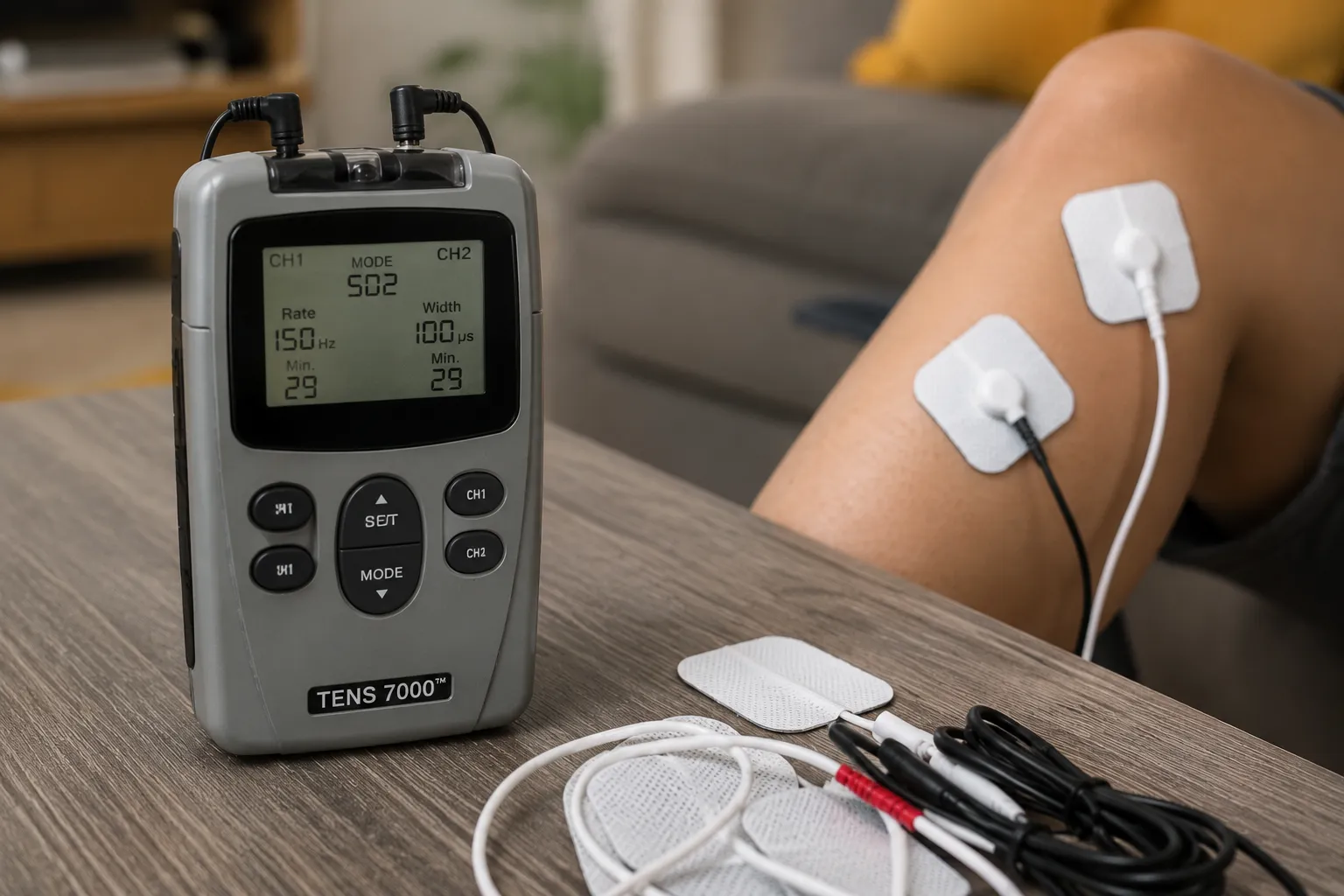
Transcutaneous electrical nerve stimulation, or TENS, applies a mild electrical current through electrodes on the skin as part of pain management. For a service issuing these devices, the practical considerations are how many channels are needed, which programmes suit the patients, how straightforward the device is for patients to use, and how electrodes are supplied and managed.
The ten device types below cover clinic, patient-issue and specialist use. Each entry explains its role and what to confirm before purchase.
Channels, programmes and patient use
The number of channels determines how many electrode pairs a device drives, which affects how much area can be treated at once. Two channels suit many needs, while more channels help where several sites are treated together.
Because patients often use these devices themselves, ease of use is central. Clear controls, understandable programmes and a device a patient can operate confidently matter as much as the range of settings. A device that overwhelms a patient will be used less than one that is simple and clear.
The ten device types
1. Single-channel TENS units
Drive one electrode pair, suited to treating a single site simply. Straightforward for patient use.
2. Dual-channel TENS units
Drive two electrode pairs for treating a larger area or two sites, the common configuration for many services.
3. Units with preset programmes
Include preset stimulation programmes to simplify use for patients who do not need to adjust individual parameters.
4. Units with adjustable parameters
Allow adjustment of stimulation parameters under guidance, giving flexibility where treatment is tailored to the individual.
5. Compact wearable units
Small units worn discreetly during daily activities suited to patients who need stimulation while mobile.
6. Units with obstetric programmes
Include programmes intended for use during labour, with a boost control for the patient. Confirm the programmes provided.
7. Combination TENS and muscle stimulation units
Add muscle stimulation modes alongside TENS, used where both are part of the approach under guidance.
8. Rechargeable TENS units
Use a rechargeable battery rather than disposable cells, convenient for regular users. Confirm charging and battery life.
9. Units with usage recording
Record use to support review of how a device is being used. Confirm what is recorded and how it is retrieved.
10. Clinic units for assessment
Fuller-featured units used in clinic to assess suitability and settings before a patient is issued a device to take home.
Electrodes, hygiene and patient issue
Electrodes are the ongoing consumable and the point of contact with the patient, so their supply and management shape the service. Self-adhesive electrodes are single-patient items, and a service issuing devices needs a reliable route for patients to obtain replacements, since worn electrodes reduce effectiveness and comfort. Where a device moves between patients, the hygiene arrangement and electrode policy must be clear, with electrodes not shared between people. Patient issue works best when the person leaves with a device they understand, a supply of electrodes, and clear written guidance, so the setup process and the supporting materials are part of the decision alongside the device itself.
What to confirm before ordering
-
Channels. Confirm single- or dual-channel against how sites are treated.
-
Programmes. Establish preset and adjustable programmes suited to your patients.
-
Ease of use. Check the controls suit patient self-use where relevant.
-
Electrodes. Confirm electrode type, supply and the patient replacement route.
-
Power. Establish disposable or rechargeable batteries and their life.
-
Guidance. Confirm the written materials supporting patient issue.
Training, hygiene and servicing
Training and guidance for patients matter more than for many devices, since patients operate them independently. Clear instructions on electrode placement, programme use,e and cleaning support safe, effective use at home.
Hygiene centres on electrodes as single-patient items and on cleaning any shared device between patients. The policy should be explicit and easy to understand.
For servicing, agree on function checks, output verification, and battery arrangements, since a device delivering incorrect output would affect treatment. Ensure the service receives device safety alerts so any field safety notices reach the pain management or therapy team.
Electrode supply and clear patient guidance should be planned alongside the device for patient issues. Services can discuss provision with the Medigear.uk contact page.
Final thoughts
Choose the device based on channels, programmes, and how straightforward it is for a patient to use, with electrode supply and clear guidance planned for patient use. Most services are best served by simple, clear devices matched to their patients, with a reliable electrode-replacement process and supporting written materials.
This article provides general procurement guidance for healthcare organisations. It is not clinical or pain management advice, and it does not replace manufacturer instructions or professional judgement.