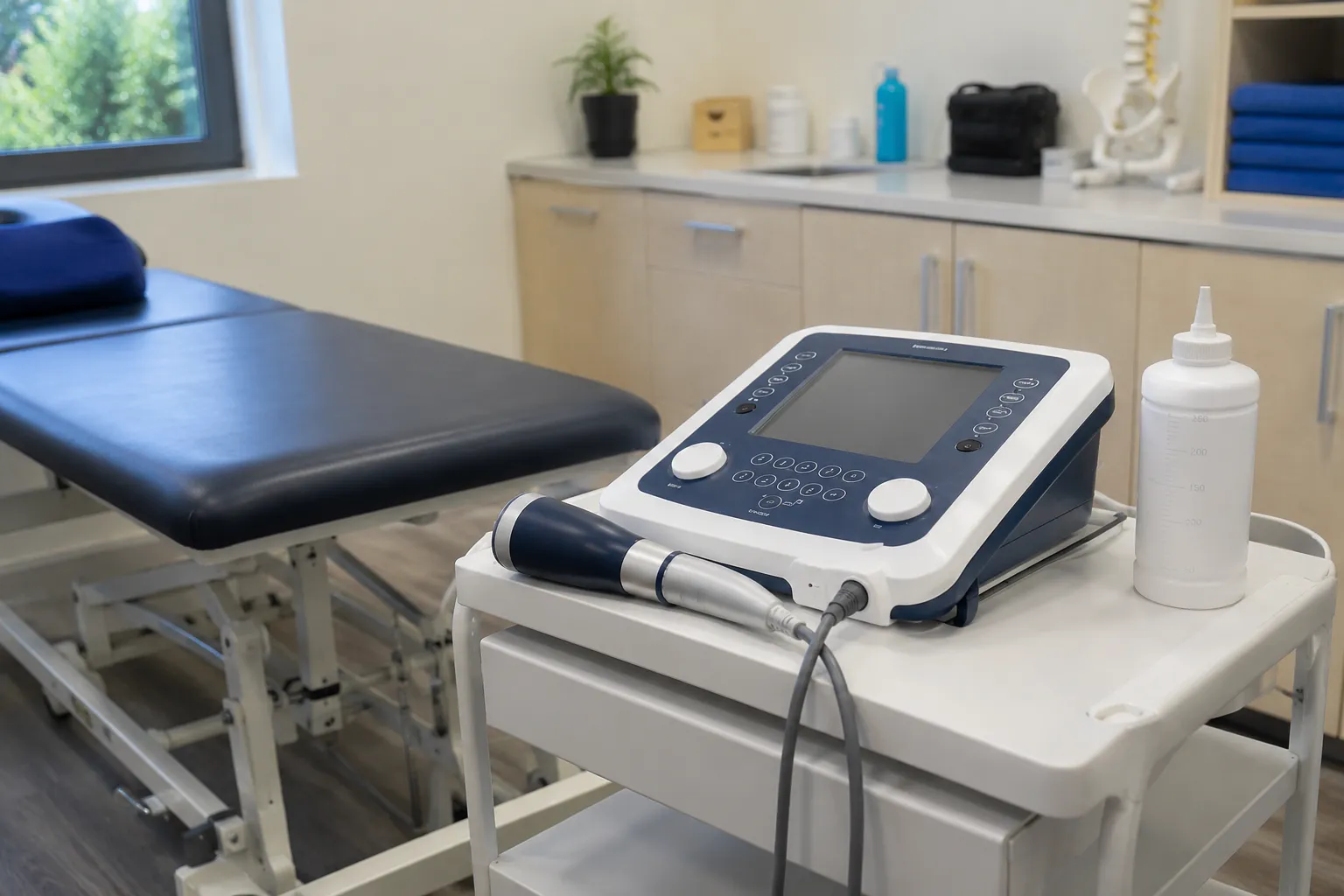
Therapeutic ultrasound delivers acoustic energy to tissue as part of physiotherapy treatment, for a different purpose than the diagnostic imaging that shares the name. For a physiotherapy service, the practical questions are about frequency options, applicator sizes, whether combination therapy is needed, and how the unit fits into a busy clinic, rather than image quality.
The ten unit types below cover clinic, portable and combination use. Each entry explains its role and what to confirm before purchase.
Frequency, applicators and treatment depth
Frequency relates to the depth at which energy is concentrated, and units that offer multiple frequencies give the therapist flexibility across superficial and deeper structures. A unit fixed to a single frequency limits the range of treatments it supports.
Applicator size and range matter for practical treatment. Different applicator sizes suit different body areas, and the treatment head is the part handled constantly, so its comfort, cable and durability affect daily use. The applicator range should match the areas a service treats.
The ten unit types
1. Single-frequency therapeutic ultrasound units
Deliver ultrasound at one frequency, suited to services with a defined treatment focus. Straightforward to use and maintain.
2. Dual-frequency units
Offer two frequencies for treating structures at different depths, giving flexibility across a varied caseload.
3. Units with multiple applicator sizes
Provide applicators of different sizes for large and small treatment areas, matching the head to the body region.
4. Combination therapy units
Combine ultrasound and electrical stimulation in a single device, used where both are part of the treatment approach. Confirm the modes provided.
5. Portable therapeutic ultrasound units
Compact units for domiciliary and community treatment, where portability and battery or simple mains use matter.
6. Units with pulsed and continuous output
Offer both pulsed and continuous delivery, giving the therapist control over how energy is applied.
7. Units with preset programmes
Include configurable presets for common treatments, to ensure consistency and save setup time in a busy clinic.
8. Units with waterproof applicators
Provide applicators suited to water-immersion treatment or certain areas. Confirm the protection and cleaning method.
9. Units with treatment recording
Record treatment parameters for the notes to support consistency across sessions and therapists.
10. Multi-modality electrotherapy platforms
Combine ultrasound with a range of electrotherapy modalities on a single platform, suited to services that want several therapies in one unit.
Clinic use, applicator care and consumables
In a physiotherapy clinic, the unit is used throughout the day by many patients, so practicality determines its value. The applicator is handled continuously and cleaned between patients, so its durability, cable strength and the approved cleaning method matter for both longevity and infection prevention. Coupling gel is the daily consumable, and a dependable supply keeps treatment running. Where a unit offers combination or multimodal therapy, the layout and controls should allow the therapist to switch between modes without a confusing setup each time. Consider too how the unit is positioned in the treatment space, since a trolley-mounted unit with a well-managed cable is easier to work with than one that must be carried between plinths.
What to confirm before ordering
-
Frequency. Confirm single- or dual-frequency against the treated structures.
-
Applicators. Establish the sizes and range for your treatment areas.
-
Output modes. Confirm pulsed and continuous delivery as required.
-
Combination therapy. Where needed, confirm the additional modalities provided.
-
Cleaning. Verify the approved method for applicators and housings.
-
Consumables. Confirm coupling gel and any accessory supply.
Training, hygiene and servicing
Training should cover applicator selection, frequency and output choice, treatment technique and cleaning between patients. Where combination therapy is used, therapists benefit from familiarity with moving between modes.
Hygiene between patients is straightforward but must be defined, since the applicator contacts skin. Confirm the cleaning agent and method with the infection prevention team.
For servicing, agree planned maintenance, output verification, applicator testing and electrical safety testing, since applicator performance can decline with heavy use. Ensure the service receives MHRA safety alerts for medical devices so any field safety notices reach the physiotherapy team.
Frequency and applicator range should match the structures a service treats. Clinics comparing units can work through configurations via healthcare buyer services.
Final thoughts
Choose the unit based on frequency, applicators, and how it fits a busy clinic, remembering that this is treatment equipment rather than imaging. A unit best serves most physiotherapy services with the frequency and applicator range their caseload needs, dependable applicators, defined cleaning and output verification built into servicing.
This article provides general procurement guidance for healthcare organisations. It is not clinical or physiotherapy advice, and it does not replace manufacturer instructions or professional judgement.