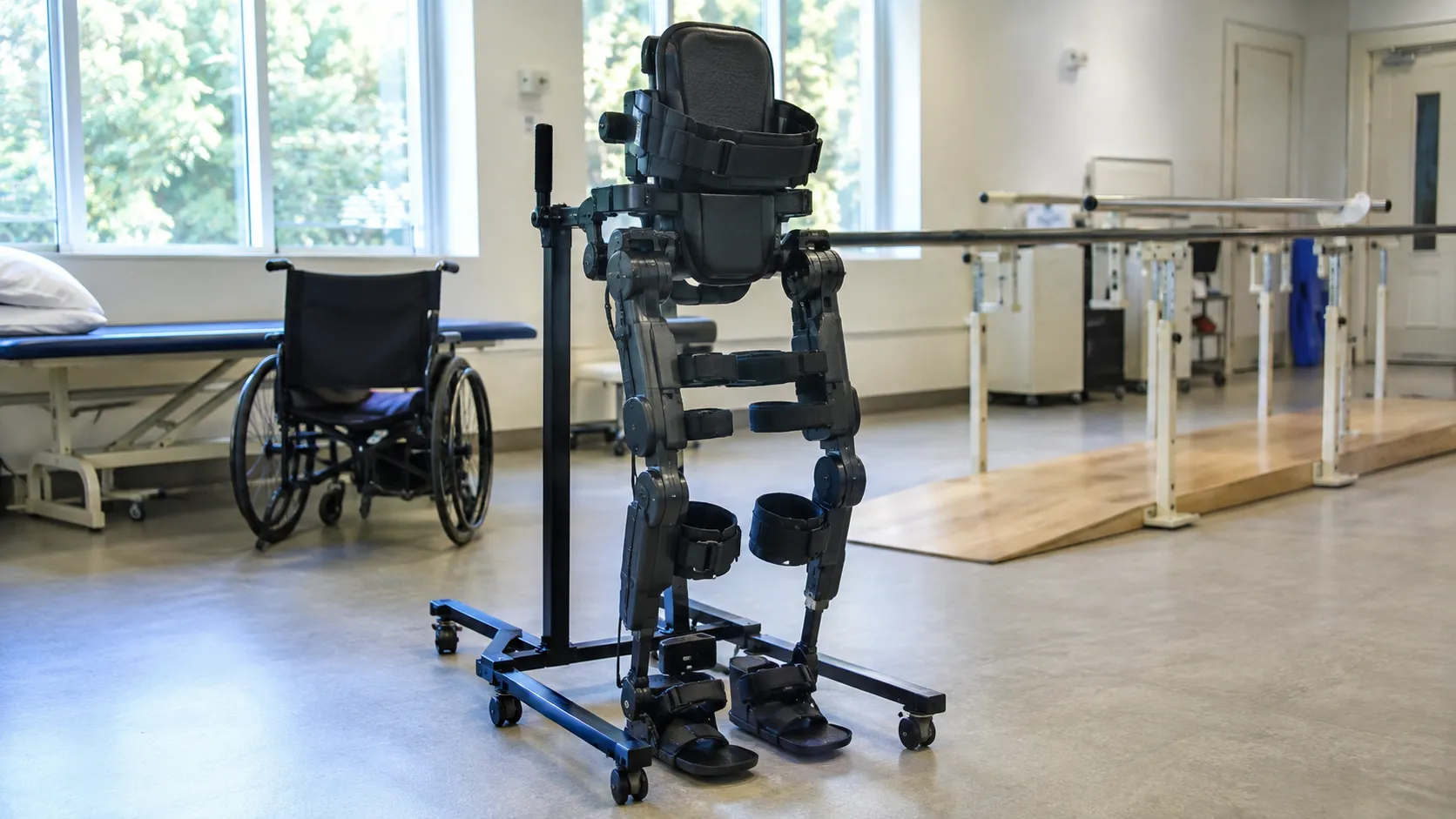
Robotic exoskeletons support standing and stepping in rehabilitation for people with spinal cord injury, used under clinical direction as part of a wider programme. They are substantial investments that reshape how a service delivers gait rehabilitation, so the decision reaches well beyond the device to staffing, training, space and support. Choosing one means being clear about who it is for and how the service will run it.
The ten types below reflect the range and the considerations a service weighs. Each entry explains a factor and what to confirm before purchase.
Patient fit, control and clinical direction
Fit governs who a device can serve. Adjustment ranges for height, limb length, and other measurements determine which patients a device suits, so the intended patient group should be checked against the device's fitting range before any decision is made.
Control approach and clinical use shape the therapy. Devices differ in how movement is initiated and supported, and all are used under clinical direction within a rehabilitation programme rather than as standalone equipment. How the device fits the service's clinical approach is central.
The ten types to weigh
1. Overground gait exoskeletons
Support standing and stepping over ground in a rehabilitation setting, used with appropriate supervision and support.
2. Treadmill-based robotic gait systems
Combine robotic support with a treadmill and body-weight support to provide a controlled environment for gait training.
3. Devices with adjustable support levels
Vary how much assistance is provided, allowing therapy to progress as a patient develops capability.
4. Devices with wide fitting ranges
Accommodate a broader range of patient measurements, widening the group a single device can serve.
5. Devices with progress recording
Record session data supporting review of progress over a programme. Confirm what is recorded and how it is used.
6. Devices with simplified setup
Reduce the time and staffing to fit and prepare a patient, which affects how many sessions a service can deliver.
7. Devices for standing and weight-bearing
Focus on supported standing and weight-bearing as part of a programme, rather than stepping alone.
8. Devices with body-weight support integration
Integrate with a body-weight support system to provide a controlled setting for early rehabilitation.
9. Devices suited to specific settings
Configured for particular rehabilitation environments, with the space and support arrangements those imply.
10. Devices with defined training and support programmes
Come with structured staff training and ongoing support, which for complex equipment is as important as the device itself.
Staffing, space and running the service
An exoskeleton changes how a service works, so the surrounding arrangements decide whether it succeeds. Fitting and supervising a patient can require more than one member of staff, and the time this takes affects how many sessions are possible, so the staffing model should be part of the decision. Space matters too: overground devices need room to walk safely with support, and treadmill-based systems need their own footprint and access. Staff training is substantial for this equipment, and confident, well-trained staff determine whether the device is used to its potential, so the training and ongoing support offered are central rather than incidental. Patient selection, within clinical judgement, then ensures the device serves those it can genuinely help.
What to confirm before ordering
-
Fitting range. Confirm the adjustment range suits your intended patient group.
-
Clinical fit. Establish how the device fits your rehabilitation approach.
-
Staffing. Confirm the staff needed to fit and supervise sessions.
-
Space. Verify the room and access the device requires.
-
Training. Establish the staff training and ongoing support provided.
-
Support and parts. Confirm service response, support life and parts availability.
Training, support and servicing
Training is central for exoskeletons, since safe, effective use depends on well-prepared staff. Confirm the depth of initial training, provision for new staff over time, and how competence is maintained, since staff turnover should not leave a device idle.
Ongoing clinical and technical support underpins a complex device used with vulnerable patients. A clear support route and response arrangement matter throughout the device's life.
For servicing, agree planned maintenance, mechanical and control system checks, electrical safety testing, software support and response times, since downtime affects a programme. Ensure the service receives published safety alerts and recalls so field safety notices reach the rehabilitation and engineering teams.
Staffing, space and training should be planned alongside the device rather than after it arrives. Services scoping a programme can raise requirements with the contact page on Medigear.uk.
Final thoughts
Approach an exoskeleton as a service decision, not only an equipment purchase, weighing fit, staffing, space, training and support alongside the device. Most services are best served by a device matched to their patient group and clinical approach, with strong training, dependable support and realistic staffing planned before it arrives.
This article provides general procurement guidance for healthcare organisations. It is not clinical or rehabilitation advice, and it does not replace manufacturer instructions, training or professional judgement.