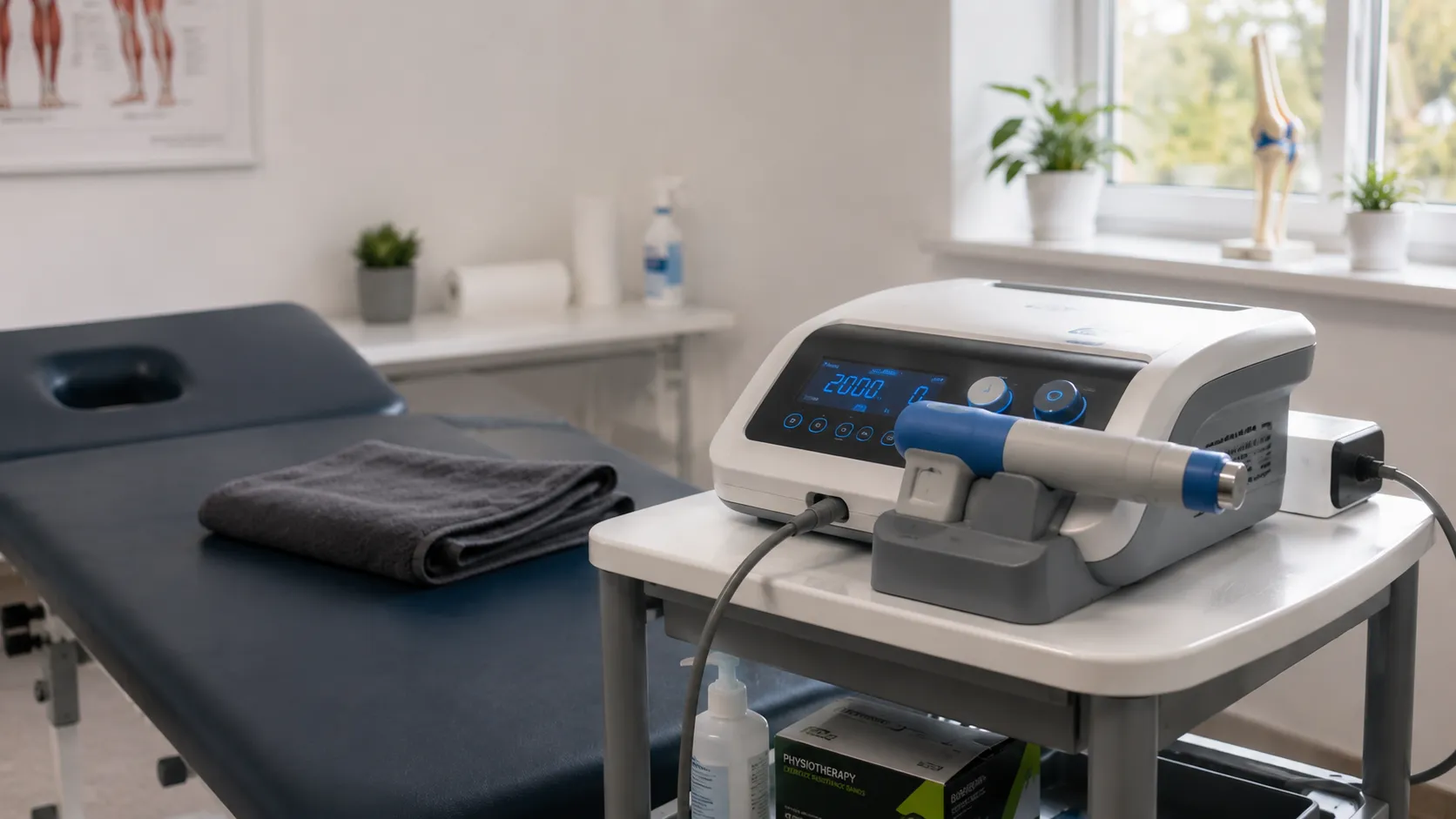
Extracorporeal shockwave therapy delivers acoustic pressure waves to tissue to treat certain musculoskeletal conditions, including tendon problems. For a clinic, the practical questions concern how the waves are generated, the available applicators, how energy is controlled, and what consumables and maintenance the device requires, since these shape both treatment and the running of the service.
The ten device types below cover clinic and specialist use. Each entry explains its role and what to confirm before purchase.
Generation method, energy and applicators
Devices generate pressure waves by different methods, broadly grouped as focused and radial approaches, which differ in how energy is concentrated and at what depth it acts. The distinction affects which conditions and depths a device is suited to, so it should be matched to the clinic's caseload.
Energy control and applicators shape treatment in practice. Adjustable energy and rate let the clinician tailor treatment, and the applicator or transmitter is the part in contact with the patient, so its range and durability matter. Match both to the conditions treated.
The ten device types
1. Radial pressure wave devices
Generate a radial wave spreading from the applicator, commonly used for more superficial musculoskeletal treatment—a frequent clinic choice.
2. Focused shockwave devices
Concentrate energy to a focal point at depth, suited to conditions requiring deeper treatment. Confirm the focusing and depth range.
3. Devices with adjustable energy levels
Allow the delivered energy to be set based on the treatment and the patient's tolerance, providing control across a caseload.
4. Devices with variable rate control
Let the pulse rate be adjusted; it's another parameter the clinician uses to tailor treatment.
5. Devices with multiple transmitters
Provide transmitters or applicators of different profiles for different areas and depths, matching the head to the target.
6. Compact clinic devices
Smaller units for clinics with limited space, retaining the capability needed for common treatments.
7. Devices with treatment presets
Include presets for common conditions to support consistency and save setup time in a busy clinic.
8. Devices with treatment recording
Record treatment parameters for the notes, supporting consistency across sessions and clinicians.
9. Combined shockwave and additional modality units
Offer shockwave alongside another modality on a single platform, suited to services that want more than one therapy in a single unit.
10. Devices with consumable-based applicators
Use applicators or components with a defined service life as consumables. Confirm the ongoing supply and replacement interval.
Consumables, workflow and the clinic list
Shockwave devices often involve components that wear and need periodic replacement, so understanding the consumable picture is part of the decision rather than a surprise later. Confirm which parts are consumable, their service life, and their supply, since a device whose applicator needs frequent replacement entails an ongoing commitment. Workflow matters in a busy clinic: preset treatments, quick applicator changes, and a device that is straightforward to set up between patients all help a list run smoothly. Noise is worth checking,g too, as some devices are audible during treatment, which can affect the clinic environment. Coupling gel is a routine consumable where the method requires it, so its supply should be confirmed alongside the applicators.
What to confirm before ordering
-
Generation method. Confirm whether a radial or focused approach is appropriate for your caseload.
-
Energy and rate. Establish the adjustable range for tailoring treatment.
-
Applicators. Confirm the transmitter range for the areas treated.
-
Consumables. Establish which parts wear, their life and supply.
-
Presets. Check treatment presets supporting consistency.
-
Noise. Consider the device's sound during treatment.
Training, hygiene and servicing
Training should cover applicator selection, energy and rate setting, treatment technique and cleaning between patients. Understanding the difference between the device's approaches supports appropriate use.
Hygiene between patients centres on the applicator contacting skin, so the cleaning method should be agreed with the infection prevention team and applied consistently.
For servicing, agree planned maintenance, output verification, consumable applicator replacement and electrical safety testing, since applicator wear affects delivered energy. Ensure the service receives the alerts and recalls listing so any field safety notices reach the clinic team.
The consumable picture and generation method should be understood before purchase. Clinics comparing devices can check current options with verified supplier listings.
Final thoughts
Choose the device based on its generation method, energy control, and consumable characteristics, matched to the conditions the clinic treats. Most services are best served by a device suited to their caseload, with a clear consumable commitment, presets that support consistency, and applicator wear built into servicing.
This article provides general procurement guidance for healthcare organisations. It is not clinical or musculoskeletal treatment advice, and it does not replace manufacturer instructions or professional judgement.