Critical care rarely runs on one monitor design. A ventilated patient in a high-dependency bay, a child recovering from theatre and a patient being wheeled to imaging each need a different measurement set, a different alarm profile and a different physical format. Buying a single model for every bay usually means paying for parameters some areas never use, while leaving others short.
The ten monitor types below cover almost every critical care need. Each entry explains what the monitor does, where it fits, and what to confirm before an order is signed.
What separates a critical care monitor from a general ward unit
Three things, mainly. The parameter set is wider, usually including invasive pressures, cardiac output, or gas measurements. The alarm system is more configurable, with priority tiers and delay settings that reduce fatigue without hiding real events. And connectivity matters far more, because critical care monitors are expected to push data to a central station and often into the patient record.
Standardising on a single platform across a unit is worth the real effort. Shared accessories, a single training programme, and a single spare-parts holding all reduce downtime. Specialist bays can still keep dedicated designs where the clinical need justifies it.
The ten monitor types and where they fit
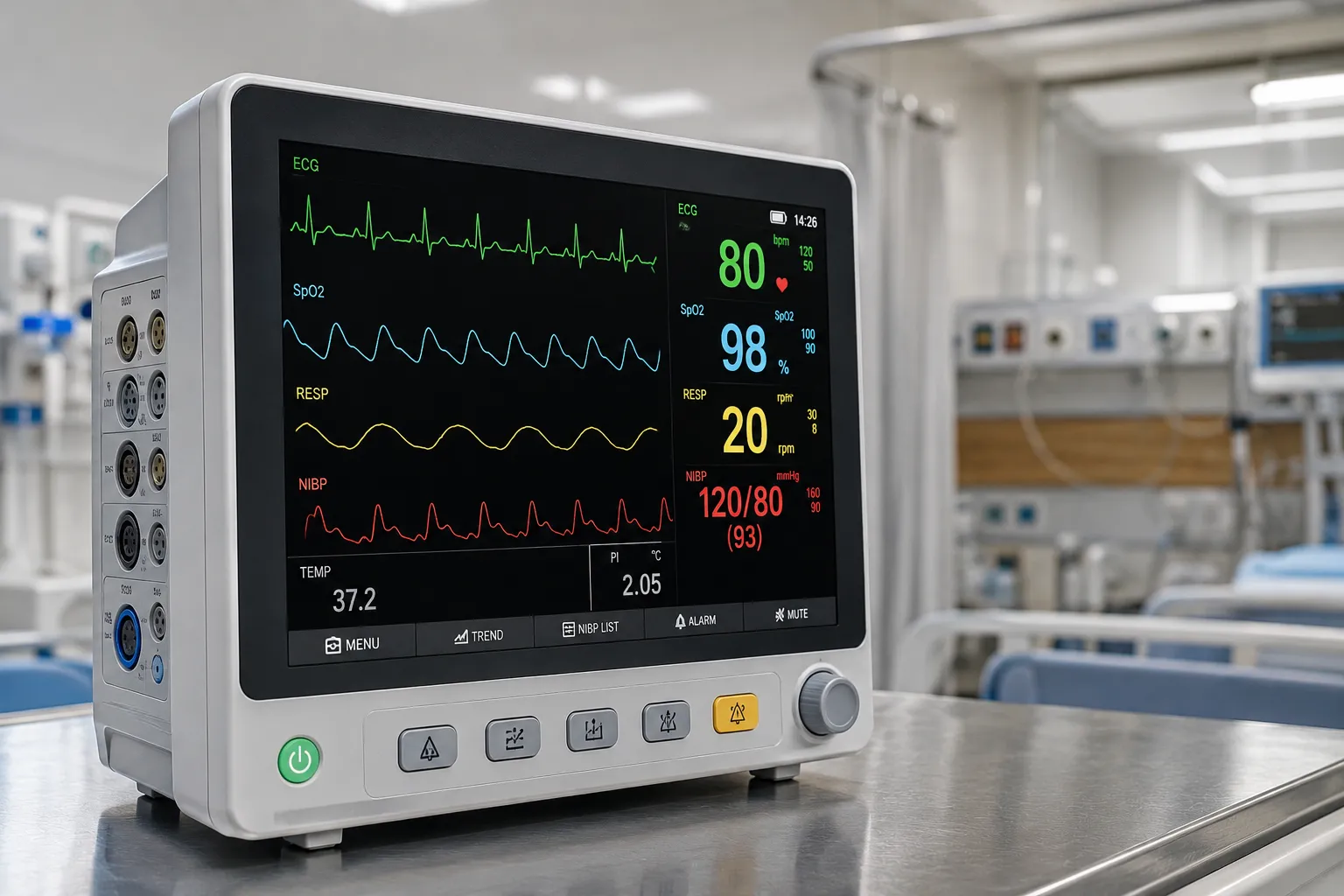
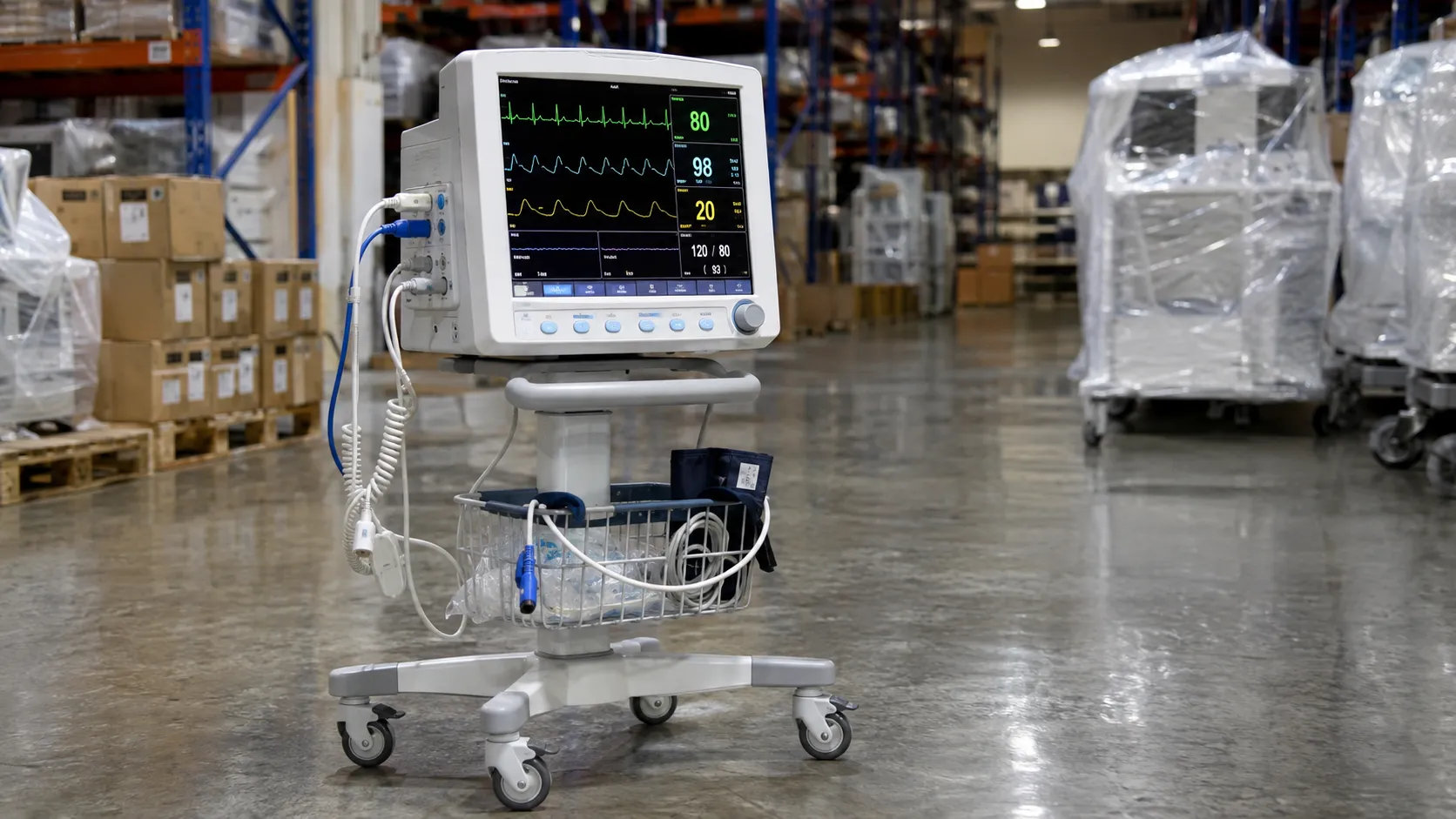
1. Bedside multiparameter monitors
The workhorse of any unit. A fixed configuration covering ECG, respiration, non-invasive pressure, pulse oximetry and temperature, usually with one or two invasive pressure channels. Screen size and mounting options matter here, because sightlines from the bay entrance affect how quickly staff spot a deteriorating patient.
2. Modular monitors
Modular platforms use a host frame with removable parameter modules. A bay can start with a basic set and later add cardiac output or gas analysis without replacing the monitor. Confirm which modules are interchangeable across the range, since module compatibility is the whole reason for choosing this design.
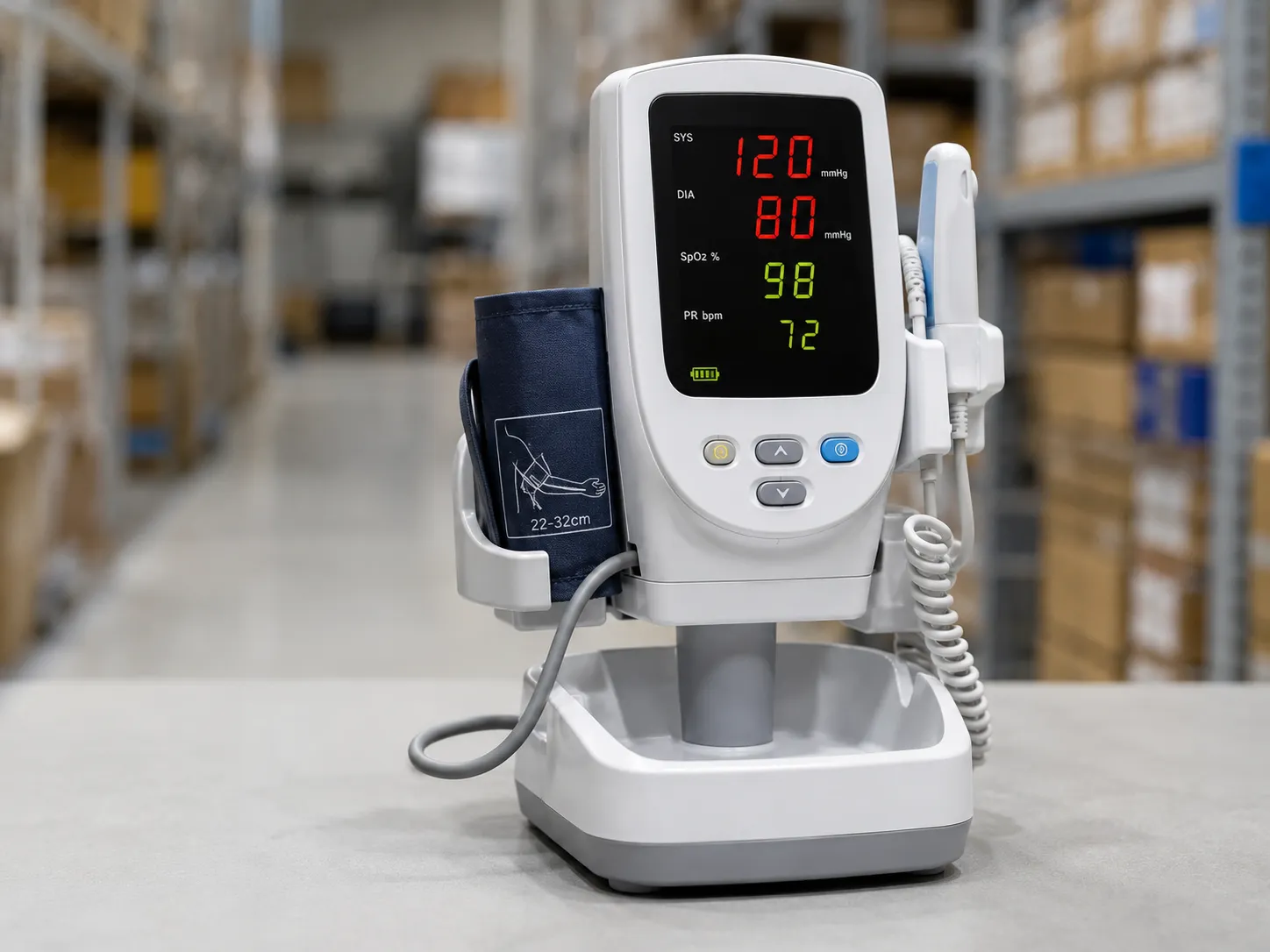
3. Compact vital signs monitors
Smaller units measuring the core observations only. They suit step-down beds, recovery areas and assessment bays where continuous invasive monitoring is not required. Battery life and cleanability tend to matter more than screen real estate.
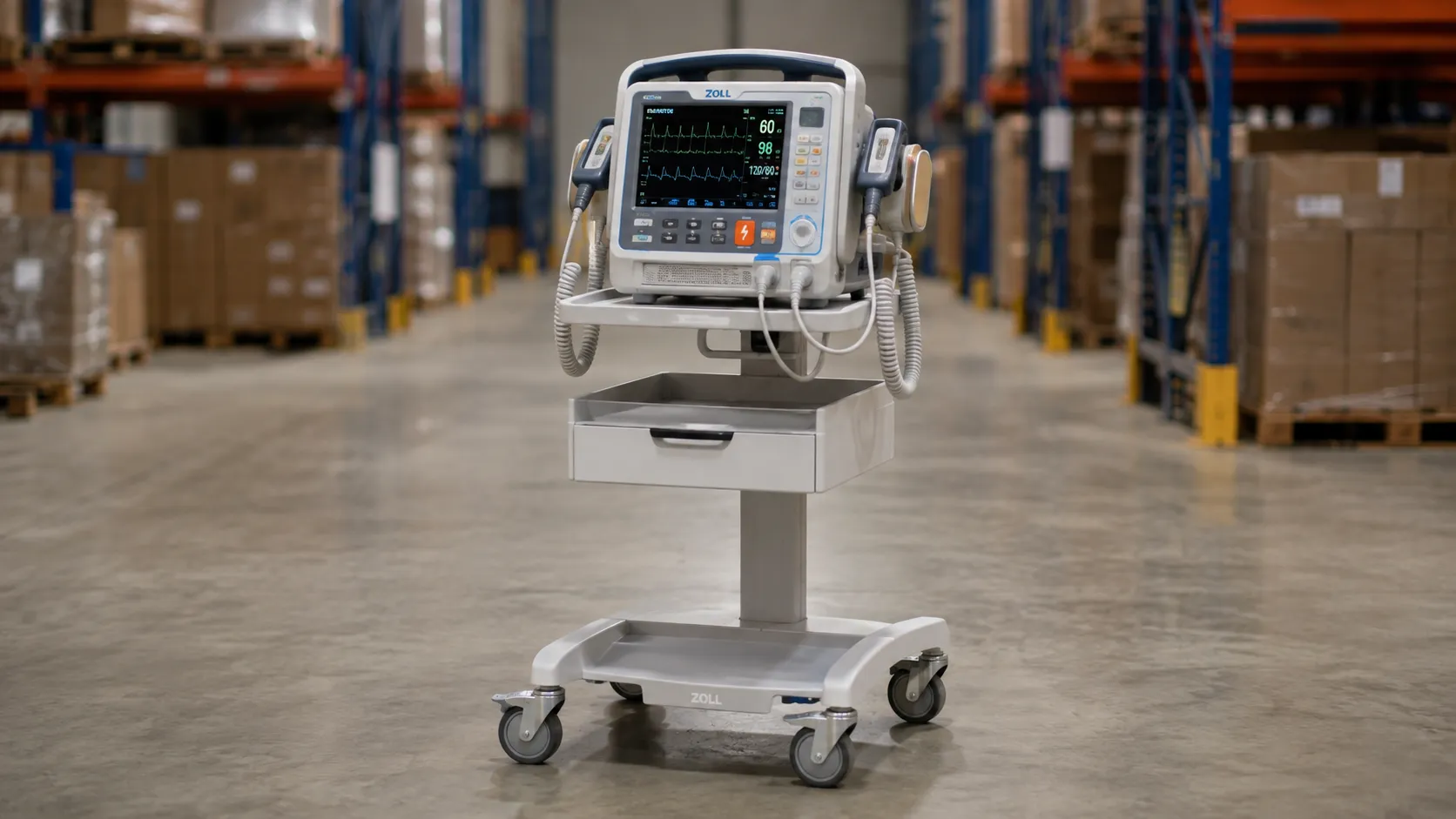
4. Transport monitors
Built for movement between the unit, theatre and imaging. Look for a robust chassis, a clear battery runtime under load, and the ability to continue a recording without a gap when the patient returns to the bedside monitor. Weight is a genuine safety factor when a monitor sits on a trolley beside a ventilator and pumps.
5. Telemetry monitors
Wearable transmitters that send cardiac and oxygenation data to a central receiver while the patient walks. They belong in step-down and cardiac areas rather than the sickest bays. Check the receiving network's coverage area before you commit, because dead zones can make the system unreliable.
6. Central station monitors
A single display gathering waveforms and alarms from every connected bed. Central stations support handover, remote review and arrhythmia trending. The number of beds a station can hold, and the licence structure for adding more, should be confirmed in writing.
7. Haemodynamic monitors
Dedicated units for cardiac output, stroke volume and fluid responsiveness measurement. Some are standalone, others are modules within a larger platform. Consumable format is the key question, since the sensor or catheter type dictates ongoing supply.
8. Capnography-capable monitors
Monitors with mainstream or sidestream carbon dioxide measurement. They are the standard for ventilated and sedated patients, and increasingly for anyone at risk of respiratory depression. Sidestream units need water traps and sampling lines, which becomes a stocking commitment.
9. Neonatal and paediatric monitors
Configured for very small patients, with appropriate probe sizes, low-flow gas sampling and alarm ranges set for paediatric physiology. Adult monitors with a paediatric mode are not always equivalent, so confirm the measurement range rather than assuming the software setting is enough.
10. Depth of anaesthesia and neurological monitors
Processed EEG and related neuromonitoring are used in theatre and for deeply sedated patients. These are specialist additions rather than a general purchase, and the disposable sensor supply chain deserves scrutiny before adoption.
Procurement checks worth making
-
Accessory compatibility. Confirm whether existing cuffs, cables and probes fit the new platform, or whether the estate changes with it.
-
Network integration. Ask exactly which protocol the monitor uses to reach your central station and records system, and who configures it.
-
Alarm configuration. Establish whether alarm profiles can be locked at the department level, so settings do not drift from bay to bay.
-
Battery specification. Ask for stated runtime under a realistic monitoring load, not the best-case figure.
-
Software updates. Clarify whether updates are included, how they are delivered, and whether they require a service visit.
Training, servicing and lifecycle
Monitors fail clinically long before they fail electrically. If staff cannot silence, set or interpret an alarm confidently, the equipment is not doing its job. Build structured handover training into the delivery agreement rather than treating it as an afterthought, and repeat it when rotations change.
On the technical side, agree a planned maintenance schedule covering electrical safety testing, pressure channel verification and gas measurement calibration where fitted. Confirm spare-parts availability and expected support life in writing, because a discontinued module can retire an otherwise sound platform. Registering with the relevant safety notice service, such as the device alert notifications, keeps your team aware of field safety actions affecting installed equipment.
Final thoughts
Match the monitor to the bay, not the brochure. Most units are best served by a standard bedside platform across general bays, a transport unit that shares the same accessory set, and a small number of specialist monitors in cases where the clinical indication is clear. Get accessory compatibility, alarm governance, and service support agreed before delivery, and the estate will stay usable for years.
This article is general procurement guidance for healthcare organisations. It is not clinical advice, and it does not replace manufacturer instructions or your own local policies.