
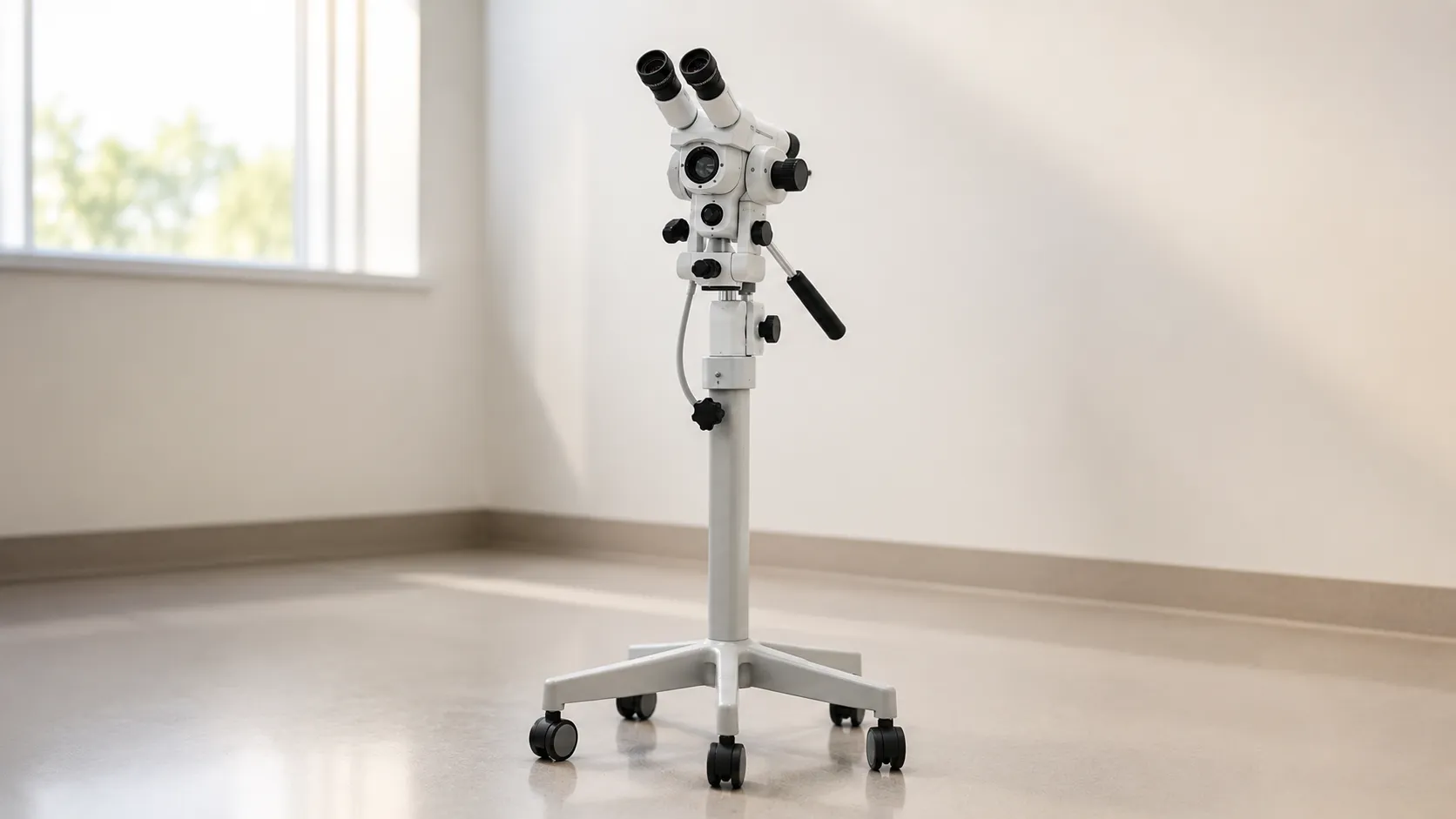
A colposcopy clinic runs on more than optics. Room layout, chair compatibility, image capture and the practicalities of cleaning between patients all shape how a list runs. The instrument that performs best in a demonstration is not always the one that fits a busy clinic room with limited space.
The ten colposcope types below cover clinic, mobile and imaging-focused provision. Each entry explains its role and what to confirm before ordering.
Optics, illumination and working distance
Magnification determines whether the clinician can move between an overview and a detailed inspection without repositioning. Illumination quality determines what is visible at the higher magnifications, and colour rendering affects the appearance of tissue and any applied solutions.
Working distance is the factor most often underestimated. It sets how far the instrument sits from the patient, which in turn affects instrument access, clinician posture and how the colposcope interacts with the chair and trolley already in the room.
The ten colposcope types
1. Optical binocular colposcopes
Traditional stereoscopic instruments giving a direct optical view. Familiar, durable and independent of screens or software, though documentation requires a separate camera.
2. Video colposcopes
Camera-based systems displaying the view on a monitor. They support shared viewing, teaching and straightforward image capture without an eyepiece.
3. Hybrid optical and video systems
Provide both eyepiece and camera outputs, allowing clinician work to be optically monitored while images are recorded or displayed for others.
4. Floor-standing mobile colposcopes
Mounted on a wheeled base for repositioning within a room or between rooms. Base footprint and stability matter where clinic space is limited.
5. Wall and ceiling-mounted colposcopes
Fixed installations that free floor space in small rooms. Confirm structural requirements and the reach of the arm across the examination chair.
6. Chair-mounted systems
Attach directly to the examination chair, maintaining compatibility. Compatibility with your specific chair model must be confirmed before ordering.
7. Colposcopes with green filters
Include filters that improve contrast of vascular patterns. Confirm which filters are fitted and how they are engaged during examination.
8. Colposcopes with variable magnification
Offer stepped or continuous magnification change, allowing rapid movement between survey and detailed views without altering position.
9. Portable and handheld colposcopes
Compact devices for outreach, community clinics and settings without a dedicated room. Battery life, image quality and storage are the practical measures.
10. Systems with integrated reporting software
Link images to a structured record and, in some services, to the screening pathway. Confirm integration requirements, data handling and who maintains the software.
Room layout and the practical clinic
Plan the room around the examination, not the instrument alone. Consider where the clinician sits, where the assistant stands, where the trolley of instruments and solutions goes, and where a monitor can be seen without turning away from the patient. Privacy and dignity should shape screen placement, since a display visible from the doorway is a problem regardless of image quality. Where rooms are shared with other clinics, a mounted system that stows neatly often works better than a floor-standing unit that must be moved.
What to confirm before ordering
-
Magnification range. Confirm the steps or the available continuous range/distance. Check it suits instruments, chair and clinician. Confirm which filters are included and how they are selected.
-
Image handling. Establish and store the recording compatibility with your room: chair, wall, and recording.
-
Cleaning. Confirm approved agents for optics, housings and any touch surfaces.
Training, infection prevention and servicing
Training should cover positioning, magnification use, filter selection, image capture and how findings are documented. Where a service moves from optical to video working, allow time for clinicians to adjust to viewing on a screen rather than through an eyepiece.
Infection prevention arrangements need to be explicit about which parts of the instrument are cleaned between patients and with what. Optics and control surfaces usually have different approved agents.
For servicing, agree planned maintenance intervals, illumination replacement, optical alignment checks, electrical safety testing and software support terms. Ensure the service receives published device safety alerts so field safety notices reach the clinical team.
Mounting method and room layout constrain the choice as much as the optics do. Services planning a colposcopy room can review options through buyer services for healthcare organisations.
Final thoughts
Fit the colposcope to the room and the pathway. Most A systems best serve most services with a useful magnification range, reliable illumination with filters, image capture that reaches the record directly, and a mounting arrangement suited to the space available. Settle image governance and cleaning before installation.
This article provides general procurement guidance for healthcare organisations. It is not clinical or diagnostic advice and does not replace manufacturer instructions, screening programme requirements or professional judgement.