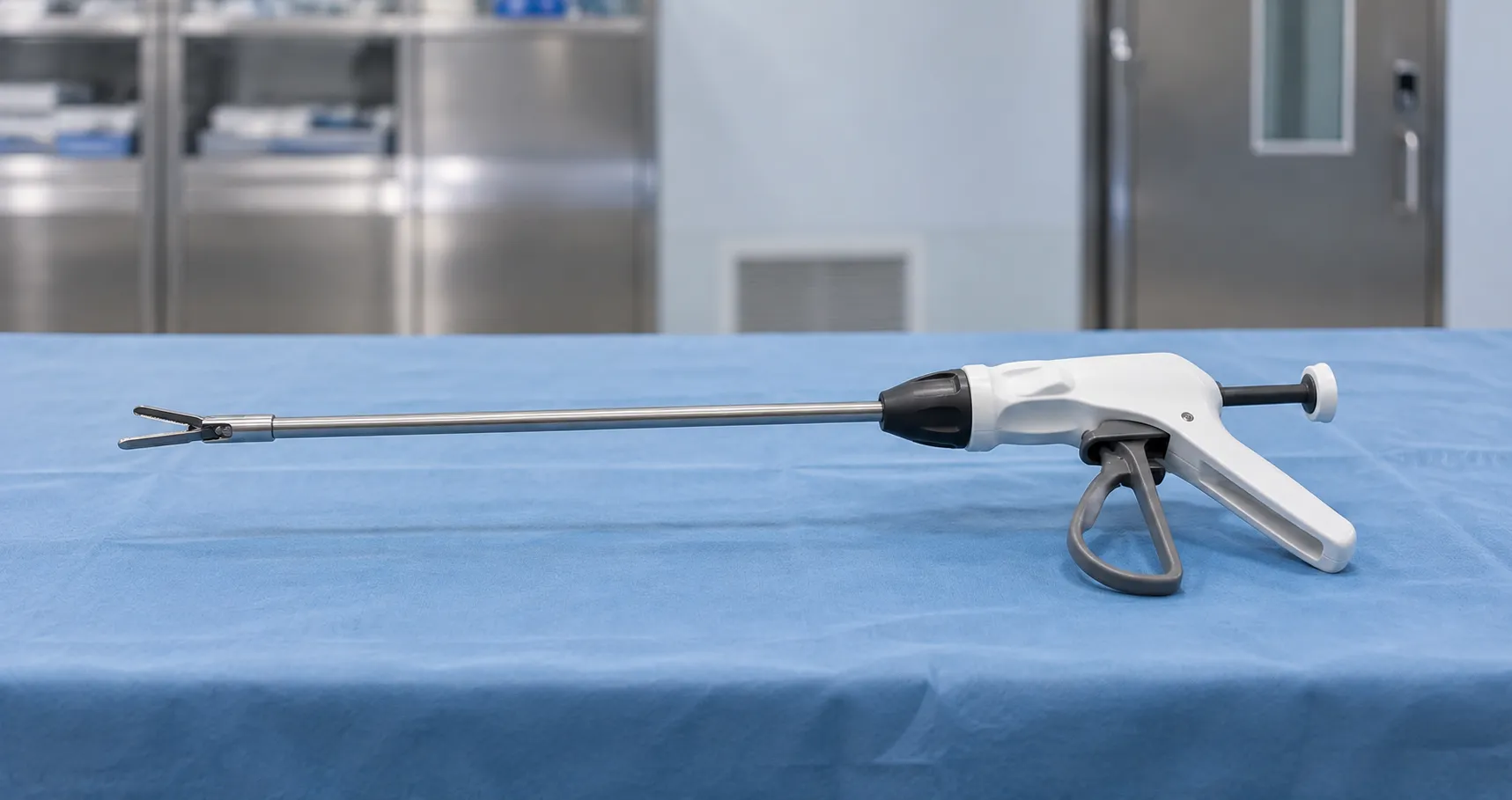
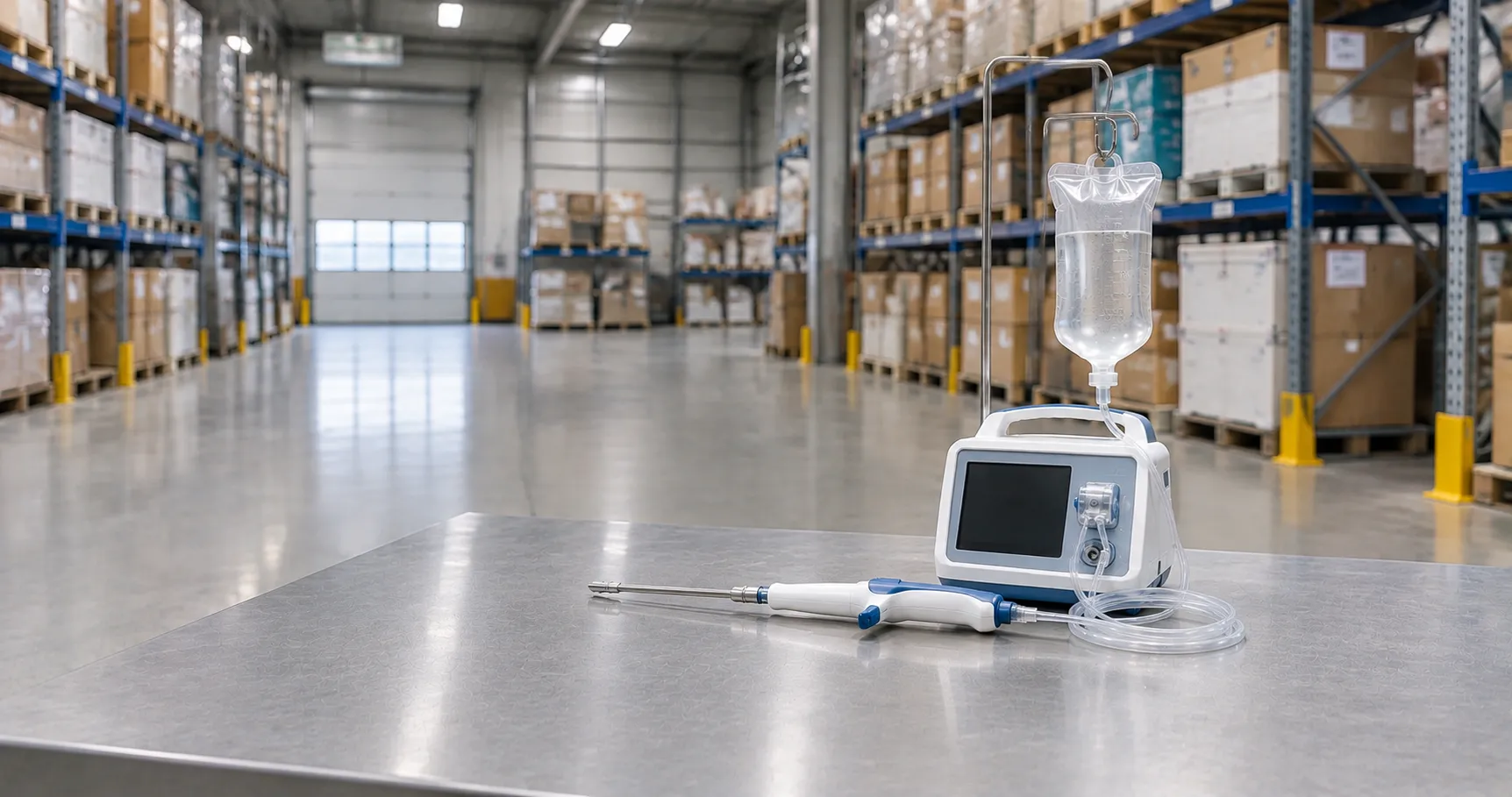
A surgical irrigation system delivers a controlled flow of sterile fluid to a wound or operative site to remove debris, blood clots, bacteria, and loose tissue, and to keep tissue moist during surgery. By washing contaminants out of the field, irrigation supports a clean surgical site and clearer visibility. For a theatre or procurement lead, the choice includes gravity-powered pulsed lavage and battery systems, the flow and pressure they deliver, single-use versus reusable handpieces, and the cost of tips, tubing, and fluid per case.
The core variable is how fluid is delivered. Pressure and flow determine how effectively debris is removed and how gently tissue is treated, so a system must match the task, from a gentle rinse of delicate tissue to pulsed lavage of a contaminated traumatic wound or an arthroplasty bone bed.
How surgical irrigation works
Irrigation flushes the wound with sterile solution so debris, particulate matter, and micro-organisms are carried away with the run-off rather than left in the tissue. Simple systems rely on gravity or a bulb syringe; powered systems use a pump to generate a defined, pulsed flow that dislodges debris more effectively than a steady stream. The fluid also cools tissue during powered bone work and keeps exposed surfaces from drying. Pressure is a balance: too little fails to clean, while excessive pressure can drive contaminants deeper, damage tissue or create aerosol, so systems offer selectable settings suited to the tissue and the degree of contamination.
Volume matters as much as pressure. Removing debris reliably requires enough fluid to carry it out of the wound; a large or grossly contaminated site can consume several litres, and the system must draw from and, where suction is fitted, dispose of that volume without interrupting the surgeon. The temperature of the fluid matters, because a cold flush over a large exposed area can lower the patient's core temperature; warmed irrigation helps maintain normothermia during longer procedures.
Types of irrigation system
Gsystems irrigation runs fluid from a hung bag through tubing to a handpiece, giving a low-pressure, low-cost rinse suitable for gentle washing and topping up a field. Bulb-syringe irrigation is manual and simple for small wounds. Still, pressure-controlled systems, powered by battery or mains, deliver a pulsating jet at higher flow and are used for heavily contaminated traumatic wounds, debridement, and preparing bone surfaces in orthopaedics; many combine irrigation with suction to remove run-off. Arthroscopic and endoscopic fluid-management pumps are a distinct category: rather than washing an open wound, they maintain a set intra-articular pressure to distend and continuously clear a joint or cavity during minimal-access surgery, and their safety limits protect against over-pressurisation. The right category depends on the procedure and the level of contamination being managed, and larger departments often hold more than one type so the team can match the tool to the case.
Flow, pressure and tip selection
Powered systems let the team select flow rate and pressure, and the choice matters clinically: lower settings suit soft tissue and delicate structures, while higher pulsed settings clear gross contamination and bone debris. The handpiece tip shapes delivery, with fan sprays for broad surfaces, splash shields to control aerosol, and narrow or angled tips for deep or awkward sites. Integrated suction on the same handpiece removes run-off. This keeps the field clear and lets the team gauge how much is being removed. A trigger that offers proportional control, rather than a single fixed rate, gives the surgeon finer command over how forcefully a given area is washed.
Infection control and aerosol
Irrigation supports surgical-site cleanliness, but powered lavage generates splash and aerosol that can spread contamination and expose staff, so control measures matter. Splash shields, appropriate personal protective equipment and suction capture reduce this. Use only irrigation fluid appropriate to the procedure; consider that the fluid may be p cooling the patient. Single-use handpieces and tubing remove any reprocessing uncertainty for contaminated cases, and closed suction canisters keep run-off contained for safe disposal. NICE publishes guidance on surgical site infection prevention; an infection-prevention policy should govern fluid choice, warming, and waste management.
Key specifications a buyer must check
Match the pressure and flow range to the procedures the system will serve, from gentle irrigation to aggressive pulsed lavage. Check the tip and handpiece range, whether suction is integrated, and the fluid-warming and delivery arrangements. For powered systems, review whether the handpiece is single-use or reusable, battery life or mains needs, and noise. For fluid-management pumps in arthroscopy, confirm pressure accuracy and safety limits. Consider fluid volumes per case, waste-fluid handling and how spent fluid and single-use parts are disposed of, and check that the tubing reaches comfortably from the fluid source to the operating field without kinking or restricting flow.
Standards and regulation
Powered irrigation systems are medical devices requiring UKCA or CE marking, and electrically powered units are built to the IEC 60601 family for safety and electromagnetic compatibility. The MHRA handles device registration and vigilance, with broader guidance on GOV.UK. Irrigation fluids themselves are regulated separately as medicinal or medical-device products, so confirm the correct fluid and its sterility for each use. Ask suppliers for the declaration of conformity and the validated reprocessing method for any reusable components.
Consumables, decontamination and total cost of ownership
Running cost is dominated by consumables- tips, single-use tubing, and disposable items discarded as clinical waste-, and every case consumes sterile fluid; reusable handpieces are cleaned and sterilised using a validated method. Model the cost per case across handpiece, tubing, tips and fluid at your expected volume, and compare single-use convenience against the reprocessing burden of reusable kit. Add battery replacement for cordless systems and any service contract for pumps. Ask about warranty, loan cover and lead times on consumables, since a system is only useful if its single-use parts arrive reliably in time for the operating list. The MediGear buyers team can compare irrigation systems and consumables, or contact us for availability.
Procurement checklist
-
Match pressure and flow range to the procedures, from gentle rinse to pulsed lavage.
-
Check tip and handpiece options and whether suction is integrated.
-
Decide between single-use and reusable handpieces based on case mix and turnaround.
-
Confirm sterile fluid choice, warming and waste-fluid handling with infection control.
-
Verify UKCA or CE marking, IEC 60601 compliance and MHRA registration.
-
For arthroscopy pumps, confirm pressure accuracy and safety limits.
-
Model cost per case across handpiece, tubing, tips and fluid volume.
-
Check splash-shield and PPE measures to control aerosol.
Conclusion
Surgical irrigation systems range from a simple gravity rinse to powered pulsed lavage, and the right choice depends on the procedures, the contamination being managed and how aerosol is controlled. Match pressure, flow, tip, and sterile fluid and waste handling with infection control, and budget for the single-use consumables that drive cost per case. MediGear's case-verification systems help theatres clean wounds effectively while managing safety and cost.
Disclaimer
This article is for informational purposes only. MediGear (medigear.uk) publishes it for general information and procurement guidance; it is not clinical, diagnostic, treatment, technical, engineering, llegal, or regulatory advice, nor a product endorsement,eguarantee, or substitute for professional assessment. MediGear does not provide medical consultations. Buyers should consult their clinical, biomlegal, estates, and regulatory contacts, review the manufacturer's documentation, and independently verify all specifications, certifications, compatibility, and suitability before purchase. Specifications, certifications, and availability are correct at the time of publication and may change without notice. MediGear is a medical-equipment distributor and does not sell medicines or pharmaceutical products.