Healthcare is becoming increasingly mobile, and patient monitoring technology is evolving to match this trend. Portable patient monitoring devices enable healthcare professionals and caregivers to track vital signs across settings, from emergency transport and outpatient care to home healthcare and remote monitoring programs.
These compact systems provide flexibility while supporting efficient patient observation. Understanding their functions, features, and procurement considerations can help healthcare buyers select equipment that aligns with operational requirements.
Why Portable Monitoring Matters
Traditional monitoring systems often remain fixed in dedicated care areas. Portable devices offer greater flexibility by allowing patient assessment in different environments.
Supporting Patient Mobility – Monitoring can continue while patients move between departments or care settings.
Improving Workflow Efficiency – Compact designs simplify transportation and deployment.
Enhancing Care Accessibility – Portable systems can support healthcare delivery outside traditional clinical environments.
Common Types of Portable Patient Monitoring Devices
Portable monitoring equipment is available for various healthcare applications.
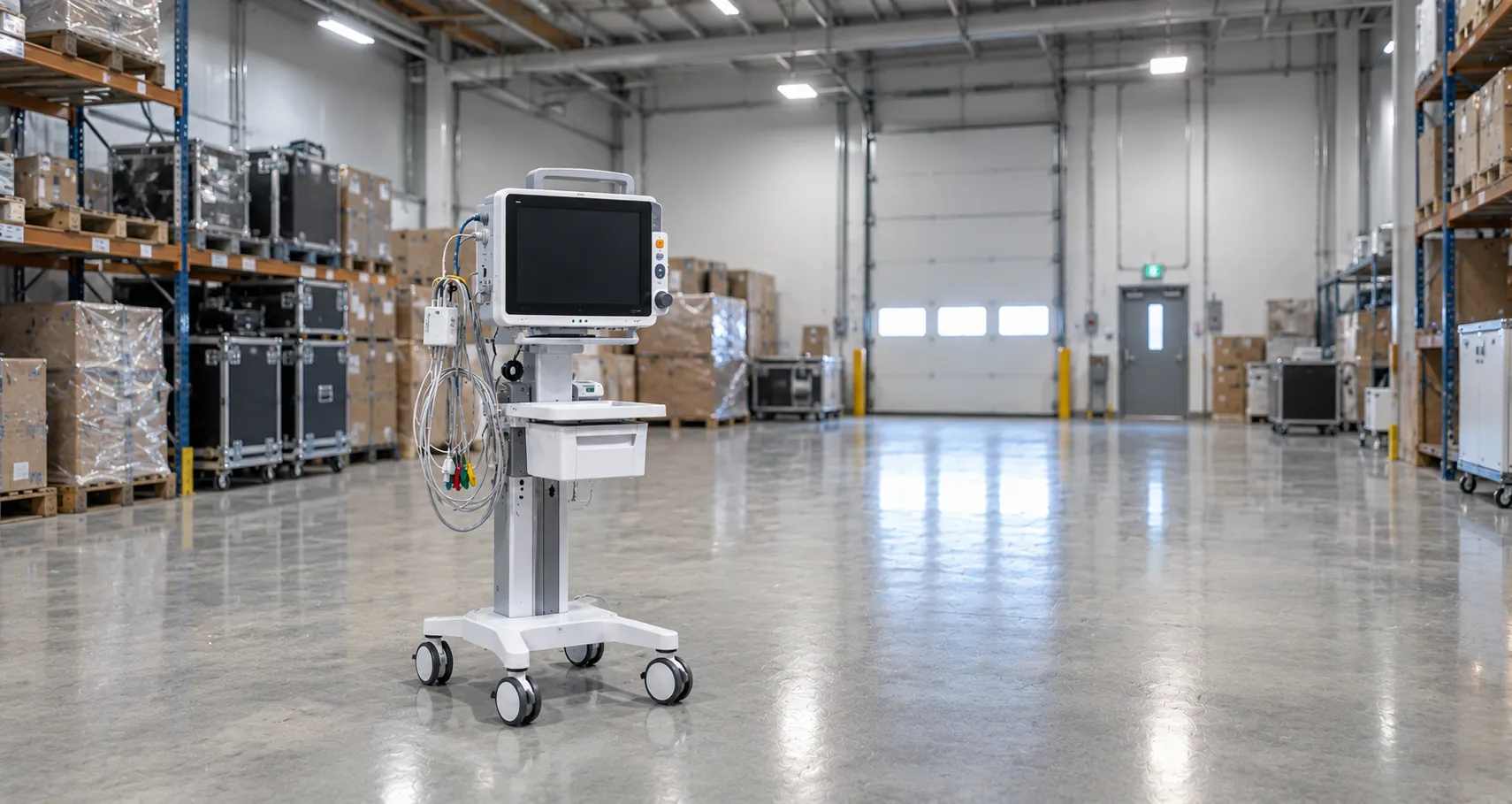
Multiparameter Monitors - These devices can display several physiological measurements simultaneously.
Common monitoring functions may include:
-
Heart rate.
-
Blood oxygen levels.
-
Blood pressure.
-
Respiratory rate
-
Temperature.
Their versatility supports multiple healthcare environments.
Portable ECG Monitors - Portable ECG systems record heart activity while offering flexible patient movement.
Compact Design – Easy to transport.
Rapid Setup – Simplifies routine assessments.
Digital Data Storage – Supports information management.
Pulse Oximeters - Pulse oximeters provide non-invasive monitoring of oxygen saturation and pulse rate.
Simple Operation – Quick measurements.
Portable Construction – Easy to carry.
Suitable for Multiple Settings – Useful across different care environments.
Ambulatory Blood Pressure Monitors - These systems measure blood pressure over extended periods while allowing routine daily activities.
Continuous data collection can provide broader monitoring information than isolated readings.
Healthcare organisations exploring procurement opportunities can learn more through buyer services.
Key Features to Consider
Portable patient monitors vary depending on intended applications.
Battery Performance – Extended operation supports mobile use.
Display Quality – Clear screens improve readability.
Compact Weight – Lightweight designs simplify transport.
Data Storage Capacity – Supports information management.
Alarm Systems – Audible and visual alerts improve monitoring awareness.
Wireless Connectivity – Some systems support digital integration.
Advantages of Portable Monitoring
Portable devices provide several operational benefits.
Supporting Flexible Healthcare Delivery – Equipment can move where needed.
Reducing Setup Time – Compact systems simplify deployment.
Improving Equipment Accessibility – Smaller designs fit a wider range of environments.
Facilitating Patient Transfers – Monitoring can continue throughout the transfer.
Maintenance and Equipment Care
Proper maintenance supports long-term reliability.
Battery Inspection – Rechargeable systems require routine checks.
Cable and Sensor Review – Components should remain in good condition.
Display Cleaning – Clear screens improve usability.
Software Updates – Compatible systems may require periodic updates.
Routine Functional Testing – Helps identify potential issues early.
Preventive maintenance can help maximise equipment lifespan.
Healthcare suppliers interested in expanding their market reach can explore: business suppliers.
Buyer Considerations
Selecting portable monitoring equipment involves several practical factors.
Consider:
-
Intended healthcare environment.
-
Required monitoring parameters.
-
Portability needs.
-
Battery duration.
-
Display visibility.
-
Data management capabilities.
-
Maintenance requirements.
-
Future expansion opportunities.
Careful planning can help align equipment capabilities with operational needs.
Emerging Industry Trends
Portable patient monitoring technology continues to evolve.
Current developments include:
Wireless Data Transmission – Simplifies information sharing.
Compact Hardware Designs – Improves portability.
Cloud-Based Data Management – Supports digital record keeping.
Longer Battery Life – Extends operational flexibility.
Artificial Intelligence Integration – May support data analysis.
Healthcare organisations interested in collaboration opportunities can discover business partners.
Businesses seeking to connect with the healthcare industry can explore: business advertising
For procurement support and product enquiries, assistance is available through the contact team.
Planning for Future Healthcare Needs
Portable patient monitoring devices continue to support changing healthcare delivery models by improving flexibility and accessibility. Whether used during patient transport, outpatient services, home healthcare, or routine monitoring, these systems help healthcare providers adapt to diverse operational environments.
Choosing appropriate portable monitoring equipment involves balancing portability, functionality, maintenance, and long-term operational requirements.
Disclaimer: Medigear.uk is a medical equipment supplier and distributor. We do not provide medical advice, diagnosis, or treatment recommendations. All information is for educational and product awareness purposes only. Qualified medical professionals should always make healthcare decisions.