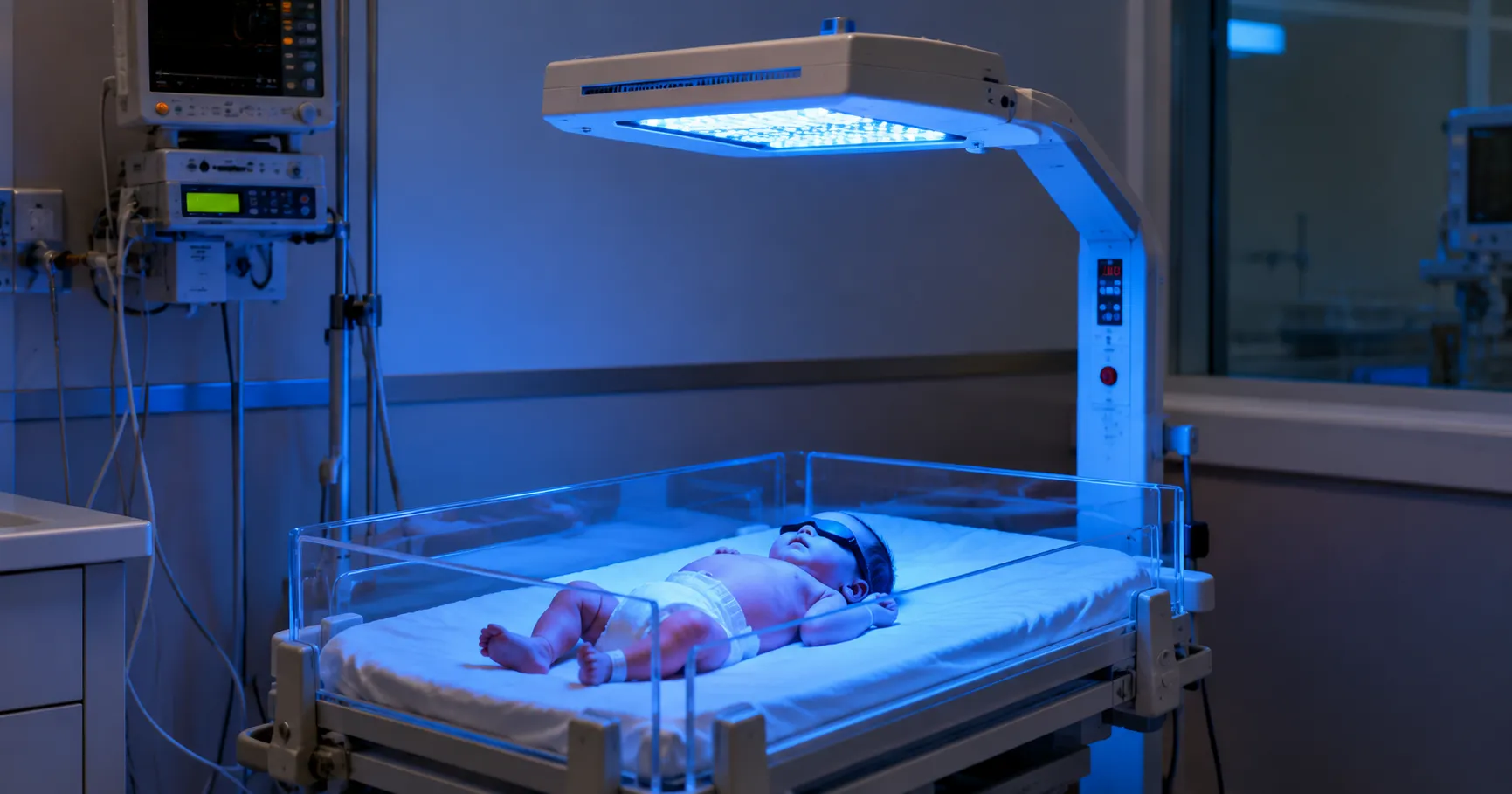
Phototherapy units are essential neonatal care systems used to treat newborn jaundice by controlling bilirubin levels through safe light exposure.
They improve infant health and prevent complications in NICU environments by providing controlled temperature and light conditions.
Hospital procurement teams can consult Medigear's buyer services. UK for assistance with selecting clinical equipment.
Hospitals that source through verified global medical equipment business suppliers ensure access to certified devices with installation and maintenance support.
This article explains clinical applications, technical specifications, and best practices for phototherapy units in neonatal care.
Clinical Role And Workflow
Safe Bilirubin Reduction — Phototherapy units reduce bilirubin levels in newborns, preventing complications such as kernicterus.
Controlled Light Exposure — Units provide specific wavelengths and intensity optimised for neonatal skin absorption.
Temperature and Humidity Control — Modern phototherapy units maintain environmental conditions to ensure newborn comfort.
Integrated Monitoring — Continuous monitoring tracks infant vitals, exposure duration, and treatment effectiveness.
Hospitals can also explore business advertising on Medigear.UK to feature neonatal equipment solutions.
NICU Applications And Deployment
Intensive Care Use — Used in NICUs for premature and full-term infants with jaundice requiring constant monitoring.
Postnatal Ward Integration — Allows safe treatment without transferring newborns away from maternal care.
Emergency Newborn Stabilisation — Rapid phototherapy setup ensures immediate bilirubin reduction when needed.
Hospitals can connect with Medigear.uk business partners for long-term supply agreements and consistent support.
Procurement guidance is available via contact Medigear.uk for selecting suitable devices and clinical solutions.
Technical Features And Considerations
Adjustable Light Intensity — Ensures safe bilirubin reduction according to the infant's condition.
Uniform Light Distribution — Prevents overexposure or underexposure across the infant’s body.
Alarm Systems — Notify staff in case of a malfunction or deviation in exposure.
Compact and Mobile Designs — Allows flexibility in NICU layouts and bedside care.
Integration With Monitoring Devices — Connects to infant vital sign monitors for continuous assessment.
Procurement Guidance
Selecting phototherapy units requires evaluation of safety, clinical effectiveness, reliability, and maintenance support.
Total Cost of Ownership — Includes equipment, spare parts, calibration, and staff training.
Supplier Reliability — Choose certified vendors providing global technical and after-sales support.
Hospitals can also use Medigear—UK buyers for equipment procurement consultation.
Regulatory Compliance — Ensure phototherapy units comply with hospital safety and neonatal care standards.
Maintenance And Service Life
Regular inspection of bulbs, light-intensity calibration, and cleaning ensure continuous safe operation.
Filter replacement and device servicing prevent failure and protect newborn safety.
A well-maintained phototherapy unit can operate reliably for several years in high-demand NICU environments.
Final Thoughts
Phototherapy units are critical for treating newborn jaundice in NICUs.
Selecting high-quality units with precise light control, safety features, and reliable vendor support ensures optimal neonatal care and improves infant health outcomes.
Hospitals should prioritise certified, easy-to-maintain systems to safeguard vulnerable newborns. Medigear.uk
Disclaimer
Medigear.uk is a global medical equipment supplier, exporter, and distributor providing information about healthcare products, hospital equipment, and neonatal care solutions for educational and informational purposes only. The content published on Medigear.uk is not intended to replace professional medical advice, diagnosis, or clinical judgment. Healthcare professionals, biomedical engineers, and procurement teams are responsible for selecting and using medical equipment in accordance with clinical requirements, regulatory standards, and institutional policies. Medigear.uk does not provide medical treatment, clinical recommendations, or diagnostic services, and any reliance on the information provided is strictly at the user’s own discretion.