Medical equipment procurement errors often become visible only after an order has been placed. A device may arrive without essential accessories, require unexpected infrastructure work or depend on consumables that are difficult to source. At that stage, the healthcare facility has fewer options and may already have committed substantial funds.
For healthcare buyers, preventing errors begins before suppliers are contacted. Buyers must define the clinical requirement, expected workload, technical environment, budget, and support expectations before evaluating products.
A competitive quotation cannot compensate for unsuitable specifications, incomplete compliance documents or weak after-sales support. These issues can delay installation, increase lifecycle costs and interrupt clinical services.
A controlled procurement process connects clinical, technical, compliance and commercial decisions. This guide explains the most common errors in medical equipment procurement and the practical controls healthcare buyers can use to avoid them.
Procurement Errors That Begin with an Unclear Clinical Need
The first procurement mistake often occurs before a specification is written. When the clinical problem is not clearly defined, suppliers may offer products that appear capable but do not fit the facility’s workflow or service demand.
Buying without a documented service gap — Equipment requests should explain what problem the purchase will solve. This may involve replacing an unreliable device, increasing capacity, introducing a clinical service or meeting a safety requirement.
In practice, procurement teams often find that requests become difficult to evaluate when departments describe a preferred model rather than the required clinical outcome.
Ignoring expected workload — Equipment capacity should reflect routine use, peak demand and expected growth. A device with insufficient throughput may create delays, while an oversized system can increase acquisition, maintenance and consumable costs.
Overlooking existing equipment — Buyers should check whether suitable equipment already exists elsewhere in the facility. Repair, transfer, shared use or improved scheduling may address the need without another purchase.
Shared equipment should only be considered where availability, transport and cleaning can be managed safely.
Allowing unnecessary functions to drive selection — Advanced features can appear valuable during demonstrations, but may provide little operational benefit. Every function should support a defined clinical, safety or workflow requirement.
Failing to involve actual users — Senior managers may understand strategic needs, but frontline staff often identify setup, cleaning, alarm, mobility and accessory issues. Representative users should contribute before specifications are approved.
Separating equipment from the wider workflow — A faster analyser or treatment device may offer limited value if preparation, sterilisation, recovery or reporting remains the main bottleneck.
A strong clinical needs assessment provides procurement teams with a clear basis for technical specifications and supplier comparisons.
How Buying Mistakes Differ Across Healthcare Settings
Procurement risks vary according to the facility’s size, location, staffing and technical support. A purchasing approach suited to a major hospital may not work for a community clinic or mobile programme.
Large hospitals and teaching facilities — Complex facilities may purchase equipment through several departments and budgets. Without central coordination, similar devices may be ordered with incompatible accessories, software or maintenance arrangements.
Standardisation can reduce unnecessary variation, but clinical differences between departments must remain visible.
District and regional hospitals — Regional facilities may face longer repair and parts-delivery times. When evaluating trusted international healthcare supply partners, buyers should confirm whether installation and service commitments apply to the hospital’s actual location.
Experienced clinical supply managers typically request evidence of previous deliveries and service support in comparable locations.
Community clinics and outpatient centres — Smaller facilities may select premium equipment containing functions they cannot use or maintain. Simpler configurations can provide stronger value when they meet clinical requirements and have dependable support.
Diagnostic and laboratory facilities — A common mistake is evaluating only the instrument price. Reagents, calibrators, software, quality controls and recurring service can represent a greater financial commitment over time.
Surgical and critical care settings — Buyers may focus on the main device while overlooking accessories, backup capacity and interoperability. Missing cables, sensors or compatible consumables can prevent clinical use.
Mobile and remote services — Fixed-site specifications may be unsuitable for transport, variable power and environmental exposure. Portability, battery capacity and protective packaging should form part of the evaluation.
Multi-facility healthcare groups — Central contracts can improve pricing, but may overlook local infrastructure and service differences. Each site should confirm that the selected configuration remains suitable.
Procurement controls should therefore reflect the clinical environment and consequences of equipment failure.
Technical Specification Errors That Increase Cost and Risk
Technical specifications should create a fair basis for comparison while excluding unsuitable equipment. Specifications that are too broad, too restrictive or incomplete can produce misleading supplier offers.
Copying one manufacturer’s specification — Catalogue wording may direct a procurement exercise towards one product without demonstrating clinical necessity. Buyers should use performance-based requirements that describe the required outcome.
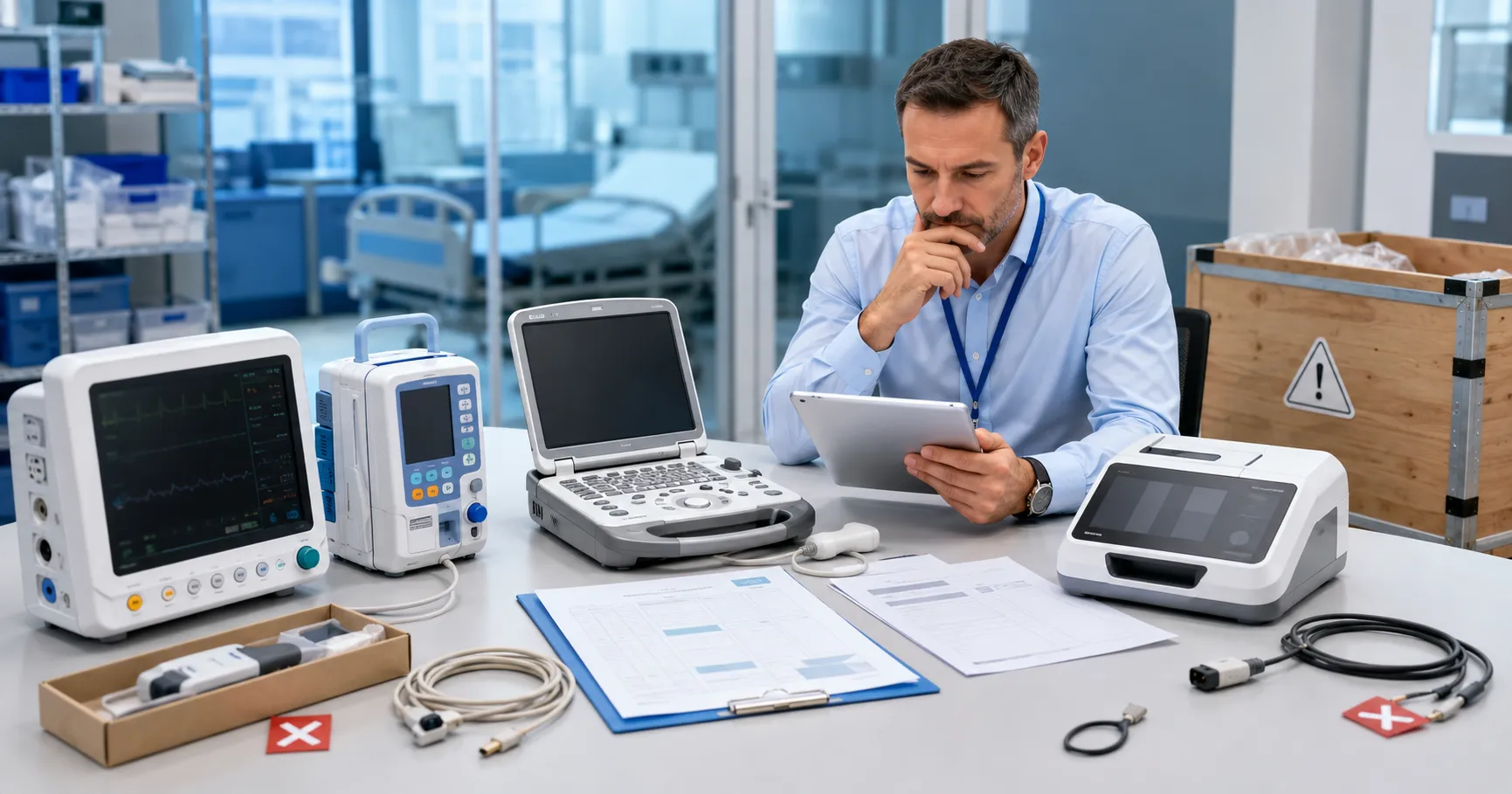
Leaving accessories undefined — Base quotations often exclude probes, batteries, cables, sensors, trolleys, software and starter consumables. Every bidder should quote the same complete configuration.
A lower offer may contain fewer clinically necessary components.
Ignoring infrastructure requirements — Voltage, frequency, electrical load, ventilation, water, drainage, medical gases, network access and room dimensions should be checked before purchase.
Unexpected infrastructure work can delay installation and exceed the approved budget.
Using maximum specifications without justification — Higher performance figures do not always create better clinical value. Excessive capacity or functionality may increase cost, training demands and maintenance complexity.
Overlooking software and cybersecurity — Connected equipment may require licences, interfaces, cloud services, user-access controls and security updates. Buyers should establish who owns the data and who supports the software throughout the equipment's life.
Failing to specify cleaning requirements — Equipment surfaces and accessories should tolerate approved cleaning methods. Difficult-to-clean components may increase infection-control and staff-workload concerns.
Ignoring environmental conditions — Temperature, humidity, dust, vibration and transport can affect performance. Buyers should verify that equipment can operate in the intended environment.
Assuming consumables are widely available — Proprietary reagents, electrodes, filters and cartridges may be expensive or difficult to import. Availability, shelf life and expected monthly consumption should be reviewed.
Technical specifications should explain what the equipment must achieve and what is needed to keep it operational.
Supplier and Commercial Errors Buyers Should Prevent
Supplier evaluation should extend beyond price and product availability. A suitable device can still become a poor purchase when the supplier lacks documentation, delivery control or technical support.
Approving an unverified supplier — Buyers should confirm the supplier’s legal identity, address, ownership details and authorised representatives. Quotations, invoices and bank information should remain consistent.
Failing to confirm supplier authority — The seller should explain whether it is the manufacturer, an authorised distributor, a reseller, or a refurbishment provider. Relevant manufacturer authorisation should be verified where applicable.
Relying on marketing information — Suppliers and manufacturers advertising to global healthcare buyers should present accurate specifications, regulatory status and support terms. Buyers should verify these claims with formal technical and compliance documentation.
Choosing only by headline price — Supplier quotations should be normalised to include identical equipment, accessories, delivery, installation, training and warranty terms. Exclusions should be recorded separately.
Ignoring total ownership cost — Buyers should include freight, customs, infrastructure, consumables, software, maintenance, repairs and disposal. A low acquisition price can conceal high recurring expenditure.
Accepting unclear delivery responsibilities — Commercial terms should identify who manages freight, insurance, customs, unloading and final delivery. Ambiguity can lead to unexpected charges and delays.
Failing to document quotation validity — Prices, currency rates and availability can change between approval and order placement. Quotations should include a clear validity period and payment schedule.
Healthcare organisations seeking dependable, repeated supply may benefit from long-term medical equipment supply partnerships. These arrangements should still maintain transparent pricing, documented approvals, and measurable supplier performance requirements.
Maintenance and Service Errors That Reduce Equipment Life
Healthcare buyers may spend considerable time comparing purchase prices while giving limited attention to service support. Maintenance arrangements should be evaluated before the equipment is ordered.
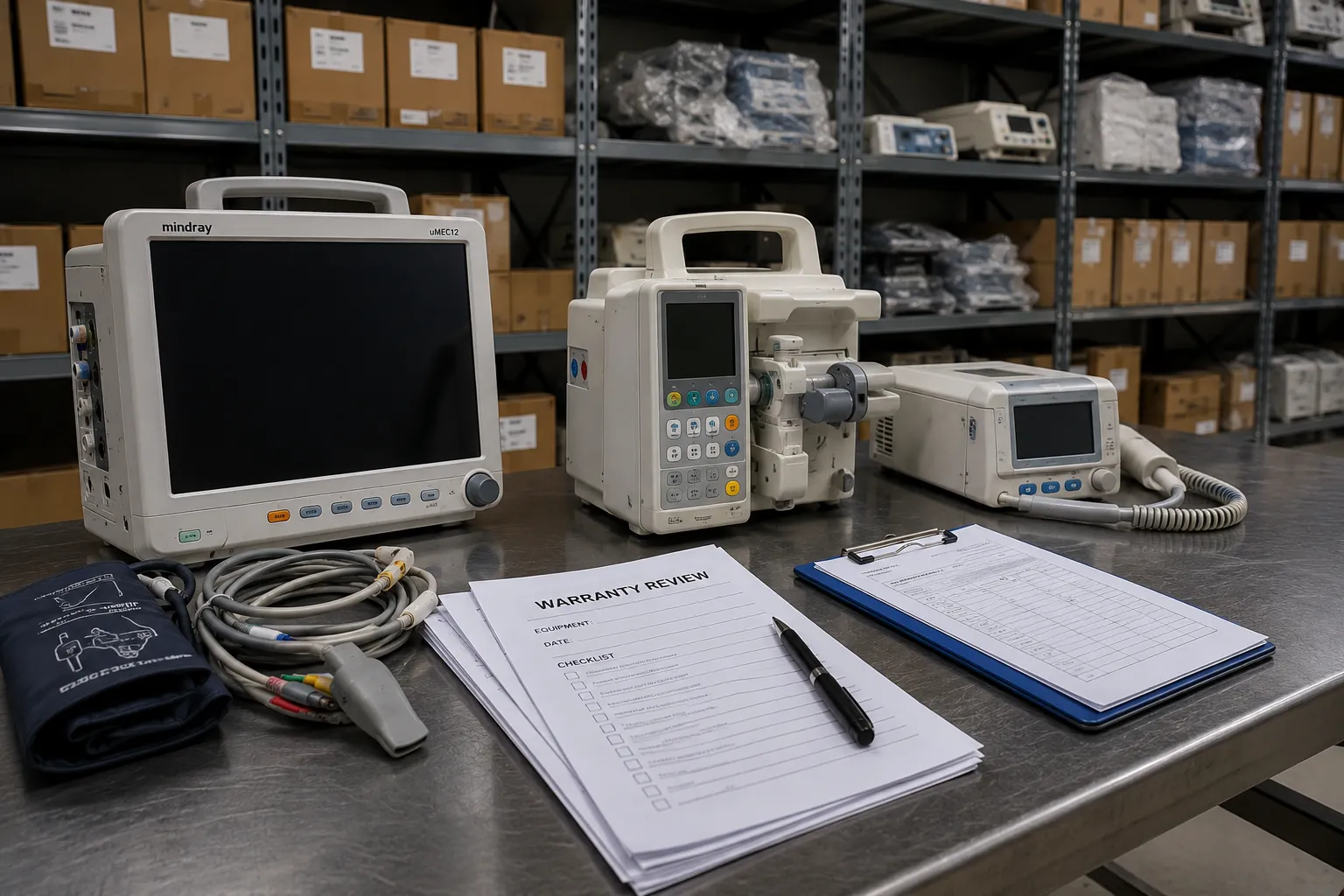
Assuming warranty means complete support — Warranty coverage may exclude engineer travel, labour, freight, accessories, software and accidental damage. Buyers should review the complete terms rather than only the warranty period.
Ignoring engineer availability — A supplier may advertise international support while relying on one engineer across a large region. Buyers should verify where qualified technicians are located and which products they can service.
Failing to review spare parts lead times — Repair response depends on the availability of replacement components. Buyers should ask which parts are stocked locally and how long international delivery typically takes.
Excluding preventive maintenance from the budget — scheduled servicing, calibration, and safety testing create recurring expenditures. These costs should be approved alongside the initial purchase.
Overlooking operator training — Incorrect setup, cleaning and accessory handling can cause avoidable faults. Training should cover routine operation, basic checks and the correct process for reporting problems.
Failing to plan software support — Connected equipment may depend on licences, patches and compatibility updates. Buyers should confirm the expected support period and costs.
Not monitoring service performance — Hospitals should track acknowledgement time, engineer attendance, repair duration, repeat failures and downtime. Poor performance should influence contract renewal and future purchasing.
Facilities with limited local service access often spend more on travel and parts freight than on the actual repair. Service capability should therefore carry meaningful weight during equipment selection.
International Sourcing Errors and Import Risks
International sourcing can improve product choice and pricing, but it introduces documentation, customs, currency and after-sales risks that require early planning.
Assuming certification applies everywhere — equipment should meet applicable local regulatory standards, including CE, FDA, or their regional equivalents, where relevant. Acceptance in the supplier’s market does not guarantee approval at the destination.
Reviewing documents after shipment — Commercial invoices, packing lists, conformity records and certificates of origin should be checked before dispatch. Correcting errors after departure can delay customs clearance.
Using unclear product descriptions — General descriptions can cause classification and inspection problems. Manufacturer, model, quantity and equipment type should remain consistent across documents.
Ignoring import and delivery costs — Budgets should include freight, insurance, customs, taxes, inspection, storage and local transport. These costs should be separated from the equipment price.
Overlooking refurbished-equipment rules — Professionally refurbished devices may provide value where condition, service history, compliance and warranty are verified. Buyers should also confirm whether the destination permits their import.
Failing to coordinate site readiness — Equipment should not be dispatched before rooms, utilities, access routes and installation teams are ready. Early arrival can create storage, damage and warranty risks.
Leaving international service terms unclear — Buyers should establish who pays for engineer travel, parts freight, customs and local labour during warranty repairs.
Healthcare buyers managing complex international purchases can reach the Medigear.uk sourcing and export team. A detailed enquiry should include the equipment type, quantity, destination, preferred condition and required delivery period.
International procurement succeeds when product, supplier, import, and service requirements are reviewed as a single, cohesive decision.
Final thoughts
Medical equipment procurement errors usually result from incomplete planning rather than one isolated decision. Unclear clinical needs, inconsistent specifications, weak supplier checks and missing lifecycle costs can combine to create an unsuitable purchase.
Healthcare buyers should define the required clinical outcome before approaching suppliers. Every quotation should then be compared using the same equipment configuration, delivery scope and service requirements.
Compliance documents, infrastructure, consumables, software and maintenance support also need verification before approval. Price should remain part of the decision, but it should not outweigh clinical suitability, regulatory acceptance or long-term support.
A controlled procurement process reduces financial surprises and helps healthcare facilities purchase equipment that can be successfully installed, operated, and maintained
Disclaimer
Medigear.uk is a global medical equipment supplier, exporter, and distributor. The content published on this site is intended for educational and product awareness purposes only. Nothing on this page constitutes medical advice, clinical guidance, or treatment recommendations. All healthcare procurement and clinical decisions should be made by qualified medical professionals and compliant procurement teams operating within the regulatory frameworks of their respective countries.