Hospital equipment demand can change faster than an annual procurement budget. Patient volumes may rise, clinical services may expand, and ageing devices may require replacement earlier than expected. Without a reliable forecast, facilities can face equipment shortages, delayed projects and expensive emergency purchases.
For medical equipment buyers and professionals, hospital equipment forecasting provides a structured method for estimating what will be required, when it will be needed and how much funding should be reserved. It connects clinical demand with asset condition, utilisation, supplier lead times and replacement schedules.
A forecast is not simply a list of future purchases. It should identify the assumptions behind each requirement and show how demand may change under different operating conditions. Equipment quantities, infrastructure, service support and staffing must be reviewed together.
This guide explains how procurement buyers can use clinical, technical and financial evidence to forecast hospital equipment requirements and prepare more dependable sourcing plans.
How Equipment Forecasting Supports Clinical Capacity
Equipment forecasting helps healthcare managers identify future capacity gaps before they affect patient services. It converts clinical activity and asset information into practical procurement requirements.
Projected patient demand — Buyers should review historical patient numbers, referral patterns, procedure volumes and expected service growth. Demand should be assessed by department rather than by a single general hospital growth rate.
In practice, procurement teams often find that growth is concentrated in a small number of services. Imaging, laboratory or critical care demand may rise even when total hospital activity remains relatively stable.
Expected equipment utilisation — Existing devices should be assessed based on operating hours, procedure volume, and peak-period demand. Equipment that appears adequate during normal operations may become a constraint when several departments require access simultaneously.
Clinical service development — New departments, additional beds or expanded treatment programmes can create demand for equipment, accessories and support systems. The forecast should show when each service is expected to become operational.
Backup capacity requirements — Critical equipment may require additional units even where average utilisation is low. Forecasting should consider the consequences of breakdowns, preventive maintenance and temporary removal from service.
Staffing and workflow capacity — Purchasing additional equipment provides limited value if qualified staff, rooms or supporting services are unavailable. Equipment growth should remain aligned with workforce and infrastructure plans.
Patient safety priorities — Devices supporting emergency, surgical, diagnostic or life-sustaining care may require earlier investment. Clinical risk should influence the forecast rather than relying solely on projected utilisation.
A useful forecast identifies both demand growth and the operational conditions required to support that growth.
Forecasting Requirements Across Healthcare Facilities
Forecasting methods should reflect facility size, clinical scope, location and access to technical support. The same volume-based calculation will not work across every healthcare environment.
Large hospitals and teaching facilities — Major hospitals often require multi-year forecasts covering imaging, surgery, critical care, laboratory, sterilisation and general wards. Departmental projections should be consolidated so that shared equipment and infrastructure requirements remain visible.
These facilities may also need to coordinate equipment demand with major construction and digital-system projects.
District and regional hospitals — Regional facilities may have limited backup capacity and longer supplier lead times. When planning demand with an established international healthcare equipment supplier, buyers should confirm realistic availability, shipping timelines, installation support, and access to spare parts.
Experienced clinical supply managers typically initiate procurement earlier when equipment must undergo several transport and customs stages.
Community clinics and outpatient centres — Smaller facilities may forecast demand using appointment growth, room availability and service expansion. Compact or multi-purpose equipment can provide appropriate capacity where specialist systems would remain underused.
Diagnostic and laboratory facilities — Forecasting should include procedure or test volumes, analyser throughput, reagent requirements, quality controls, and software capacity. Main equipment and recurring consumables should be planned together.
Surgical and treatment centres — Equipment projections should reflect complete patient pathways. Additional operating capacity may also increase demand for sterilisation, recovery monitoring, patient transport and storage.
Mobile and remote healthcare programmes — Forecasts should account for transport damage, battery replacement, charging capacity and the need for backup equipment. Environmental conditions may shorten the practical service life of portable devices.
Multi-facility healthcare groups — Central forecasting can combine demand across several locations and identify consolidated purchasing opportunities. Each site should still report local workload, infrastructure and service constraints.
Forecast accuracy improves when calculations reflect real operating conditions rather than broad assumptions about facility growth.
Data and Technical Inputs Needed for Reliable Forecasting
Forecasting quality depends on the accuracy of the information used. Incomplete asset registers or inconsistent utilisation records can create misleading projections.
Current asset inventory — Records should include manufacturer, model, serial number, location, installation date, ownership status and service condition. Equipment that has been transferred, retired or placed in storage should be updated promptly.
Utilisation information — Buyers should review operating hours, procedures, tests, patient contacts or treatment sessions. The most appropriate utilisation measure will differ by equipment category.
A patient monitor may be assessed by occupied bed hours, whereas the number of tests completed may be used to evaluate a laboratory analyser.
Condition and reliability records — breakdown frequency, repair duration, calibration failures, and recurring defects — should influence future demand. Equipment that remains available but is increasingly unreliable may require replacement within the forecast period.
Manufacturer support status — Software, parts and technical support may end before the equipment physically fails. Known support-withdrawal dates should feed directly into the replacement forecast.
Capacity and performance requirements — Future products should match expected workload and clinical needs. Higher performance should only be forecast where it supports measurable improvements in capacity, safety, or workflow.
Infrastructure requirements — power, network, water, ventilation, medical gases, shielding, and room space — can affect the timing of equipment deployment. Forecasts should identify where construction or utility changes are required.
Consumable dependency — Equipment that uses proprietary reagents, cartridges, filters, or sensors should include the expected recurring demand. Product availability, shelf life and minimum order quantities can affect procurement schedules.
Training and technical support — New equipment may require operator instruction, engineering training and service contracts. These activities should be forecast alongside the equipment purchase.
Reliable forecasting integrates asset, clinical,l and technical data rather than relying solely on departmental purchase requests.
How Procurement Buyers Should Build the Forecast
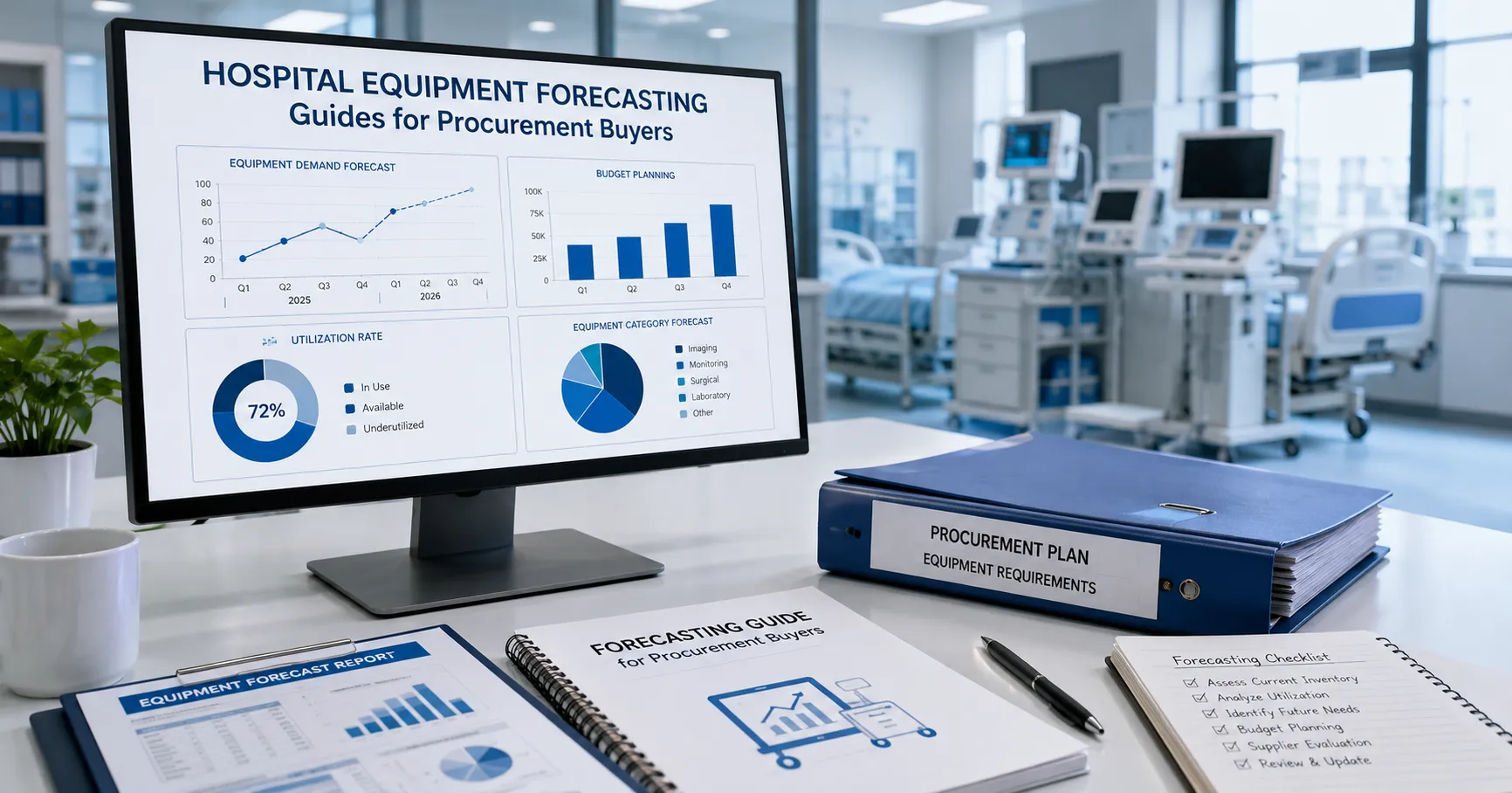
A procurement forecast should show quantities, timing, cost assumptions, risks and the evidence supporting each requirement. It must remain practical enough to guide budget and sourcing decisions.
Choose an appropriate planning period — Facilities may use short-term operational forecasts alongside multi-year capital plans. Shorter periods support order scheduling, while longer periods help managers prepare for major replacements and service expansion.
Separate replacement and growth demand — Replacement demand results from equipment condition, obsolescence or support withdrawal. Growth demand results from additional capacity, departments or patient activity.
Separating them makes budget priorities easier to explain.
Create demand scenarios — Buyers can prepare expected, high-demand and constrained-budget scenarios. Scenario planning helps management understand which purchases are essential and which can be phased in or out as assumptions change.
Review supplier market information — Medical equipment advertising reaching out to international procurement teams should provide accurate product availability, specifications, support information, and estimated lead times. Procurement teams should verify these details before incorporating them into purchasing schedules.
Calculate complete forecast costs — Include equipment, accessories, freight, customs, installation, infrastructure, software, consumables, training and maintenance. Forecasts based only on product price will understate future expenditure.
Assign confidence levels — Each forecast item can be classified according to the strength of the supporting evidence. Confirmed projects should be distinguished from early departmental proposals or uncertain growth assumptions.
Set review triggers — Significant changes in patient demand, equipment condition, funding, or supplier availability should trigger an update. Waiting for the scheduled annual review may leave the forecast outdated.
Healthcare groups coordinating repeated purchases may benefit from collaborative global distribution and procurement partnerships. These arrangements should retain transparent forecasting assumptions, clear pricing and measurable delivery and service commitments.
Replacement, Maintenance and Lifecycle Forecasting
Replacement planning should form a distinct part of the equipment forecast. Age alone is not a sufficient measure, but it remains useful when combined with condition, reliability and support information.
Expected remaining service life — Biomedical engineers should estimate how long each asset can remain safe, reliable and supportable. The estimate should reflect utilisation and maintenance history rather than relying on a single fixed lifespan for every device.
Rising maintenance expenditure — Increasing repair costs may show that an asset is approaching replacement. Buyers should consider engineer charges, parts, freight, downtime and temporary replacement arrangements.
Breakdown and downtime patterns — Repeated failures may justify earlier replacement even where individual repairs remain affordable. Clinical disruption should be recorded alongside direct maintenance costs.
Spare parts availability — Equipment may need replacement when essential components become unavailable or delivery times become unacceptable. Strategic parts purchasing can sometimes extend service life, but it should not delay necessary renewal.
Software and cybersecurity support — Connected devices may depend on licences, updates and supported operating systems. End-of-support dates should be included in the forecast before equipment becomes difficult to secure or integrate.
Preventive maintenance capacity — Growth in equipment numbers also increases maintenance workload. Facilities should forecast engineer time, test equipment, service contracts and calibration requirements.
Disposal and transition costs — Replacement projects may involve decontamination, data removal, storage, recycling or resale. These activities should be planned before new equipment arrives.
In markets with limited technical support, engineer travel and international parts freight can shorten the economic service life of equipment. Forecast models should reflect local support conditions.
International Sourcing, Lead Times and Delivery Planning
International procurement requires a longer forecasting horizon because equipment may pass through manufacturing, export preparation, shipping, customs, installation and commissioning stages.
Supplier production lead times — Buyers should distinguish between products held in stock and equipment manufactured after order confirmation. Custom configurations or large quantities may require additional preparation.
Shipping and customs periods — Freight method, route, inspection and destination requirements can affect delivery timing. Forecasts should include a realistic allowance rather than relying solely on transport time.
Documentation readiness — Invoices, packing lists, certificates of origin, conformity records and import permits should be prepared before dispatch. Document errors can extend the final delivery date.
Currency and budget exposure — International quotations may change due to exchange rate fluctuations, freight rate changes, or supplier revisions. Forecasts should identify which values are fixed and which remain estimates.
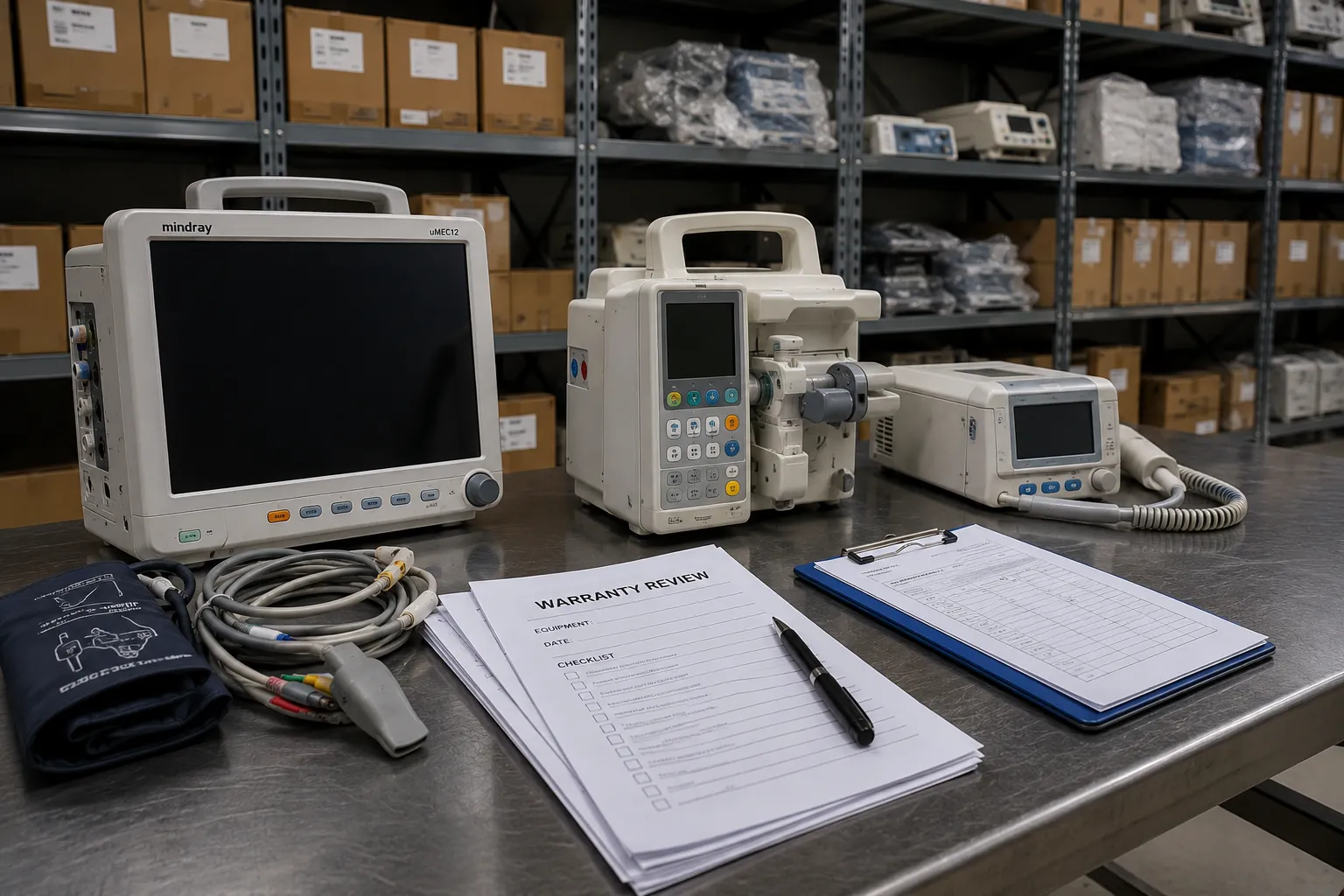
New and refurbished options — New equipment may offer longer support life and current software platforms. Professionally refurbished equipment may support budget or urgent capacity requirements where condition, compliance, warranty and parts availability are verified.
Site readiness and installation — Equipment should not arrive before rooms, utilities and installation teams are prepared. Early delivery can create storage, damage and warranty risks.
Service and spare parts forecasting — International warranties may require engineer travel or parts freight. These future costs and response times should be included in sourcing decisions.
Specialist procurement support — Procurement buyers preparing international equipment forecasts or multi-category requirements can contact the Medigear.uk team for supply support. A useful enquiry should include equipment categories, quantities, destinations, preferred condition, and the expected purchasing schedule.
International sourcing forecasts should be reviewed with suppliers before final budget approval because market availability and lead times can change.
Final thoughts
Hospital equipment forecasting helps procurement buyers prepare for clinical growth, asset replacement and changing service demand before shortages occur. It creates a practical connection between patient activity, equipment utilisation, maintenance data and future budgets.
Reliable forecasts distinguish growth requirements from replacement demand. They also include infrastructure, accessories, consumables, training and service costs rather than focusing only on the main equipment price.
Forecasts should be reviewed whenever important assumptions change. Patient demand, equipment condition, funding and supplier lead times can all move faster than the annual planning cycle.
A structured forecasting process gives healthcare facilities more time to compare products, verify suppliers and coordinate installation. It also reduces emergency purchasing and supports equipment portfolios that remain clinically appropriate and financially sustainable.
Disclaimer
Medigear.uk is a global medical equipment supplier, exporter, and distributor. The content published on this site is intended for educational and product awareness purposes only. Nothing on this page constitutes medical advice, clinical guidance, or treatment recommendations. All healthcare procurement and clinical decisions should be made by qualified medical professionals and compliant procurement teams operating within the regulatory frameworks of their respective countries.