Hospital equipment purchase requests can reach management with strong clinical support but incomplete financial, technical or compliance evidence. A department may urgently need additional capacity, yet the proposed device may require unplanned infrastructure, specialist consumables or service support that has not been included in the request.
For healthcare buyers, purchase approval should confirm more than whether funds are available. Managers must determine whether the equipment is clinically justified, technically suitable, compliant, supportable and affordable across its expected service life.
Approving a purchase too early can create installation delays, recurring costs and operational problems. Delaying a well-supported request can also affect patient capacity and clinical continuity. The approval process, therefore, needs consistent evidence and clear responsibilities.
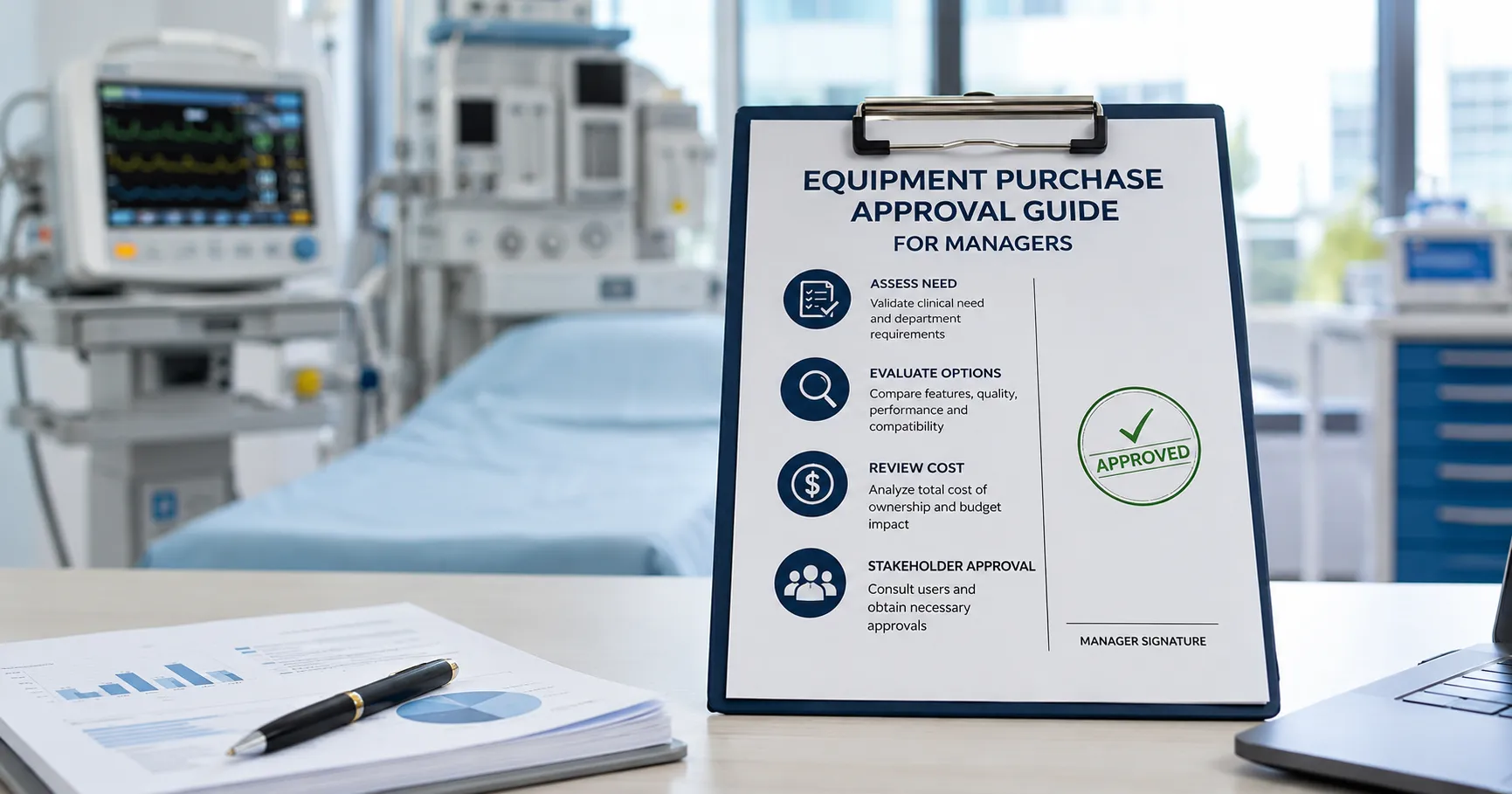
This guide explains how managers can review hospital equipment requests, compare quotations, assess lifecycle costs and authorise purchases through a controlled decision-making process.
What Purchase Approval Controls Before Commitment
Purchase approval is the point at which a healthcare facility confirms that an equipment request is ready to become a financial and operational commitment. It should bring clinical, technical, and commercial evidence into a single documented decision.
Clinical necessity — The requesting department should explain the service gap, the expected workload, and the consequences of not purchasing the equipment. Managers should distinguish essential clinical demand from preference for a newer model or additional features.
In practice, procurement teams often find that requests supported by utilisation, waiting-time and downtime records are easier to assess than requests based on general statements about departmental growth.
Current equipment availability — Approval reviewers should check whether suitable equipment already exists elsewhere in the facility. Transfer, repair, redeployment or improved scheduling may sometimes address the requirement without another purchase.
Shared use should be considered only where transport, cleaning, and clinical availability can be managed safely.
Patient and operational risk — Equipment supporting emergency, diagnostic, surgical or life-sustaining services may require greater priority. Managers should consider the consequences of equipment unavailability, inaccurate performance or delayed replacement.
Approved clinical scope — The requested device should support services that the healthcare facility is authorised and prepared to provide. Equipment should not be approved until staffing, clinical protocols, and supporting infrastructure are in place.
Budget ownership — The request should identify whether the purchase will use capital, project or departmental funding. Recurring expenses should also have an approved operational budget.
Accountability for implementation — Managers should know who will order, receive, install, test, register and maintain the equipment. Approval without named responsibilities can result in equipment arriving before the facility is ready.
A complete approval request shows why the purchase is needed, what it will cost and how it will be introduced into clinical service.
How Approval Requirements Change Across Healthcare Facilities
The depth of purchase approval should reflect equipment risk, contract value, facility type and available technical support. A single process may be used, but the level of evidence should remain proportionate.
Large hospitals and teaching facilities — Major hospitals may operate formal capital committees that compare requests across several departments. High-value imaging, surgery, laboratory and critical care purchases may require clinical, technical, digital, financial and facilities approval.
These projects often need infrastructure plans and multi-year cost forecasts before funds are released.
District and regional hospitals — Regional facilities may have limited internal engineering and purchasing capacity. When obtaining proposals from verified global medical equipment suppliers, managers should confirm whether installation, parts and technical support are available at the actual hospital location.
Experienced clinical supply managers typically assess realistic support arrangements rather than accept a general claim that service is available across the entire region.
Community clinics and outpatient centres — Smaller facilities may use a shorter approval process, but essential controls should remain in place. In place, Clinical justification, complete configuration, compliance, warranty and recurring costs still require review.
A lower purchase price does not remove the need for accountable approval.
Diagnostic and laboratory facilities — Approval should include expected test volume, reagent costs, calibration, quality controls and software. The instrument price may represent only a portion of the total operational commitment.
Surgical and treatment centres — Equipment approval should consider the complete procedure pathway. Purchasing a higher-capacity operating device may offer limited benefit if sterilisation, recovery or staffing capacity remains restricted.
Mobile and remote healthcare services — Portable equipment may require battery capacity, protective cases, charging systems and remote technical support. Transport and environmental risks should be included in the approval record.
Multi-facility healthcare groups — Central approval can support equipment standardisation and consolidated purchasing. Each facility should still confirm local workload, infrastructure, staffing and service conditions.
Approval requirements should protect the organisation without creating unnecessary delay for routine, low-risk purchases.
Technical Evidence Managers Need Before Approval
Managers should not be expected to interpret every technical detail on their own. Biomedical engineers, clinical users and facilities teams should translate specifications into practical operational and financial effects.
Complete equipment configuration — The approval request should identify the main device, accessories, probes, cables, batteries, software, trolleys and starter consumables. A base-unit quotation may not represent a usable clinical package.
Every supplier should quote against the same configuration.
Capacity and performance — Specifications should match expected workload and patient requirements. Insufficient capacity can create delays, while excessive capability can increase costs without improving the intended service.
Infrastructure compatibility — Voltage, frequency, electrical load, network access, water, drainage, ventilation, medical gases, shielding and room dimensions should be checked before approval.
Infrastructure modifications should be priced and scheduled as part of the project.
Software and connectivity — Connected equipment may require licences, interfaces, cybersecurity controls, servers or cloud services. Managers should know which systems the device must connect with and who will support integration.
Consumables and recurring supplies — Proprietary reagents, sensors, filters or treatment accessories can create a significant ongoing commitment. Approval should include expected consumption, shelf life, availability and alternative sourcing options.
Cleaning and infection control — Equipment surfaces and accessories should be compatible with approved cleaning processes. Infection control teams may need to review products used across several patients or departments.
Compliance evidence — Equipment should meet applicable local regulatory standards, including CE, FDA, or their regional equivalents, where relevant. The legal manufacturer, exact model and required registration should be confirmed.
Serviceability — Managers should understand preventive maintenance, likely spare parts, engineer access and expected support life. Technically complex equipment may be unsuitable where qualified service remains unavailable.
Technical evidence should show not only what the device can do but how it will operate within the facility.
How Managers Should Review and Authorise the Purchase
A purchase should be approved only after the clinical, technical, commercial and implementation reviews reach a consistent conclusion.
Use a standard approval form — Each request should follow the same format covering clinical need, quantities, specifications, budget, quotations, compliance and support. Mandatory fields reduce missing information and make requests easier to compare.
Compare quotations consistently — Supplier offers should include identical equipment configurations, delivery terms, installation, training and warranty coverage. Differences and exclusions should be recorded rather than hidden within a total price.
Review supplier information carefully — Suppliers and manufacturers advertising to global healthcare buyers should provide accurate specifications, regulatory information, configurations and after-sales terms. Managers should verify these claims through formal quotations and technical documentation before approval.
Calculate total cost of ownership — The financial review should include acquisition, freight, customs, infrastructure, installation, software, consumables, maintenance, repairs and disposal. Managers should confirm that recurring costs can be funded after the initial capital purchase.
Assess supplier capability — Review company identity, relevant experience, references, delivery performance and technical-support arrangements. A competitive quotation offers limited value if the supplier cannot reliably deliver or support the equipment.
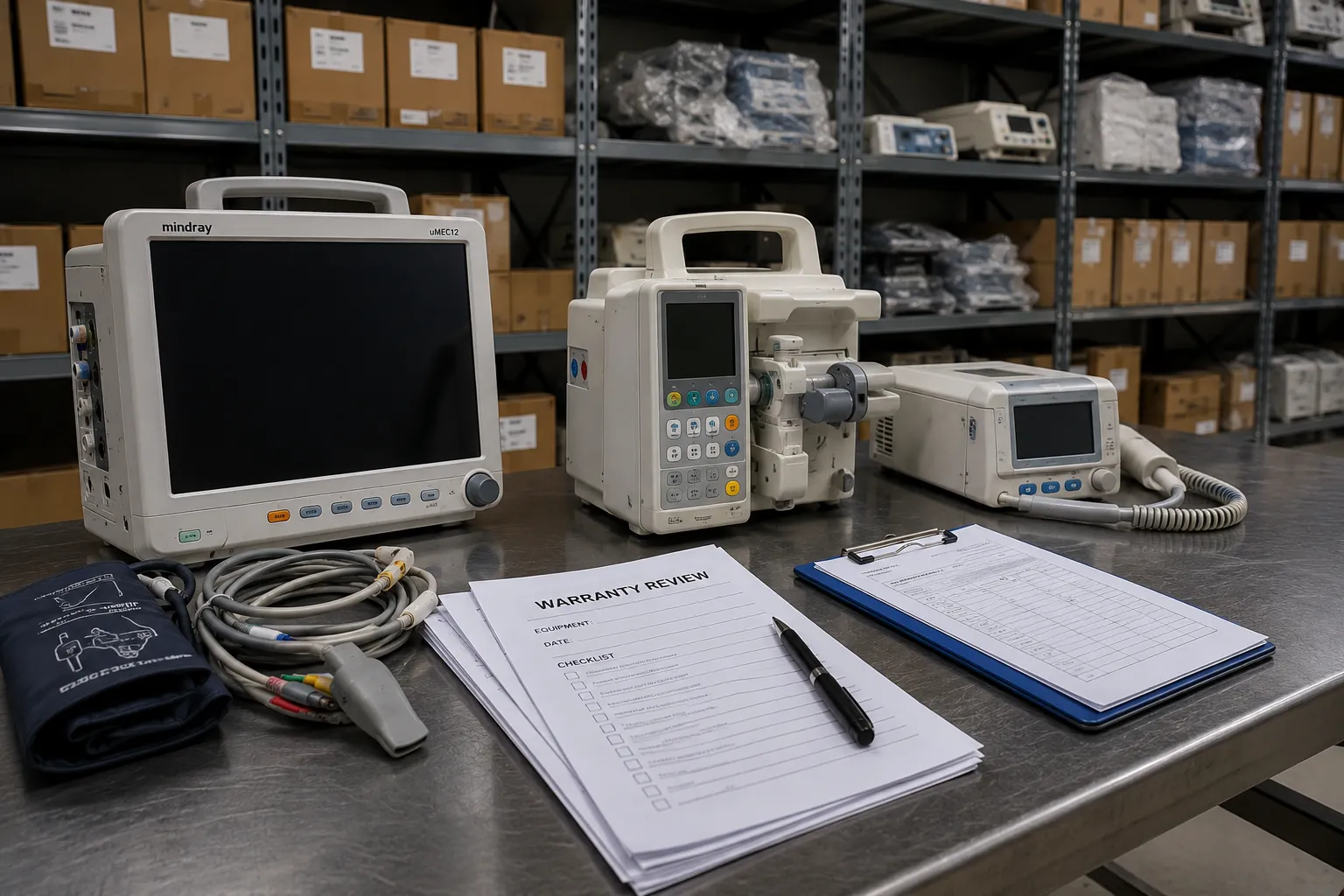
Confirm warranty terms — Labour, engineer travel, spare parts, software, freight and exclusions should be stated clearly. Warranty duration alone does not demonstrate the quality of support.
Document approval conditions — Managers may approve a purchase subject to final site readiness, document verification or budget release. Conditions should have responsible owners and completion deadlines.
Healthcare organisations that manage repeat purchases may improve accountability through formal international supply chain partnerships. These arrangements should still require transparent quotations, documented approvals and measurable delivery and service performance.
Maintenance and Lifecycle Costs in Approval Decisions
Maintenance expenditure should be evaluated before the purchase is authorised. Excluding service costs can make an affordable device difficult to support after installation.
Preventive maintenance requirements — Suppliers should provide recommended service intervals and describe the work required. The facility should confirm whether internal engineers can complete routine tasks or whether external support is mandatory.
Calibration and testing — Measuring and diagnostic equipment may require periodic calibration, quality checks or electrical safety testing. Approval should include technician time, reference equipment and external service charges.
Spare parts availability — Managers should review the expected availability and lead times for batteries, sensors, boards, lamps, and other components. Equipment with limited parts support may face extended downtime.
Service response — Critical equipment may require defined targets for acknowledgement, attendance, and repair. The facility’s location and backup capacity should influence the required response.
Software support period — Connected equipment may rely on security updates, licences and compatibility upgrades. Managers should establish how long the manufacturer or supplier intends to support the platform.
Operator training — Poor setup, cleaning or accessory handling can increase service calls. Training should cover routine use, basic checks and fault reporting.
Replacement and disposal — The approval record should estimate expected service life and eventual disposal requirements. Data removal, decontamination and environmental controls may create additional costs.
Facilities with limited local technical support may spend more on engineer travel and parts freight than on the repair itself. These risks should influence both supplier selection and contingency planning.
International Purchasing and Final Approval Risks
International purchases require additional checks because the supplier, manufacturer, service provider and healthcare facility may operate in different markets.
Destination-market compliance — Managers should confirm registration, importer responsibilities and regulatory requirements before approval. Documents accepted in the supplier’s market may not be sufficient at the destination.
Import and shipping costs — freight, insurance, customs, taxes, inspection, storage, and final delivery — should be included in the approved budget. Commercial responsibilities must be clear before the order is placed.
Delivery lead times for manufacturing, refurbishment, export preparation, transit, customs clearance, installation, and training should be scheduled separately. The delivery date should align with site readiness and clinical demand.
New and refurbished equipment — New equipment may provide longer support life and stronger warranty coverage. Professionally refurbished equipment may be approved where its condition, service history, compliance, software and remaining support life are verified.
Currency and payment risk — Quotation validity, exchange-rate exposure and payment milestones should be reviewed. Final payment should not proceed before the required documentation and shipment conditions are confirmed.
Cross-border service arrangements — Managers should establish whether warranty coverage includes engineer travel, parts freight and local labour. Remote support alone may not be sufficient for complex systems.
Specialist procurement support — Healthcare managers reviewing international orders or complex equipment packages can contact the Medigear.uk team for supply support. A complete enquiry should include the equipment type, quantity, destination, preferred condition and required delivery period.
Final approval should be granted only when the organisation understands the full commercial, regulatory, and service commitments.
Final thoughts
Hospital equipment purchase approval should connect clinical need with technical suitability, compliance and financial sustainability. Confirming that funds are available is only one part of the decision.
Managers should require consistent evidence covering workload, existing assets, complete configurations, infrastructure, supplier capability and total ownership costs. Higher-risk and higher-value purchases should receive a deeper review than routine equipment orders.
The approval record should also identify who will manage delivery, installation, training, maintenance and asset registration. Equipment should not be approved without a realistic plan for introducing it into clinical service.
A controlled approval process reduces unsuitable purchases, improves accountability and helps healthcare facilities invest in equipment that remains safe, supportable and useful throughout its service life.
Disclaimer
Medigear.uk is a global medical equipment supplier, exporter, and distributor. The content published on this site is intended for educational and product awareness purposes only. Nothing on this page constitutes medical advice, clinical guidance, or treatment recommendations. All healthcare procurement and clinical decisions should be made by qualified medical professionals and compliant procurement teams operating within the regulatory frameworks of their respective countries.