Medical equipment can meet a written specification and still perform poorly within the facility that purchases it. A device may be difficult for staff to operate, incompatible with existing systems or dependent on consumables that are expensive or difficult to obtain. These issues are often discovered after delivery when corrective options are limited.
For healthcare buyers, medical equipment evaluation provides a structured way to compare products before commercial approval. It connects clinical requirements with technical performance, compliance, usability, lifecycle cost and after-sales support.
The evaluation should begin before quotations are requested. Healthcare facilities need to define the clinical problem, intended users, expected workload and operating environment. Without this foundation, suppliers may offer technically capable products that do not fit the facility’s actual needs.
A controlled evaluation process reduces unsuitable purchasing and makes approval decisions easier to explain. This guide covers the practical criteria healthcare teams should use when reviewing medical equipment.
How Equipment Evaluation Supports Clinical Decision-Making
Equipment evaluation should determine whether a proposed device can safely and efficiently support the intended clinical service. The process should not begin with product features alone.
Defined clinical purpose — The evaluation team should describe what the equipment must do, where it will be used and which patients or procedures it will support. This keeps the assessment focused on operational need rather than promotional functions.
In practice, procurement teams often find that products appear similar until clinical users examine how they fit within a real procedure or patient pathway.
Expected workload — Buyers should estimate daily use, peak demand, operating hours and likely growth. Equipment with insufficient capacity may create delays, while excessive capacity can increase costs without improving care delivery.
Clinical risk level — The consequences of equipment failure should influence the depth of assessment. Life-support, diagnostic and surgical devices usually require more detailed technical, service and backup evaluation than lower-risk products.
User requirements — The evaluation should identify who will operate, clean, move and maintain the equipment. Controls, alarms, displays, accessories and physical adjustments must be suitable for those users.
Patient considerations — Size range, positioning, accessibility, infection-control requirements and comfort may affect suitability. Equipment designed for one patient group may not work well across every department.
Workflow compatibility — Buyers should examine how the device enters, moves through and leaves the clinical process. A faster device may provide limited value if preparation, reporting or cleaning remains a bottleneck.
Clinical evaluation is strongest when it measures how the product performs within the complete care environment rather than assessing isolated specifications.
Evaluation Priorities Across Healthcare Environments
Healthcare facilities should adjust evaluation criteria according to location, workload, infrastructure and available technical support.
Large hospitals and teaching facilities — Major hospitals may need equipment that integrates with central monitoring, imaging archives, laboratory systems or electronic records. Evaluations often involve several clinical departments and specialised engineering teams.
The process should determine whether a single model can be standardised or whether different clinical areas require separate configurations.
District and regional hospitals — Regional facilities may have limited access to specialist engineers and replacement parts. When comparing trusted international healthcare supply partners, buyers should confirm support coverage, parts lead times and technical assistance at the actual destination.
Experienced clinical supply managers typically evaluate how the supplier has resolved previous faults in comparable locations rather than accepting general statements about international support.
Community clinics and outpatient centres — Smaller facilities may prioritise compact design, simple operation and manageable infrastructure requirements. Equipment should provide the necessary clinical performance without introducing rarely-used functions.
Diagnostic and laboratory facilities — Evaluation may need to include throughput, accuracy, calibration, reagents, quality controls and information-system connectivity. Cost per test or examination may provide a clearer comparison than the purchase price.
Surgical and critical care areas — High-risk environments require close assessment of alarms, accessories, backup power, cleaning, reliability and service response. Demonstrations should involve the actual users who will operate the equipment.
Mobile and remote healthcare services — portability, battery life, transport protection, and environmental tolerance may be more important than advanced fixed-site functionality.
Multi-facility healthcare networks — Central teams may evaluate opportunities for standardisation, consolidated purchasing and shared training. Each site should still confirm local utility, workflow and support conditions.
The evaluation method should remain consistent while allowing criteria and weightings to reflect each healthcare environment.
Technical Characteristics That Affect Equipment Suitability
Technical specifications should be translated into their practical clinical and operational effect. A higher number on a data sheet does not automatically mean better performance for the facility.
Performance range and capacity — Buyers should assess whether operating ranges, throughput and accuracy match the intended workload. Specifications should provide sufficient capacity for predictable demand without incurring unnecessary costs or complexity.
Complete equipment configuration — Quotations may exclude probes, sensors, batteries, cables, trolleys, software modules or starter consumables. Every evaluated product should be compared using the same complete clinical configuration.
Infrastructure compatibility — Voltage, frequency, power stability, ventilation, water, drainage, medical gases, network access and room size can affect suitability. Infrastructure modifications should be identified and costed before selection.
Software and integration — Connected devices may require interfaces, licences, servers, cloud services and cybersecurity controls. Buyers should verify data ownership, update responsibilities and compatibility with existing systems.
Consumables and accessories — Proprietary reagents, filters, cartridges or sensors can increase recurring expenditure. The evaluation should consider availability, shelf life, minimum order quantities and alternative supply options.
Cleaning and infection control — Equipment surfaces, removable parts and accessories should support the facility’s cleaning processes. Difficult-to-clean areas can increase staff workload and the risk of contamination.
Serviceability — Modular components, diagnostic tools and technical documentation can support faster repairs. These advantages depend on qualified engineers and genuine parts being accessible.
Environmental tolerance — Temperature, humidity, dust and transport conditions may influence performance. Equipment suitable for a controlled hospital room may not remain dependable in mobile or remote settings.
A technical characteristic should receive weight because of its effect on clinical use, cost or service continuity, not merely because it appears advanced.
How Procurement Teams Should Score Equipment Options
A structured scoring process allows healthcare facilities to compare competing products consistently. Criteria and weightings should be approved before final offers are assessed.
Set mandatory requirements — Compliance, essential clinical performance, and critical safety criteria should be treated as pass-or-fail. A product that fails a mandatory criterion should not progress because it scores strongly in another area.
Use weighted categories — Clinical suitability, technical performance, usability, cost, delivery and support may carry different weightings. Higher-risk equipment should generally place greater emphasis on reliability and after-sales service.
Review advertiser claims carefully — advertiser connecting with procurement decision-makers worldwide should provide accurate specifications, regulatory information and support terms. Evaluation teams should verify these claims against formal product documentation.
Compare total ownership cost — Include acquisition, accessories, freight, installation, software, consumables, maintenance, repairs and disposal. This prevents low initial prices from concealing substantial recurring expenditure.
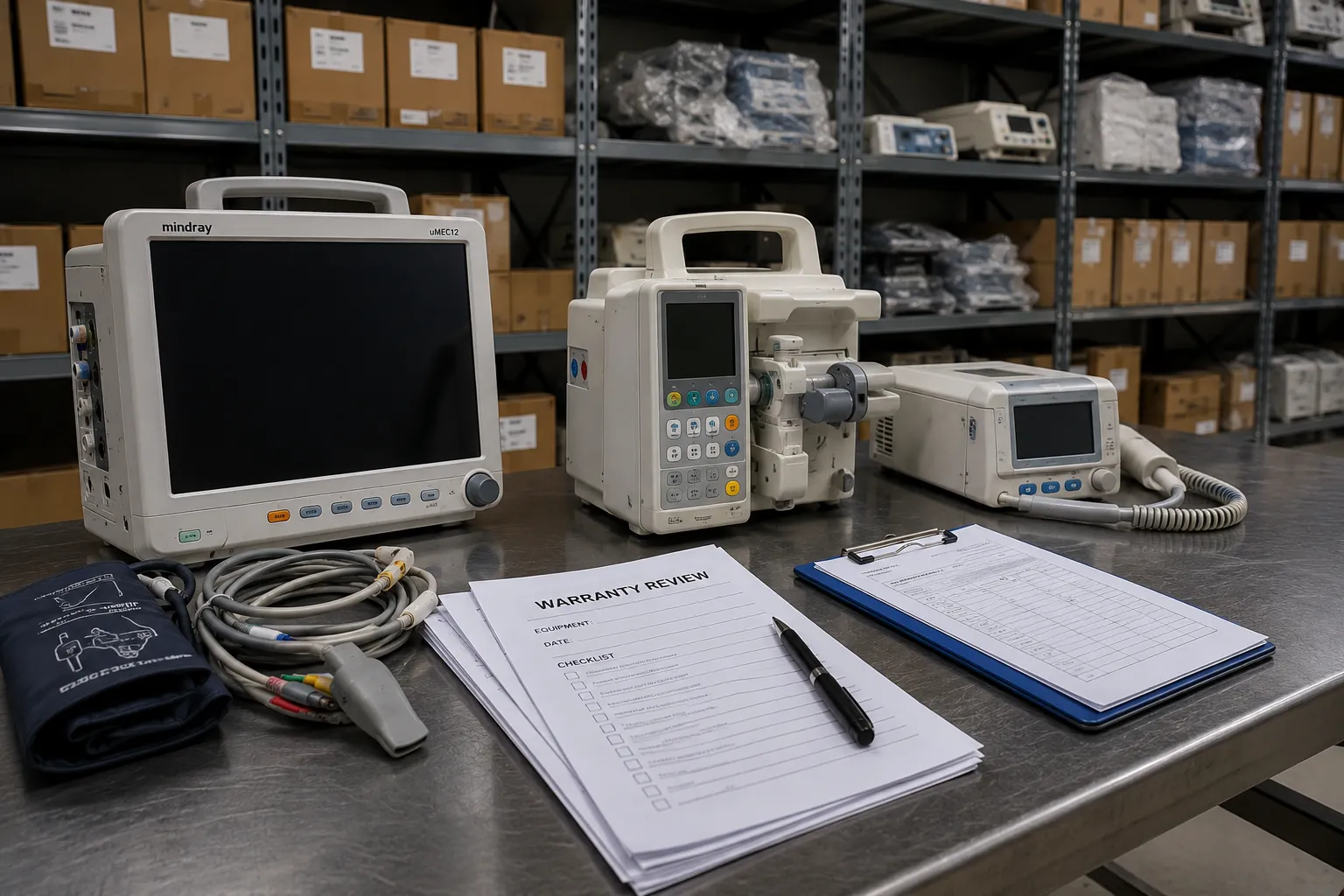
Evaluate warranty terms — Review labour, engineer travel, spare parts, software, exclusions and response times. Warranty duration alone does not indicate the level of support the facility will receive.
Document evaluation evidence — Specification records, demonstration findings, quotations, and user feedback should support the score. Brief comments help explain why evaluators awarded or deducted points.
Resolve scoring differences — Significant variation between evaluator scores should be discussed. The purpose is not to force identical opinions but to identify misunderstood criteria or different clinical priorities.
Healthcare groups making repeated purchases may improve consistency through collaborative global distribution and procurement partnerships. These arrangements should still preserve product evaluation, transparent pricing and measurable performance requirements.
Demonstrations, Trials and Lifecycle Performance Checks
Product demonstrations allow clinical and technical users to test claims against practical workflow. They should follow a defined assessment plan rather than an informal presentation.
Standard demonstration scenarios — Every supplier should be asked to demonstrate comparable tasks. Using different scenarios makes products difficult to score fairly.
Representative users — Staff who will operate, clean and support the equipment should participate. Senior decision-makers may not notice practical issues experienced during routine use.
Usability assessment — Users should review controls, screen visibility, alarms, setup, patient positioning and accessory changes. One aspect that surprises first-time buyers is how small interface differences can affect repeated daily tasks.
Performance verification — Where appropriate, buyers should confirm output, accuracy, response time or throughput using controlled methods. Demonstration results should be recorded rather than relying on memory.
Cleaning and turnaround — Teams should assess how long the device takes to clean, reset and prepare for the next use. This can affect capacity as much as operating speed.
Maintenance access — Biomedical engineers should review service points, battery replacement, error logs and preventive maintenance requirements. Restricted access can increase service time.
Training requirements — Suppliers should explain initial instruction, competency checks and refresher support. Complex equipment may require separate operator and engineering programmes.
Trial limitations — Short demonstrations cannot fully predict long-term reliability, consumable costs or support quality. Reference checks, service records and warranty terms remain necessary.
Facilities should retain demonstration scores and comments in the final procurement file. This evidence can also support future standardisation and replacement decisions.
International Sourcing and Final Equipment Approval
International equipment evaluation requires additional checks covering documentation, shipping, import requirements and regional service capability.
Destination compliance — Buyers should confirm that the device meets applicable local regulatory standards, including CE, FDA, or their regional equivalents, where relevant. Registration and importer responsibilities should be clarified before ordering.
Supplier identity and authority — The seller should explain whether it is the manufacturer, an authorised distributor, a reseller, or a refurbishment provider. Relevant authorisation and company records should be verified.
Shipping and packaging — Sensitive equipment may require shock protection, environmental control or specialised insurance. Responsibility for freight, customs, unloading and final delivery should remain clear.
New and refurbished comparison — Professionally refurbished equipment may reduce capital expenditure where condition, service history, compliance, software and warranty are verified. The evaluation should use defined acceptance criteria rather than price alone.
Installation and commissioning — Buyers should confirm who will install, test, calibrate and release the equipment for clinical use. Remote guidance may not be sufficient for technically complex products.
Regional service support — International warranties may exclude engineer travel, freight or local labour. Service terms should state how faults, parts, and escalations will be managed at the facility.
Specialist sourcing assistance — Healthcare facilities evaluating international suppliers or multi-category requirements can get in touch with the Medigear.uk contact for procurement assistance. A detailed enquiry should include the equipment type, quantity, destination, preferred condition and required delivery period.
Final approval should occur only after clinical, technical, compliance, financial and service concerns have been resolved and documented.
Final thoughts
Medical equipment evaluation helps healthcare facilities select products that are clinically suitable, technically compatible and financially supportable. Comparing product features or supplier prices alone does not provide enough evidence for a reliable decision.
The process should begin with a clear clinical need and include representative users, biomedical engineers, procurement professionals and finance teams. Mandatory requirements and scoring criteria should be approved before suppliers are assessed.
Demonstrations can reveal workflow and usability issues, while lifecycle costing exposes recurring expenditure that may not appear in the initial quotation. Compliance documents, warranty terms and regional service capability also require verification.
A structured evaluation creates a defensible purchasing decision and reduces the risk of equipment arriving without the performance, accessories or support needed for successful clinical use.
Disclaimer
Medigear.uk is a global medical equipment supplier, exporter, and distributor. The content published on this site is intended for educational and product awareness purposes only. Nothing on this page constitutes medical advice, clinical guidance, or treatment recommendations. All healthcare procurement and clinical decisions should be made by qualified medical professionals and compliant procurement teams operating within the regulatory frameworks of their respective countries.