Hospital purchasing becomes difficult to control when different departments request similar equipment under different names, specifications and configurations. One ward may order a patient monitor with a complete accessory package, while another receives a lower-priced unit that lacks essential sensors, network compatibility or service support.
For medical equipment buyers professionals worldwide, a hospital equipment standard list provides an approved foundation for planning, budgeting and supplier comparison. It records what equipment is normally required, where it will be used and which technical, compliance and support conditions must be met.
The list should not function as a fixed catalogue that prevents clinical judgement. Its purpose is to reduce unnecessary variation while allowing justified differences for critical care, surgery, diagnostics, community services and other specialised environments.
A well-managed standard list connects clinical need with technical specifications, room requirements, quantities, accessories, installation, training and lifecycle support. This guide explains how procurement teams can create, approve and maintain a list that supports consistent hospital equipment purchasing.
How a Standard Equipment List Controls Clinical Planning
A standard list translates the hospital’s clinical model into defined equipment requirements. It helps managers understand which assets are essential, which can be shared and where different performance levels are justified.
Clinical purpose for every item — Each device should be linked to a recognised clinical activity, room or service. This prevents equipment from being added only because it appeared in an older project list or a supplier catalogue.
In practice, procurement teams often find duplicated items when departments use different terminology for the same clinical requirement. Standard descriptions make these overlaps easier to identify.
Approved equipment categories — Related products should be organised into clear categories such as imaging, critical care, surgery, laboratory, sterilisation, furniture, rehabilitation and patient monitoring. Categories improve budget visibility and supplier evaluation.
Subcategories may be required where equipment has different risk, performance or support requirements.
Defined performance levels — A standard list should distinguish basic, intermediate and advanced configurations where clinically justified. A general ward monitor should not automatically carry the same specifications as a critical care monitor.
Performance tiers allow procurement teams to control cost without compromising clinical suitability.
Quantity planning rules — Quantities should be calculated based on room numbers, bed capacity, expected patient demand, workflow, utilisation, and backup requirements. Fixed ratios should be reviewed against the actual service model.
A hospital with high patient turnover may need more mobile equipment than another facility with the same bed count.
Shared-equipment decisions — Some equipment can serve several departments if transport, cleaning and availability can be managed safely. Other devices require permanent placement because moving them would create delays or clinical risk.
Future growth allowances — The list should distinguish opening requirements from future expansion. This prevents unnecessary early purchasing while ensuring that rooms, utilities and networks can support later additions.
The strongest standard lists provide consistent planning rules while leaving room for documented clinical exceptions.
Standard Equipment Lists Across Hospital Departments
The contents of a hospital equipment list depend on the services delivered. Procurement teams should avoid assuming that one facility’s list can be copied directly into another project.
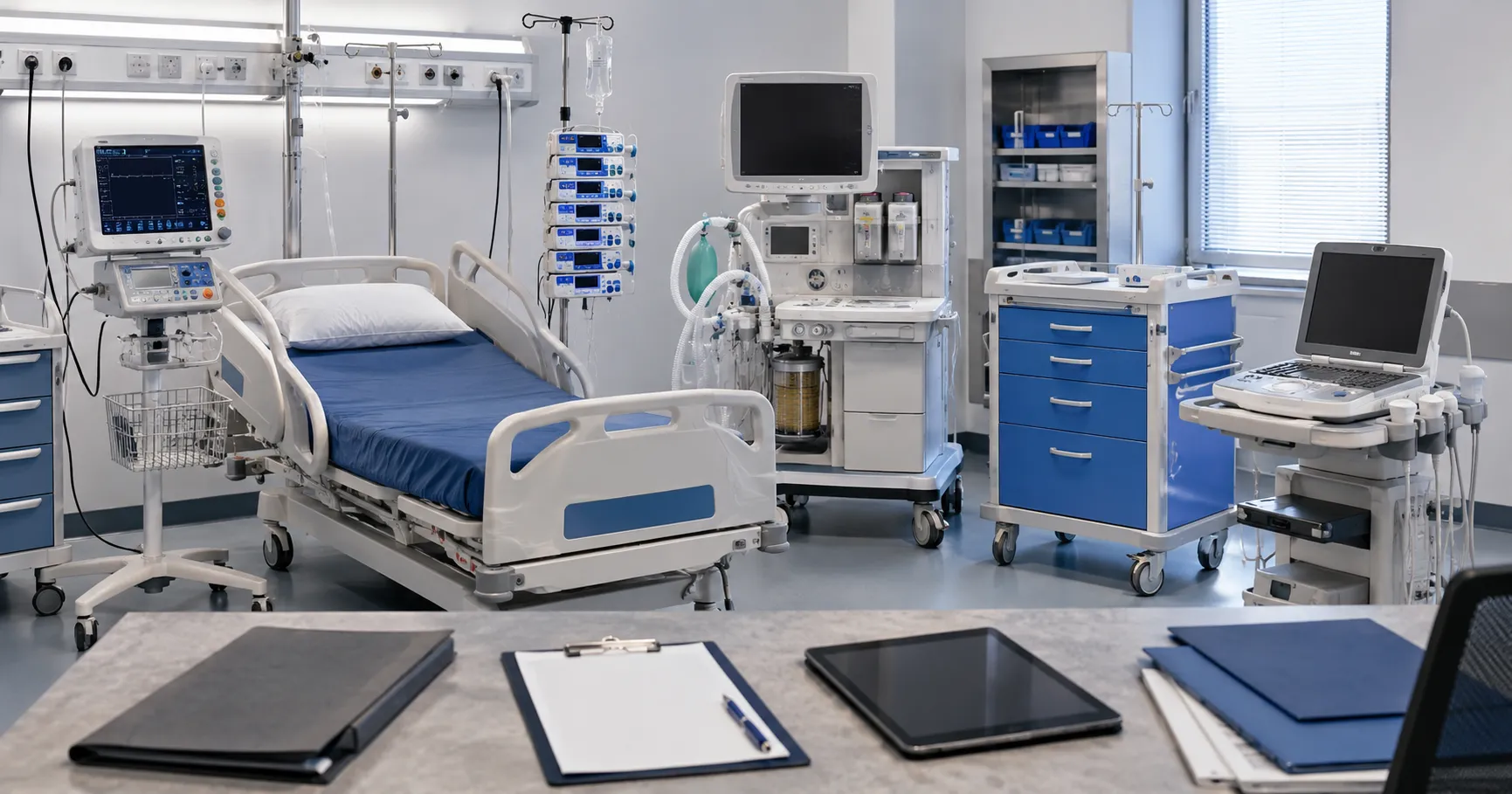
Emergency and critical care departments — These areas may require patient monitors, ventilators, defibrillators, infusion systems, suction devices, resuscitation equipment and emergency trolleys. Quantities should reflect treatment spaces, patient acuity and backup capacity.
Critical equipment also requires stricter service response and spare parts standards.
Operating theatres and procedure rooms — Standard items may include operating tables, surgical lighting, anaesthesia systems, electrosurgical units, suction, patient warming and recovery monitoring. The list should show which equipment is fixed, ceiling-mounted or mobile.
Room layouts and equipment clearances should be checked before final approval.
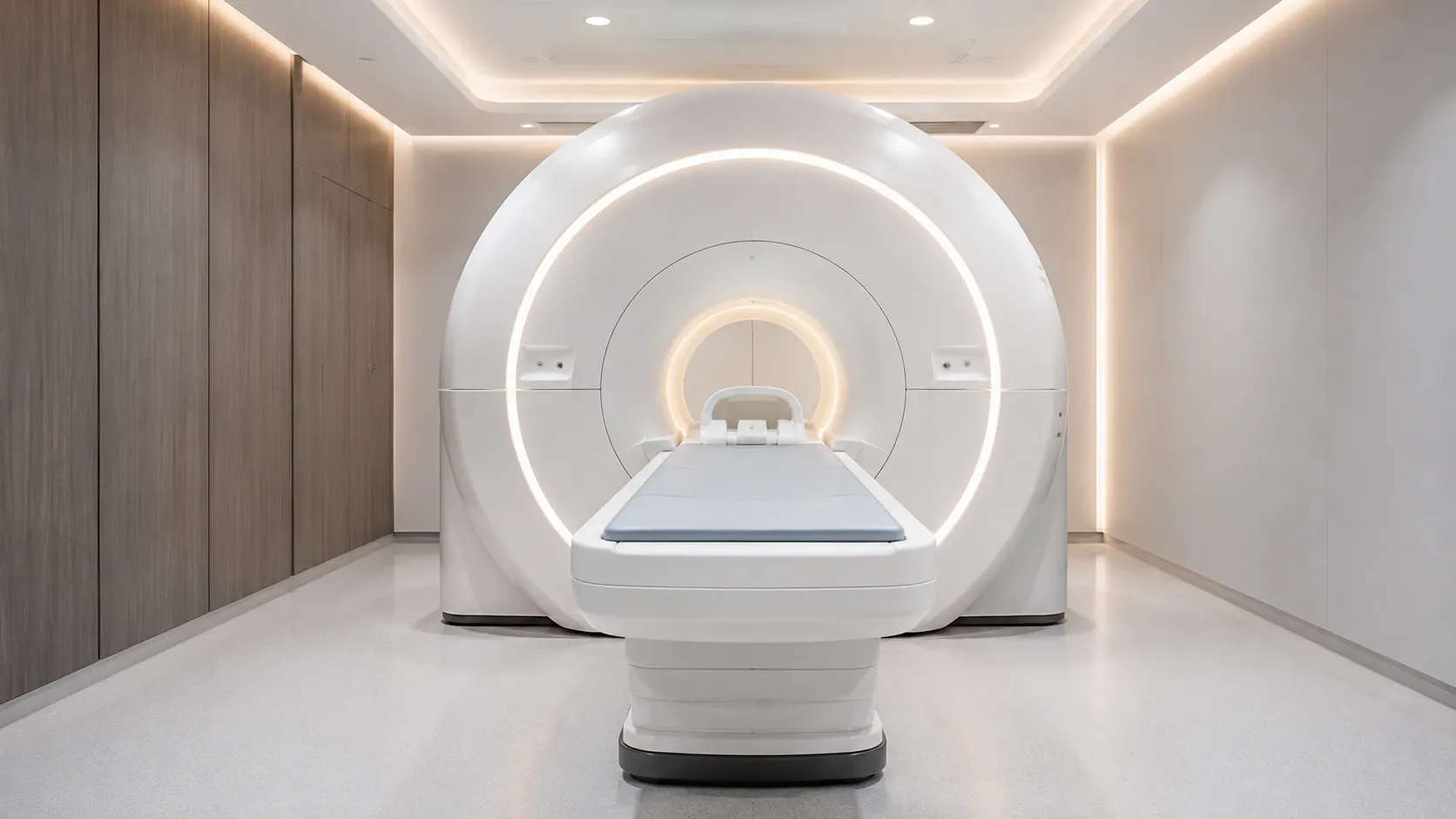
Imaging and diagnostic departments — Imaging equipment may require shielding, cooling, structural support, controlled power and digital integration. When assessing an established international healthcare equipment supplier, procurement teams should confirm site-planning information, installation responsibilities and support at the destination.
Experienced clinical supply managers usually request technical drawings before architecture and utilities are finalised.
Laboratory and pathology services — Standard lists may include analysers, microscopes, centrifuges, refrigerators, freezers, sample-preparation equipment and safety devices. Reagents, calibrators and quality-control materials should be linked to the main equipment.
Cost per test may be more useful than instrument price when comparing systems.
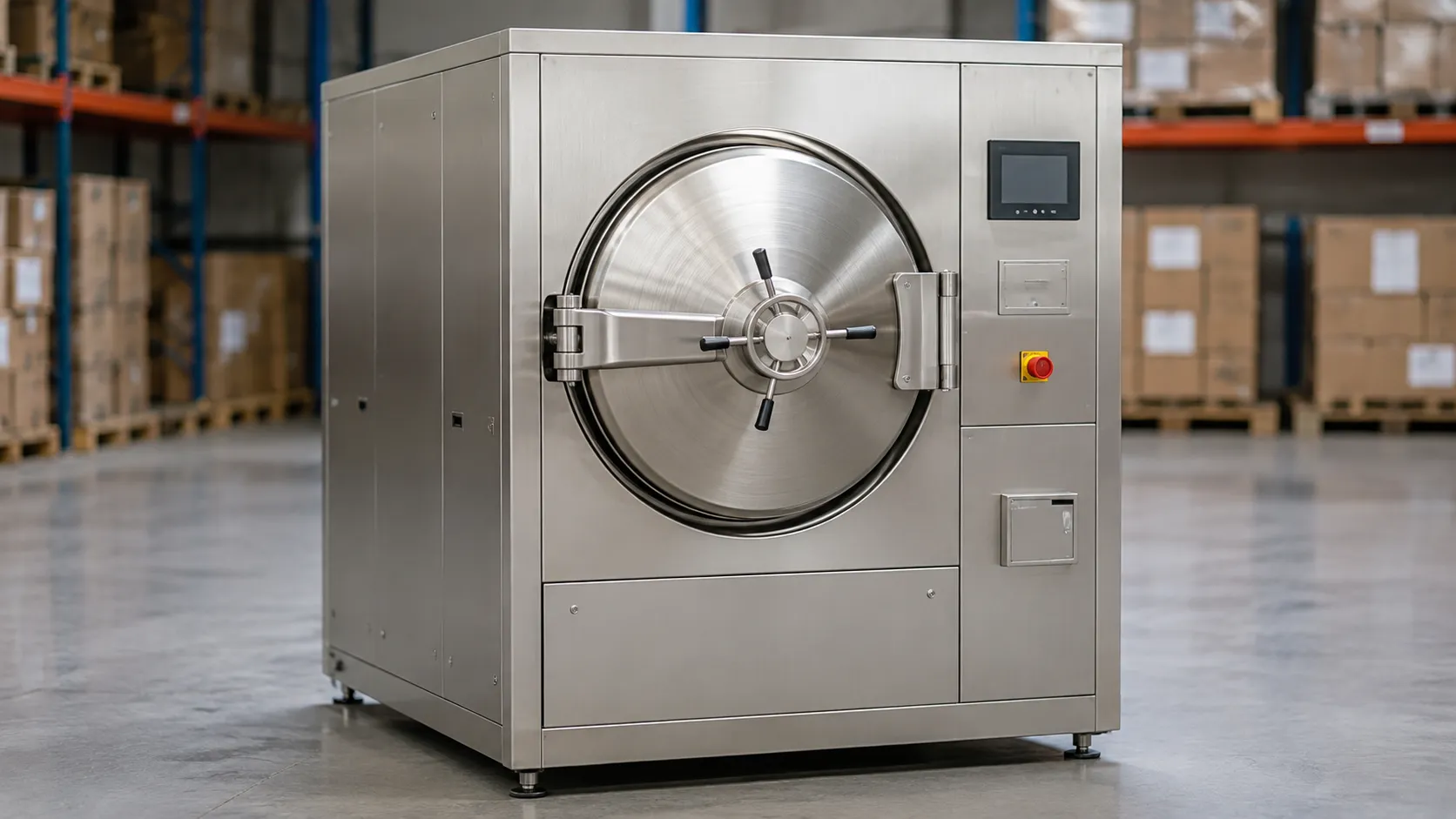
Sterilisation and infection-control areas — Autoclaves, washer-disinfectors, sealing devices, water-treatment systems and transport trolleys should be coordinated with clean and contaminated workflows. Equipment throughput should match surgical and procedural demand.
Inpatient wards and outpatient clinics — Beds, examination couches, vital-sign monitors, treatment trolleys, mobility aids and basic diagnostic devices may form the core list. Standardisation can simplify accessories, staff training and preventive maintenance.
Specialist clinical services — dental, ophthalmology, neonatal, rehabilitation, dialysis, and fertility services — require dedicated equipment groups. Generic lists often omit specialised accessories, consumables and environmental conditions.
Departmental lists should remain linked to a single central equipment schedule so that quantities, specifications, and budgets can be reviewed together.
Technical Fields Every Standard List Should Contain
An equipment name alone does not provide enough information for budgeting or procurement. Each entry should contain the technical and commercial fields needed to compare suitable products.
Standard equipment description — Use a clear generic name that reflects the clinical purpose. Brand or model names should appear only where technically justified and permitted by procurement policy.
Consistent descriptions reduce confusion between departments and suppliers.
Required performance specification — The list should define essential operating ranges, capacity, accuracy, alarms, mobility or throughput. Specifications should explain what the equipment must achieve without copying one manufacturer’s distinctive wording.
Complete configuration — Required probes, sensors, batteries, cables, trolleys, software modules and starter consumables should be listed. A base-unit price can be misleading when essential clinical components are excluded.
Room and department allocation — Every item should be linked to a room, clinical area or shared-equipment pool. This supports quantity verification, infrastructure checks and delivery planning.
Infrastructure requirements — Voltage, power load, network access, water, drainage, ventilation, medical gases and structural conditions should be recorded where relevant. These requirements may affect construction and installation budgets.
Compliance requirements — Equipment should meet applicable local regulatory standards, including CE, FDA, or their regional equivalents, where relevant. The list should state which conformity, registration and technical records suppliers must provide.
Installation and commissioning — Entries should identify whether supplier installation, calibration, safety testing or integration is required. Responsibility for unloading, positioning and final acceptance should also be clear.
Training requirements — Operator and biomedical engineering training should be separated. The list may specify participant numbers, training materials, competency checks and refresher requirements.
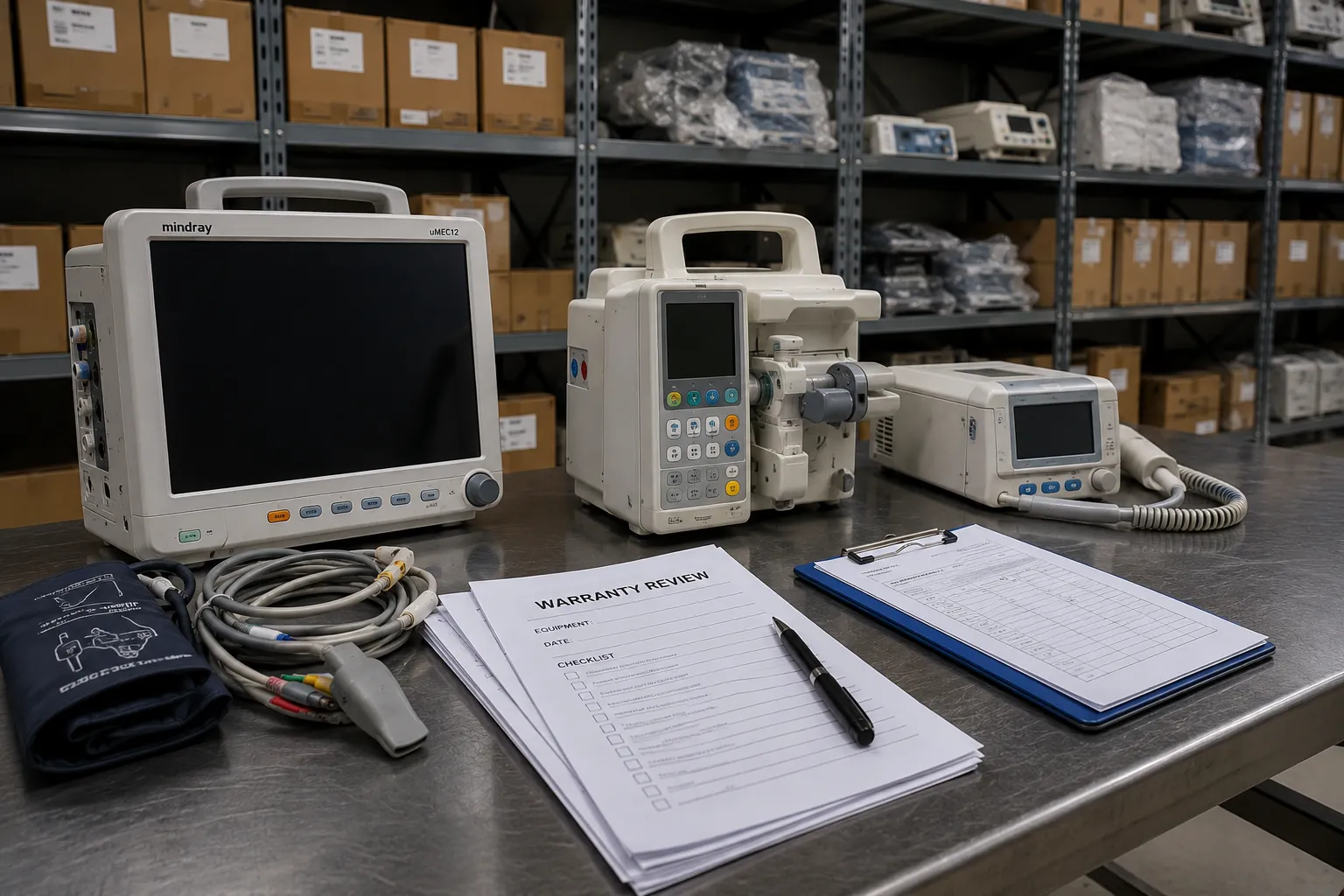
Warranty and service terms — Minimum warranty coverage, preventive maintenance, response times, parts support and software updates should be recorded. These requirements help suppliers quote comparable support packages.
Expected lifecycle — Planned service life, replacement priority, and upgrade potential can support long-term capital planning. The estimate should consider utilisation and support availability, not age alone.
Technical fields turn the standard list into a working procurement document rather than a simple inventory of product names.
How Procurement Teams Should Approve Equipment Standards
Equipment standards should be developed through multidisciplinary review. Procurement teams can coordinate the process, but clinical, technical and financial decisions require broader input.
Confirm clinical necessity — Clinical representatives should explain where the equipment will be used and which functions are essential. Requests for premium specifications should be supported by evidence of workload risk.
Review technical feasibility — Biomedical engineers and facilities teams should examine infrastructure, compatibility, serviceability and maintenance requirements. Digital teams may need to assess network integration and cybersecurity.
Calculate lifecycle cost — Procurement and finance teams should compare acquisition, accessories, consumables, software, maintenance and replacement costs. A lower initial price may create higher recurring expenditure.
Evaluate supplier information — Medical equipment advertising reaching out to international procurement teams should provide accurate configurations, compliance details, and service terms. Procurement teams should verify formal documents rather than relying on promotional descriptions.
Control justified exceptions — Departments may need equipment not on the standard list due to specialised clinical requirements. Exceptions should document the reason, cost impact, support requirements and approving authority.
Approve standard specifications — Each specification should have a version number, approval date, owner and review date. Uncontrolled copies can result in outdated requirements being included in quotations or tenders.
Link standards to tenders — Approved descriptions, configurations and evaluation criteria should flow directly into procurement documents. This reduces rewriting and keeps supplier comparison consistent.
Healthcare groups managing several hospitals may benefit from structured distribution and reseller partnership arrangements. These arrangements should preserve competitive review, transparent pricing and measurable service standards for every approved category.
Using Maintenance Data to Refresh the Standard List
A hospital equipment list should evolve as clinical demand, technology and supplier support change. Maintenance and user records provide practical evidence for these updates.
Breakdown and downtime trends — Procurement teams should review recurring faults, repair durations, and service response times. A model that regularly fails may need to be removed from the approved list even when its purchase price remains attractive.
Accessory and consumable performance — Frequent shortages, high expiry rates or fragile accessories may indicate that a configuration is difficult to support. Standardisation should consider recurring items as well as the main device.
Operator feedback — Clinical users can identify workflow problems, difficult controls and missing functions. Feedback should be assessed against measured performance rather than personal preference alone.
Maintenance complexity — Biomedical engineering teams should report whether spare parts, tools and service information are available. Supporting many unrelated platforms can increase training requirements and downtime.
Software and cybersecurity status — Connected equipment may require patches, licence renewals and integration updates. Models approaching the end of software support should be reviewed before further purchases are approved.
Actual lifecycle costs — service contracts, repairs, consumables, and downtime — should be compared with the original forecast. These records improve future cost assumptions and supplier negotiations.
Safety notices and recalls — Product alerts should be linked to the standard list and asset inventory. Significant unresolved concerns may require temporary suspension or permanent removal of an equipment model.
Replacement and upgrade planning — The list should show whether approved products remain suitable for future purchases or only for continued support of existing assets. This prevents accidental expansion of a platform already approaching obsolescence.
Facilities with limited local service support may need stronger standards for spare parts access, remote diagnostics, and engineer coverage. Maintenance experience should directly influence future procurement specifications.
International Sourcing and List Implementation
A standard equipment list can support international sourcing by giving suppliers one controlled statement of requirements. It also helps buyers identify documentation, logistics and service responsibilities before ordering.
Supplier capability by category — A supplier experienced in furniture may not have the technical capacity to support imaging or laboratory equipment. Qualifications should be completed for each relevant product group.
Destination compliance — Buyers should confirm product registration, importer responsibilities and applicable regulatory requirements before approving a model. Documentation accepted in the supplier’s market may not be sufficient at the destination.
Consistent quotation schedules — Suppliers should quote against the same descriptions, quantities, accessories and support terms. This allows procurement teams to identify exclusions and compare complete delivered packages.
New and refurbished equipment — Professionally refurbished equipment may appear on the standard list where condition, service history, compliance, warranty and remaining support life are verified. The acceptance criteria should be written clearly.
Freight and delivery planning — Packaging, insurance, customs, unloading, storage and final delivery should be included in the sourcing plan. Large or sensitive equipment may require specialised transport and installation arrangements.
Training and regional support — International suppliers should explain how operator instruction, technical training, maintenance and repairs will be delivered. Global sales activity does not automatically demonstrate service capability in every location.
Specialist sourcing support — Procurement teams developing standard lists, volume orders,s or multi-category requirements can submit a medical equipment enquiry to the Medigear.uk contact. A useful enquiry should include categories, quantities, destination, preferred condition and expected delivery schedule.
Standard-list implementation should remain controlled after contract award. Delivered models, accessories, software and documents should be checked against the approved schedule before clinical acceptance.
Final thoughts
A hospital equipment standard provides the procurement team with a consistent foundation for clinical planning, budgeting, and supplier evaluation. It reduces unnecessary product variation while preserving documented exceptions for specialised care.
The list should include more than product names. Clinical purpose, performance, quantities, accessories, infrastructure, compliance, installation, training and service requirements all affect whether equipment can be used successfully.
Standards should be reviewed using maintenance records, user feedback, lifecycle costs, and technology support. Information: An outdated list can retain outdated specifications and unsupported equipment platforms.
A controlled standard list improves procurement consistency, strengthens supplier comparisons and helps hospitals build equipment portfolios that remain clinically suitable, supportable and financially sustainable.
Disclaimer
Medigear.uk is a global medical equipment supplier, exporter, and distributor. The content published on this site is intended for educational and product awareness purposes only. Nothing on this page constitutes medical advice, clinical guidance, or treatment recommendations. All healthcare procurement and clinical decisions should be made by qualified medical professionals and compliant procurement teams operating within the regulatory frameworks of their respective countries.