Clinic growth often puts pressure on equipment before managers recognise the need for an upgrade. Appointment volumes increase, clinical services expand and existing devices begin operating for longer periods. Equipment that was suitable during the clinic’s early development may eventually restrict capacity, staff efficiency or the range of care that can be delivered.
For healthcare buyers, medical equipment upgrade planning provides a structured approach to determining what should be modernised, expanded, or replaced. The process should begin with clinical demand and operational evidence rather than interest in a new product or technology.
An upgrade may involve adding accessories, increasing capacity, installing new software, improving connectivity or purchasing a more capable system. It may also require changes to rooms, utilities, staff training and maintenance arrangements.
Growing clinics need to understand the full operational and financial impact before approving an investment. This guide explains how managers can identify upgrade priorities, evaluate technical options, and implement equipment improvements without incurring unnecessary costs or disruption.
How Clinic Growth Creates Equipment Upgrade Requirements
A documented clinical or operational need should drive equipment upgrades. Growth alone does not justify purchasing more advanced technology unless the proposed upgrade solves a measurable problem.
Increasing patient demand — Higher appointment or procedure volumes can place sustained pressure on existing equipment. Managers should examine waiting times, utilisation, operating hours and delays caused by limited capacity.
In practice, procurement teams often find that equipment appears adequate during average activity but becomes a bottleneck during peak periods. Demand analysis should therefore include both routine and high-activity conditions.
Expansion into new clinical services — A clinic introducing diagnostics, rehabilitation, minor procedures or specialised treatment may require new equipment capabilities. Managers should define the intended service before selecting products.
Equipment should support the planned clinical scope without including costly features that staff are unlikely to use.
Recurring workflow delays — slow processing, manual data entry, or repeated equipment setup — may reduce staff productivity. An upgrade may improve workflow by removing duplicated steps or allowing information to move securely between systems.
Technology should not be introduced merely to digitise an inefficient process. The workflow should be reviewed first.
Reliability and downtime — Increasing breakdown frequency can indicate that equipment is operating beyond its practical capacity. Managers should review service records, fault patterns and repair duration before assuming that another repair will provide suitable long-term value.
Patient and staff requirements — Growth may bring a wider patient profile, additional operators or more complex procedures. Equipment may need improved adjustability, accessibility, ergonomics or safety functions.
Regulatory and support changes — Software updates, cybersecurity expectations, or discontinued spare parts may necessitate an upgrade even when basic equipment performance remains acceptable.
A well-supported upgrade proposal connects each planned investment to clinical capacity, operational resilience or measurable service improvement.
Upgrade Priorities Across Different Clinic Environments
The appropriate upgrade strategy depends on the clinic’s services, workload, location and access to technical support. A solution designed for a large diagnostic centre may be unnecessarily complex for a smaller outpatient clinic.
General and primary care clinics — These facilities may prioritise examination, monitoring, point-of-care testing and basic diagnostic equipment. Upgrades should focus on dependable operation, efficient patient flow and compatibility with available space.
Compact equipment may offer greater value than larger systems that require substantial room modifications.
Specialist outpatient clinics — Cardiology, ophthalmology, dental, physiotherapy and other specialist services often need equipment aligned with defined procedures. Managers should assess whether an upgrade increases clinical capacity or merely adds functions outside the clinic’s scope.
When comparing options from verified global medical equipment suppliers, clinics should confirm configurations, documentation, training and service availability rather than relying only on product descriptions.
Diagnostic and laboratory clinics — Growth may increase demand for analyser throughput, imaging capacity or reporting speed. Upgrades should account for consumables, quality controls, software integration and data storage.
Experienced clinical supply managers typically calculate cost per test or procedure rather than evaluating the equipment price in isolation.
Day surgery and treatment centres — These facilities may require upgrades to operating tables, lighting, monitoring, sterilisation or recovery equipment. The plan should assess how each device interacts with the complete procedure pathway.
Improving one room may provide limited value if recovery or sterilisation capacity remains restricted.
Mobile and outreach clinics — Portable equipment must tolerate transport, charging cycles and variable environmental conditions. Upgrade decisions may focus on battery life, protective design, connectivity and replacement accessories.
Multi-site clinic groups — Growing clinic networks may benefit from standardising selected equipment across locations. Standardisation can simplify staff training, spare parts management and servicing, but local workload and infrastructure differences should remain visible.
Upgrade priorities should reflect the specific conditions of each clinic rather than applying a single technology plan across all locations.
Technical Factors That Determine Upgrade Feasibility
Before approving an upgrade, clinics should confirm that the proposed equipment can operate safely within the existing environment. Technical feasibility affects cost, installation time and long-term support.
Existing equipment compatibility — An upgrade may need to work with current accessories, software, networks or clinical systems. Managers should identify which components can remain in use and which will require replacement.
Compatibility claims should be confirmed in writing before an order is placed.
Space and infrastructure requirements — Clinics should check room dimensions, access routes, electrical capacity, power stability, ventilation, water, drainage, medical gases and structural loading. Even compact equipment may require changes to utilities or furniture layout.
A site assessment can prevent expensive installation delays.
Capacity and performance range — Equipment should support current workload and realistic growth without being significantly oversized. Underestimating capacity can recreate the original bottleneck, while excessive specifications can increase acquisition and maintenance costs.
Software and cybersecurity — Connected equipment may require secure network access, user permissions, data backup and regular updates. Clinics should establish who will manage software support and how long updates will remain available.
Accessory and consumable requirements — New equipment may use different probes, sensors, cartridges, filters or reagents. Managers should calculate recurring costs and confirm supply availability in the destination market.
Serviceability — The upgrade should have access to trained engineers, diagnostic tools and spare parts. A technically advanced device may create operational risk where local support is limited.
Training complexity — New functions can require operator instruction, competency assessment and refresher training. Clinics should also plan for staff turnover and new employee onboarding.
Future expansion potential — Modular equipment can allow clinics to add software, accessories or capacity over time. The value of modularity depends on transparent future pricing and continued manufacturer support.
A suitable upgrade should be technically achievable, financially supportable and proportionate to the clinic’s expected development.
How Growing Clinics Should Evaluate Upgrade Purchases
Procurement evaluation should compare complete upgrade solutions rather than individual product prices. The chosen option must work clinically, technically and financially.
Define the required outcome — Clinics should state whether the upgrade must increase capacity, reduce downtime, add a clinical service or improve connectivity. Clear outcomes make supplier proposals easier to assess.
Compare upgrade and replacement costs — Existing equipment may support hardware, software or accessory upgrades. Managers should compare this route with complete replacement, including remaining service life and future support.
A lower upgrade price may offer limited value if the main system is approaching obsolescence.
Calculate total implementation expenditure — Include equipment, accessories, software, freight, customs, installation, infrastructure work, training, servicing and consumables. The budget should also allow for temporary service disruption.
Verify supplier information — Suppliers and manufacturers advertising to global healthcare buyers should provide accurate specifications, upgrade compatibility, evidence of compliance, and service terms. Procurement teams should compare these claims with formal technical documents.
Assess regulatory suitability — Equipment should meet applicable local regulatory standards, including CE, FDA, or their regional equivalents, where relevant. Clinics should confirm whether additional registration or import approval is required.
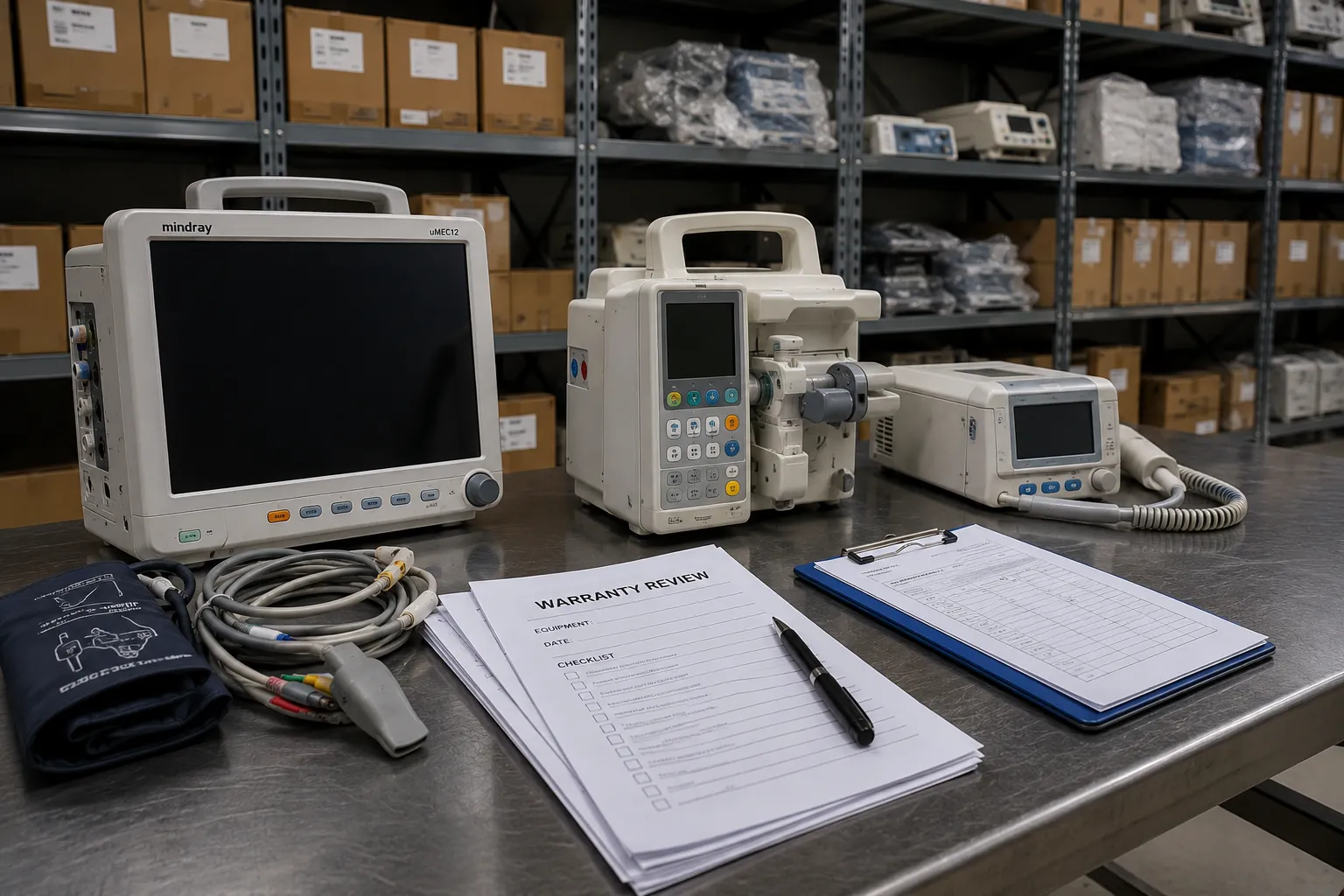
Review warranty and support — Buyers should examine response times, engineer access, software coverage, spare parts and warranty exclusions. Support commitments should apply to the actual clinic location.
Plan implementation timing — Installation may affect appointments, room availability and staff schedules. A phased upgrade or temporary equipment arrangement can reduce disruption.
Growing clinic networks that make repeated investments may benefit from long-term medical equipment supply partnerships. These arrangements should retain transparent pricing, measurable service expectations, and regular supplier performance reviews.
Protecting the Value of Upgraded Equipment
An upgrade provides limited long-term value if maintenance, training and performance monitoring are not planned. Clinics should protect the investment from the first day of use.
Preventive maintenance planning — Service intervals should follow manufacturer guidance, equipment risk, workload and applicable local requirements. High utilisation may justify more frequent inspection than the minimum schedule.
Calibration and quality checks — Diagnostic and measuring equipment may require calibration or performance verification. Clinics should budget for technician time, reference materials and temporary replacement arrangements.
Software update management — Connected equipment may depend on security patches, licence renewals and compatibility updates. Managers should record software versions and establish responsibility for approving changes.
Operator competency — Staff should receive practical instruction relevant to the clinic’s workflow. Training records help managers identify who is authorised to use the upgraded equipment.
One aspect that surprises first-time buyers is how quickly inconsistent operating practices can reduce the expected benefit of a new system.
Consumable and accessory control — Clinics should monitor stock levels, expiry dates and usage patterns. A new device can become unavailable when one specialised accessory or reagent is missing.
Performance monitoring — Managers should compare utilisation, waiting time, downtime and maintenance costs before and after implementation. This shows whether the upgrade delivered the intended improvement.
Remaining lifecycle planning — Upgraded equipment should be added to the clinic’s asset register, including warranty, service, and expected replacement information. Upgrade completion should not remove the need for future lifecycle planning.
Where technical support is limited, clinics may face higher engineer travel, freight and downtime costs. Maintenance arrangements should therefore form part of the original purchase decision.
International Sourcing and Phased Clinic Expansion
International sourcing can provide growing clinics with access to new and professionally refurbished equipment. It alsoalso introduces consideration of delivery, documentation, currency, and after-sales.
Phased purchasing — Clinics do not always need to complete every upgrade at once. Equipment can be introduced according to clinical priority, infrastructure readiness and available capital.
Phasing also allows managers to review performance before repeating the purchase across other departments or sites.
Export and import documentation — International orders may require invoices, packing lists, certificates of origin, conformity evidence and destination-specific permits. Responsibilities should be confirmed before shipment.
Freight and delivery planning — Equipment budgets should include packing, insurance, customs, inspection, storage and final delivery. Access routes and unloading requirements should be checked before arrival.
New and refurbished options — New equipment may offer longer support life and broader warranty coverage. Professionally refurbished equipment may reduce capital expenditure where condition, service history, compliance and parts support are verified.
Currency and payment risk — Exchange-rate changes can affect the final project cost. Clinics should review the quotation's validity, payment milestones, and contingencies before approval.
Installation and commissioning — International supply arrangements should identify who will install, test and commission the equipment. Remote guidance may not be sufficient for equipment requiring specialist setup or formal acceptance testing.
Specialist sourcing assistance — Growing clinics planning international upgrades or multi-category purchases can contact the Medigear.uk team for supply support. A detailed enquiry should include equipment categories, quantities, destinations, preferred condition, and the expected implementation schedule.
International procurement should remain aligned with the clinic’s growth plan. Equipment should not be ordered before space, staffing, registration, training and maintenance arrangements are ready.
Final thoughts
Medical equipment upgrade planning helps growing clinics expand clinical capacity without introducing unsuitable technology or uncontrolled expenditure. The strongest upgrade projects begin with evidence of workload, workflow limitations, equipment condition and service demand.
Managers should compare software, component and accessory upgrades with full equipment replacement. They should also calculate the complete implementation cost, including infrastructure, training, maintenance and recurring consumables.
An upgrade should improve a defined clinical or operational outcome. More advanced technology does not automatically provide better value when functions remain unused or technical support is unavailable.
Structured planning allows clinics to modernise equipment in stages, protect service continuity and invest in systems that can support future growth.
Disclaimer
Medigear.uk is a global medical equipment supplier, exporter, and distributor. The content published on this site is intended for educational and product awareness purposes only. Nothing on this page constitutes medical advice, clinical guidance, or treatment recommendations. All healthcare procurement and clinical decisions should be made by qualified medical professionals and compliant procurement teams operating within the regulatory frameworks of their respective countries.