Medical equipment shipments can reach a border on schedule and remain unavailable for clinical use because a single document is incomplete, inconsistent, or missing. A product description may differ between the invoice and packing list, conformity evidence may cover another model, or the importer may not have secured the required local approval.
For medical equipment buyers and professionals worldwide, import documentation must be reviewed before the equipment leaves the supplier. Waiting until customs requests clarification can lead to storage charges, delivery delays and uncertainty about when the equipment will reach the healthcare facility.
Document requirements differ according to the destination, equipment classification, condition and intended use. Buyers must therefore confirm applicable local regulatory standards rather than relying on a standard international document pack.
This guide explains the main commercial, shipping, regulatory and technical records medical buyers should review when preparing an international equipment purchase.
Why Import Records Matter to Healthcare Procurement
Import documents provide evidence of what is being shipped, where it originated, how it is classified and whether it can legally enter the destination market. They also support traceability after delivery.
Shipment identity and value — Customs authorities normally require a clear description of the equipment, quantity, value, origin and parties involved. Product names should remain consistent across invoices, packing lists, transport documents and permits.
In practice, procurement teams often find that general wording, such as “hospital equipment,” raises avoidable questions. Each item should be described accurately enough for identification and classification.
Regulatory eligibility — Medical equipment may require product registration, import authorisation or conformity evidence before entry. Requirements vary considerably across healthcare systems and equipment classifications.
A document showing compliance in one market does not automatically confirm acceptance in another.
Clinical traceability — Model and serial-number information helps healthcare facilities link imported equipment to conformity records, warranty documents, asset registers,s and maintenance history.
Traceability becomes particularly important when managing recalls, safety notices or future resale.
Financial control — Import documents confirm the declared transaction value, payment terms, freight arrangements and additional charges. Finance and procurement teams should review these records against the approved purchase order.
Transfer of responsibility — Shipping and commercial records help establish when risk, transport responsibility and customs obligations transfer between the supplier and buyer.
Clear documentation reduces disputes when damage, delay or unexpected charges occur.
Documentation Requirements Across Different Import Settings
The document pack should reflect the equipment, shipment route and healthcare setting receiving the products. A standard checklist may need additional records for specialised or higher-risk equipment.
Large hospital projects — Multi-category projects may include imaging, critical care, laboratory, surgical and furniture shipments from several suppliers. The package, shipment and delivery phase should control documentation.
Project teams should avoid combining unrelated products under unclear descriptions merely to simplify paperwork.
District hospitals and regional facilities — Buyers may depend on external freight agents and customs representatives because internal import experience is limited. When sourcing from verified global medical equipment suppliers, buyers should confirm which party prepares each document and which party checks destination requirements.
Experienced clinical supply managers typically request draft shipping records before dispatch so errors can be corrected without delaying transport.
Private clinics and diagnostic centres — Smaller facilities may import individual devices or compact equipment packages. Even low-volume shipments require accurate invoices, product documents and importer details.
A smaller order does not remove regulatory or customs responsibilities.
Laboratories and specialised facilities — Laboratory shipments may include analysers, refrigeration, reagents, calibrators or controlled materials. Different items within a single order may require separate classifications, storage conditions, or permits.
Mobile healthcare programmes — Portable equipment shipments may include batteries, communication modules and protective cases. Battery transport rules and equipment serialisation may require additional attention.
Humanitarian and public health programmes — Donated or funded equipment may still require valuation, conformity evidence and import approval. Donation status does not automatically remove customs or regulatory controls.
The appropriate document set should be confirmed for each shipment rather than assumed based on previous purchases.
Commercial and Shipping Documents Buyers Should Check
Commercial and logistics documents must describe the same transaction consistently. Small differences can lead to customs questions or incorrect charges.
Commercial invoice — The invoice should identify the seller and buyer, delivery details, product description, model, quantity, unit value, total value, currency, and commercial terms. Freight, insurance and discounts should be shown clearly where relevant.
The invoice should match the purchase order and payment arrangement.
Packing list — This record should show the contents of every package, carton, pallet or crate. Package numbers, dimensions, gross weight, net weight and equipment identifiers should correspond with the physical shipment.
Transport document — Depending on the transport method, the shipment may use an air waybill, a bill of lading, a road consignment record, or a courier document. Buyers should confirm the consignee, destination, package count and freight status.
Certificate of origin — This document confirms where the equipment was manufactured. It may affect customs duties, trade arrangements or destination-country requirements.
The seller’s location and product origin are not always the same.
Insurance record — Buyers should know whether the equipment is insured during transport, what risks are covered and how a claim must be submitted. High-value or sensitive equipment may require specialised coverage.
Customs classification — Equipment should be assigned an appropriate tariff or commodity code. Classification can influence duties, controls and document requirements.
Buyers should avoid selecting codes solely because they produce a lower charge.
Delivery terms — Commercial terms should show whether the supplier or buyer manages freight, insurance, customs, duties and final delivery. Responsibilities should be understood before payment and dispatch.
Every commercial document should be reviewed as part of one shipment file rather than checked independently.
Regulatory and Product Records Required Before Shipping
Regulatory documentation should apply to the exact equipment model, manufacturer and configuration being imported. Collecting unrelated certificates provides little protection.
Declaration or evidence of conformity — Buyers should request evidence demonstrating that the equipment meets applicable local regulatory standards, including CE, FDA, or their regional equivalents, where relevant.
The model listed in the document should match the product being supplied.
Quality management certification — Manufacturer quality certification may support assessments of suppliers and products. Procurement teams should check the certificate scope, validity and issuing organisation.
Manufacturer authorisation — Distributors and resellers may need to demonstrate authorisation to supply the equipment. The document should cover the relevant products and markets where applicable.
Product registration records — Some destinations require that the equipment or the manufacturer be registered before import. Buyers should establish whether registration is held by the manufacturer, distributor, importer or local representative.
Accurate product communication — Suppliers and manufacturers advertising to global healthcare buyers should provide accurate regulatory status, manufacturer details and model information. Buyers should verify these statements using formal records rather than relying on marketing wording.
Technical documentation — User manuals, technical data, installation requirements, intended use and maintenance information may be requested during regulatory or customs review.
Special product controls — Equipment containing batteries, radiation sources, wireless transmitters, controlled substances or temperature-sensitive materials may require additional approvals or transport documents.
Healthcare organisations managing repeated imports may benefit from formal international supply chain partnerships. These arrangements should still include shipment-level document verification, regulatory accountability and clear escalation procedures.
Document Review, Corrections and Record Control
Import documentation should pass through a controlled review before the shipment is released. Correcting records after departure can be difficult and may require formal amendments.
Use one approved product description — Procurement teams should establish a standard description that includes the equipment type, manufacturer, model, and intended use, where required. This wording should appear consistently across commercial and regulatory records.
Check quantities and package details — Invoice quantities, packing-list contents and transport records should agree. Accessories packed separately should still be traceable to the main order.
Verify names and addresses — Supplier, buyer, importer, consignee and delivery information should be accurate. Differences in legal names or addresses can delay clearance or payment.
Control document versions — Draft, corrected, and final records should be clearly identified. Only approved versions should be shared with freight agents, customs representatives and finance teams.
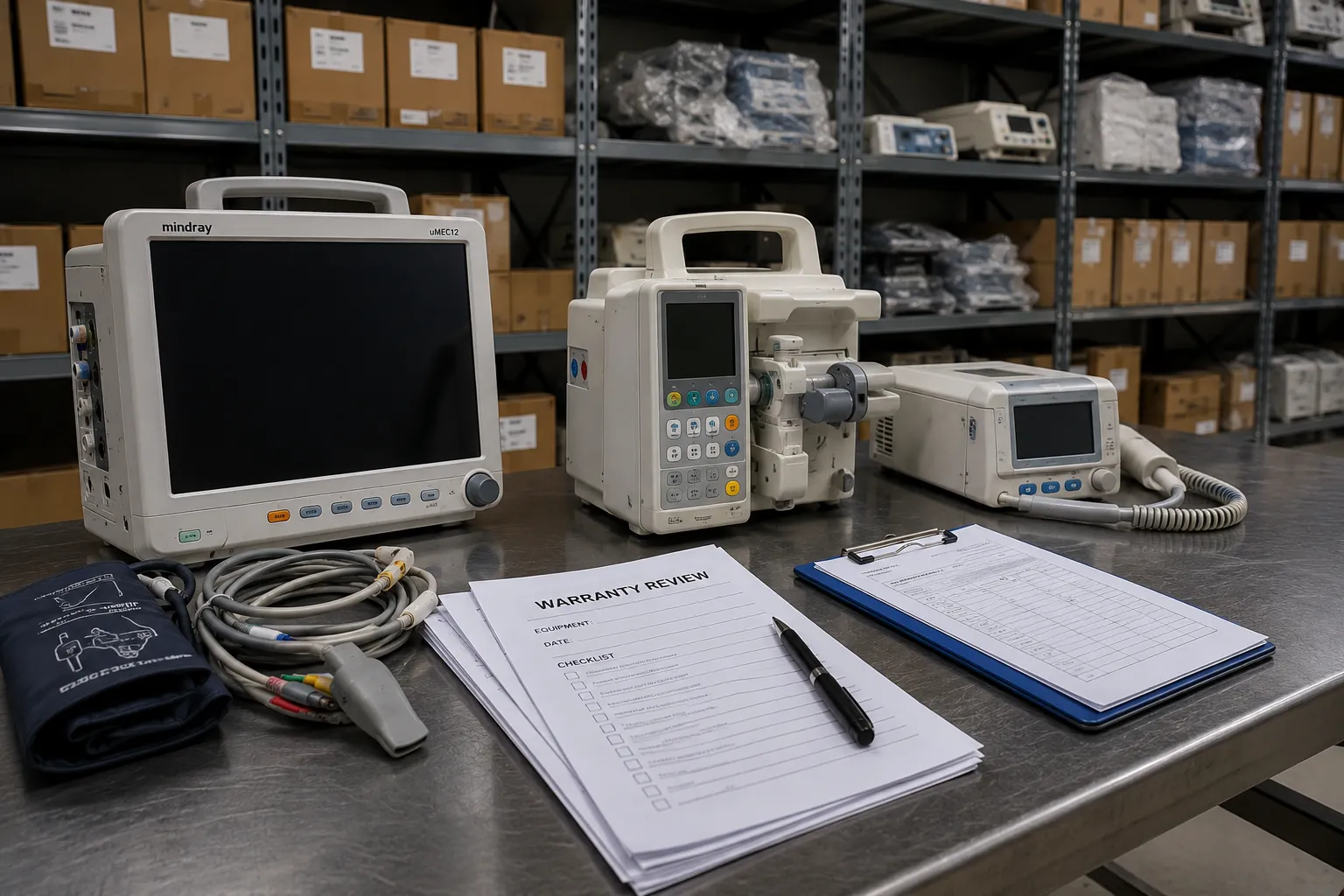
Review document validity — Certificates and authorisations should remain valid at the time of shipment and clearance. Expired documents may require replacement even where the purchase was agreed upon earlier.
Protect sensitive information — Commercial documents contain prices, bank details and company information. Access should be controlled, and any unexpected changes to payment information should be independently verified.
Maintain a complete import file — Final records should be stored with the purchase order, contract, inspection results, delivery confirmation and equipment asset information.
A controlled file supports audits, warranty claims, recalls, resale and future replacement planning.
Customs Clearance, Delivery and Post-Import Records
Import documentation remains important after the shipment arrives. Clearance, inspection, delivery and commissioning can create additional records that should become part of the equipment history.
Pre-arrival customs preparation — Buyers or their appointed representatives should review documents before the shipment reaches the border. Required permits, classifications and declarations should already be available.
Pre-arrival review reduces the risk of avoidable storage and handling costs.
Customs inspection support — Authorities may request package opening, serial-number checks or additional technical information. The buyer should know who will provide clarifications and how inspection findings will be recorded.
Delivery condition records — Packaging and equipment should be checked for visible damage, moisture, impact or missing components. Photographs and signed delivery records support insurance or supplier claims.
Serial-number verification — Delivered identifiers should match shipping, conformity, warranty and asset-registration records. Differences should be investigated before clinical acceptance.
Installation and commissioning documents — Equipment may require installation reports, safety tests, calibration certificates and user training records before entering service.
Specialist import assistance — Buyers managing international shipments, volume orders or complex equipment documentation can reach the Medigear.uk sourcing and export team. A useful enquiry should include the destination, equipment type, quantity, condition and planned delivery period.
Document retention — Import, customs, conformity, installation and service records should remain accessible throughout the equipment lifecycle. Retention periods should follow organisational policy and applicable local requirements.
Successful customs clearance completes only one stage of the process. Equipment should not enter clinical use until delivery, documentation and commissioning checks are complete.
Final thoughts
Medical equipment import documentation should be prepared with the same care as technical specifications and supplier evaluation. A clinically suitable device can still be delayed or rejected during shipping, customs, or regulatory processes when records are incomplete.
Buyers should establish document responsibilities before placing the order. Draft invoices, packing lists and product records should be reviewed before dispatch, while destination-specific permits and registrations should be confirmed early.
Consistency matters. Product descriptions, models, quantities, values, and company details should match across all records.
A controlled document file supports customs clearance, asset traceability, warranty management and future compliance reviews. It also gives procurement teams clearer evidence if a shipment is delayed, damaged or disputed.
Disclaimer
Medigear.uk is a global medical equipment supplier, exporter, and distributor. The content published on this site is intended for educational and product awareness purposes only. Nothing on this page constitutes medical advice, clinical guidance, or treatment recommendations. All healthcare procurement and clinical decisions should be made by qualified medical professionals and compliant procurement teams operating within the regulatory frameworks of their respective countries.