Medical equipment cybersecurity planning connects clinical technology with network security, controlled access, software support and operational continuity. A hospital may purchase clinically suitable equipment yet introduce avoidable risks when connectivity, remote access, update responsibilities or end-of-support conditions are not reviewed.
For healthcare buyers assessing connected medical equipment, cybersecurity requirements should be developed before quotations are collected. These requirements should apply to new, refurbished, mobile, shared and supplier-managed equipment.
Clinical engineering, information security, digital infrastructure, procurement and clinical representatives may each hold a different part of the equipment-risk picture. Their requirements should be combined into a single controlled procurement and lifecycle plan.
A structured approach helps hospitals maintain device visibility, compare supplier responsibilities, manage software changes and prepare for technical incidents without unnecessarily interrupting clinical services.
Map Connected Equipment and Cybersecurity Risk
Cybersecurity planning should begin with a complete understanding of the devices, software and connections operating within the hospital.
Equipment inventory — Record connected medical devices, supporting computers, servers, gateways, mobile systems and relevant accessories.
Device ownership — Identify whether each system is owned, leased, loaned, rented, shared or managed by an external provider.
Clinical purpose — Document where each device is used, which service it supports and how operational disruption could affect patient care.
Connectivity type — Record wired, wireless, mobile, removable-media and external system connections.
Software status — Capture operating systems, application versions, firmware and supplier-supported configurations.
Data handled — Identify whether equipment displays, stores, processes or transfers patient, operational or authentication data.
User groups — Define the clinicians, technicians, administrators, suppliers, and support personnel who require access.
Support status — Record warranty, software-support period, update availability and announced end-of-support dates.
In practice, healthcare buyers often find that supporting computers and gateways are missing from the medical equipment inventory even though they are essential to device operation.
The hospital should therefore assess the complete connected system rather than only the primary clinical device.
Organise Controls by Device and Care Setting
Cybersecurity controls should reflect equipment function, location, mobility and clinical dependence.
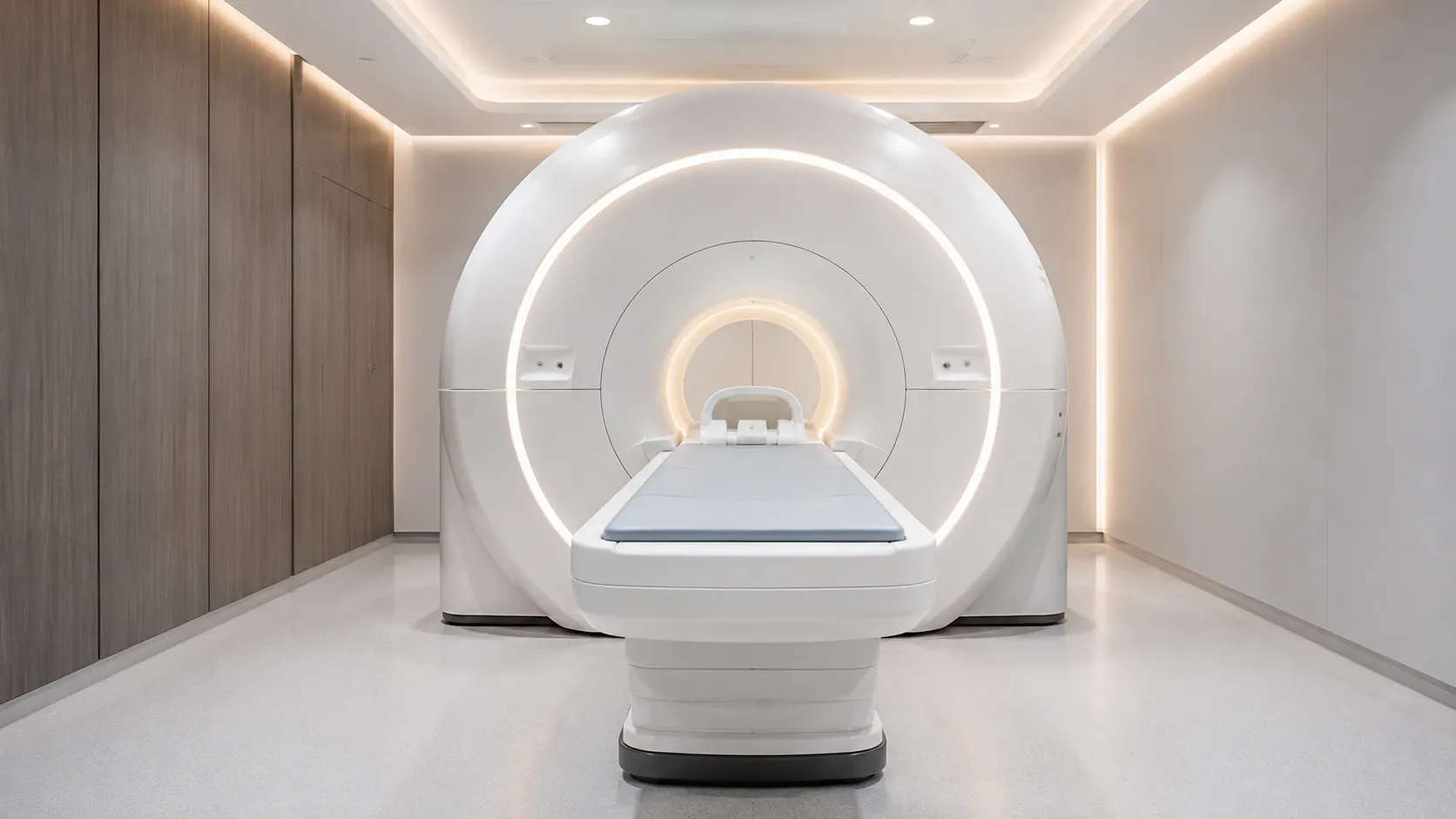
Fixed diagnostic systems — Imaging, laboratory and specialist diagnostic equipment may depend on workstations, servers, interfaces and long-term software support.
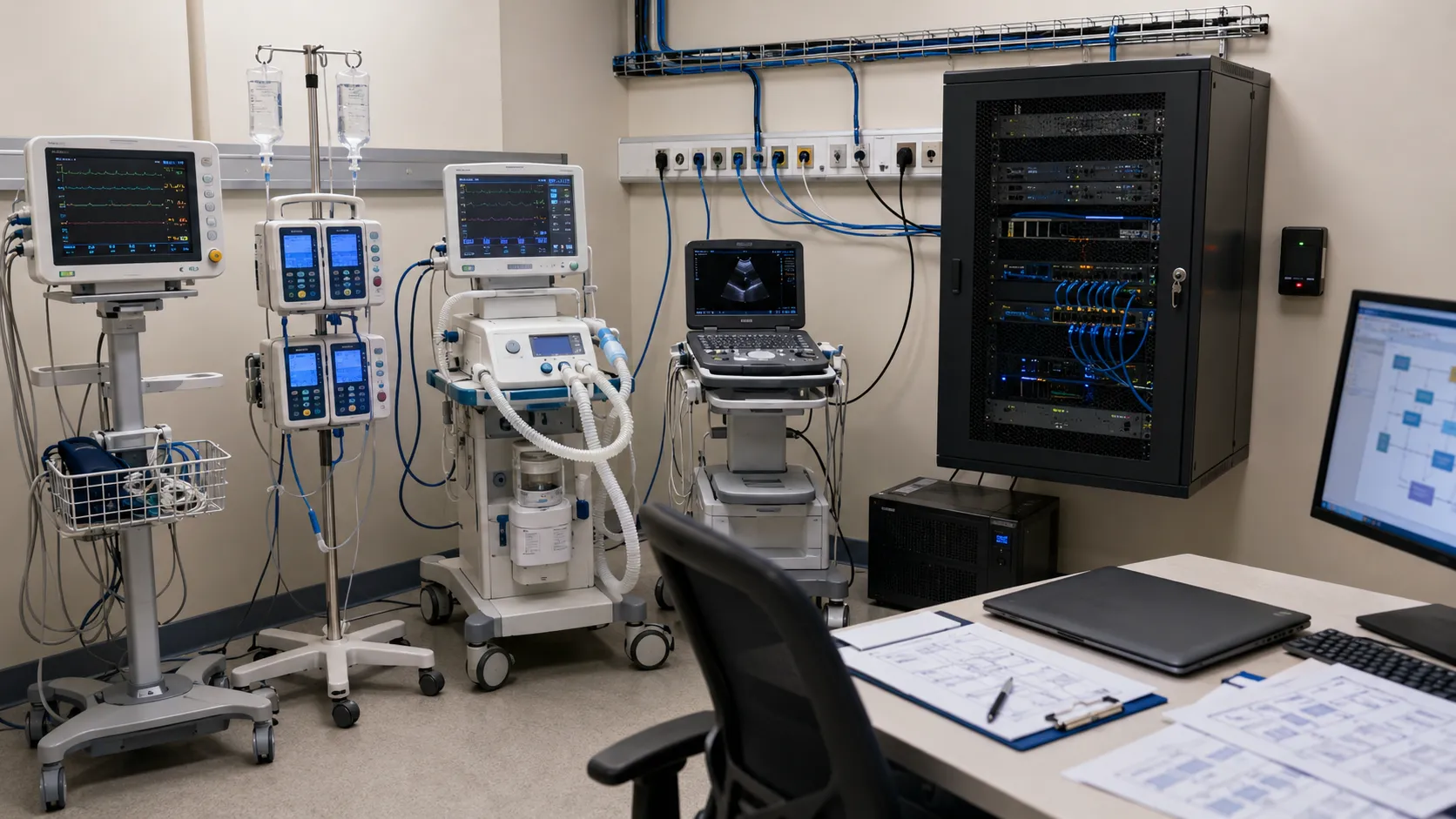
Bedside and critical-care devices—connected monitors, ventilators, pumps, and related systems—may require continuous availability and carefully controlled updates.
Hospitals comparing regulated and certified equipment suppliers worldwide should request clear information on connectivity, authentication, software maintenance, and remote support arrangements.
Mobile medical equipment — Portable devices need controlled wireless access, secure storage, asset-location records and battery-management arrangements.
Departmental workstations — Computers supporting medical devices should use approved configurations and be subject to controlled administrative access.
Shared equipment — Devices moving between departments require consistent controls for users, networks, cleaning, and location.
Supplier-managed systems — Responsibilities for monitoring, updates, access and incident escalation should be documented.
Cloud-connected equipment — Hospitals should review data flows, service availability, user control, storage and contract responsibilities.
Offline equipment — Devices without routine network access may still require controls for removable media, service laptops and software installation.
Experienced clinical technology managers typically classify devices by clinical criticality, connectivity, and support status rather than applying a single control to every asset.
Set Technical, Access and Document Requirements
Procurement specifications should translate cybersecurity expectations into measurable responsibilities for suppliers and the hospitals.
Unique device identification — Each asset should be linked to its manufacturer, model, serial number, software version, location and responsible department.
User authentication — Define whether named accounts, role-based access, password controls or stronger authentication methods are required.
Administrative access — Restrict configuration and system-level privileges to authorised personnel.
Network segmentation — Place equipment within approved network zones based on clinical function, communication needs and risk.
Communication controls — Document which systems, addresses, services and external destinations the equipment must access.
Encryption requirements — Review protection for stored and transferred information where supported and required.
Software updates — Define how updates are issued, assessed, tested, approved, installed and documented.
Security logging — Confirm whether access, configuration, connection and fault events can be recorded and reviewed.
Remote access — Require controlled authorisation, time-limited access, identity verification and activity records.
Removable media — Define controls for USB devices, service media, software installation and data transfer.
Backup and recovery — Record configuration backup, restoration, system recovery and replacement-device requirements.
Cybersecurity documentation — Request network diagrams, port requirements, account information, software details, update processes and support contacts.
One aspect that surprises first-time buyers is that strong hospital network controls cannot compensate for unsupported device software or unclear supplier responsibilities.
Cybersecurity documentation should therefore be evaluated alongside clinical and technical specifications.
Evaluate Suppliers and Commercial Packages
Supplier comparison should include cybersecurity support across the expected equipment lifecycle.
Supplier capability — Assess experience with connected medical equipment, hospital integration, software support and security escalation.
Quotation structure — Require separate details for equipment, software, licences, interfaces, support services and optional connectivity.
Accuracy of security information — Medical equipment companies advertising connected solutions to healthcare buyers should ensure that access, update, and support claims align with their formal quotations and contracts.
Exact software configuration — Record operating systems, firmware, applications and approved versions included at delivery.
Support period — Confirm how long security updates, technical assistance and compatible software will remain available.
Update responsibilities — Define whether the supplier, hospital or authorised service partner assesses and installs updates.
Remote-support conditions — Document required tools, connection methods, authorisation steps and audit records.
Known limitations — Require suppliers to identify unsupported protocols, fixed accounts, update restrictions or other relevant constraints.
Incident notification — Define how the hospital will receive information about identified vulnerabilities or security issues.
Commercial exclusions — Clarify charges for software updates, security reviews, remote support, licences and system upgrades.
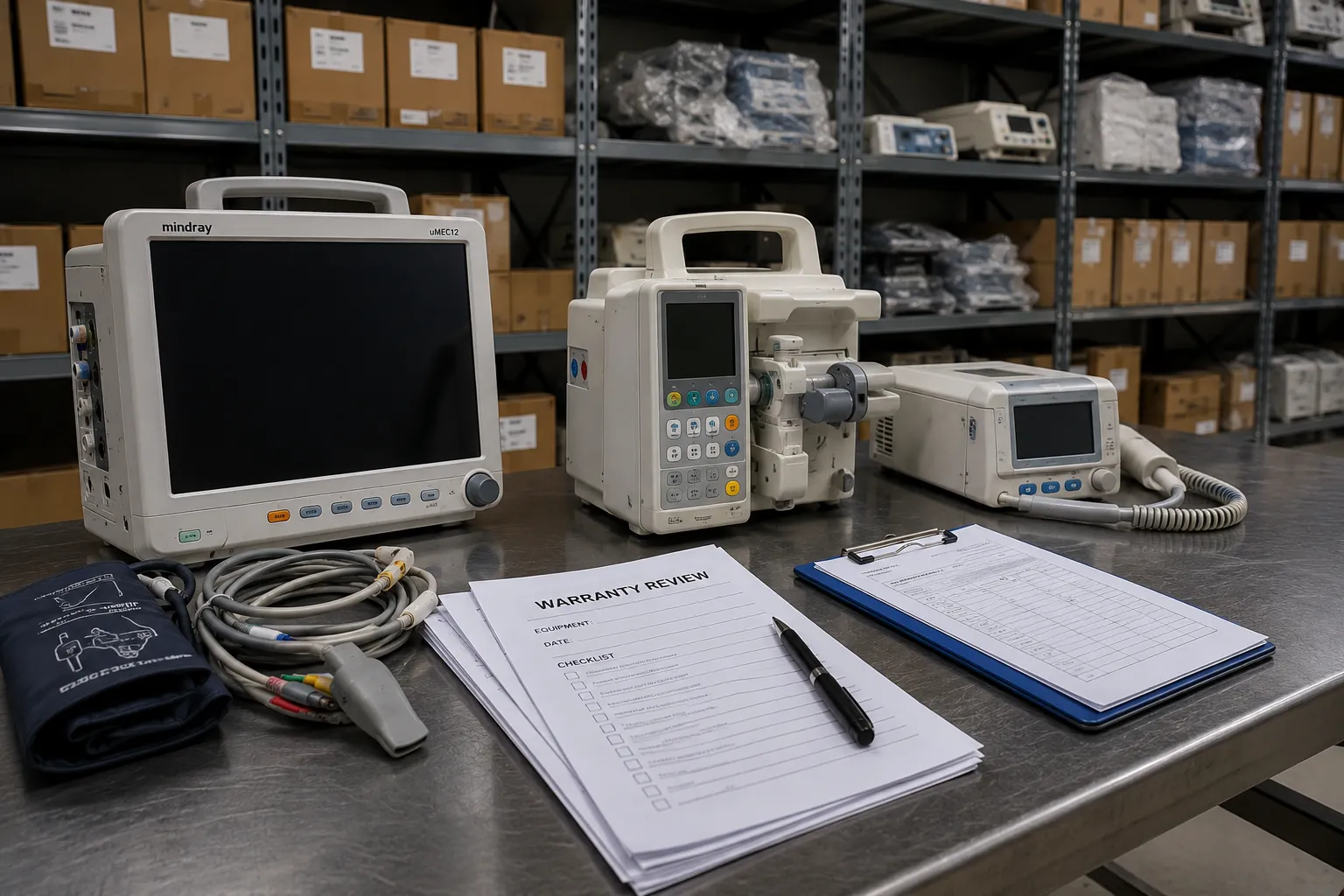
Warranty coverage — Confirm whether unauthorised software or configuration changes affect warranty and technical support.
End-of-support planning — Request notice periods and available upgrade, replacement or migration routes.
Healthcare organisations sourcing connected systems across several departments may benefit from structured international healthcare equipment sourcing partnerships.
Each commercial package should still identify the exact hardware, software, interfaces, licences, support period and cybersecurity responsibilities.
Coordinate Secure Deployment and Lifecycle Support
Connected equipment should not enter operational use until technical, network and access requirements have been verified.
Receiving inspection — Check the manufacturer, model, serial number, accessories, software information and equipment condition.
Configuration review — Compare delivered software, accounts, settings and interfaces against the approved specification.
Network onboarding — Connect devices only through the hospital’s authorised process and approved network location.
Account setup — Create required user roles, change default credentials where applicable and document administrative ownership.
Remote-access testing — Confirm that supplier access can be approved, monitored, and closed in accordance with hospital procedures.
Integration testing — Test data exchange, reporting, time synchronisation and communication with approved hospital systems.
Operational acceptance — Verify clinical functions, alarms, access controls, connectivity and recovery arrangements before release.
Asset registration — Record hardware, software, network information, warranty, support contacts and lifecycle dates.
User training — Explain secure access, normal device behaviour, removable-media restrictions and incident-reporting routes.
Technical training — Clinical engineering and digital teams may require separate instruction on configuration, updates and recovery.
Change management — Review software, network, account and integration changes before implementation.
Decommissioning controls — Remove access, connections, stored information and supplier accounts before disposal, resale or transfer.
Physical installation should not be treated as evidence that a connected medical device is securely configured.
Govern Cyber Risk and Incident Readiness
Cybersecurity planning should continue throughout the equipment lifecycle rather than ending after installation.
Asset visibility — Maintain current records for device location, software, connectivity, ownership and support status.
Vulnerability review — Assess relevant supplier notifications and technical findings through an approved risk process.
Update monitoring — Track available, approved, pending and completed software or firmware updates.
Access review — Periodically review active users, administrative accounts, supplier access and unnecessary permissions.
Network monitoring — Investigate unexpected communication, repeated connection failures or unusual device behaviour.
Incident response — Define how clinical, technical, security and supplier teams will coordinate during a suspected event.
Clinical continuity — Maintain approved alternatives when equipment must be isolated, inspected, restored or replaced.
Supplier performance — Monitor notification quality, response times, update support and corrective-action completion.
Lifecycle review — Identify equipment approaching unsupported software, obsolete hardware or unavailable security support.
Replacement planning — Prioritise devices according to clinical criticality, exposure, support status and practical mitigation options.
Healthcare organisations seeking connected medical equipment, supplier comparisons or procurement support can contact the Medigear.uk sourcing and export team. Enquiries should include the equipment category, required connectivity, intended hospital environment, quantities and destination.
The cybersecurity plan should be updated whenever devices, software, interfaces, networks, suppliers or support conditions change.
Final thoughts
Medical equipment cybersecurity planning should begin before connected devices are ordered and continue until they are securely decommissioned.
Healthcare teams should maintain complete asset records, define access requirements, review network connections,s and document software support responsibilities. Supplier proposals should identify update processes, remote-access conditions, support periods and known technical limitations.
Cybersecurity controls should remain proportionate to clinical importance, connectivity and operational risk.
A structured planning process helps hospitals improve equipment visibility, technical accountability and continuity across connected clinical services.
Disclaimer
Medigear.uk is a global medical equipment supplier, exporter, and distributor. The content published on this site is intended for educational and product awareness purposes only. Nothing on this page constitutes medical advice, clinical guidance, or treatment recommendations. All healthcare procurement and clinical decisions should be made by qualified medical professionals and compliant procurement teams operating within the regulatory frameworks of their respective countries.