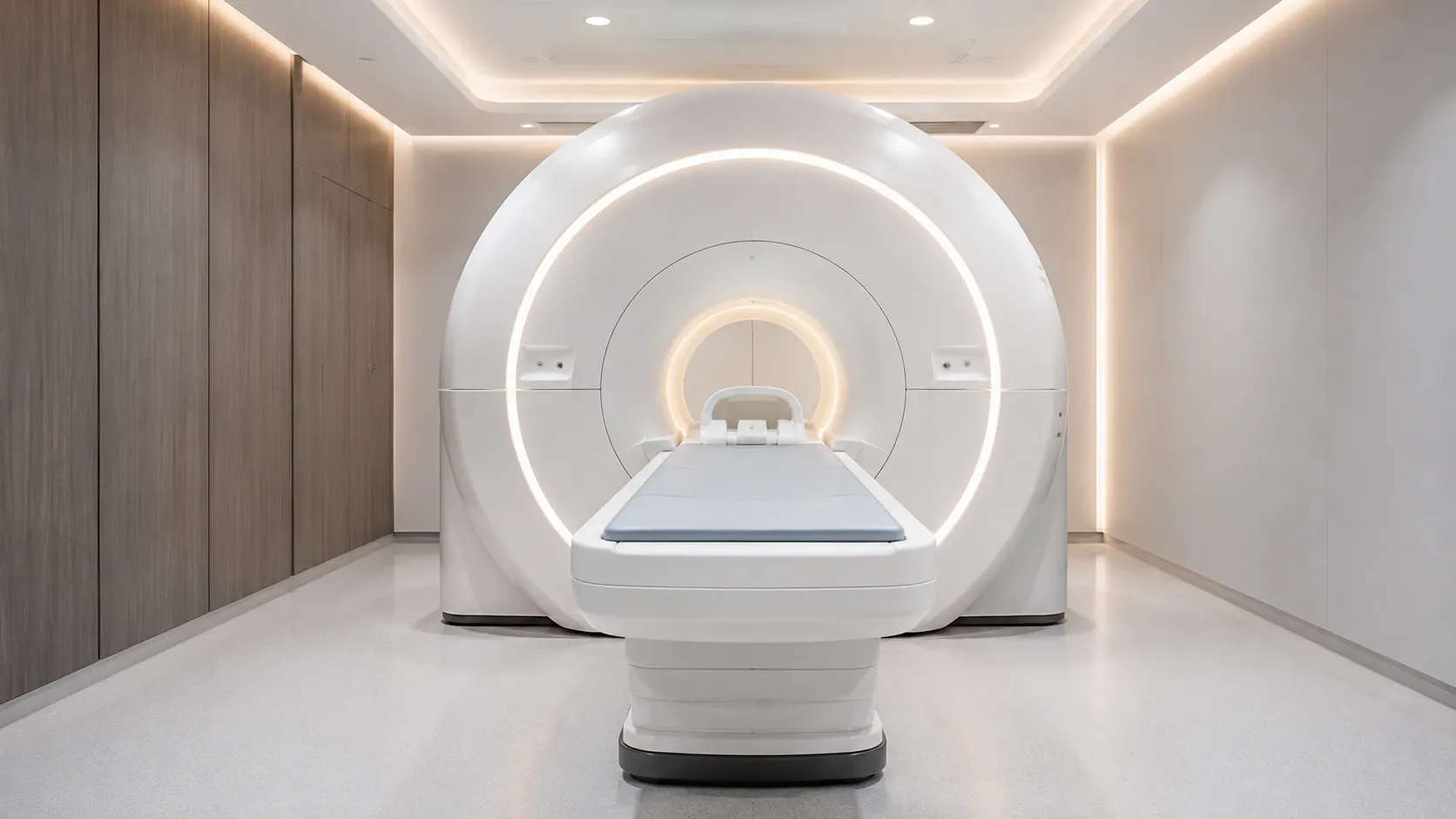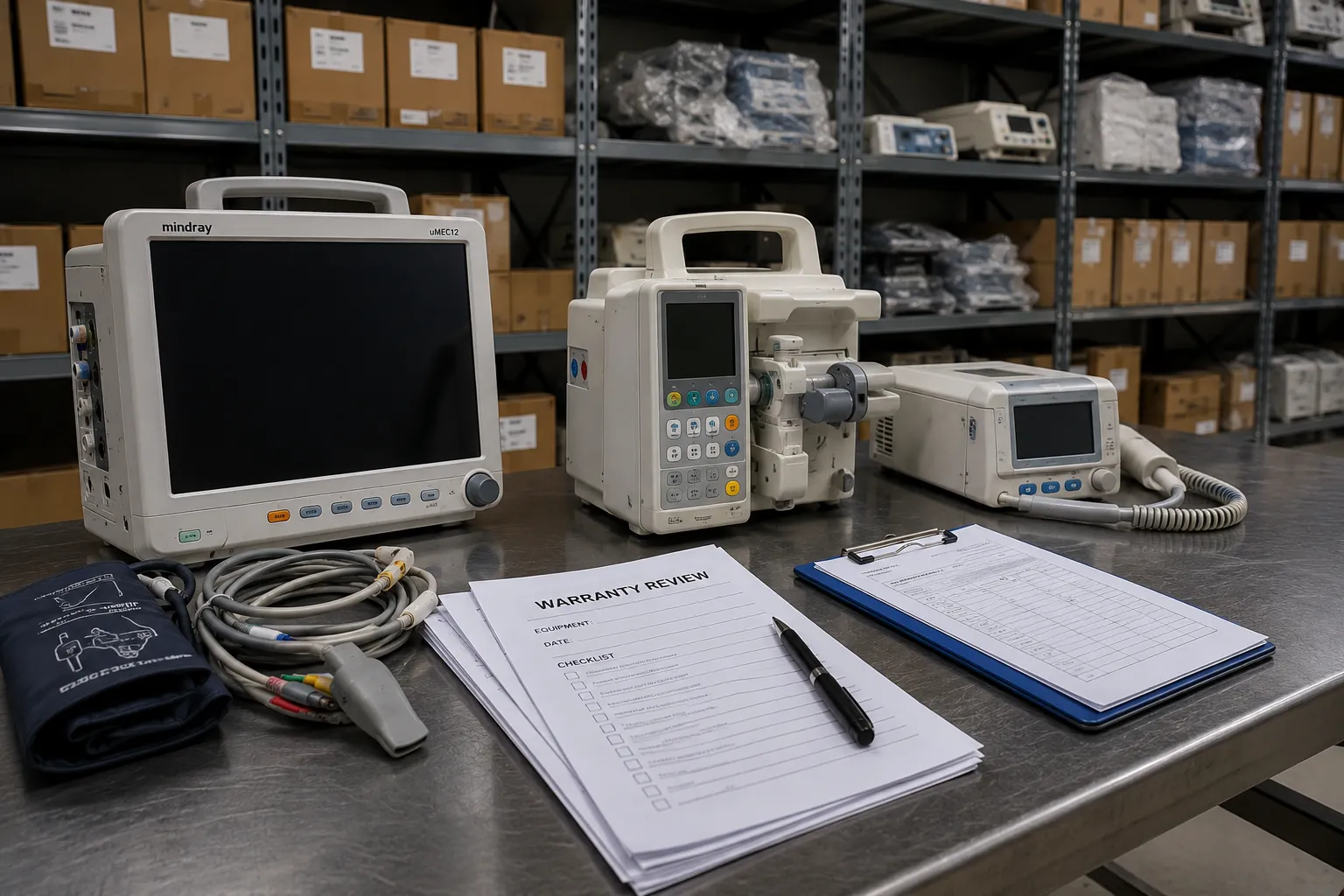
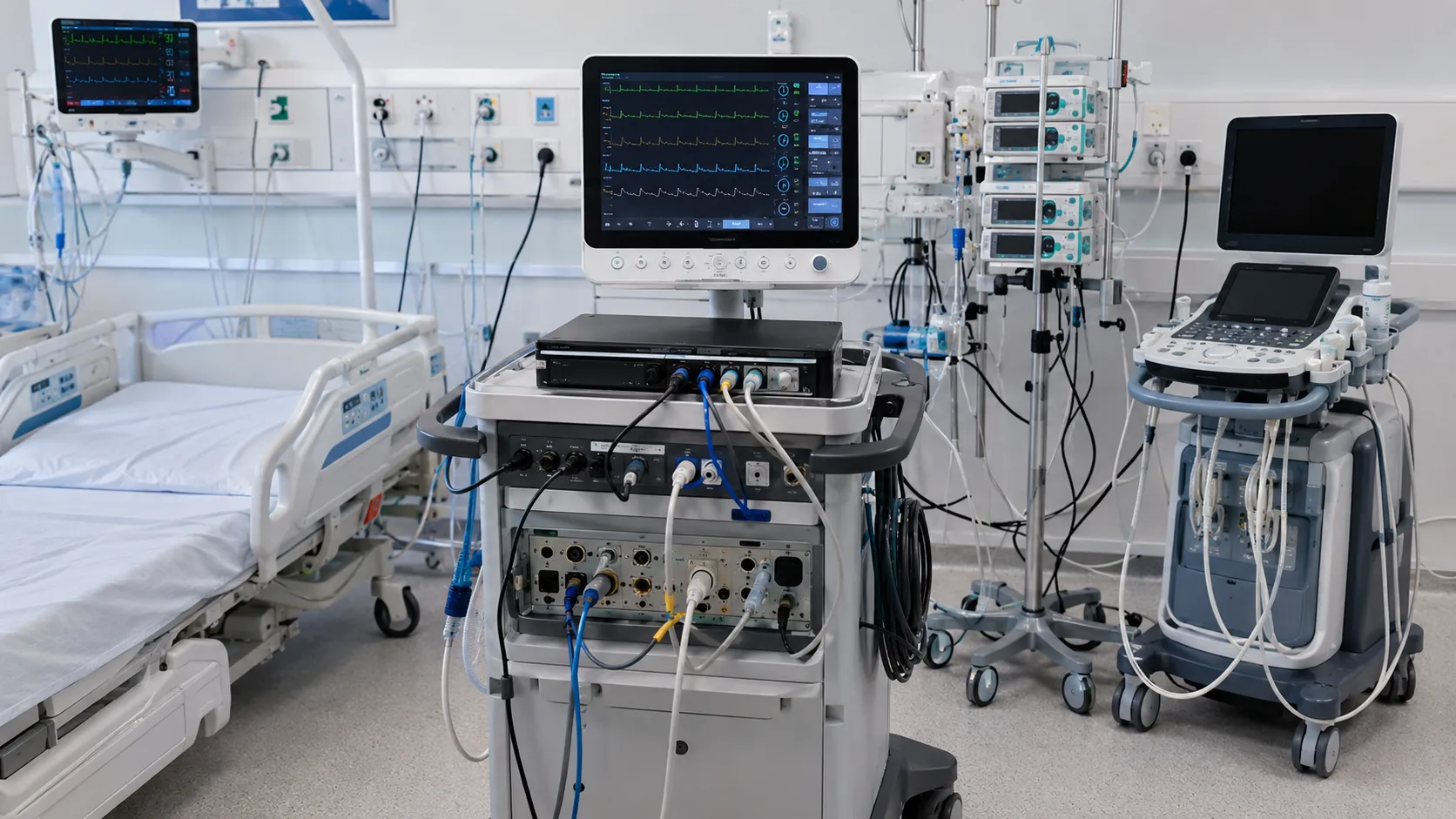
Medical equipment interoperability assessment examines whether devices, software and hospital systems can exchange and use information within an approved clinical workflow. A successful network connection does not automatically mean that patient identity, measurements, alarms, images or reports will move accurately between systems.
For healthcare buyers assessing connected medical equipment, interoperability requirements should be documented before supplier quotations are collected. The hospital should define what information must move, where it must go and how users will confirm that the information is complete and correct.
Clinical teams, biomedical engineers, digital specialists, information-security personnel and procurement managers may each understand a different part of the integration. Their requirements should be combined into a single controlled assessment and implementation plan.
A structured approach helps hospitals compare complete configurations, identify hidden integration costs and reduce the risk of purchasing technically isolated equipment.
Define the Workflow and Integration Scope
The assessment should begin with the clinical and operational outcome rather than a general request for device connectivity.
Clinical use case — Define the patient-care activity, diagnostic process or monitoring workflow the equipment will support.
Source system — Identify the medical device or application that creates the measurement, image, alarm or report.
Destination system — Record where the information must appear, such as a monitoring platform, imaging archive, laboratory system or approved clinical record.
Required information — Specify the measurements, identifiers, timestamps, status messages and reports that need to move.
Direction of exchange — Confirm whether information moves in one direction or whether commands, patient details or acknowledgements return to the device.
User responsibilities — Identify who starts the workflow, verifies information, responds to errors and reports integration problems.
Clinical criticality — Assess how delayed, missing or incorrectly assigned information could affect the service.
Expected volume — Estimate the number of devices, records, messages, images or results the integration must support.
In practice, healthcare buyers often find that suppliers use the term “compatible” without defining which workflow or data fields are included.
Each interoperability requirement should therefore describe a specific, testable exchange.
Map Devices, Systems and Care Settings
The complete integration pathway may include more components than those in the main medical device and hospital applications.
Medical devices — Record the manufacturer, model, software version, network capability and intended clinical location.
Supporting workstations — Include computers used for device operation, review, configuration or reporting.
Hospitals comparing specialist medical equipment supply networks should request clear evidence that proposed products can operate with the hospital’s intended systems and workflows.
Middleware platforms — Identify integration engines, device gateways or vendor applications that translate and route information.
Hospital applications — Record the clinical, imaging, laboratory, pharmacy, monitoring or asset-management systems receiving data.
Servers and storage — Include local, hosted or cloud-based systems required for processing, archiving or reporting.
Network services — Review wired, wireless, address, time, identity and security services supporting the connection.
Mobile equipment — Devices moving between departments may require consistent wireless coverage, location records and reconnection controls.
Shared equipment — Equipment used across several areas requires agreed-upon workflows for department, patient, and user identification.
External systems — Record approved connections with service providers, remote specialists or other healthcare organisations.
Experienced clinical engineering teams typically map every component between the source device and the final user rather than reviewing only the connection at each end.
Assess Technical and Data Requirements
The technical review should determine whether the complete proposed configuration can exchange information accurately, securely, and consistently.
Interface capability — Identify the physical, network and software interfaces supported by each system.
Data format — Confirm how measurements, images, alarms, reports and identifiers are structured and transferred.
Data mapping — Check that fields from the source system correspond correctly with fields in the receiving application.
Patient identification — Define how the equipment receives, displays and transmits the correct patient identity.
Time synchronisation — Confirm that devices and systems use an approved time source to prevent inconsistent timestamps.
Device identification — Ensure that receiving systems can identify the exact device, department, or location that generated the information.
Alarm integration — Where applicable, define which alarms are transferred, how they are prioritised and where they are displayed.
Network compatibility — Review address requirements, communication paths, wireless coverage and connection stability.
User authentication — Define how users access devices, middleware and connected hospital applications.
Cybersecurity controls — Review encryption, access permissions, software updates, remote support and logging requirements.
Failure handling — Document what happens when data cannot be transmitted, acknowledged, stored or displayed.
Technical documentation — Request interface guides, data dictionaries, network requirements, software details and known limitations.
One aspect that surprises first-time buyers is that two systems may support the same general interface type but still exchange different fields or versions.
The hospital should therefore review actual implementation details rather than relying on broad compatibility statements.
Compare Suppliers and Commercial Proposals
Supplier evaluation should cover all hardware, software, interfaces, licences and implementation responsibilities.
Supplier experience — Assess previous work with connected medical equipment, hospital integration and multi-vendor environments.
Quotation structure — Require separate details for equipment, software, interfaces, middleware, licences and integration services.
Accuracy of integration claims — Medical equipment companies advertising connected solutions to healthcare buyers should ensure that interoperability statements match their formal technical and commercial proposals.
Exact configuration — Record the device model, software version, interface option and included communication components.
Licence requirements — Identify one-time, recurring, device-based, user-based and interface-specific licences.
Middleware requirements — Confirm whether an additional gateway, server or integration platform is required.
Implementation scope — Define which party configures the device, network, interface, receiving system and user workflow.
Testing responsibilities — Record who prepares test cases, provides test data, investigates failures and approves results.
Support boundaries — Clarify which supplier supports each component when several companies are involved.
Software support period — Confirm update availability, compatible versions and expected end-of-support conditions.
Commercial exclusions — Identify charges for interface activation, configuration, testing, upgrades and future changes.
Change management — Require suppliers to explain how software or interface updates may affect existing integrations.
Healthcare organisations coordinating multiple connected systems may benefit from collaborative international medical equipment supply partnerships.
Each proposal should still identify its exact equipment, interfaces, licences, implementation services and long-term support responsibilities.
Test Integration and Operational Readiness
Interoperability should be demonstrated within realistic hospital workflows before equipment enters routine use.
Test environment — Use the proposed device, software, network and destination system wherever possible.
Patient matching — Confirm that information is assigned to the correct test identity throughout the workflow.
Data completeness — Verify that required measurements, images, reports, units and status information are transferred.
Data accuracy — Compare source information with what appears in the receiving system.
Timestamp checks — Confirm that collection, transmission and display times remain consistent.
Volume testing — Assess performance when several devices or records are processed within expected operating demand.
Connection recovery — Test how the system handles interruption, reconnection, delayed messages and duplicate transmissions.
Error messages — Confirm that users and technical teams can recognise and investigate integration failures.
Security testing — Verify approved accounts, permissions, network paths, logging and remote-access arrangements.
Workflow simulation — Complete an end-to-end test using the intended clinical and technical roles.
Acceptance records — Document test cases, expected results, actual results, failures and corrective actions.
Operational handover — Release the system only after unresolved integration risks and training actions have been addressed.
A successful demonstration with sample data should not replace structured acceptance testing in the hospital’s intended environment.
Govern Interoperability Throughout the Lifecycle
Integration should remain controlled as devices, applications, networks and supplier arrangements change.
Configuration records — Maintain current device, software, interface, server and network information.
Interface monitoring — Track failed messages, delayed data, rejected records and recurring communication problems.
User reporting — Provide a clear route for clinical staff to report missing, incorrect or delayed information.
Change control — Assess the effect of device, software, network or workflow changes before implementation.
Supplier coordination — Ensure that all responsible vendors participate when integration problems cross support boundaries.
Software updates — Review compatibility before installing new firmware, operating systems or application versions.
Support-status monitoring — Identify equipment or software approaching end of support.
Business continuity — Define approved workflows for periods when connected systems are unavailable.
Performance review — Compare expected integration benefits with actual utilisation, reliability and user feedback.
Replacement planning — Consider interoperability, software support and migration needs when prioritising future investment.
Healthcare organisations seeking connected medical equipment, supplier comparisons, or integration support can contact the Medigear.uk team for assistance. Enquiries should include the equipment category, intended systems, interface requirements, quantities and destination.
The interoperability assessment should be updated whenever the device configuration, software, network, destination system or clinical workflow changes.
Final thoughts
Medical equipment interoperability assessment should begin with a clearly defined clinical workflow and a testable information-exchange requirement.
Healthcare teams should map every device, workstation, gateway, server and hospital application involved in the integration. Interface support, data mapping, patient identity, time synchronisation, cybersecurity and failure handling should be reviewed together.
Supplier quotations should identify exact configurations, licences, implementation services, support boundaries and future update responsibilities.
A structured assessment helps hospitals reduce isolated systems, improve information flow and maintain connected equipment throughout its operational lifecycle.
Disclaimer
Medigear.uk is a global medical equipment supplier, exporter, and distributor. The content published on this site is intended for educational and product awareness purposes only. Nothing on this page constitutes medical advice, clinical guidance, or treatment recommendations. All healthcare procurement and clinical decisions should be made by qualified medical professionals and compliant procurement teams operating within the regulatory frameworks of their respective countries.