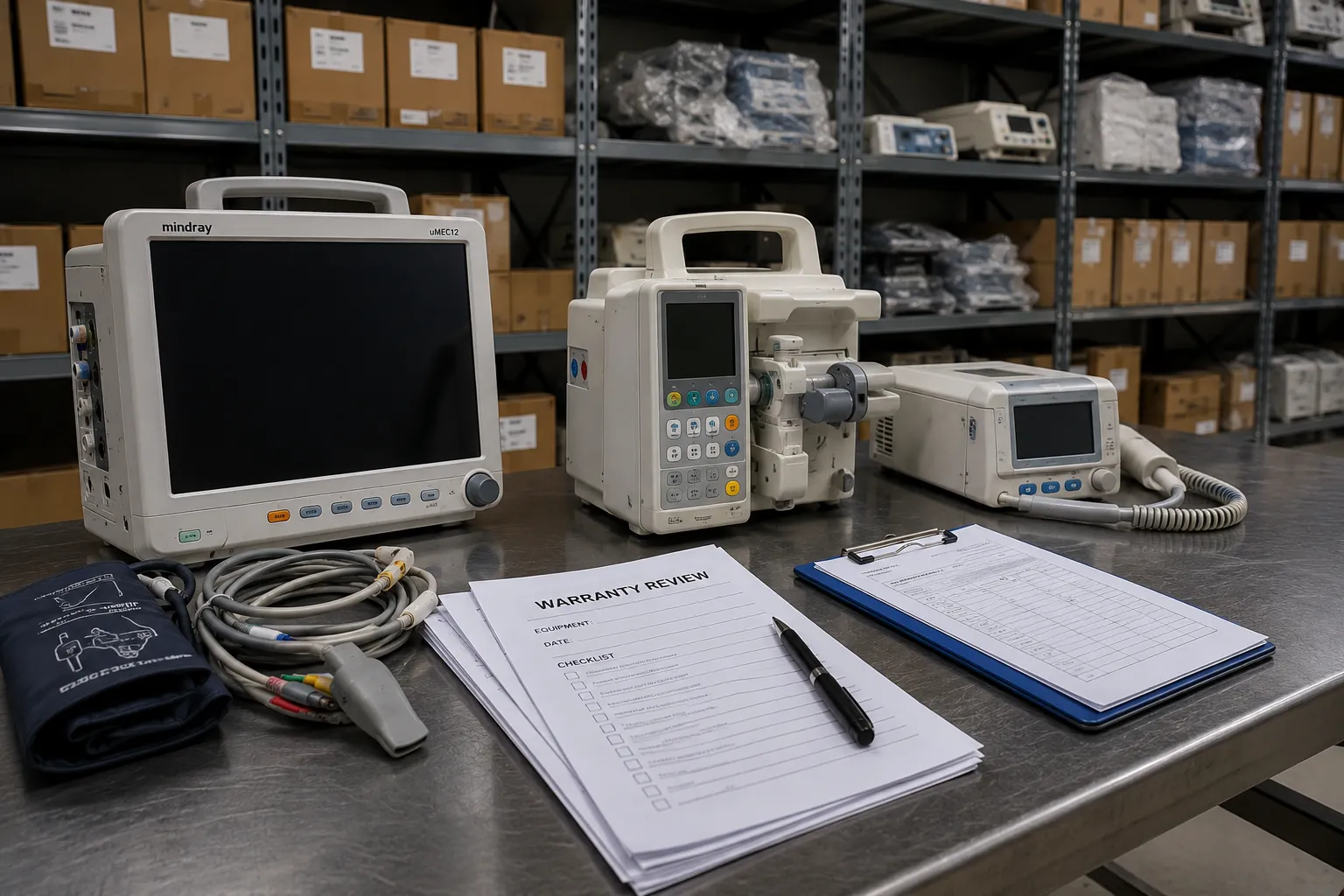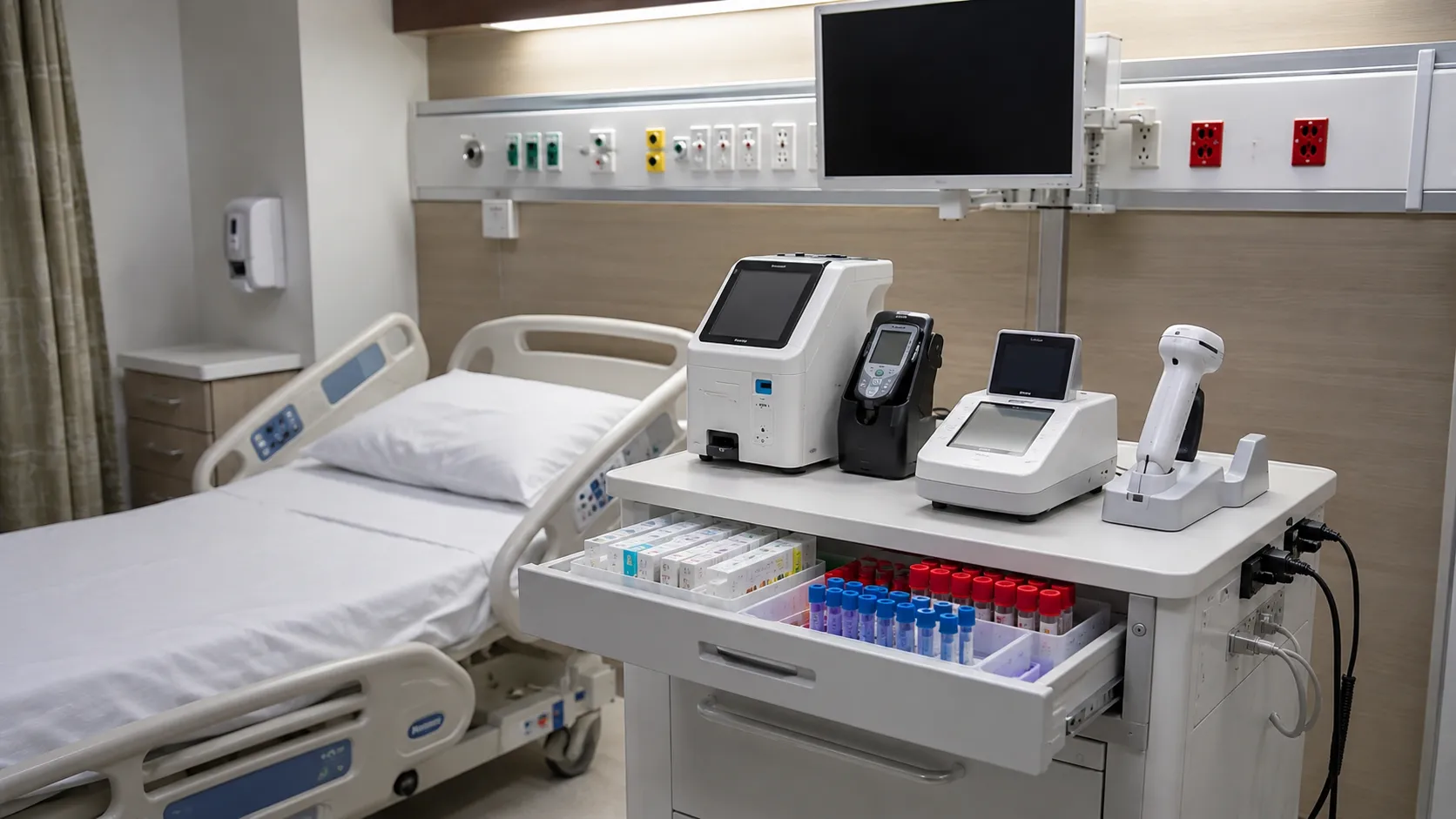
Point-of-care testing can shorten the distance between specimen collection, diagnostic information, and clinical action. However, placing analysers across hospital departments creates responsibilities that extend beyond buying the devices. Hospitals must control operator access, test quality, consumable storage, result transfer, infection prevention, maintenance, and oversight by qualified laboratory professionals.
For hospital and clinic equipment buyers, the planning process should begin with the clinical decision the test will support. A rapid result only creates value when it is accurate, recorded correctly, reviewed by trained staff, and available at the right point in the patient pathway.
The IFCC defines point-of-care testing as diagnostic testing performed at or near the site of patient care by healthcare professionals. This means POCT may operate outside the central laboratory while still requiring structured clinical and quality oversight.
How Point-of-Care Equipment Supports Clinical Decisions
Rapid access to diagnostic results — POCT equipment can provide selected results without sending every sample to the main laboratory. This can support time-sensitive decisions in emergency care, intensive care, operating theatres, maternity services, dialysis, and acute hospital wards.
Testing based on clinical need — Hospitals should select tests according to the decisions clinicians need to make. Glucose, blood gas, coagulation, electrolyte, cardiac marker, urinalysis, haemoglobin, and molecular testing systems serve different purposes and should not be grouped into a single general equipment package.
Reduced sample transport requirements — Testing near the patient may reduce delays caused by specimen transport and laboratory processing. However, it transfers more responsibility to clinical staff for patient identification, sample collection, device operation, quality checks, and result documentation.
Support for decentralised hospital services — POCT can be particularly useful where rapid access to the central laboratory is difficult. Experienced hospital buyers often find that the most valuable system is not the device with the highest number of tests, but the one that fits the actual clinical workflow and can be reliably supported.
WHO guidance on buying diagnostic equipment highlights the risk of selecting analysers that require skills or specimen types that do not match the intended testing environment.
Where Hospitals Commonly Deploy POCT Equipment
Emergency departments — Emergency teams may require blood gas, electrolyte, glucose, cardiac marker, coagulation, haemoglobin, or selected molecular tests. Devices must be accessible without obstructing patient movement, resuscitation work, or infection-control processes.
Intensive care and operating areas — Critical care units and operating theatres often use POCT where rapid physiological or coagulation information may influence immediate treatment. Equipment must remain available during high workload and should have clear backup arrangements.
Hospitals sourcing from verified global medical equipment suppliers should request full device configurations, compatible consumables, quality-control materials, regulatory documents, installation requirements, and service arrangements before confirming an order.
Maternity and neonatal services — These areas may require glucose, blood gas, bilirubin, haemoglobin, or other rapid tests depending on the hospital’s clinical scope. Buyers should check whether the analyser supports the required specimen volume and patient population.
Dialysis and specialist departments — Electrolyte, blood gas, coagulation, and other bedside testing may support selected specialist services. The value of each test should be confirmed with laboratory and clinical teams before equipment is distributed across departments.
Specifications Buyers Should Compare Before Selection
Analytical performance — Buyers should review accuracy, precision, reportable range, detection limits, interfering substances, and comparison with the main laboratory method. A fast result does not compensate for performance that is unsuitable for the clinical decision.
Specimen type and sample volume — Devices may use arterial, venous, capillary, urine, swab, or other specimens. The required sample volume affects the difficulty of collection, particularly in neonatal, paediatric, or critically ill patients.
Result time and testing capacity — Turnaround time should include sample preparation, cartridge handling, analysis, result transfer, and device cleaning. Buyers should also assess whether a single analyser can handle peak testing demand without creating queues.
Quality control functions — Systems may include internal checks, external control materials, calibration, electronic quality controls, lockouts, and remote oversight. CLSI guidance treats risk-based quality management as a central part of implementing and managing hospital POCT services.
Operator identification and lockout controls — Devices should identify authorised users and restrict testing when training, quality controls, maintenance, or consumables are out of date. This can reduce the risk of untrained use and incomplete quality records.
Connectivity and data transfer — Buyers should assess links to laboratory systems, electronic patient records, middleware, barcode scanners, wireless networks, and central device-management platforms. Manual result entry can introduce identification and transcription errors.
Environmental requirements — Temperature, humidity, power, storage, dust, vibration, and cleaning conditions may affect performance. These factors are especially important for devices used in mobile clinical areas or hospitals with limited environmental control.
How Buyers Should Evaluate Suppliers and Ownership Costs
Match the device to the intended setting — Buyers should evaluate devices in the department where they will be used. CLSI device-selection guidance recommends comparing systems according to the patient population, care environment, quality needs, and operational requirements.
Calculate cost per reportable result — Equipment price is only one part of the financial assessment. Test cartridges, reagents, controls, calibration materials, service, software, connectivity, training, wasted tests, and expired stock can significantly influence lifetime cost.
Review evidence and regulatory documents — Buyers should request documentation applicable to the destination country, together with manufacturer authorisation, performance data, quality certificates, labelling, manuals, service records, and warranty terms.
Equipment manufacturers advertising products to hospital buyers should provide clear information about specimen requirements, analytical limitations, consumable life, storage, quality controls, software, and service coverage. Promotional claims should not replace independently reviewable technical evidence.
Assess training and operator support — Training should cover specimen collection, patient identification, quality controls, device cleaning, error messages, result reporting, and escalation procedures. ISO/TS 22583:2024 provides requirements and recommendations for supervisors and operators where POCT is performed without routine medical laboratory training or support.
Confirm long-term supply stability — Hospitals should assess cartridge availability, minimum order quantities, shelf life, cold-chain requirements, local stock, spare parts, and availability of replacement analysers. Structured long-term medical equipment supply partnerships can improve continuity, but buyers should still define performance expectations and alternative supply arrangements.
Maintenance and Quality Management for POCT Devices
Daily operational checks — Devices may require cleaning, visual inspection, cartridge verification, temperature review, control testing, and confirmation that the analyser is ready for patient use. Responsibilities should be clearly assigned to each clinical area.
Preventive maintenance and calibration — Maintenance schedules should follow manufacturer instructions, risk level, workload, and applicable local requirements. Records should show completed work, identified faults, corrective actions, and approval for service return.
Quality control monitoring — Results from internal and external quality checks should be reviewed centrally rather than stored only on individual devices. CLSI guidance emphasises policies, processes, records, and quality activities aimed at reducing errors in hospital-based POCT programmes.
Consumable storage and stock rotation — Cartridges, strips, reagents, controls, and calibration materials may have defined temperature and humidity limits. Buyers should plan monitored storage, expiry tracking, lot management, and emergency stock levels.
Cleaning and infection prevention — Equipment used near multiple patients requires validated cleaning procedures that do not damage sensitive components. The hospital should specify approved disinfectants, cleaning frequency, protective equipment, and responsibility between tests.
Global Demand and International Sourcing Considerations
Growing decentralisation of diagnostic testing — Hospitals are expanding testing closer to patients through connected analysers, compact molecular systems, and department-based diagnostic platforms. Recent WHO work on near-point-of-care molecular testing also reflects broader demand for diagnostics that can operate closer to where patients receive care.
Different needs across hospital settings — Large teaching hospitals may prioritise connectivity and centralised device management. In contrast, district or remote hospitals may place greater weight on battery operation, simple maintenance, limited sample preparation, and a stable supply of consumables.
Export and import preparation — International buyers should confirm device registration, shipping conditions, reagent temperature controls, customs documentation, installation responsibilities, language requirements, and local technical support before dispatch.
New and refurbished options — New systems may offer current software, a manufacturer's warranty, and longer product support. Refurbished analysers may reduce initial cost but require careful checks covering calibration, software status, service history, accessories, documentation, cartridge supply, and remaining support life.
Hospitals planning multi-category or cross-border buying can contact the Medigear.uk team for supply support to discuss equipment availability, documentation, consumables, shipping, installation, and after-sales requirements.
Final thoughts
Effective point-of-care testing equipment planning begins with clinical need rather than device availability. Hospital buyers should identify which decisions require rapid results, where the tests will be performed, who will operate the equipment, and how quality will be supervised.
Technical performance, connectivity, consumable continuity, staff competency, maintenance, and long-term costs should be assessed as one system. A well-planned POCT programme can improve access to timely diagnostic information while maintaining the controls expected from a hospital testing service.
Disclaimer
Medigear.uk is a global medical equipment supplier, exporter, and distributor. The content published on this site is intended for educational and product awareness purposes only. Nothing on this page constitutes medical advice, clinical guidance, or treatment recommendations. All healthcare procurement and clinical decisions should be made by qualified medical professionals and compliant procurement teams operating within the regulatory frameworks of their respective countries.