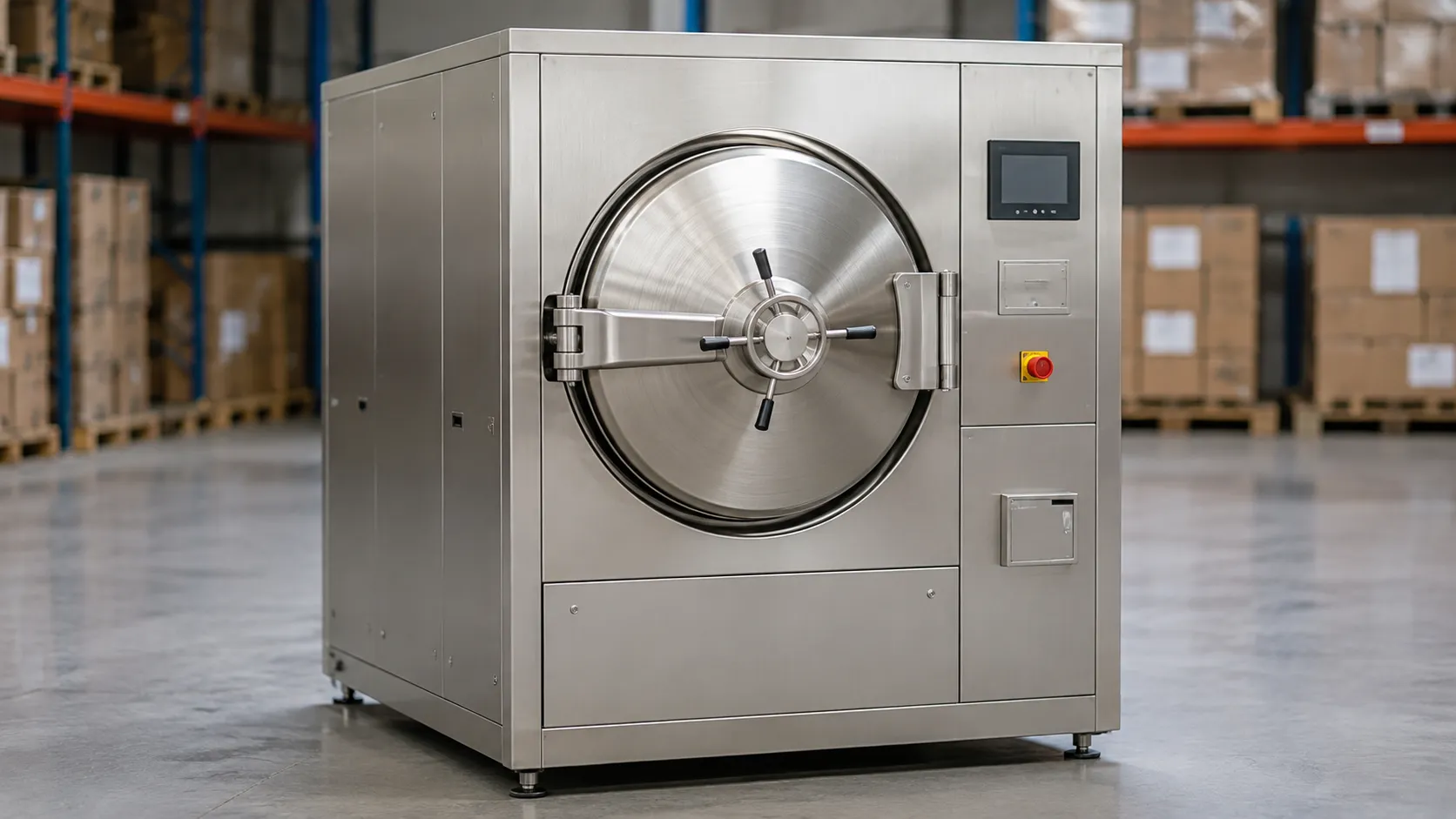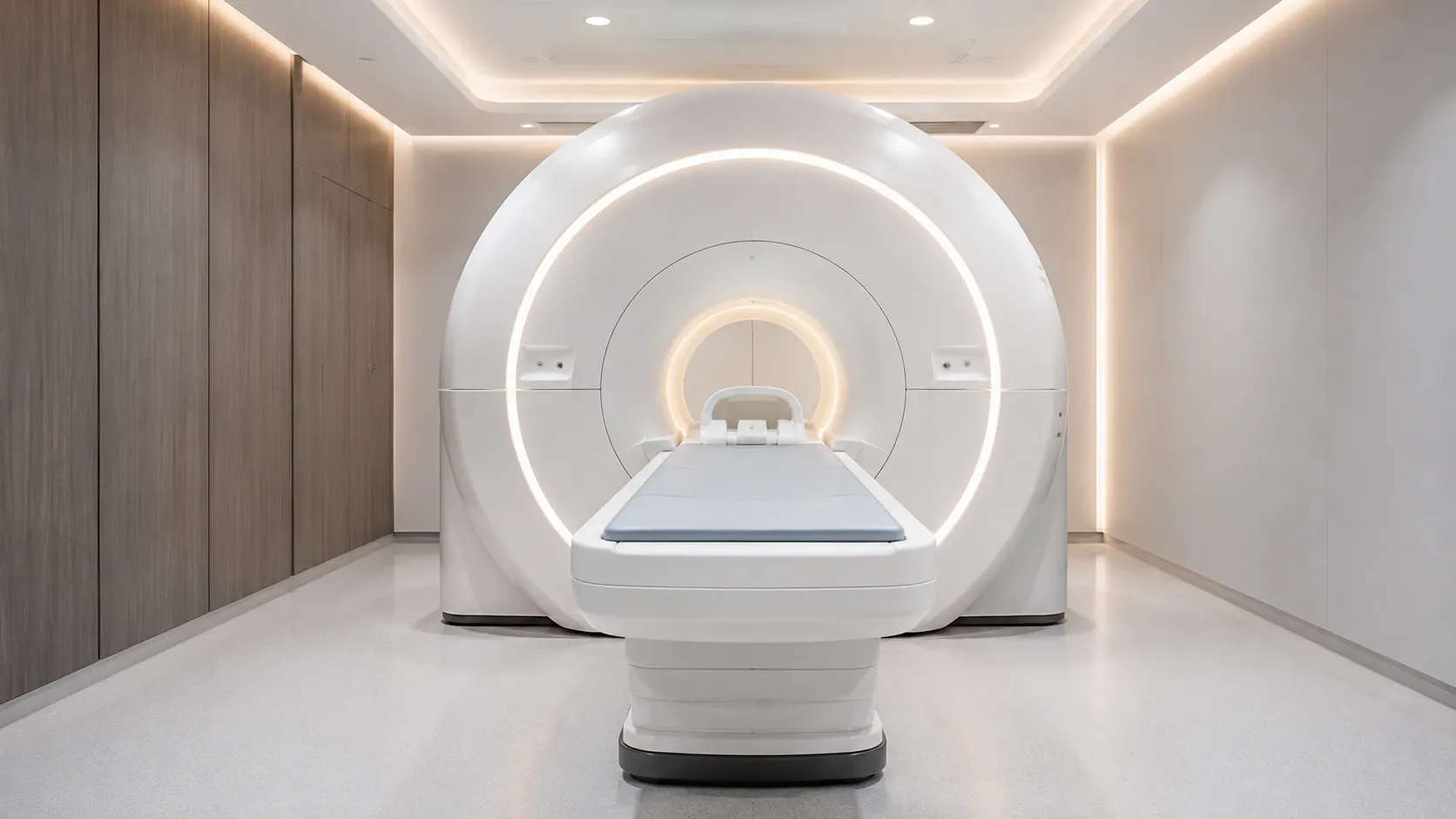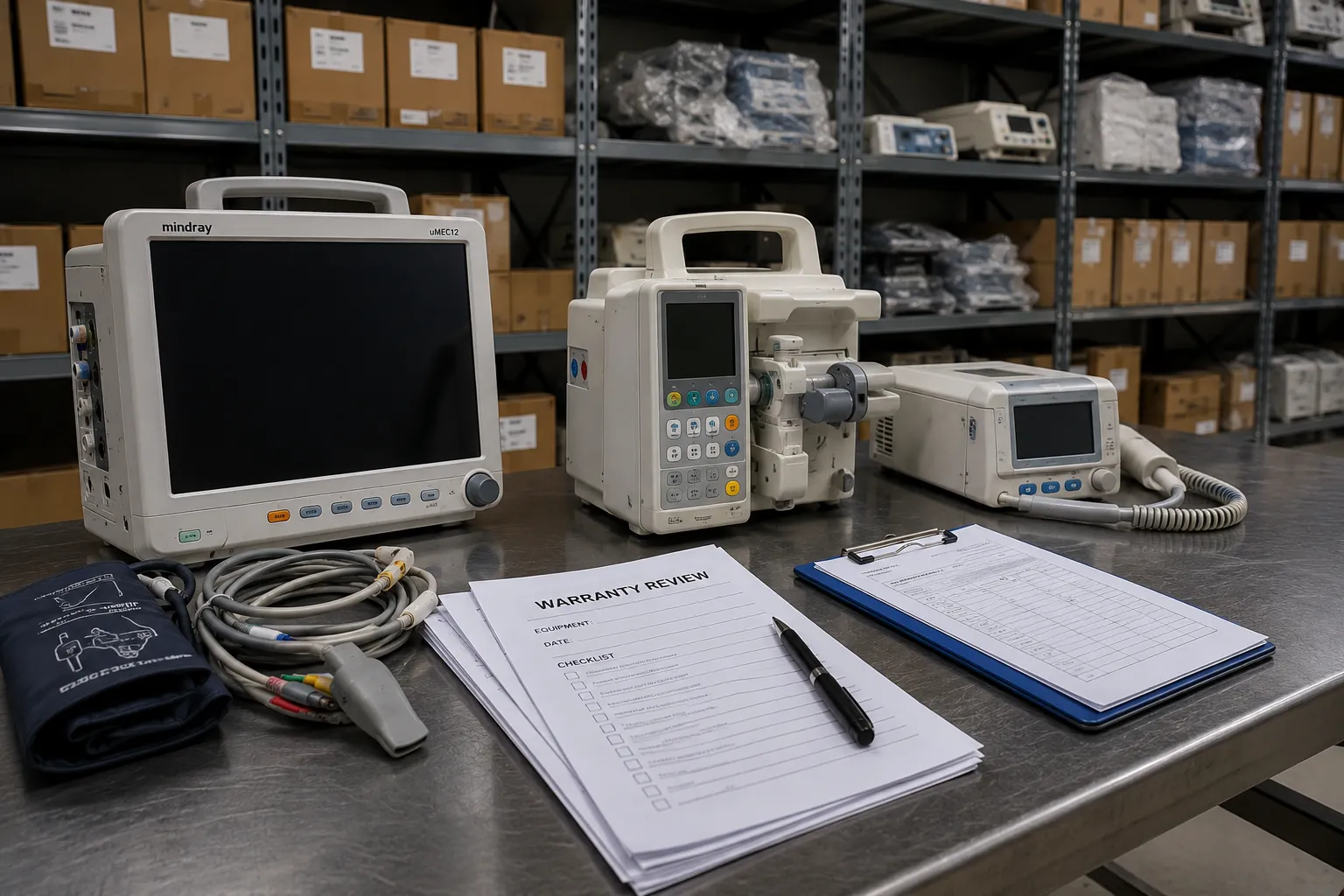
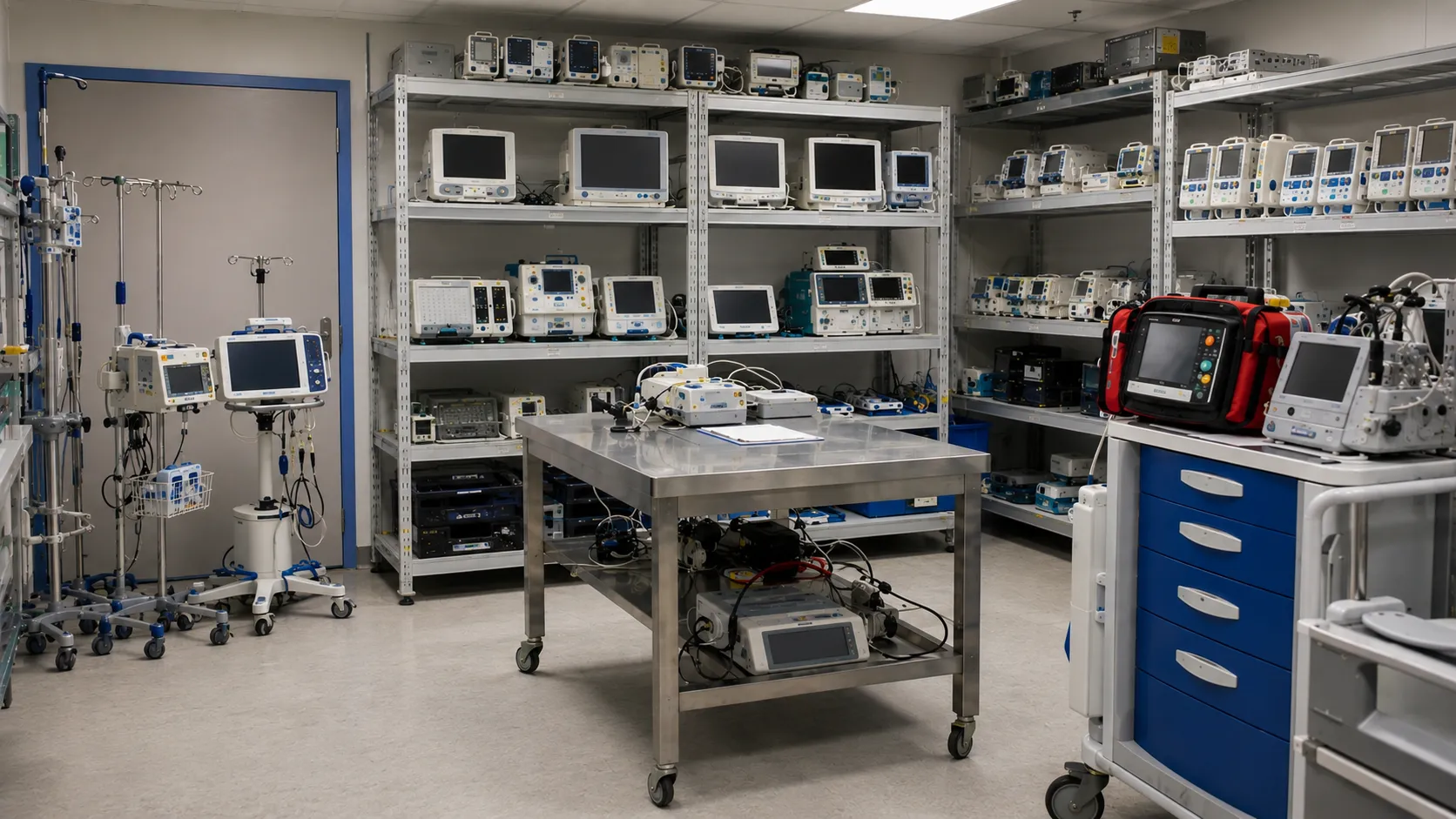
Medical equipment asset management helps healthcare organisations maintain clear control over the devices used across clinical departments. It connects equipment identity and location with maintenance, user training, warranty, software support and eventual replacement.
For clinical equipment buyers and healthcare asset managers, asset-management requirements should begin during procurement. Manufacturer details, model numbers, serial numbers, accessories, warranty terms and support responsibilities should be collected before the equipment enters routine operation.
Clinical teams play an important role because they use, move and monitor equipment during daily services. Biomedical engineers may maintain the technical record, but clinical users are often the first to identify missing devices, damaged accessories, operating restrictions or changes in department location.
A structured asset-management process improves equipment traceability, supports timely maintenance and provides reliable information for budgeting and lifecycle decisions.
Define Asset Ownership and Clinical Responsibilities
Healthcare organisations should establish who owns each part of the asset-management process.
Central asset owner — Assign a department to maintain the official medical equipment register. This role is often managed by biomedical engineering or healthcare technology teams.
Clinical department owner — Identify the department responsible for daily operation, routine checks and reporting changes in equipment status.
Named equipment custodian — Shared or high-value devices may require a named representative who confirms location, condition and availability.
Procurement responsibility — Purchasing teams should provide approved supplier, quotation, purchase-order and warranty information for new assets.
Maintenance responsibility — Record whether technical support is provided internally, by the manufacturer, through an authorised distributor or under a service contract.
Software responsibility — Connected devices may require digital teams to manage network access, software versions, interfaces and cybersecurity controls.
Financial responsibility — Finance teams may require acquisition cost, ownership status, depreciation category and disposal records.
Update authority — Define who may create, edit, transfer, restrict or close an equipment record.
In practice, clinical teams often assume that biomedical engineers automatically know when portable equipment has moved to another department.
Clear responsibilities help prevent equipment from becoming untraceable or remaining in operation with outdated records.
Apply Asset Controls Across Healthcare Settings
Asset-management requirements should reflect the scale and structure of the healthcare organisation.
Large teaching hospitals — These facilities may operate thousands of assets across several buildings. Standard naming, location codes and asset statuses support more consistent records.
District and regional hospitals — Equipment may be shared across departments with limited technical staff. Clear custodianship and transfer procedures become especially important.
When working with verified international medical equipment suppliers, healthcare organisations should obtain consistent information on the manufacturer, model, serial number, warranty, and support before asset registration.
Community clinics — Smaller facilities may use simpler systems, but each device should still have a unique identity, current location and maintenance status.
Laboratories and diagnostic centres — Asset records may need to link analysers with software, refrigeration systems, calibration tools and associated modules.
Critical care and surgical areas — High-risk equipment may require frequent location verification, accessory control and urgent fault escalation.
Mobile and remote services — Portable devices may need records for assigned teams, vehicles, transport cases, batteries and charging arrangements.
New hospital projects — Equipment schedules should be converted into controlled asset records during delivery, installation and commissioning.
Multi-facility healthcare groups — A common asset numbering and data structure can support transfers, central reporting, and standardised replacement planning.
Experienced healthcare asset managers usually maintain consistent core fields while allowing equipment-specific technical information where required.
Build Complete Medical Equipment Asset Records
Each asset record should provide enough information to identify, locate, maintain and support the equipment.
Unique asset number — Assign an internal identifier that remains connected to the equipment throughout its lifecycle.
Equipment description — Use an approved and consistent equipment name rather than informal terminology used by one department.
Legal manufacturer — Record the manufacturer listed on the equipment label and in the technical documentation.
Exact model and variant — Similar model names may have different accessories, software or maintenance requirements.
Serial number — Capture the complete serial number because it supports warranty, servicing, field-action and traceability records.
Equipment category — Assign a standard clinical or technical category for reporting and maintenance planning.
Department and location — Record the facility, building, department and room where appropriate.
Ownership status — Identify whether the asset is owned, leased, rented, borrowed, donated or provided for demonstration.
Operational status — Use controlled terms such as operational, restricted, under repair, stored, awaiting installation or decommissioned.
Acquisition information — Record the supplier, purchase order, acquisition date and approved configuration.
Installation and commissioning dates — These dates support warranty activation and lifecycle monitoring.
Warranty information — Include the coverage period, exclusions, supplier contacts and claim process.
Maintenance requirements — Record preventive servicing, calibration and safety-inspection intervals.
Software and connectivity — Connected devices may require information on versions, licences, interfaces, networks, and security.
Accessories and modules — Important probes, batteries, trolleys, and reusable accessories should be linked or tracked separately.
Complete records reduce uncertainty when equipment requires repair, transfer, upgrade or replacement.
Connect Procurement, Supplier and Support Information
Asset registration should connect the equipment with its approved purchasing and supplier records. Purchase order verification — Confirm that the manufacturer, model, quantity, and configuration match the approved order.
Delivery-inspection record — Record package condition, serial numbers, accessories and identified discrepancies.
Accuracy of supplier information — Medical equipment companies advertising products to clinical buyers should ensure that product descriptions, warranty and support claims match formal documentation.
Compliance documents — Store or link applicable conformity, registration and product records.
Installation information — Retain room-readiness details, installation reports and supplier engineer information.
Commissioning evidence — Link functional testing, safety checks, calibration and final acceptance records to the asset.
Training records — Record completed clinical and technical training or link the asset to the relevant competency system.
Service contacts — Include the manufacturer, supplier, and authorised service provider contact routes.
Spare-parts information — Identify important component references, approved suppliers and expected lead times.
Commercial support terms — Record warranty, software, extended-service and maintenance commitments.
Healthcare groups coordinating recurring purchases may benefit from structured international partnerships for medical equipment. Every delivered device should still receive independent verification and asset registration.
Linking procurement, commissioning and service information creates a traceable record from purchase through operational use.
Control Equipment Location, Use and Maintenance Status
Asset information must remain current after equipment enters the clinical environment.
Permanent location — Define the department or room where fixed equipment is expected to remain.
Home location for mobile assets — Portable devices should have a designated return location even when they move between departments.
Transfer records — Update the asset register when equipment changes department, building or facility.
Clinical availability — Record whether equipment is available, reserved, restricted, undergoing maintenance or temporarily loaned.
Pre-use checks — Clinical teams should complete approved routine checks and report damaged cables, missing accessories or abnormal operation.
Fault reporting — Users should record symptoms, error messages and the circumstances in which the problem occurred.
Maintenance status — Clinical departments should be able to identify whether preventive maintenance, calibration or inspection is overdue.
Repair history — Link faults, engineer visits, parts used, downtime and return-to-service approval to the asset.
Software changes — Record updates, licence changes, new interfaces and cybersecurity actions.
Training status — Departments should ensure that only suitably trained staff operate equipment requiring formal competency.
Physical verification — Periodic checks should confirm that each asset exists, carries the correct label and remains in its recorded location.
Missing-equipment process — Establish a procedure for investigating assets that cannot be found during routine checks or audits.
One aspect that surprises first-time asset managers is how quickly portable equipment records become unreliable when temporary movements are not reported.
Simple transfer and status-update procedures help clinical teams maintain traceability without creating unnecessary administrative work.
Use Asset Information for Lifecycle Decisions
Medical equipment asset records should support maintenance, budgeting and replacement rather than operate as a static inventory.
Maintenance forecasting — Use service dates and risk categories to plan preventive maintenance, calibration and inspections.
Warranty monitoring — Identify equipment approaching warranty expiry so service options can be reviewed in advance.
Utilisation review — Compare available equipment with actual department demand to identify shortages, duplication or underused assets.
Downtime analysis — Review fault frequency and repair duration across manufacturers, models and departments.
Supplier-performance assessment — Compare response times, parts delivery and warranty outcomes with contractual commitments.
Spare-parts planning — Connect active equipment models with required components, stock levels and international lead times.
Training planning — Identify departments using unfamiliar models, updated software or transferred equipment.
Lifecycle-cost monitoring — Combine purchase, service, parts, software and consumable costs where reliable data is available.
Replacement prioritisation — Use clinical criticality, condition, downtime, support status and maintenance cost to rank assets.
Decommissioning control — Record withdrawal, data removal, accessory reconciliation and the final resale, return, recycling or disposal decision.
Healthcare teams seeking equipment quotations, asset replacement options, or international supply support can contact the Medigear.uk team for assistance with medical equipment. Enquiries should include the equipment category, required quantity, preferred condition, destination and support requirements.
Reliable asset information provides clinical and management teams with a common basis for operational and capital planning decisions.
Final thoughts
Medical equipment asset management depends on cooperation between clinical teams, biomedical engineers, procurement specialists and healthcare managers.
Each asset should have a unique identity, current location, operational status and complete maintenance and support information. Shared and portable equipment requires particularly clear controls on transfer and custodianship.
Asset records should be updated whenever equipment is received, moved, repaired, upgraded, restricted or decommissioned.
A controlled asset-management process improves equipment traceability, supports timely maintenance and provides stronger evidence for budgeting and replacement planning.
Disclaimer
Medigear.uk is a global medical equipment supplier, exporter, and distributor. The content published on this site is intended for educational and product awareness purposes only. Nothing on this page constitutes medical advice, clinical guidance, or treatment recommendations. All healthcare procurement and clinical decisions should be made by qualified medical professionals and compliant procurement teams operating within the regulatory frameworks of their respective countries.